Mastering Sit, Stay & Come Commands: A Complete Dog Training Guide
Learn how to teach your dog sit, stay & come commands with step-by-step instructions, expert tips & common mistakes to avoid. Start training today!
Mastering Sit, Stay & Come Commands: A Complete Dog Training Guide
Every dog owner dreams of a well-behaved companion who listens reliably, whether you are at home, in the park, or navigating a busy sidewalk. The foundation of that dream rests on three essential commands: sit, stay, and come. Together, these commands form the backbone of canine obedience, giving you control in everyday situations while keeping your dog safe from potential dangers.
Teaching your dog to sit, stay & come is not just about impressive tricks at a family gathering. These commands can prevent your dog from darting into traffic, jumping on guests, or bolting out the front door. They build a communication bridge between you and your pet, fostering trust, respect, and a deeper bond. Whether you are working with an energetic puppy or an older rescue dog, this comprehensive guide will walk you through every step of the process.
In this article, you will find detailed, step-by-step instructions for each command, along with practical tips, common mistakes to avoid, and answers to frequently asked questions. By the end, you will have all the tools you need to transform your dog into a confident, responsive companion. For additional guidance on building a strong training routine, check out our puppy training basics guide and explore our collection of breed profiles to understand your dog's unique temperament.
Why Sit, Stay & Come Are the Most Important Commands
Before diving into technique, it helps to understand why these three commands matter so much. Think of sit, stay, and come as the pillars of a safe and harmonious life with your dog.
The Sit Command: Manners & Impulse Control
Sitting is the most natural calming behavior for dogs. When your dog sits instead of jumping, lunging, or pawing, they are exercising impulse control. A reliable sit is useful before meals, at doorways, when greeting people, and during veterinary visits. It is often the first command puppies learn because it is relatively easy to shape and sets the stage for more advanced training.
The Stay Command: Patience & Safety
Stay builds on sit by adding duration and self-control. A dog who can hold a stay while you answer the door, cross a street, or set down a hot plate of food is a dog who understands patience. This command is invaluable for safety; it can stop your dog from chasing a squirrel into a road or rushing toward an unfamiliar animal. Our leash training guide pairs perfectly with stay training for walks that are enjoyable for both of you.
The Come Command: A Lifesaving Recall
Of all the commands you will ever teach, come (or recall) is arguably the most critical. A reliable recall means your dog will return to you regardless of distractions, distance, or temptation. This single command has saved countless dogs from dangerous situations, including oncoming vehicles, aggressive animals, and hazardous terrain. Investing time in a rock-solid recall is one of the greatest gifts you can give your dog, because it grants them more freedom and you more peace of mind.
How to Teach the Sit Command Step by Step
The sit command is typically the easiest of the three to teach, making it the perfect starting point for new trainers and young puppies alike. Here is a proven, reward-based method that works for dogs of all ages and breeds.
Step 1: Gather Your Supplies
Before your training session begins, prepare small, soft, high-value treats that your dog loves. Pea-sized pieces of chicken, cheese, or commercial training treats work well. You want something your dog will eat quickly so you can move on to the next repetition without losing momentum. Have a clicker ready if you use clicker training, and choose a quiet, low-distraction environment for your first sessions.
Step 2: Use the Lure Method
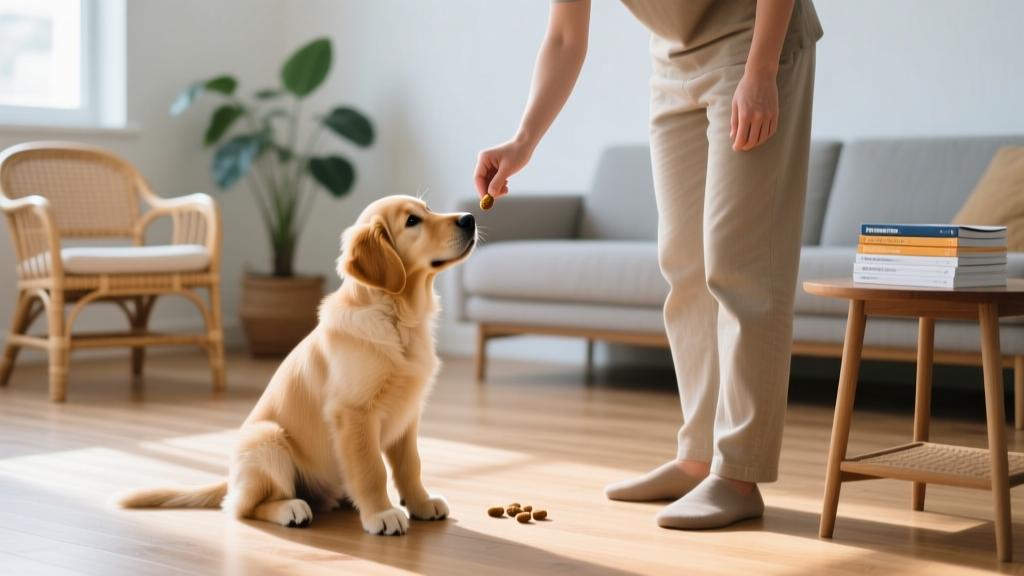
- Stand or kneel in front of your dog with a treat in your hand.
- Hold the treat close to your dog's nose so they can smell it but not grab it.
- Slowly move the treat upward and slightly backward over your dog's head.
- As your dog's nose follows the treat upward, their rear end will naturally lower toward the ground.
- The moment their bottom touches the floor, say "Yes!" or click your clicker, then immediately give them the treat.
Step 3: Add the Verbal Cue
Once your dog is reliably following the lure into a sitting position (usually after 5 to 10 successful repetitions), begin adding the word "sit" just before you move the treat. Say "sit" in a clear, calm voice, then lure as before. Over several sessions, gradually fade the lure by using an empty hand gesture and rewarding from your other hand or a treat pouch. Eventually, your dog will sit on the verbal cue alone.
Step 4: Practice in Different Environments
A dog who sits perfectly in the kitchen may struggle to do so at the park. This is because dogs do not generalize well initially. Practice the sit command in every room of your house, then in your yard, on the sidewalk, and eventually in busier locations. Each new environment is a fresh challenge, so be patient and lower your expectations at first. Reward generously in distracting settings to reinforce the behavior.
Step 5: Phase Out Treats Gradually
Once your dog responds to "sit" reliably in multiple environments, begin transitioning from continuous treats to intermittent rewards. Reward every other sit, then every third, and so on, while always offering verbal praise. This variable reinforcement schedule actually strengthens the behavior over time, much like a slot machine keeps players engaged. Never eliminate rewards entirely; even experienced dogs appreciate an occasional treat or enthusiastic praise.
How to Teach the Stay Command Step by Step
Stay is more challenging than sit because it requires your dog to maintain a position over time and resist the urge to move. The key is to build duration, distance, and distraction gradually, one variable at a time. If your dog is still mastering sit, spend a few more sessions solidifying that command before introducing stay. For a deeper look at building self-control, visit our impulse control training guide.
Step 1: Start With a Solid Sit
Ask your dog to sit. Once they are seated, hold your palm flat toward them like a stop sign and say "stay" in a firm but gentle tone. Wait just one or two seconds. If your dog remains seated, immediately say "Yes!" and reward them with a treat. Release them from the stay with a release word such as "okay" or "free" so they understand the exercise is over.
Step 2: Build Duration Slowly
Increase the time your dog must hold the stay by one or two seconds per session. Aim for three seconds, then five, then eight, then ten. If your dog breaks the stay, calmly ask them to sit again and try a shorter duration. The goal is to set your dog up for success by progressing at a pace they can handle. Most dogs can work up to a 30-second stay within a few weeks of consistent practice.
Step 3: Add Distance
Once your dog can hold a stay for about 10 seconds while you stand directly in front of them, begin adding distance. Take one step back, say "stay," wait a moment, then step back to your dog and reward. Gradually increase to two steps, three steps, and eventually across the room. Always return to your dog to deliver the reward rather than calling them to you during this phase; calling them can inadvertently teach them to break the stay.
Step 4: Introduce Distractions
After your dog can stay while you move away, start adding mild distractions. Bounce a ball nearby, have a family member walk across the room, or place a treat on the floor a few feet away. If your dog breaks the stay, reduce the distraction level and try again. This stage takes patience, but it is essential for real-world reliability. Dogs who learn to stay through distractions are safer and more welcome in public spaces.
Step 5: Practice Stay in Real-Life Scenarios
Put the stay command to work in everyday situations. Ask your dog to stay while you open the front door, prepare their food bowl, or greet a visitor. These real-life applications reinforce the command and teach your dog that staying is a normal part of life, not just a training exercise. For dogs who struggle with excitement at the door, our door dashing prevention guide offers additional strategies.
How to Teach the Come Command Step by Step
Teaching a reliable recall is one of the most rewarding achievements in dog training, but it also demands the most consistency and patience. Dogs are naturally curious and easily distracted, so coming when called must become more rewarding than whatever has captured their attention. Here is how to build a recall your dog will respond to every time.
Step 1: Start Indoors With High-Value Rewards
Begin in a quiet room with minimal distractions. Say your dog's name followed by "come" in an upbeat, enthusiastic tone. You can squat down, open your arms, or clap your hands to make yourself more inviting. When your dog moves toward you, encourage them with praise. The moment they reach you, reward them with an extra-special treat, a favorite toy, or a brief play session. The key is to make coming to you the best thing that happens all day.
Step 2: Never Punish a Dog Who Comes to You
This rule cannot be overstated. Even if your dog has been ignoring you for ten minutes and you are frustrated, never scold, yell at, or physically punish a dog who finally comes when called. Doing so teaches them that returning to you results in something unpleasant, which will make future recalls even harder. Always reward the recall, no matter how long it took.
Step 3: Practice on a Long Line Outdoors
Move your training to a fenced yard or open area with a long training line (15 to 30 feet). Let your dog wander and sniff, then call them with your chosen cue. If they do not respond immediately, give a gentle tug on the line as a reminder and encourage them enthusiastically. When they arrive, reward lavishly. The long line prevents your dog from learning that they can ignore the command and successfully run away.
Step 4: Add Controlled Distractions
Once your dog responds reliably on the long line in a quiet area, practice with mild distractions present. Have a friend stand at a distance, place toys on the ground, or train near (but not too close to) other dogs. Call your dog and reward generously when they come. If they struggle, move farther from the distraction and try again. For dogs with high prey drive, such as many hound breeds and terrier breeds, this stage may require extra time and patience.
Step 5: Proof the Recall in Real-World Settings
The final stage is practicing recall in real-world scenarios: the dog park, hiking trails, and neighborhood walks. Start in safer, enclosed areas before attempting off-leash recalls in open spaces. Use a high-value reward that your dog only receives for recall, such as real meat or a special game of tug. Some trainers use a whistle as a recall cue because the sound carries over long distances and is distinct from everyday noises. Our off-leash training guide covers advanced recall proofing in detail.
Essential Tips for Successful Training Sessions
Regardless of which command you are working on, certain principles apply universally. Following these tips will make your training sessions more effective and enjoyable for both you and your dog.
Keep Sessions Short & Positive
Dogs learn best in brief, focused sessions of 5 to 15 minutes. Training for an hour straight will lead to frustration and diminishing returns. Instead, schedule two or three short sessions per day. End each session on a positive note with a success your dog can achieve, even if it means going back to an easier step.
Use Consistent Cues
Choose one word for each command and stick with it. If you say "come" sometimes, "here" other times, and "get over here" when you are frustrated, your dog will be confused. Everyone in the household should use the same verbal cues and hand signals. Consistency extends to rules as well; if jumping on the couch is sometimes allowed and sometimes not, your dog will struggle to understand expectations.
Find the Right Rewards
Not all treats are created equal. For easy tasks in low-distraction environments, ordinary kibble or training treats may suffice. For challenging tasks like recall with distractions present, bring out the high-value rewards: real chicken, freeze-dried liver, or string cheese. Some dogs are more motivated by toys or play than food. Experiment to discover what your dog values most.
Train Before Meals, Not After
A slightly hungry dog is a motivated dog. Schedule training sessions before your dog's regular meals when their food drive is highest. A dog who just ate a full bowl of kibble may be less interested in working for treats. However, never withhold food to an unhealthy degree; the goal is mild hunger, not deprivation.
Socialize & Exercise Before Training
A dog bursting with pent-up energy will have difficulty focusing. Provide adequate exercise before your training session, especially for high-energy breeds like those in our sporting dog breeds collection. A 15-minute walk or game of fetch can help your dog settle into a learning mindset. Similarly, well-socialized dogs are less likely to be distracted by novel stimuli during training.
Common Mistakes & How to Avoid Them
Even experienced dog owners fall into training traps that slow progress or create behavioral problems. Being aware of these common mistakes will help you sidestep them and keep your training on track.
Repeating the Command Over & Over
Saying "sit, sit, sit, sit" teaches your dog that they do not need to respond the first time. Give the command once, wait a few seconds, and if your dog does not respond, gently lure or guide them into position. Over time, your dog will learn that the first cue is meaningful and requires immediate action.
Moving Too Fast Through the Steps
One of the most common errors is expecting too much too soon. If your dog has only learned to stay for five seconds, asking for a two-minute stay sets them up for failure. Progress in small, achievable increments. If your dog fails at a new level, go back to the last level they succeeded at and build from there.
Training in Overly Distracting Environments Too Soon
Starting recall training at a busy dog park is like asking a child to solve math problems at a carnival. Begin in quiet, controlled environments and gradually add distractions as your dog proves ready. The park can come later, once your dog has a strong foundation.
Using the Come Command for Unpleasant Things
If you only call your dog to give them a bath, clip their nails, or leave the park, they will quickly learn that "come" predicts something they dislike. Counter this by calling your dog frequently for positive experiences: treats, play, praise, and then releasing them to go back to what they were doing. This keeps the recall cue associated with good things.
Inconsistency Between Family Members
If one person allows jumping and another scolds for it, your dog receives mixed messages. Hold a brief family meeting to agree on commands, rules, and reward strategies. Everyone does not need to train at the same time, but everyone should follow the same protocols. Post a cheat sheet on the fridge if it helps keep everyone aligned.
Punishing Instead of Redirecting
Positive reinforcement builds enthusiasm and trust, while punishment breeds fear and avoidance. If your dog makes a mistake, simply withhold the reward and try again. Redirect unwanted behavior toward the correct behavior and reward when they get it right. For more on this philosophy, read our positive reinforcement training guide.
Combining Sit, Stay & Come Into Fluid Sequences
Once your dog has learned each command individually, you can begin combining them into sequences that mirror real-life situations. This is where training becomes truly practical and impressive.
The Sit-Stay-Come Sequence
Ask your dog to sit, then stay. Walk a short distance away, pause, and then call your dog to come. When they arrive, reward enthusiastically. This sequence mimics scenarios like waiting at a crosswalk, sitting calmly while you open a gate, and then being called through. It also builds your dog's ability to transition between commands smoothly.
Real-Life Applications
Use these combined commands during daily routines. Ask your dog to sit and stay while you put on their leash, then release them to go for a walk. Practice sit-stay at doorways before allowing your dog through. Call your dog to come and sit when visitors arrive, reinforcing polite greeting behavior. These everyday applications turn training from an isolated activity into a way of life.
Adding Duration & Distance Over Time
As your dog becomes proficient, continue to challenge them. Increase the distance of your stay from across the room to across the yard. Extend the duration from 30 seconds to several minutes. Practice recall from greater distances and with more tempting distractions. The goal is a dog who responds reliably in any situation, not just in the living room.
Frequently Asked Questions About Sit, Stay & Come Commands
How long does it take to teach a dog sit, stay & come?
Most dogs can learn the basic sit command within a few days of consistent practice. Stay typically takes one to three weeks to build reliable duration and distance. Come (recall) is the most complex and may take several weeks to months to proof fully, especially in distracting environments. Every dog learns at their own pace, so focus on steady progress rather than a fixed timeline. Puppies, adult dogs, and senior dogs can all learn these commands, though younger dogs often pick them up faster. For breed-specific training insights, browse our complete breed guide library.
My dog knows sit at home but ignores it outside. What should I do?
This is a classic generalization problem. Dogs learn context-specifically, meaning a sit in the kitchen feels different from a sit at the park. To fix this, practice the sit command in progressively more distracting environments. Start in a different room, then your backyard, then your front yard, then a quiet park, and finally busier locations. At each new location, start with easier expectations and higher-value rewards. With patience and repetition, your dog will learn that "sit" means the same thing everywhere.
Should I use a clicker for training sit, stay & come?
A clicker can be an excellent tool for marking the exact moment your dog performs the desired behavior, which speeds up learning. The click sound is consistent and distinct, unlike human voices that can vary in tone. To use a clicker, first "load" it by clicking and treating 10 to 20 times so your dog associates the sound with a reward. Then use the click to mark correct responses during training. However, a clicker is not mandatory. A verbal marker like "Yes!" works well too. Choose the method that feels most natural to you and stick with it consistently.
What do I do if my dog breaks the stay command?
If your dog breaks a stay, calmly and without scolding guide them back to the original spot and ask them to sit and stay again. Reduce the difficulty by shortening the duration, moving closer, or removing the distraction that caused the break. The goal is to help your dog succeed at a level they can handle, then gradually build back up. Avoid repeating "stay" over and over; give the cue once and let your dog figure it out. If they struggle repeatedly at a certain level, you may have progressed too quickly. Take a step back and rebuild confidence before advancing again.
Is it too late to teach an older dog sit, stay & come?
It is never too late to teach an older dog new commands. While puppies may learn faster due to their developmental stage and lack of ingrained bad habits, adult and senior dogs are fully capable of learning sit, stay, and come. In fact, older dogs often have longer attention spans and may be easier to train in some respects. The key considerations for older dogs are physical comfort (a dog with arthritis may find sitting painful) and patience with breaking any existing habits. Adapt your training to your dog's physical abilities, use motivating rewards, and celebrate every small victory. Our senior dog training guide offers specialized advice for teaching older companions.
Final Thoughts on Teaching Sit, Stay & Come
Training your dog to sit, stay, and come is a journey that strengthens the bond between you and your canine companion. These three commands open the door to a safer, more enjoyable life together, whether you are relaxing at home, exploring hiking trails, or visiting friends and family. Remember that consistency, patience, and positive reinforcement are your most powerful tools.
Celebrate small victories along the way and do not be discouraged by setbacks. Every dog has off days, and progress is rarely perfectly linear. What matters is that you show up regularly, keep sessions fun, and communicate clearly with your dog. Over time, the effort you invest in training will pay dividends in the form of a well-mannered, confident, and happy dog who trusts you and looks to you for guidance.
For more training resources, explore our complete training library, learn about crate training, or discover fun tricks to teach your dog once they have mastered the basics. Every training session is an opportunity to deepen your connection and build the partnership you and your dog deserve.
Priya Sutaria
All our authors care for dogs every day — read more of their work on the authors page.