Master the Place Command: A Step-by-Step Guide to Training Your Dog
Learn how to teach your dog the place command with our step-by-step guide. Perfect for managing hyperactive pups and creating a calm home environment.
Imagine trying to cook a hot meal while your dog weaves dangerously between your legs, or dealing with a chaotic scene every time the doorbell rings and your pup goes into a barking frenzy. These are incredibly common scenarios for dog owners, but they do not have to be your reality. The secret to a calm, well-managed household often boils down to one highly effective skill: the 'place' command. Teaching your dog to go to a specific spot and relax is one of the most practical and transformative tools in your canine training toolkit. Whether you have a bouncy puppy who needs to learn boundaries or an adult dog who struggles with impulse control, this guide will walk you through everything you need to know to achieve peace & quiet in your home.
What Exactly is the 'Place' Command?
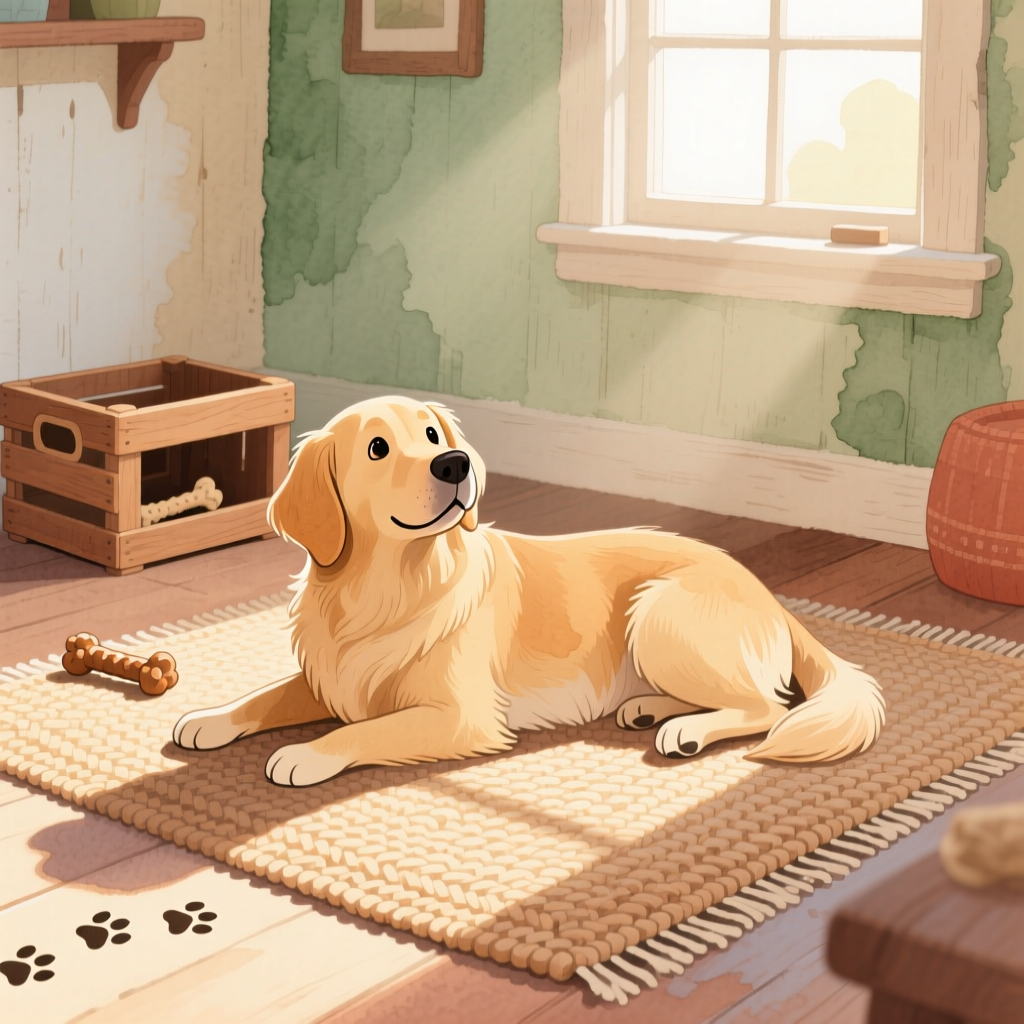
Before diving into the mechanics, it is crucial to understand what the place command actually is. Many owners confuse 'place' with 'stay,' but they serve entirely different purposes. When you tell a dog to 'stay,' you are asking them to freeze in their current position, like a paused video. When you give the 'place' cue, you are providing a destination. You are asking your dog to go to a specific mat, bed, or cot, settle down, and remain there until released.
This distinction is vital because 'place' promotes a state of relaxation rather than rigid tension. It is an active job that gives your dog a clear boundary and a safe space to retreat to when the environment becomes overwhelming. For high-energy breeds like Border Collies or Australian Shepherds, having a designated job like 'holding the place' provides immense mental stimulation and helps satisfy their need to work. Furthermore, mastering this skill is a cornerstone of broader basic obedience commands and sets the stage for advanced impulse control.
Choosing the Right Equipment and Location
Success with this command starts with selecting the right 'place.' While you can technically use any distinct object, having a dedicated, portable training mat makes the process significantly smoother. When choosing the right dog bed or mat for training, consider the following options:
- Raised Cots: Elevated beds provide a clear physical boundary. Dogs can easily feel when they are on or off the cot, which speeds up the learning process and keeps them off cold floors.
- Flat Training Mats: These are highly portable and can be rolled up and taken to restaurants, parks, or friends' houses, making them ideal for generalization.
- Distinct Textures: Choose a mat with a texture that contrasts with your home's flooring so your dog can easily differentiate the 'place' from the surrounding carpet or hardwood.
Location is equally important. During the initial learning phases, place the mat in a quiet area with minimal foot traffic. As your dog becomes more proficient, you can move the mat to high-traffic areas like the kitchen or the living room, allowing them to be part of the family action while maintaining their boundaries.
Step-by-Step Guide to Teaching the Place Command
Now that you have your equipment ready, it is time to start training. Remember to keep your sessions short, positive, and rewarding. Utilizing the best training treats will keep your dog motivated and focused on the task at hand.
Step 1: Luring and Capturing Interest
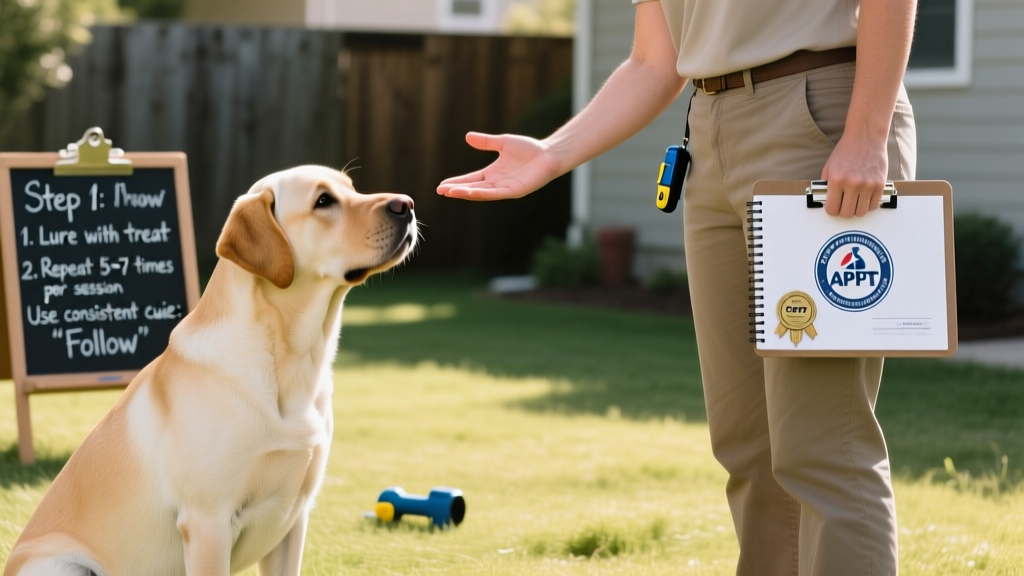
Begin with your dog on a leash to prevent them from wandering off. Stand near the mat with a handful of high-value treats. Toss a treat directly onto the center of the mat. When your dog steps onto the mat to eat the treat, immediately praise them. Repeat this several times until your dog eagerly steps onto the mat the moment they see you prepare a treat. You are building a positive association, teaching them that the mat is a magical spot where good things happen.
Step 2: Adding the Verbal Cue
Once your dog is reliably stepping onto the mat for the tossed treat, it is time to introduce the verbal cue. Just before you toss the treat or point to the mat, say your chosen word clearly. 'Place,' 'bed,' or 'mat' all work perfectly. Consistency is key, so ensure everyone in the household uses the exact same word. Say 'place,' point to the mat, and reward them the moment all four paws are on the fabric.
Step 3: Building Duration
This is where many trainers get stuck. To build duration, you must change how you deliver the rewards. Instead of tossing the treat onto the mat, you will now hand-feed the treats to your dog while they are standing or lying on the mat. Start by asking for just two seconds of stillness before delivering the treat. Gradually increase the time to five seconds, then ten, then thirty. If your dog breaks the position, simply reset them without scolding and try again with a shorter time requirement. Rewarding calm, relaxed behavior—such as sitting or lying down—will encourage them to settle rather than stand rigidly.
Step 4: Adding Distance
Once your dog can comfortably stay on the mat for a minute or two while you stand right next to them, you can begin adding distance. Take one single step back, wait a second, and step back in to reward. Slowly increase the distance, taking two steps back, then three. If your dog gets up, you have moved too far, too fast. Return to the mat, reset, and try a smaller distance. This phase requires immense time & patience, but it is critical for reliability.
Step 5: Proofing with Distractions
A dog that can hold their place in an empty room is only halfway trained. You must 'proof' the command against real-world distractions. Start with mild distractions, like dropping a toy on the floor a few feet away. If your dog stays on the mat, deliver a 'jackpot' reward (three or four treats at once). Gradually increase the difficulty by bouncing a ball, ringing the doorbell, or having a guest enter the room. This level of impulse control is incredibly beneficial for dogs struggling with separation anxiety or over-excitement.
Step 6: The Release Cue
Your dog needs to know when the job is over. Introduce a release word such as 'free,' 'okay,' or 'all done.' When you are ready to end the session, say your release word cheerfully, clap your hands, and encourage your dog to step off the mat. This clear communication prevents your dog from guessing when they are allowed to move and eliminates the frustration of ambiguous boundaries.
Real-Life Applications of the Place Command
Understanding how to apply the place command in daily life will solidify your dog's training and make your home significantly more peaceful. Here are a few scenarios where this command shines:
- The Dinner Party: When hosting guests, the kitchen and dining room can become chaotic. Sending your dog to their place keeps them safely out of the way of hot food, dropped glass, and guests who may not be comfortable around dogs. It allows them to watch the festivities without begging at the table.
- The Doorbell Dilemma: If your dog barks aggressively or tries to dart out the door when the doorbell rings, the place command is your best defense. Train your dog to run to their mat when the bell rings. Over time, the doorbell becomes the cue to go to their place, entirely eliminating the door-dashing behavior.
- Cooperative Care and Grooming: Using a portable mat for grooming, nail trimming, or vet visits gives your dog a familiar anchor in an unfamiliar or stressful environment. It provides a sense of security and predictability.
Pro Tips for Place Command Success
- Incorporate Chew Toys: Once your dog understands the basics, give them a long-lasting chew toy or a food-stuffed puzzle toy only when they are on their place. This reinforces the idea that the mat is the ultimate relaxation zone. Check out our guide on the best chew toys for dogs to find the perfect option.
- Use a Long Line: When practicing distance, clip a lightweight long line to your dog's collar. This prevents them from successfully breaking the command and wandering off, allowing you to gently guide them back if they make a mistake. Our leash training guide offers more insights on handling long lines effectively.
- Practice in Different Environments: Generalization is crucial. Dogs do not naturally assume that a rule in the living room applies to the kitchen or the backyard. Take your portable mat to different rooms, and eventually to outdoor environments like a park or a pet-friendly cafe patio.
- Reward the Calm: Do not just reward your dog for getting on the mat; reward them for the state of mind they exhibit while there. If your dog lets out a deep sigh, drops their head, or lies on their side, quietly slide a treat between their paws. You are rewarding the relaxation, not just the physical location.
Common Mistakes to Avoid During Training
Even experienced owners can stumble when teaching this skill. Avoid these common pitfalls to ensure a smooth training journey:
- Repeating the Cue: Saying 'place, place, place, place' teaches your dog that the command is just background noise. Say it once, clearly, and wait. If they do not respond, gently guide them to the mat and try again later.
- Using the Mat for Punishment: The place must always be a positive, safe haven. Never send your dog to their mat in anger or use it as a time-out zone for bad behavior. If the mat becomes associated with negative emotions, your dog will resist going to it.
- Moving Too Fast Through the 3 Ds: The three Ds of dog training are Duration, Distance, and Distraction. You must master them one at a time. Never add distance and distractions simultaneously. If you increase the distance, lower your expectation for duration and keep the environment quiet.
- Forgetting to Release: If you do not use a release cue, your dog will eventually decide on their own when the command is over, usually resulting in them breaking the stay and thinking they failed. Always formally release your dog to maintain the integrity of the command.
Frequently Asked Questions
How long does it take to teach the place command?
The timeline varies depending on your dog's age, breed, and previous training experience. Some dogs can grasp the basic concept in a single weekend of short, focused sessions, while others may take several weeks to build reliable duration and distance. Consistency is far more important than speed. Short, daily sessions of five to ten minutes will yield much better results than a single, exhausting hour-long session once a week.
Can I use a blanket or towel instead of a dog bed?
Yes, a distinct blanket or towel can work wonderfully, especially for travel. However, ensure it has a unique texture or color that stands out from your home's rugs and carpets. The more distinct the 'place' is from the surrounding environment, the easier it is for your dog to understand the physical boundary.
What should I do if my dog won't stay on the mat?
If your dog repeatedly breaks the command, you are likely asking for too much too soon. Take a step back in your training. Reduce the distance, decrease the duration, and eliminate distractions. Go back to basics by heavily rewarding them for simply standing on the mat for three seconds. Rebuild their confidence and understanding before pushing the boundaries again.
Is the place command the same as 'stay'?
No, they are fundamentally different. 'Stay' is an active restraint command where the dog must freeze in their exact current posture and location. 'Place' is a destination command. The dog is allowed to shift their weight, sit, stand, lie down, or even roll over, as long as all four paws remain on the designated mat. 'Place' is generally much easier for dogs to hold for long periods because it encourages a relaxed state of mind rather than rigid physical tension.
Can I train the place command with a hyperactive puppy?
Absolutely. In fact, hyperactive puppies are the ones who benefit the most from this training! Puppies often become overstimulated and do not know how to self-soothe. The place command acts as an 'off switch.' Start with incredibly short durations—just a few seconds—and use extremely high-value treats & rewards. Over time, the mat will become a sanctuary where your puppy learns to decompress and settle their busy mind.
Dr. Hannah Wickes
All our authors care for dogs every day — read more of their work on the authors page.