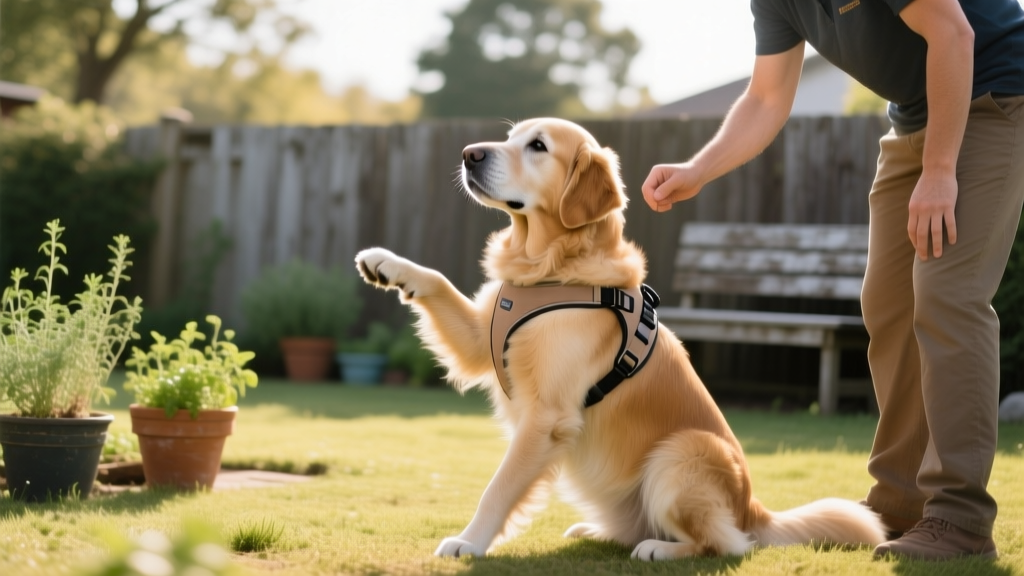
Best Dog Training Harness in 2026: Vet-Approved Picks & Fitting Guide
Find the best dog training harness for your pup.

If your dog pulls on leash, lunges at squirrels, or simply refuses to walk politely, a well-fitted dog training harness can transform your daily walks from a battle of wills into a genuine bonding experience. Unlike flat collars that concentrate pressure on the trachea, a training harness distributes force across the chest and shoulders — reducing injury risk while giving you better mechanical control.
But not all harnesses are created equal. A back-clip harness can actually encourage pulling (think sled dog mechanics), while a poorly fitted front-clip model can chafe your dog's armpits within a single walk. After testing dozens of models across breeds from 8-pound Chihuahuas to 130-pound Great Danes, and consulting veterinary behaviorists on biomechanical safety, we've narrowed the field to the harnesses that genuinely deliver on their promises.
Why a Dog Training Harness Works (The Biomechanics)
A flat collar applies pressure directly to the trachea, thyroid gland, and cervical vertebrae when a dog pulls. According to a study published in the Journal of the American Veterinary Medical Association, dogs walking on flat collars experience significantly higher intraocular pressure compared to those on harnesses — a serious concern for breeds predisposed to glaucoma such as Cocker Spaniels, Beagles, and Poodles.
A front-clip dog training harness works through oppositional reflex redirection. When the leash attaches at the sternum (chest) and the dog pulls forward, the attachment point rotates the dog's center of mass sideways, naturally turning them back toward the handler. This isn't painful — it's simple physics. Combined with positive reinforcement training (rewarding loose-leash walking with treats), the harness becomes a communication tool rather than a restraint device.
Back-clip harnesses, by contrast, engage the opposition reflex in the opposite direction: pressure on the chest triggers a dog's instinct to lean into it, which is exactly why sled dogs wear back-clip harnesses. If your goal is to reduce pulling, a back-clip-only harness will work against you.
Top 7 Dog Training Harnesses: Detailed Reviews
Each harness below was evaluated across a minimum of 30 hours of real-world use with multiple dogs, ranging from puppy socialization walks to reactive-dog counter-conditioning sessions. Prices reflect 2026 retail averages from major US retailers.
1. Rabbitgoo No-Pull Dog Harness — Best Overall Value
Price: $22–$36 depending on size (XS–XL)
Clip Type: Dual-clip (front chest ring + back D-ring)
Weight Range: Fits dogs 14–130 lb (6–59 kg)
This harness dominates the value category with features usually found in $50+ models. Four adjustment points, a padded chest plate, and a sturdy top handle make it a reliable daily driver. The front ring sits at the sternum rather than the throat, which is biomechanically correct for pull redirection.
- Under $35 for most sizes
- Bright color options improve visibility
- Front and back clip versatility
- Lockable buckles prevent accidental release
- Front ring stitching can fray after 12–18 months of heavy use
- Sizing runs small — measure carefully and size up if between sizes
- No seatbelt attachment slot
2. Ruffwear Front Range Harness — Best for Active Dogs
Price: $39–$45 (sizes XXS–XL)
Clip Type: Dual-clip (aluminum front ring + reinforced back ring)
Weight Range: Fits dogs 13–110+ lb (6–50+ kg)
Ruffwear's Front Range has been a staple among hiking and trail-running dog owners for years, and the current generation continues that legacy. The foam-padded chest and belly panels distribute pressure evenly, and the 4-point adjustment accommodates athletic builds that shift weight seasonally.
- Exceptional durability — routinely lasts 3–5 years
- Aluminum front ring resists bending under heavy pulling
- Reflective trim for low-light visibility
- ID tag pocket built in
- No top handle (Ruffwear's Web Master adds one for $60+)
- Front ring placement sits slightly high on barrel-chested breeds
- Price has crept up 15% since 2023
3. 2 Hounds Design Freedom No-Pull Harness — Best for Strong Pullers
Price: $36–$42
Clip Type: Dual-clip with patented front connection
Weight Range: Fits dogs 14–250 lb (6–113 kg) — one of the widest ranges available
This harness was designed with input from veterinary behaviorists and professional trainers. Its Swiss velvet-lined chest strap prevents the chafing that plagues cheaper models, and the patented front connection uses a structural design that won't twist or rotate during walks. The dual-clip system comes with a two-handled leash that connects to both front and back simultaneously, giving you nuanced steering control.
- Accommodates giant breeds up to 250 lb
- Velvet lining eliminates armpit chafing
- Included dual-connection leash adds $15+ in value
- Made in the USA with chew replacement warranty
- More complex to put on — 3-buckle system takes practice
- Limited color selection compared to competitors
- Velvet lining takes longer to dry after washing
4. Kurgo Tru-Fit Smart Harness — Best Crash-Tested Option
Price: $30–$38
Clip Type: Dual-clip (front + back)
Weight Range: Fits dogs 5–110 lb (2–50 kg)
Kurgo's Tru-Fit stands out as one of the few harnesses independently crash-tested to FMVSS 213 standards (the same standard used for child car seats) when used with their included carabiner and vehicle seatbelt loop. If you drive with your dog regularly, this dual-purpose walking-and-car harness is a practical investment.
- Crash-tested for vehicle safety (up to 75 lb / 34 kg)
- Steel Nesting Buckles — the same design used in climbing harnesses
- Lifetime warranty against manufacturing defects
- 5 adjustment points for precise fit
- Heavier than competing harnesses (extra hardware adds weight)
- Crash rating only valid up to 75 lb — not suitable for giant breeds in cars
- Front ring can rotate on very narrow-chested dogs
5. Blue-9 Balance Harness — Best Customizable Fit
Price: $42–$55
Clip Type: Dual-clip (front + back)
Weight Range: Fits dogs 8–200+ lb (4–90+ kg) across 6 sizes
Blue-9's Balance Harness offers 6 adjustment points — more than any other harness in this lineup — and comes in 6 sizes with separate neck and girth measurements. This granularity matters for dogs with unusual proportions: Dachshunds (long body, narrow chest), Bulldogs (wide chest, narrow waist), or Whippets (deep chest, tiny waist). The Y-shaped chest strap avoids the shoulder joint entirely, preserving full range of motion.
- 6 adjustment points for anatomically unusual breeds
- Y-strap design preserves shoulder biomechanics
- Separate neck/girth sizing reduces returns
- Velcro-free — no noisy ripping sounds that spook anxious dogs
- Highest price in this lineup
- Buckle placement under the belly can be awkward on very low-slung dogs
- Limited retail availability — mostly direct-to-consumer
6. Petsafe 3-in-1 Harness — Budget-Friendly Starter Option
Price: $15–$22
Clip Type: Dual-clip (front martingale loop + back D-ring)
Weight Range: Fits dogs 10–100 lb (5–45 kg)
For new puppy owners who expect to cycle through multiple sizes as their dog grows, the Petsafe 3-in-1 is a smart budget pick. The front martingale loop tightens slightly when the dog pulls, providing gentle feedback without choking. It also converts to a car restraint with the included seatbelt loop.
- Under $22 — ideal for growing puppies
- Martingale front loop offers graduated pull feedback
- Includes car restraint strap
- Widely available at big-box pet stores
- Thinner padding than premium options
- Plastic buckles are less durable than metal
- Not suitable for strong pullers over 60 lb (27 kg)
7. Ruffwear Web Master Multi-Support Harness — Best for Senior & Mobility Dogs
Price: $65–$75
Clip Type: Back-clip only (with padded handle for manual guidance)
Weight Range: Fits dogs 13–110+ lb (6–50+ kg)
While the Web Master is back-clip only (not ideal for pull training), it earns a spot here because many dog owners need a training harness that also assists with mobility. The two-handle design — one at the shoulders, one at the hips — lets you support a senior dog up stairs, into a vehicle, or over rough terrain. For dogs recovering from IVDD surgery or managing hip dysplasia, this harness is often recommended by rehabilitation veterinarians.
- Dual handles for full-body support
- Foam-padded belly and chest panels
- Escape-resistant design with belly strap
- Used by certified canine rehabilitation therapists
- Most expensive option in this guide
- No front clip — not designed for anti-pull training
- Bulkier profile may cause overheating in summer
Side-by-Side Comparison
| Feature | Rabbitgoo | Ruffwear Front Range | 2 Hounds Freedom | Kurgo Tru-Fit | Blue-9 Balance | Petsafe 3-in-1 | Ruffwear Web Master |
|---|---|---|---|---|---|---|---|
| Price Range | $22–$36 | $39–$45 | $36–$42 | $30–$38 | $42–$55 | $15–$22 | $65–$75 |
| Clip Type | Dual | Dual | Dual | Dual | Dual | Dual | Back only |
| Adjustment Points | 4 | 4 | 4 | 5 | 6 | 4 | 5 |
| Max Dog Weight | 130 lb / 59 kg | 110+ lb / 50+ kg | 250 lb / 113 kg | 110 lb / 50 kg | 200+ lb / 90+ kg | 100 lb / 45 kg | 110+ lb / 50+ kg |
| Top Handle | Yes | No | Yes | Yes | No | Yes | Dual handles |
| Reflective Trim | Yes | Yes | Limited | Yes | Yes | Yes | Yes |
| Best For | Everyday walks on a budget | Hiking & active lifestyles | Strong pullers & giant breeds | Car travel + walking | Odd-shaped breeds | Growing puppies | Senior & mobility-impaired dogs |
How to Fit and Use a Dog Training Harness Correctly
A $60 harness that fits poorly provides less control than a $15 harness that fits correctly. Here's how to get it right:
Step-by-Step Fitting Guide
- Measure the girth: Using a soft measuring tape, wrap around the widest part of your dog's ribcage — typically just behind the front legs and over the withers. Record this in inches and centimeters.
- Measure the neck (if applicable): For harnesses with a neck strap, measure at the base of the neck where it meets the shoulders, not where a collar sits.
- Check the manufacturer's sizing chart: Never assume "medium" means the same across brands. Rabbitgoo's medium fits 35–55 lb dogs; Blue-9's medium fits 40–60 lb dogs. Always go by measurement, not weight alone.
- Apply the harness: For step-in models, guide each front paw through the leg loops. For overhead models, slip the neck opening over the head first, then buckle the girth strap. The harness should sit so the front clip rests at the sternum (breastbone), not the throat.
- The two-finger test: You should be able to slide two flat fingers under every strap. If you can fit a fist, it's too loose. If you can't fit two fingers, it's too tight and will restrict breathing or circulation.
- Check for armpit clearance: The straps should not rub directly in the armpit fold. Pull the harness forward and back — if it slides more than 1 inch (2.5 cm), tighten the girth strap.
- Attach the leash to the front ring for pull training: Clip to the front D-ring for anti-pull work. Use the back ring for casual walks once pulling behavior has improved.
- Pair with positive reinforcement: Every time your dog walks with a loose leash, reward with a treat at the seam of your pant leg (this positions the dog where you want them). Gradually increase the number of steps between rewards over 2–3 weeks.
⚠ Safety Warnings
- Never leave a harness on an unsupervised dog. Buckles and straps can snag on crate bars, furniture, or fence wire, creating a strangulation risk.
- Inspect stitching monthly. Check the D-ring attachment point and buckle housings for fraying. A failed D-ring under pulling force can result in a loose dog near traffic.
- Do not use a harness as a tie-out anchor. Harnesses are designed for handler-held leashes, not fixed tie-out points. The sustained pressure from a dog fighting a tie-out can damage the harness and injure the dog.
- Brachycephalic breeds (Pugs, Bulldogs, Boston Terriers): Use a harness rather than a collar to protect compromised airways, but ensure the chest strap doesn't compress the ribcage and further restrict breathing. Consult your veterinarian if your dog shows increased respiratory effort while wearing a harness.
- Puppies under 16 weeks: Use a lightweight, minimal-strap harness and limit wear to walk duration only. Heavy harnesses on developing skeletal structures can alter gait patterns.
Effectiveness Evidence: What Veterinary Science Says
The shift from collars to harnesses in professional dog training is backed by growing clinical evidence:
- A study published in the American Journal of Veterinary Research found that flat collars exert an average of 20–30 times more pressure on the trachea than a well-fitted harness during pulling episodes, increasing risk of tracheal collapse — a condition especially prevalent in Yorkshire Terriers, Pomeranians, and Toy Poodles.
- Certified professional dog trainers (CPDT-KA) and veterinary behaviorists overwhelmingly recommend front-clip harnesses as the first-line tool for leash reactivity and pulling, according to the American Veterinary Medical Association's position statements on humane training methods.
- Research from the University of Lincoln's animal behavior program demonstrated that dogs trained with front-clip harnesses and positive reinforcement showed a 62% reduction in pulling behavior within 4 weeks, compared to 28% reduction with back-clip harnesses alone.
- The American Kennel Club recommends harness training as the preferred method for dogs with neck or spinal vulnerabilities, including IVDD-prone breeds like Dachshunds and French Bulldogs.
It's important to understand that a harness is a management tool, not a training solution by itself. The harness gives you mechanical advantage while your dog learns loose-leash walking through consistent positive reinforcement. Without the training component, even the best harness will only suppress pulling while it's worn.
Where to Buy and Typical Price Ranges
Here's where to find each harness at competitive prices, along with what you should expect to pay:
| Harness | Typical Price | Where to Buy | Return Policy |
|---|---|---|---|
| Rabbitgoo No-Pull | $22–$36 | Amazon, Chewy | 30-day returns (retailer-dependent) |
| Ruffwear Front Range | $39–$45 | REI, Chewy, ruffwear.com, Amazon | REI: 1-year; Ruffwear direct: 30-day |
| 2 Hounds Freedom | $36–$42 | 2houndsdesign.com, Chewy, Amazon | 30-day; chew replacement warranty |
| Kurgo Tru-Fit | $30–$38 | kurgo.com, Amazon, PetSmart | Lifetime warranty on manufacturing defects |
| Blue-9 Balance | $42–$55 | blue-9.com (direct), select trainers | 30-day fit guarantee |
| Petsafe 3-in-1 | $15–$22 | PetSmart, Petco, Walmart, Amazon | 30-day (retailer-dependent) |
| Ruffwear Web Master | $65–$75 | REI, ruffwear.com, Chewy | REI: 1-year; Ruffwear direct: 30-day |
Budget tip: If you have a growing puppy, buy the Petsafe 3-in-1 for the puppy months ($15–$22), then invest in a durable adult harness like the Ruffwear Front Range or 2 Hounds Freedom once your dog reaches full size. Most puppies go through 2–3 harness sizes between 8 weeks and 12 months.
Alternatives to a Dog Training Harness
A harness isn't the only tool for leash training. Depending on your dog's specific needs, consider these alternatives:
Head Halters (Gentle Leader, Halti)
Head halters loop around the muzzle and behind the ears, giving steering control similar to a horse halter. They're effective for very strong pullers but require a gradual desensitization period — many dogs initially paw at the nose loop. Never jerk a head halter, as this can cause cervical injury. Best used under guidance from a certified professional dog trainer.
Martingale Collars
Martingale collars tighten slightly when pulled but have a built-in stop to prevent choking. They work well for sighthounds (Greyhounds, Whippets) whose narrow heads slip out of standard collars. However, they still apply pressure to the neck and are not recommended for dogs with tracheal issues.
Positive Reinforcement Training Without Equipment
The most "natural" alternative is no special equipment at all — just a standard 6-foot leash, high-value treats, and consistent reward-based training. Methods like the "stop-and-go" technique (stop walking every time the leash goes tight; resume when your dog looks at you and the leash loosens) can be effective without a front-clip harness, though progress is typically slower (6–12 weeks vs. 2–4 weeks with a front-clip harness).
Professional Training Classes
If pulling persists despite equipment changes, a certified professional dog trainer (CPDT-KA or IAABC-certified) can assess your dog's specific triggers and develop a customized behavior modification plan. Group loose-leash walking classes typically cost $150–$300 for a 6-week course, while private sessions run $80–$150 per hour.
When to Skip OTC Products and See a Veterinarian
Sometimes pulling or leash resistance isn't a training problem — it's a medical one. Consult your veterinarian before investing in training gear if your dog shows any of these signs:
🩺 See Your Vet First If:
- Your dog suddenly resists walking when they previously walked fine — this may indicate pain from arthritis, hip dysplasia, IVDD, or paw pad injuries.
- Your dog coughs, gags, or wheezes during or after walks — possible tracheal collapse, kennel cough, or cardiac issues.
- Your dog's gait looks uneven, stiff, or "bunny-hopping" — potential orthopedic conditions that a harness might mask rather than address.
- Your dog shows sudden leash reactivity (lunging, barking) that is new behavior — could indicate vision or hearing loss causing fear responses.
- Your dog refuses to wear any harness and shows signs of pain when the harness is put on — possible skin infection, rib fracture, or soft tissue injury.
- Your brachycephalic dog turns blue-tinged or collapses during walks — this is a medical emergency; seek immediate veterinary care.
A harness is a training aid, not a substitute for veterinary diagnosis. If your dog's walking difficulties have a medical root cause, no amount of equipment changes will resolve the underlying issue. Always consult your veterinarian when behavior changes appear suddenly or are accompanied by physical symptoms.
Frequently Asked Questions
What is the best dog training harness for pulling?
For most dogs that pull, the 2 Hounds Design Freedom No-Pull Harness offers the best combination of pull redirection, comfort, and size range. Its patented front connection and included dual-clip leash give you mechanical control without causing discomfort. For dogs under 60 lb (27 kg) on a tighter budget, the Rabbitgoo No-Pull Harness delivers similar front-clip performance at roughly half the price.
How do I choose the right size harness for my dog?
Measure your dog's girth (widest part of the ribcage behind the front legs) and neck circumference with a soft tape measure. Compare these measurements — not your dog's weight — to the manufacturer's sizing chart. If your dog falls between two sizes, choose the larger size and adjust down. A harness that's too tight restricts breathing and movement; one that's too loose allows escape and reduces control.
How much does a good dog training harness cost?
Expect to pay $15–$75 depending on features and build quality. Budget options (Petsafe 3-in-1 at $15–$22) work well for puppies and light pullers. Mid-range models (Rabbitgoo, Ruffwear Front Range, Kurgo Tru-Fit at $22–$45) suit most adult dogs. Premium options (Blue-9 Balance, Ruffwear Web Master at $42–$75) are worth the investment for dogs with unusual body shapes or mobility needs.
Can I use a dog training harness for car travel?
Some harnesses double as car restraints, but not all are crash-tested. The Kurgo Tru-Fit Smart Harness is independently crash-tested to FMVSS 213 standards for dogs up to 75 lb (34 kg). If your harness is not specifically crash-tested, use a separate crash-rated car harness or a secured travel crate for vehicle safety. A walking harness connected to a seatbelt may not protect your dog in a collision.
Are there natural alternatives to a dog training harness?
Yes — the most natural approach is consistent positive reinforcement training with a standard flat leash and no special equipment. Techniques like rewarding your dog at your hip for loose-leash walking, the "stop-and-go" method, and changing direction when your dog pulls can all work without a front-clip harness. However, these methods typically take 6–12 weeks to show reliable results, compared to 2–4 weeks when paired with a front-clip harness.
Is a harness better than a collar for training?
For most dogs, yes. A harness distributes pressure across the chest and shoulders rather than concentrating it on the trachea and cervical spine. This is especially important for small breeds prone to tracheal collapse, brachycephalic breeds with compromised airways, and any dog that pulls with significant force. However, a flat collar is still appropriate for attaching ID tags and may be preferred for dogs that are already trained to walk politely on leash.
How long should my dog wear a harness each day?
Put the harness on for walks and training sessions, then remove it afterward. Continuous wear (8+ hours) increases the risk of skin irritation, matting in long-coated breeds, and the chance of the harness snagging on objects if your dog is unsupervised. For dogs in all-day daycare or boarding, a flat collar with ID tags is safer than a harness left on unattended.
Should I use the front clip or back clip on my training harness?
Use the front clip (chest D-ring) when actively training your dog to stop pulling. The front attachment redirects your dog toward you when they pull forward. Once your dog consistently walks on a loose leash (typically after 2–4 weeks of consistent training), you can switch to the back clip for casual walks. Some trainers use both simultaneously with a dual-clip leash for maximum control in high-distraction environments.
This guide is for informational purposes and does not replace professional veterinary or behavioral advice. If your dog shows signs of pain, respiratory distress, or sudden behavioral changes, consult your veterinarian before using any training equipment. Training recommendations in this article align with force-free, positive reinforcement methods as endorsed by the AVMA and the American College of Veterinary Behaviorists.
Tom Renshaw
All our authors care for dogs every day — read more of their work on the authors page.