Master Dog Training Techniques at Home: A Comprehensive Guide
Discover effective dog training techniques at home. Learn step-by-step methods, expert tips, and common mistakes to avoid for a well-behaved pup.
Bringing a new dog into your life is an exciting journey filled with companionship, joy, and unforgettable memories. However, it also comes with the significant responsibility of guiding your canine companion through the rules of living in a human world. While professional classes are a wonderful resource, mastering dog training techniques at home is not only entirely possible but also highly beneficial. Training in your dog's primary environment helps them generalize good behaviors to the place where they spend most of their time, fostering a deeper bond built on trust, communication, and mutual respect.
Whether you are raising a high-energy Border Collie who needs a job to do, or a gentle Golden Retriever who just wants to please you, the foundational principles of canine psychology remain the same. This comprehensive guide will walk you through effective, evergreen dog training techniques at home, providing step-by-step instructions, expert tips, and solutions to common hurdles. By dedicating time & patience to these exercises, you will transform your furry friend into a polite, confident, and well-adjusted family member.
Setting Up Your Home Training Environment
Before you issue your first cue, it is crucial to set the stage for success. Dogs are highly sensitive to their surroundings, and a chaotic environment can make learning nearly impossible. Creating a dedicated training space in your home is the first step toward effective communication.
Minimizing Distractions
When teaching a new behavior, start in a quiet room with minimal foot traffic. Turn off the television, put away other pets, and ask family members to give you some peace & quiet. As your dog becomes more proficient, you can gradually introduce distractions, moving to the living room, then the backyard, and eventually public spaces. This process, known as proofing, ensures your dog listens to you regardless of the environment.
Gathering Your Training Toolkit
Having the right tools on hand prevents interruptions during your session. Your home training kit should include:
- High-Value Treats: Soft, smelly treats like boiled chicken, cheese, or commercial training bites that your dog loves.
- Treat Pouch: A wearable pouch allows for rapid delivery of rewards, which is critical for marking the exact moment your dog performs the desired behavior.
- Clicker: A small mechanical device that makes a distinct clicking sound, used to mark precise behaviors in clicker training.
- Standard Leash & Collar/Harness: A 4-to-6-foot leather or nylon leash. Avoid retractable leashes during training, as they teach dogs to pull and offer poor control.
- Non-Slip Mat: A designated training mat or rug helps dogs who struggle with slipping on hardwood or tile floors, allowing them to focus on the task rather than their balance.
Essential Dog Training Techniques at Home
The core of any well-behaved dog lies in mastering a few fundamental commands. These cues are not just party tricks; they are vital tools for safety, management, and mental stimulation. Below are step-by-step instructions for the most critical commands you can teach at home.
1. Teaching a Reliable 'Sit'
The 'Sit' command is often considered the 'please' of the dog world. It is an incompatible behavior with jumping, making it an excellent tool for managing overly enthusiastic greetings.
- The Lure: Hold a high-value treat close to your dog's nose. Slowly move your hand up and slightly back over their head. As their nose follows the treat, their bottom will naturally lower to the ground.
- The Mark & Reward: The exact second their hindquarters touch the floor, use your clicker or a verbal marker like 'Yes!' and immediately give them the treat.
- Adding the Cue: Once your dog is reliably following the lure, begin saying the word 'Sit' just before you move your hand.
- Fading the Lure: Gradually make your hand motion smaller until you are only using an empty hand gesture, followed eventually by just the verbal cue. Reward heavily from your treat pouch.
2. Mastering the 'Stay' Command
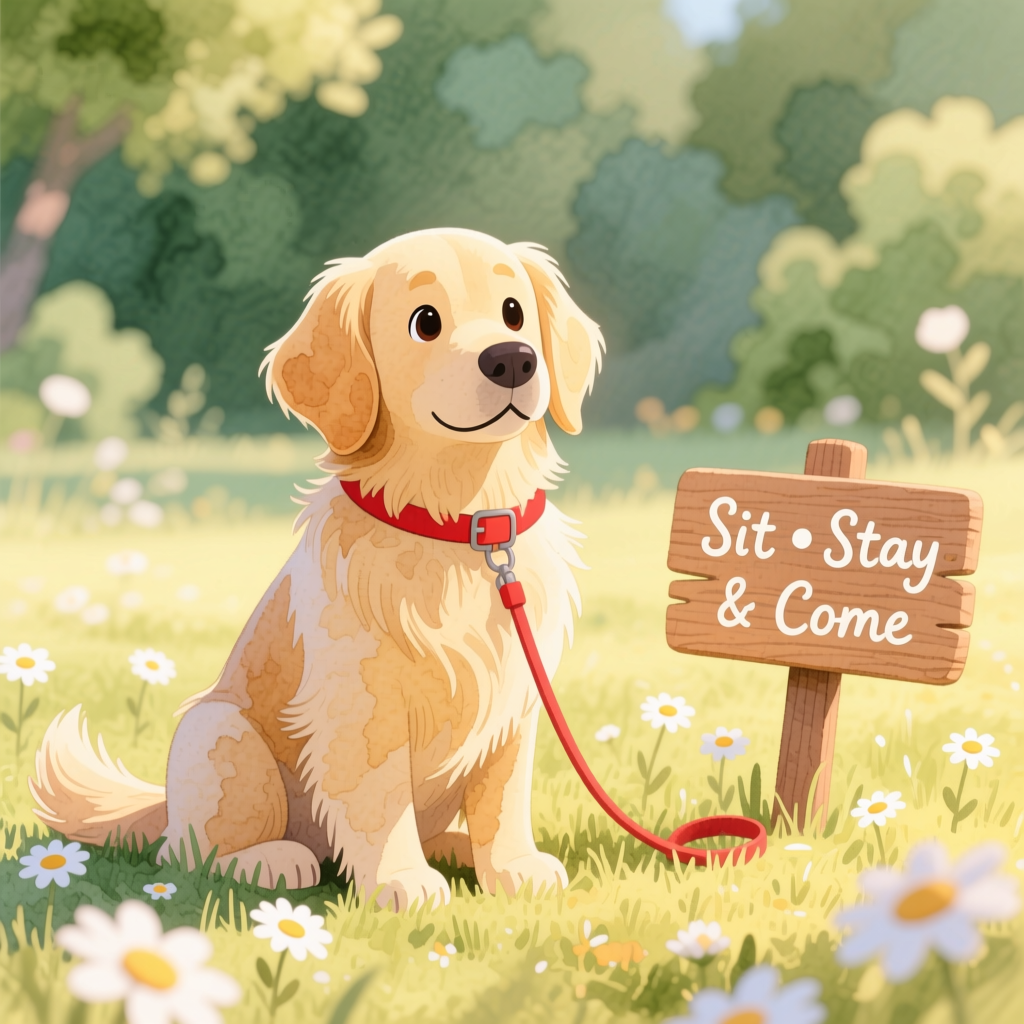
'Stay' requires impulse control and is built upon the three Ds: Duration, Distance, and Distraction. Never work on more than one 'D' at a time.
- Duration: Ask your dog to sit. Hold your hand out like a stop sign and say 'Stay'. Wait just one second, mark 'Yes!', and reward. Gradually increase the time by one-second increments before marking and rewarding.
- Distance: Once your dog can hold a stay for 10 seconds, take one step back. Immediately return, mark, and reward. Slowly increase the number of steps you take away.
- Distraction: Only add distractions (like bouncing a ball or having someone walk by) once your dog has mastered duration and distance in a quiet room.
3. The Life-Saving 'Come' (Recall)
A reliable recall can save your dog's life. It should always be associated with the best things in the world, never with punishment or the end of playtime.
- Start Close: With your dog on a leash, take just a few steps away. Say their name followed by 'Come!' in an enthusiastic, happy tone.
- Encourage Movement: Pat your legs, crouch down, and make yourself inviting. You can even run backward a few steps to trigger their prey drive to chase you.
- The Jackpot Reward: When they reach you, grab their collar gently, mark 'Yes!', and give a 'jackpot' reward (3-4 treats in a row) along with enthusiastic praise.
- Practice Indoors: Play 'recall ping-pong' with a family member in the hallway or living room, calling the dog back and forth and rewarding heavily each time.
4. Impulse Control with 'Leave It'
'Leave It' teaches your dog to ignore tempting but potentially dangerous items, from dropped medication to toxic foods on a walk.
- The Closed Fist: Place a low-value treat in your hand and close your fist. Present it to your dog. They will likely sniff, lick, or paw at it. Ignore this behavior.
- The Moment of Choice: The second your dog pulls their nose away or stops trying to get the treat, mark 'Yes!' and reward them with a different, higher-value treat from your other hand.
- Adding the Cue: Once they consistently pull away from the closed fist, say 'Leave It' right before presenting your hand.
- Progression: Move to an open palm, then a treat on the floor covered by your hand, and finally an uncovered treat on the floor. Always reward from your hand, never the item on the floor.
Integrating Training into Daily Routines
One of the most effective dog training techniques at home is realizing that training does not only happen during formal 15-minute sessions. Dogs are constantly learning from their environment and your reactions. By integrating training into your daily routine, you establish consistent boundaries and leadership without requiring extra time in your busy schedule.
Mealtime Manners
Food is a powerful motivator. Instead of simply placing the bowl on the floor, ask your dog to 'Sit' and 'Stay' before every meal. This reinforces impulse control and teaches them that calm behavior yields the resources they desire. If your dog struggles with food aggression or resource guarding, consult a professional behaviorist, but for most dogs, this simple routine builds immense respect.
Doorway Etiquette
Dashing out the front door is a common issue that can lead to a lost dog. Implement a rule that your dog must sit and wait while you open the door. If they break the sit, the door closes immediately. Repeat this until they remain seated while the door is fully open. This practice pairs perfectly with the skills learned in our leash walking techniques guide, ensuring your dog does not pull you out the door the moment it opens.
The 'Nothing in Life is Free' Protocol
This philosophy dictates that your dog must perform a known command to earn anything they value. Want to go outside? Sit. Want a belly rub? Sit. Want a chew toy? Leave it, then sit. This protocol subtly reinforces your role as the provider of good things and keeps your dog's mind sharp throughout the day.
Pro Tips for Maximizing Home Training Success
Even with the best step-by-step instructions, the nuances of how you handle a session can make or break your progress. Keep these expert tips in mind to ensure your home training is as effective as possible.
- Keep Sessions Short & Sweet: Dogs have the attention span of a toddler. Aim for 3 to 5-minute sessions, 2 to 3 times a day, rather than one grueling hour-long session. This prevents frustration and keeps the dog eager for more.
- End on a High Note: Always finish your training session with a command your dog knows perfectly and reward them generously. This leaves them with a positive association regarding training, ensuring they are excited for the next session.
- Understand Canine Body Language: Learn to read your dog's stress signals. Yawning, lip licking, whale eye (showing the whites of their eyes), and shaking off are signs that your dog is overwhelmed. If you see these, take a break, lower your criteria, and make the next step easier.
- Manage the Environment: If you are struggling with unwanted behaviors like counter-surfing or chewing shoes, management is your best friend. Use baby gates, keep counters clear, and store shoes in closets while your dog is learning the rules. For more on managing destructive habits, check out our guide on how to stop excessive barking and other nuisance behaviors.
Common Mistakes to Avoid During Home Training
When training without a professional instructor present, it is easy to fall into bad habits that can inadvertently reinforce the very behaviors you are trying to eliminate. Be mindful of these common pitfalls.
1. Repeating the Cue
Saying 'Sit, sit, sit, sit' teaches your dog that the command is actually 'sitsitsitsit' and that they do not need to respond the first time. Give the cue once. If your dog does not respond, wait a few seconds, reset their position by taking a step, and try again, perhaps using a lure to help them understand what is expected.
2. Inconsistent Rules Among Family Members
If you do not allow your Labrador Retriever on the couch, but your partner secretly lets them up when you are not home, the dog will become confused and the rule will fail. Hold a family meeting to agree on the rules, the specific verbal cues used, and the consequences for breaking them. Consistency is the bedrock of canine learning.
3. Punishing After the Fact
Dogs live entirely in the present moment. If you come home to find a chewed-up pillow and scold your dog, they do not connect your anger to the pillow they destroyed three hours ago. They only learn that your arrival home is unpredictable and scary. Instead of punishment, focus on managing the environment (e.g., using a crate or a safe playpen) when you cannot supervise them. For foundational confinement skills, review our crate training basics guide.
4. Training When Frustrated
Dogs are incredibly empathetic and can sense human frustration through changes in breathing, muscle tension, and tone of voice. If you find yourself getting angry because your German Shepherd is not grasping a new concept, end the session immediately. Take a deep breath, play a game of tug, and try again tomorrow.
Frequently Asked Questions (FAQ)
How long should daily training sessions be?
For most dogs, especially puppies or those learning a brand-new behavior, sessions should be kept incredibly short—around 3 to 5 minutes. You can repeat these micro-sessions 2 to 4 times throughout the day. Short, frequent sessions prevent mental fatigue and keep the learning process fun and engaging. If your dog starts to wander off or lose focus, the session has gone on too long.
What are the best treats for home dog training?
The best treats are small, soft, and highly aromatic. You want treats that your dog can swallow quickly without needing to chew extensively, which breaks the flow of the training. Excellent options include tiny pieces of boiled chicken breast, low-sodium hot dogs, string cheese, or commercial freeze-dried liver treats. Remember to factor these treats into your dog's daily caloric intake to prevent weight gain.
Can I train an older dog at home, or just puppies?
The old adage 'you can't teach an old dog new tricks' is entirely false. Older dogs can absolutely be trained at home, and in some ways, it is easier because they have longer attention spans than puppies. However, older dogs may have ingrained bad habits or physical limitations (like arthritis) that require you to adapt your training techniques. For example, if your senior dog struggles to sit on hard floors, teach them to 'down' on a soft mat instead.
How do I know if I need to hire a professional dog trainer?
While basic obedience and manners can easily be taught at home, certain behavioral issues require professional intervention. If your dog displays aggression toward humans or other animals, severe resource guarding, extreme separation anxiety, or fear-based reactivity, it is time to seek help from a certified professional dog trainer or a veterinary behaviorist. Attempting to fix severe behavioral issues without expert guidance can inadvertently make the problem worse.
What is the best age to start training a puppy at home?
You can and should start training your puppy the moment they come home, which is typically around 8 weeks of age. Puppies are constantly learning from their environment. Early training should focus on socialization, handling exercises, name recognition, and basic foundation skills like puppy potty training. Keep expectations age-appropriate; a 10-week-old puppy will not have the bladder control or impulse control of an adult dog, so patience and positive reinforcement are key.
Conclusion
Mastering dog training techniques at home is a rewarding endeavor that pays dividends for the lifetime of your pet. By establishing a positive, distraction-free environment, utilizing high-value rewards, and maintaining unwavering consistency, you empower your dog to make good choices. Remember that training is not a destination but an ongoing conversation between you and your canine companion. Celebrate the small victories, remain patient through the setbacks, and enjoy the incredible bond that blossoms when you and your dog learn to speak the same language. With dedication and love, your home will become the ultimate classroom for a happy, well-behaved dog.
Priya Sutaria
All our authors care for dogs every day — read more of their work on the authors page.