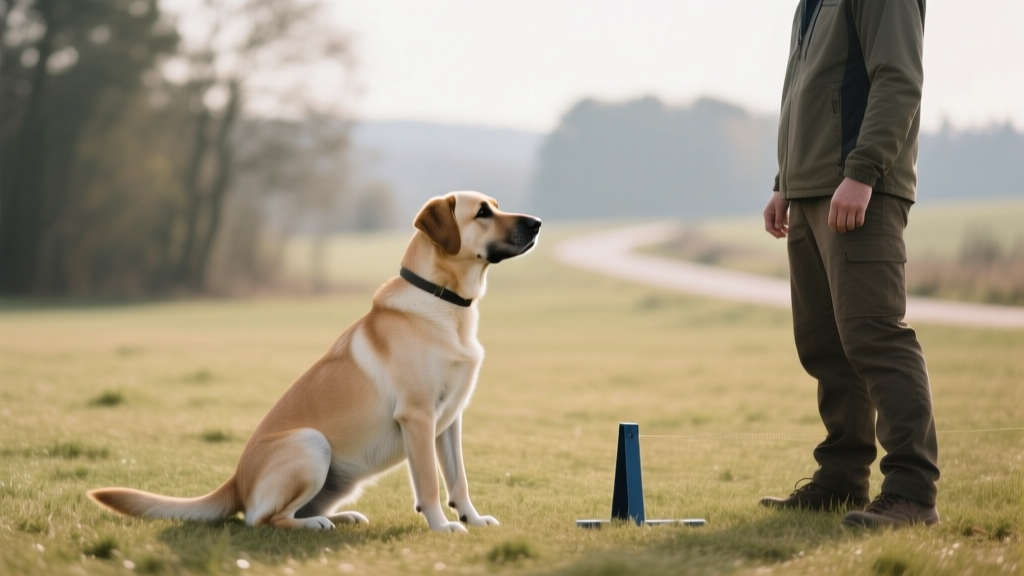
Best Electric Dog Fence Systems 2026: Vet-Reviewed Buyer's Guide
Compare the best electric dog fence systems for 2026 with expert buying criteria, safety tips, pricing, and training guidance from canine behavior specialists.

How Electric Dog Fences Actually Work
An electric dog fence — more accurately called an invisible or underground containment system — creates an invisible boundary using a buried wire loop connected to a radio transmitter. Your dog wears a receiver collar that detects the signal as they approach the boundary line.
The typical sequence works like this: the collar emits a warning beep when your dog enters a "warning zone" (usually 3-6 feet from the boundary). If the dog continues forward into the "correction zone," the collar delivers a static pulse, vibration, or tone. The goal is for your dog to learn to retreat at the warning beep alone, making the physical correction unnecessary after proper training.
According to the American Kennel Club, these systems work best as part of a structured training program — not as a set-and-forget solution. Dogs left to figure it out alone often develop barrier frustration, fear-based reactivity, or learn to tolerate the correction to chase prey or greet other dogs on the other side.
⚠️ Important Safety Considerations
- Not for aggressive dogs: Dogs with a history of aggression toward people or other animals should not use static correction fences — the correction can escalate redirected aggression
- Age minimum: Most veterinary behaviorists recommend waiting until at least 6 months of age, when cognitive development supports associative learning
- Never leave dogs unsupervised for extended periods: An invisible fence does not prevent other animals, people, or vehicles from entering your yard
- Lightning protection: Install a surge protector on the transmitter — lightning strikes on buried wire can destroy the unit and injure nearby dogs
- Collar fit check: You should fit two fingers between the contact points and your dog's skin; check weekly for pressure sores or hair loss
- Not a substitute for physical fencing for high-prey-drive breeds: Huskies, Greyhounds, and terriers often run through the correction zone when triggered by prey
Top Electric Dog Fence Systems Compared
The following systems represent the strongest options across different property sizes, dog temperaments, and budgets as of early 2026. Pricing reflects current retail ranges from major pet retailers.
1. PetSafe Stubborn Dog In-Ground Fence (PIG00-10777)
Best for: Large, strong-willed dogs over 30 lb who need higher correction levels
Price range: $250–$320 (base kit, 1/3 acre coverage)
Key features: 5 progressively stronger correction levels plus tone-only mode; covers up to 10 acres with additional wire; collar fits dogs 8 lb+; waterproof receiver; compatible with PetSafe's wireless add-on systems.
- Highest correction range in its class — effective on thick-coated breeds
- Long contact points included for double-coated dogs
- Wide collar compatibility across PetSafe ecosystem
- Replaceable RFA-67 battery widely available ($6–$8 per cell)
- Uses disposable batteries, not rechargeable
- Included 20-gauge wire is thin — upgrade to 14-gauge recommended ($40–$60 for 500 ft)
- Collar is bulky for dogs under 20 lb
- No wire break alarm on transmitter
2. SportDOG Brand In-Ground Fence System (SDF-100C)
Best for: Large rural properties up to 100 acres; hunting and sporting breeds
Price range: $300–$380 (base kit, 1 1/3 acres included)
Key features: Covers up to 100 acres with additional wire and flags; 4 correction levels plus tone and vibration; collar fits dogs 10 lb+ (8 lb with slim-fit collar add-on); surge protector built into transmitter; anti-linger feature prevents dogs from sitting in the warning zone.
- Massive coverage area — best-in-class for rural acreage
- Built-in lightning protection saves $30–$50 on separate surge suppressor
- Vibration option works well for hearing-impaired dogs
- Collar submersible to 25 feet (true waterproof, not just splash-proof)
- Higher price point for full setup on large properties
- Heavier collar unit (3.2 oz) may bother toy breeds
- Instruction manual is dense — first-time owners may need supplemental training videos
- Replacement collars are expensive ($130–$150 each)
3. PetSafe Wireless Pet Containment System (PIF-300)
Best for: Renters, temporary setups, and small-to-medium yards up to 1/2 acre
Price range: $200–$280
Key features: No buried wire — transmitter creates a circular boundary up to 90 feet in radius (1/2 acre); 5 correction levels plus tone-only; portable — set up in under 2 hours; collar fits dogs 8 lb+; boundary width adjustable from 1 to 8 feet.
- Zero installation labor — no trenching or wire burial
- Ideal for renters who can't modify the property
- Takes the system with you when you move
- Consistent circular boundary is easier for dogs to learn than irregular wire layouts
- Limited to circular shape — can't create custom boundary around garden beds or pools
- Signal disrupted by metal roofing, thick masonry walls, or large metal objects
- Not suitable for properties over 1/2 acre
- Boundary can shift slightly (1-3 feet) due to interference, confusing trained dogs
4. Extreme Dog Fence Pro Grade (2nd Generation)
Best for: Owners who want a professional-grade wire system without professional installation costs
Price range: $280–$350 (covers up to 10 acres with included wire)
Key features: 14-gauge wire included (not the flimsy 20-gauge found in most kits); 7 correction levels; collar fits dogs 8 lb+; digital transmitter with wire break alarm; waterproof to 10 feet; covers up to 10 acres; made in the USA.
- Heavy-duty 14-gauge wire eliminates the most common failure point
- Wire break alarm on transmitter — you'll know immediately if boundary is compromised
- 7 correction levels offer finer granularity than most competitors
- Rechargeable collar battery lasts 30-60 days per charge
- Brand has less market history than PetSafe or SportDOG
- Fewer authorized service centers for repairs
- Collar design is less ergonomic — sits slightly off-center on narrow-necked breeds
- Boundary flags included are small and hard to see in tall grass
5. PetSafe Rechargeable In-Ground Fence (PIG00-13663)
Best for: Multi-dog households wanting rechargeable collars and moderate correction
Price range: $230–$300 (base kit, 1/3 acre)
Key features: Rechargeable collar (2-hour charge, 3-month battery life); 4 correction levels plus tone; covers up to 25 acres with additional wire; collar fits dogs 5 lb+ (smallest fit in this roundup); slim-profile receiver for small breeds.
- Rechargeable battery eliminates recurring $6-$8 battery costs
- Fits small dogs from 5 lb — one of few options for Chihuahuas and Yorkies
- Slim collar profile reduces snagging on brush and furniture
- Supports unlimited additional collars for multi-dog homes
- Lower maximum correction — may not deter determined escape artists
- No vibration mode — limited to static or tone
- Included wire is 20-gauge (upgrade recommended)
- No wire break alarm on base transmitter
6. Halo Collar 4 (GPS Wireless Fence)
Best for: Large properties where burying wire is impractical; tech-savvy owners who want GPS tracking
Price range: $699–$899 (collar) + $8–$10/month subscription
Key features: GPS-based boundary — draw custom fences on your phone app; no buried wire needed; real-time GPS tracking; 15-hour battery life; uses vibration, sound, and optional static; works on properties from 30 acres to unlimited; training program included with Cesar Millan content.
- Custom boundary shapes — exclude pools, gardens, or neighbor's property
- GPS tracking shows your dog's real-time location if they escape
- No wire to bury, break, or locate with a wire locator tool
- Multiple virtual fences — set different boundaries for different times of day
- Highest upfront cost of any system reviewed
- Monthly subscription required — system stops working if you cancel
- GPS accuracy can drift 5-15 feet under tree canopy or near tall buildings
- Collar weighs 5.6 oz — too heavy for dogs under 20 lb
- Requires strong cell signal at your property for GPS updates
Side-by-Side Product Comparison
| Feature | PetSafe Stubborn | SportDOG SDF-100C | PetSafe Wireless PIF-300 | Extreme Dog Fence Pro | PetSafe Rechargeable | Halo Collar 4 |
|---|---|---|---|---|---|---|
| Price Range | $250–$320 | $300–$380 | $200–$280 | $280–$350 | $230–$300 | $699–$899 + sub |
| Max Coverage | 10 acres | 100 acres | 1/2 acre | 10 acres | 25 acres | Unlimited |
| Min Dog Weight | 8 lb | 10 lb | 8 lb | 8 lb | 5 lb | 20 lb |
| Correction Levels | 5 | 4 | 5 | 7 | 4 | Variable |
| Battery Type | Replaceable | Replaceable | Replaceable | Rechargeable | Rechargeable | Rechargeable |
| Wire Break Alarm | No | No | N/A (wireless) | Yes | No | N/A (GPS) |
| Vibration Mode | No | Yes | No | Yes | No | Yes |
How to Train Your Dog on an Electric Fence: Step-by-Step
The ASPCA and certified professional dog trainers (CPDTs) consistently emphasize that the fence hardware is only 20% of the equation. The other 80% is a structured, positive-reinforcement-based training protocol. Here is a proven 3-phase approach:
Phase 1: Flag and Tone Introduction (Days 1–5)
- Install boundary flags along the entire perimeter at 5-foot intervals — these are your dog's visual markers
- Set the collar to tone-only mode (no static correction)
- Walk your dog on a 6-foot leash along the inside edge of the boundary
- When the collar beeps, say "come" cheerfully, guide your dog back inside the boundary, and reward with a high-value treat (boiled chicken, cheese, commercial training treats)
- Repeat 10-15 minutes per session, 2-3 sessions per day
- Goal: Your dog hears the beep and voluntarily turns back toward you before reaching the flags
Phase 2: Adding Correction (Days 6–14)
- Set the collar to the lowest static correction level
- Continue leash-walking the boundary — never let your dog approach the boundary off-leash during training
- If your dog ignores the tone and receives a correction, calmly guide them back and reward heavily
- Never scold or punish your dog for crossing the boundary — the correction itself is the consequence
- If your dog shows signs of fear (tucked tail, flattened ears, refusing to go near the yard), drop back to tone-only for 3-5 more days
- Gradually increase distractions: toss a toy near the boundary, have a family member stand just outside the flags
Phase 3: Off-Leash Supervised Testing (Days 15–30)
- Allow your dog into the yard off-leash while you watch closely
- Keep a long line (15-30 feet) attached as a safety backup for the first 5 off-leash sessions
- Introduce real-world temptations: a neighbor walking their dog, a squirrel, a ball thrown near the boundary
- If your dog respects the tone consistently for 14 consecutive days, you can begin unsupervised yard time
- Continue checking collar fit and battery weekly — a dead collar means zero containment
Training tip from the field: Never use the electric fence as your dog's only exercise and enrichment. Dogs who spend hours alone in a yard with invisible boundaries often develop barrier frustration — barking, pacing, and digging along the perimeter line. Pair containment with daily structured walks, puzzle toys, and supervised outdoor time.
Are There Alternatives to Electric Dog Fences?
Not every property or dog is a good candidate for an invisible containment system. Here are the most practical alternatives ranked by cost and effectiveness:
| Alternative | Cost Range | Escape Prevention | Best For |
|---|---|---|---|
| Physical fence (wood/vinyl, 6 ft) | $2,500–$8,000 | Excellent | All breeds; keeps other animals out too |
| Physical fence (chain link, 4-6 ft) | $1,200–$4,000 | Good (climbers may scale) | Budget-conscious owners; most breeds |
| Agricultural wire fence with gates | $800–$2,500 | Moderate | Rural properties; large breed dogs |
| Long line/tie-out (supervised only) | $15–$50 | Moderate | Temporary setups; camping; renters |
| GPS tracker + recall training (no fence) | $100–$300 + $8/mo | Low (relies on training) | Reliable recall dogs; rural acreage |
If your dog has a history of escaping, a physical fence remains the gold standard. According to the American Veterinary Medical Association, physical barriers combined with proper exercise and mental stimulation are the most reliable way to prevent roaming and escape behavior.
When to Skip the Fence and Consult a Professional
Consult a veterinarian or certified behaviorist if your dog:
- Shows aggression when corrected (snapping, growling at the collar or at you)
- Develops new fear behaviors after fence introduction (refusing to go outside, trembling, hiding)
- Has a history of noise phobia — the warning beep can trigger anxiety spirals in thunderstorm-phobic dogs
- Runs through the correction zone repeatedly despite proper training — this indicates the motivation to escape (prey drive, separation anxiety, barrier frustration) exceeds the deterrent value of the correction
- Is under 6 months old — puppy brains are still developing impulse control; focus on foundational recall training instead
- Wears a medical alert or service dog vest — static correction can interfere with task performance
In these cases, work with a Certified Applied Animal Behaviorist (CAAB) or a veterinary behaviorist (DACVB) before installing any containment system. Your veterinarian can provide a referral.
Where to Buy and What You'll Actually Spend
Most electric dog fence systems are available through the following channels, with pricing that reflects early 2026 retail rates:
- Direct from manufacturer (PetSafe, SportDOG, Halo): Full warranty, latest firmware, but rarely discounted. Expect list price.
- Amazon and Chewy: Often $20–$50 below MSRP on wired systems; watch for third-party sellers offering counterfeit collars — verify "Ships from and sold by Amazon/Chewy"
- Tractor Supply Co. and farm stores: Strong selection on SportDOG and rural-grade systems; staff can advise on wire gauge for your soil type
- Professional installers: Companies like DogWatch and Invisible Fence brand offer installation + training packages for $1,200–$3,000 depending on property size — worth considering if you have rocky soil, extensive landscaping, or irrigation lines that complicate DIY wire burial
Real total cost of ownership (first year):
| Item | Budget Setup | Mid-Range Setup | Premium Setup |
| Base system | $200–$280 | $280–$380 | $700–$900 |
| Wire upgrade (14-gauge, 500 ft) | $0 (use included) | $45–$65 | $0 (included or wireless) |
| Extra collar (1 additional dog) | $80–$120 | $120–$160 | $350–$450 |
| Surge protector | $25–$40 | $0 (built-in) | N/A |
| Batteries/subscription (annual) | $24–$48 | $0 | $96–$120 |
| Total first year | $329–$488 | $445–$605 | $1,146–$1,470 |
Frequently Asked Questions
What is the best electric dog fence for most dogs?
For the average suburban dog on a property under 1 acre, the PetSafe Rechargeable In-Ground Fence (PIG00-13663) offers the best balance of price, features, and collar comfort. For large rural properties, the SportDOG SDF-100C is the clear choice for coverage and durability. For renters or temporary setups, the PetSafe Wireless PIF-300 eliminates installation entirely.
How much does an electric dog fence cost?
Base kits range from $200 to $900 depending on technology (wired vs. GPS wireless). A realistic first-year total — including wire upgrades, extra collars, batteries, and accessories — falls between $330 and $600 for most wired systems, or $1,150 to $1,470 for GPS collar systems with subscriptions. Professional installation adds $1,200 to $3,000.
How do I use an electric dog fence safely?
Start with tone-only mode for at least 5 days before introducing any static correction. Always train on-leash. Fit the collar so two fingers slide between the contact points and your dog's skin. Check the fit weekly for pressure sores. Never leave the collar on for more than 12 hours continuously — remove it at night to prevent skin irritation. Set the correction to the lowest level your dog notices, not the highest level the system offers.
Are there natural alternatives to electric dog fences?
Yes. The most reliable "natural" alternative is a physical fence combined with positive-reinforcement recall training. For dogs who roam due to boredom, increasing daily exercise (45-60 minutes of structured activity), providing puzzle feeders, and scheduling supervised outdoor time can reduce escape motivation significantly. Some owners use landscape barriers — dense hedges, rock borders, or decorative fencing — as visual boundaries that dogs learn to respect with consistent training, though these are not escape-proof without physical height.
Can electric dog fences cause anxiety in dogs?
They can, particularly in dogs with pre-existing noise sensitivity, generalized anxiety, or fearful temperaments. A study published in the Journal of Veterinary Behavior found that some dogs exposed to electronic containment systems showed elevated cortisol levels and stress behaviors compared to dogs contained with physical fencing. If your dog already startles easily at loud noises, thunderstorms, or unfamiliar sounds, consult a veterinary behaviorist before choosing an electric fence. Tone-only or vibration-only modes reduce this risk but don't eliminate it entirely.
Will an electric dog fence stop my dog from digging under or jumping over?
No. Electric dog fences create a horizontal boundary at ground level — they do not prevent digging under the signal zone or jumping above it. If your dog is a determined digger (common in terriers and hounds), bury the wire 3-6 inches deep and consider adding a physical dig barrier like landscape timber or chicken wire buried 12 inches below the boundary line. For jumpers, no invisible fence addresses vertical escape — you need a physical fence at least 6 feet tall.
Disclaimer: This guide provides general product information and training guidance. It does not replace professional veterinary advice or certified dog trainer consultation. If your dog has behavioral issues, medical conditions, or a history of aggression, consult your veterinarian or a certified applied animal behaviorist before using any containment system. Always follow the manufacturer's instructions for your specific model.
Dr. Hannah Wickes
All our authors care for dogs every day — read more of their work on the authors page.