Essential Winter Recall Training For Snowy Dog Walks
Master winter recall training to keep your dog safe in the snow. Learn cold-weather gear, high-value treats, and boundary tips for off-leash walks.
Why Winter Changes Recall Training
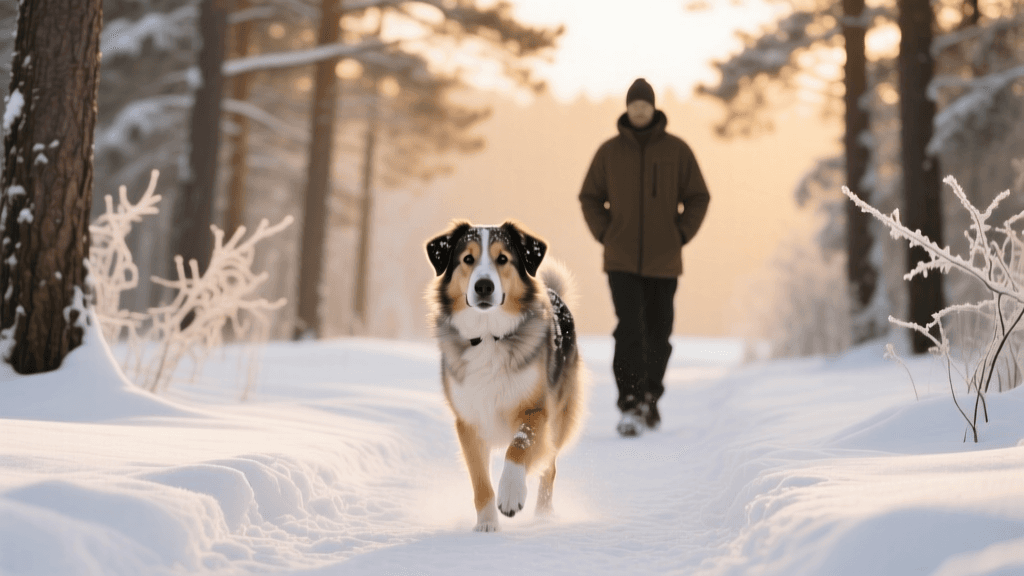
Winter landscapes offer a magical backdrop for dog walks, but they also introduce a complex set of variables that can severely impact your dog's obedience and recall reliability. When snow blankets the ground, it acts as an acoustic dampener, altering how sound travels and making your verbal recall cues sound muffled or distorted to your dog's sensitive ears. Furthermore, snow and ice drastically change the olfactory environment. Scents that your dog typically relies on for navigation and mental stimulation become buried or masked, which can lead to disorientation or hyper-fixation on the few fresh wildlife tracks that remain accessible.
Because of these environmental shifts, a recall command that your dog obeys flawlessly in July might completely fail in January. According to the ASPCA's cold weather pet safety guidelines, winter also brings severe physical hazards like frostbite, hypothermia, and hidden bodies of water. If your dog blows past your recall cue and dashes onto thin ice or gets lost in a sudden whiteout squall, the consequences can be fatal. Therefore, seasonal care requires you to adapt your training methodology, upgrade your gear, and adjust your reward systems to ensure your dog remains safe, engaged, and responsive in freezing temperatures.
Essential Cold-Weather Gear for Recall Practice
Standard nylon leashes and cotton treat pouches are inadequate for winter training. Nylon absorbs melting snow, freezes into a stiff, heavy rope, and can cause severe friction burns on your bare hands if a dog suddenly bolts. To maintain safety and effective communication during off-leash or long-line training sessions, you must invest in winter-specific gear.
| Gear Type | Material/Brand Example | Estimated Cost | Winter Benefit |
|---|---|---|---|
| Long Line | Biothane (30-50 ft) | $35 - $60 | Waterproof, won't freeze stiff, and easily wipes clean of mud and snow. |
| GPS Tracker | Whistle GO or Garmin | $70 - $150+ | Locates your dog in whiteout conditions or dense, snow-laden brush. |
| Harness | Reflective Fleece-Lined | $40 - $80 | High visibility in low winter light; retains core heat during stationary training. |
| Treat Pouch | Silicone or Neoprene | $15 - $25 | Flexible in sub-zero temps; won't crack or freeze shut like hard plastic or canvas. |
When practicing recall in open, snowy fields, always use a 30 to 50-foot Biothane long line attached to a well-fitted, fleece-lined back-clip harness. This gives your dog the illusion of being off-leash while providing you with a physical safety net to prevent them from chasing wildlife into dangerous terrain.
High-Value Treats for Freezing Temperatures
In the summer, a piece of dry kibble or a standard training biscuit might be enough to motivate a recall. In the winter, your dog is burning significantly more calories just to maintain their core body temperature, and their food drive can become competing with their instinct to seek shelter or burn off nervous energy. You must upgrade to high-value, high-fat rewards that remain palatable and soft in freezing weather.
- Squeeze Tubes: Products like Churu or squeeze cheese do not freeze solid in your pocket. They provide an immediate, high-scent reward that keeps your dog's attention locked on you.
- Beef Liver or Lung: Dehydrated organ meats retain their strong scent and remain relatively chewable even when exposed to cold air.
- Peanut Butter Dabs: A small dab of xylitol-free peanut butter on a wooden spoon or silicone spatula is an excellent, non-freezing reward for rapid recall repetitions.
Keep your treat pouch tucked inside your coat, close to your body heat, until the exact moment you need to reward your dog. This prevents the treats from turning into unappetizing ice pucks.
Step-by-Step Snow Recall Conditioning
The American Kennel Club (AKC) emphasizes that recall training requires progressive distraction proofing. Winter introduces a completely new tier of distractions, meaning you must take a few steps back in your training criteria before expecting off-leash reliability.
Phase 1: The Long-Line Snow Drag
Begin in a familiar, enclosed area that is now covered in snow. Attach the 30-foot Biothane long line to your dog's harness. Allow the line to drag behind them as they explore. Call your dog using your designated recall cue (e.g., 'Come' or a specific whistle). Because the snow dampens sound, use a high-pitched, enthusiastic tone, or consider using an acoustic training whistle, which cuts through winter wind much better than the human voice. When they return, reward heavily with a squeeze tube. If they ignore you, gently step on the long line to prevent them from running further, reel them in, and reset the distance. Keep these sessions short—no longer than 10 to 15 minutes—to prevent the dog's paw pads from getting too cold.
Phase 2: Distraction Proofing with Wildlife Scents
Once your dog is reliably returning on the long line in a quiet area, move to a wooded trail where deer, rabbit, and fox tracks are visible. Winter is a time when wildlife is desperate for food, and their tracks will crisscross your walking paths. When your dog drops their nose to investigate a fresh track, allow them to sniff for three seconds, then issue your recall cue. Reward them with a 'jackpot' (three to five rapid treats) for disengaging from the wildlife scent and returning to you. This teaches the dog that abandoning a fascinating winter scent to return to you yields a superior reward.
Training the 'Leave It' Command for Thin Ice
A reliable recall is only half of the winter safety equation. You must also train a robust 'Leave It' command specifically targeted at frozen bodies of water. Dogs often do not recognize ice as a hazard and may run onto a frozen pond to retrieve a stick or chase a goose, only to break through into freezing water. During your on-leash walks, practice 'Leave It' near the edges of safe, shallow, frozen puddles. Drop a high-value toy near the ice edge. When your dog moves toward it, say 'Leave It.' The moment they look back at you, reward them with a treat from your pouch. Gradually work your way up to practicing this boundary near larger, more tempting frozen ponds, always keeping your dog on a secure long line to ensure they cannot physically access the dangerous ice if they make a mistake.
Knowing When to Stop: Temperature Thresholds
Effective training requires a dog that is physically comfortable. If a dog is shivering, lifting their paws alternately, or whining, their cognitive function drops, and they cannot process new obedience commands. The American Veterinary Medical Association (AVMA) notes that cold tolerance varies wildly by breed, coat type, and body fat. As a general rule, active recall training should be paused when temperatures drop below 20°F (-6°C) for short-coated or small breeds, and below 0°F (-17°C) for thick-coated, cold-weather breeds like Huskies or Malamutes. Always prioritize your dog's physical well-being over obedience drills. If the weather is too severe for outdoor training, pivot to indoor recall games, such as hiding in different rooms and calling your dog, to maintain their muscle memory until the spring thaw arrives.
marcus-aldridge
All our authors care for dogs every day — read more of their work on the authors page.