Winter Dog Training: Indoor Scent Work and Agility
Keep your dog active this winter with indoor scent work and agility training. Learn step-by-step exercises, gear costs, and seasonal safety tips.
Beating the Winter Blues: The Power of Indoor Canine Enrichment
When winter arrives, freezing temperatures, icy sidewalks, and shortened daylight hours can severely limit your dog's outdoor exercise. While physical walks are important, seasoned dog trainers know a secret that is especially useful during the colder months: mental stimulation can be just as exhausting as physical exertion. A 15-minute intensive training session can tire your dog out as much as a one-hour walk in the snow.
Transitioning your training regimen indoors during the winter is not just about burning off excess energy; it is a vital component of seasonal care. Dogs confined indoors for long periods due to harsh weather are prone to boredom, which can quickly escalate into destructive behaviors, excessive barking, and anxiety. By introducing structured indoor scent work and modified agility exercises, you can maintain your dog's obedience, build their confidence, and protect their joint health until spring returns.
The Science and Setup of Indoor Scent Work
Scent work, often referred to as nose work, taps into a dog's most powerful natural instinct. According to the American Kennel Club's Scent Work program, dogs possess up to 300 million olfactory receptors in their noses, compared to our mere six million. The part of their brain devoted to analyzing odors is proportionally 40 times greater than ours. Engaging this sense indoors provides profound mental enrichment that requires minimal physical space.
Step-by-Step Birch Scent Introduction
To begin, you will need a starter kit. You can purchase professional nose work kits online, but a DIY setup costs less than $30. You will need Sweet Birch essential oil (ensure it is dog-safe and properly diluted), cotton swabs, and a small metal tin with holes punched in the lid (like a mint tin).
- Prep the Scent Tin: Place two drops of Sweet Birch essential oil on a cotton swab, cut it in half, and place it inside your metal tin. Never apply essential oils directly to your dog's skin or nose.
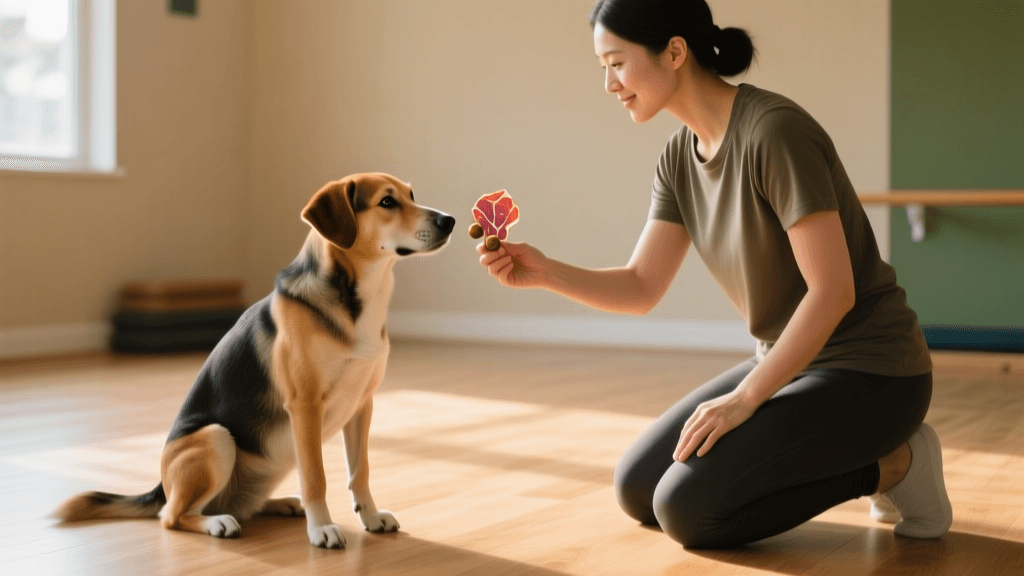
- The 'Find It' Association: In a quiet room, show your dog the tin, then place it on the floor next to their paw. The moment they sniff it, click a clicker or say 'Yes!' and reward with a high-value treat like freeze-dried liver.
- Adding Distance: Once your dog reliably sniffs the tin for a treat, place it one foot away. Use the cue 'Find It.' Gradually increase the distance across the room.
- Introducing Hides: Begin placing the tin behind furniture legs, under low stools, or on top of stacked books. Dogs naturally search from low to high, so start with floor-level hides before moving to elevated surfaces.
- Session Timing: Keep winter scent work sessions short. Five to ten minutes of intense sniffing is the sweet spot to prevent mental fatigue and frustration.
Winter Indoor Agility and Proprioception
Cold weather causes muscles to tighten and synovial fluid in joints to thicken, making winter slips and strains a real hazard. Indoor agility and proprioception training focus on body awareness, core strength, and joint mobility. This is a crucial seasonal care activity that prepares your dog's musculoskeletal system for the rigorous outdoor activities of spring and summer.
DIY Cavaletti Rails for Stride Regulation
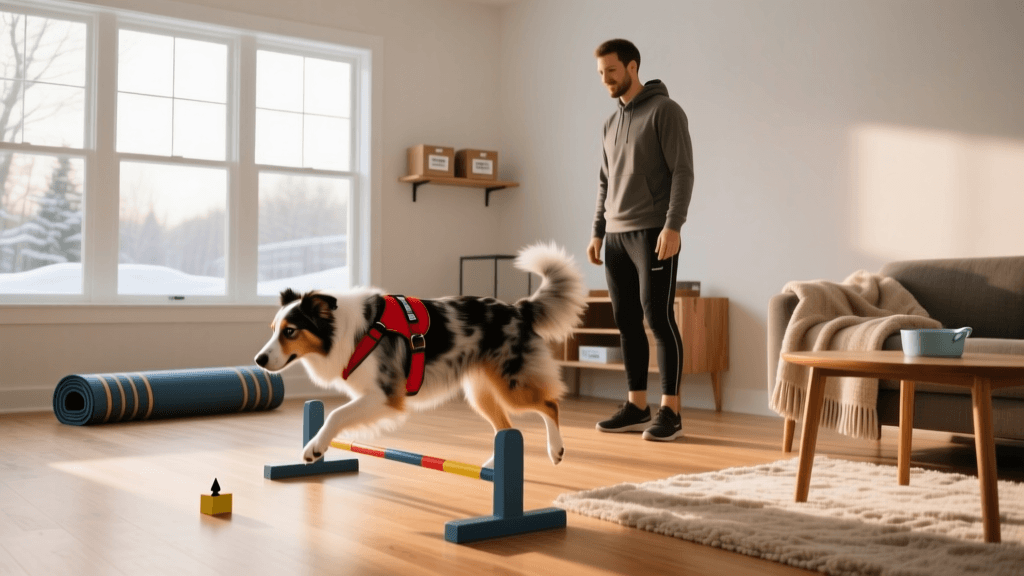
Cavaletti rails are a series of low poles or broomsticks placed on the ground that a dog must step over. They encourage a dog to lift their paws, articulate their joints, and engage their core. You can build a set at home using PVC pipes or wooden dowels and resting them on thick books or specialized Cavaletti cones ($25-$40 online).
Measurement Guide: The spacing and height of the poles must be tailored to your dog. Measure your dog's withers (the highest point of their shoulder blades). For a walking exercise, space the poles at a distance equal to 1.0 to 1.2 times your dog's withers height. The height of the poles should not exceed the length of your dog's pastern (the joint just above the paw) to prevent tripping. For an average Labrador Retriever, this means poles spaced about 24 inches apart and raised only 4 to 6 inches off the ground.
Proprioception with Balance Pads
Canine conditioning equipment, such as the balance pads and inflatable discs offered by brands like FitPAWS, are excellent for winter indoor training. Standing on an unstable surface forces a dog to make micro-adjustments with their stabilizer muscles. A basic FitPAWS Paw Pod set costs around $45 to $65. Start by luring your dog to place just their front paws on the pods, rewarding heavily for stillness. Over the winter months, progress to having all four paws on the unstable surfaces, which drastically improves their balance and prevents icy slip-and-fall injuries outdoors.
Seasonal Safety: Floor Traction and Joint Warm-Ups
Training indoors introduces a unique seasonal hazard: slippery floors. Hardwood, tile, and laminate floors are dangerous for dogs performing dynamic movements. Before starting any indoor agility or play, lay down interlocking foam play tiles ($20-$30 for a 6-pack) or use rubber-backed yoga mats to create a secure training runway. This simple environmental modification prevents cruciate ligament tears and hip strains.
Furthermore, the ASPCA's winter pet care guidelines emphasize that cold temperatures affect joint mobility. Even if you are training in a heated living room, your dog's joints need a proper warm-up. Never ask a dog to jump or perform rapid agility moves straight from their bed. Spend the first five minutes of every indoor session doing 'hand targeting' (luring the dog to touch their nose to your palm) while walking in large circles to get their blood flowing and muscles warmed up.
Pro-Tip: If your dog becomes frustrated during indoor scent work or agility, do not repeatedly ask them to perform the behavior. Winter confinement can lower a dog's frustration tolerance. End the session on a positive note with a simple 'sit' or 'down' command, reward generously, and try again the next day.
Winter Training Schedule and Gear Budget
Structuring your indoor training week ensures your dog receives a balanced mix of mental and physical enrichment without overexertion. Below is a recommended weekly schedule and budget breakdown for setting up your indoor winter training facility.
| Activity | Duration | Frequency | Est. Gear Cost | Primary Benefit |
|---|---|---|---|---|
| Scent Work (Find It) | 10-15 mins | 3x / week | $25 - $40 | Mental fatigue, confidence building |
| Cavaletti Rails | 10 mins | 2x / week | $15 - $30 (DIY) | Joint mobility, stride regulation |
| Balance Pad Work | 5-10 mins | 2x / week | $45 - $65 | Core strength, slip prevention |
| Obedience & Tricks | 15 mins | Daily | $10 (Treats) | Impulse control, bonding |
| Floor Traction Mats | N/A (Setup) | Always | $20 - $30 | Injury prevention on hard floors |
Conclusion: Embracing the Indoor Season
Winter does not have to be a season of regression for your dog's training. By shifting your focus to the intricate mental challenges of scent work and the physical precision of indoor agility, you can turn a season of confinement into a period of profound growth. Investing a small amount of time and budget into DIY Cavaletti rails, safe essential oils, and traction mats will pay dividends. Not only will you maintain your dog's obedience and fitness, but you will also ensure they remain happy, healthy, and safely exercised until the spring thaw finally arrives.
anouk-beaumont
All our authors care for dogs every day — read more of their work on the authors page.