Dog Button Training: Master the Viral Sound Board Trend
Discover how to teach your dog to talk using viral sound buttons. Learn step-by-step AAC training, costs, and the best starter kits for canine communication.
The Viral Phenomenon of Talking Dogs
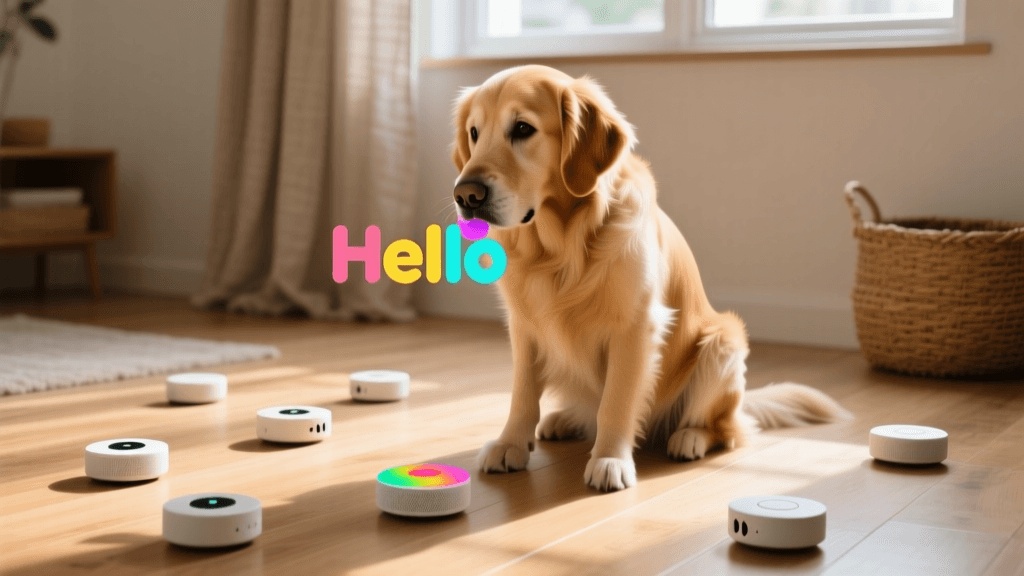
If you have spent any time on TikTok, Instagram, or YouTube over the past few years, you have likely encountered a talking dog. From Bunny the Sheepadoodle expressing existential dread to Stella the Goldendoodle demanding a trip to the park, canine soundboard training has taken the internet by storm. But behind the viral videos and hilarious out-of-context phrases lies a legitimate, science-backed training methodology known as Augmentative and Alternative Communication, or AAC. While it looks like magic, teaching your dog to use sound buttons requires patience, consistency, and a solid understanding of canine cognition. In this comprehensive guide, we will break down exactly how to start your dog on their button training journey, the costs involved, and the science that proves dogs have the capacity for complex communication.
Understanding AAC for Canines
Augmentative and Alternative Communication (AAC) encompasses all forms of communication other than oral speech. In humans, AAC is frequently used to assist individuals with speech impairments, utilizing picture boards, tablets, or sound-generating devices. When applied to dogs, AAC involves mapping specific recorded words to physical buttons. Dogs possess the cognitive ability to associate a specific sound or action with an outcome, a concept rooted in operant conditioning. However, recent research suggests that some dogs may be capable of more than just simple associative learning; they may be combining words to express novel concepts or emotional states. By providing a structured soundboard, you are giving your dog a tool to bridge the interspecies communication gap, reducing frustration and deepening your bond.
Prerequisite: Target Training
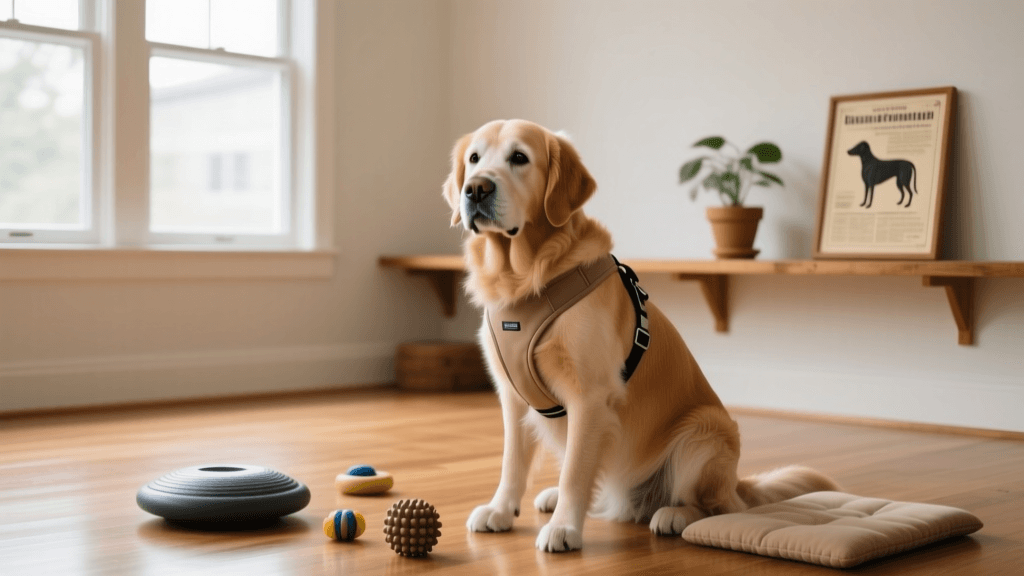
Before introducing a soundboard, your dog must understand how to activate a button. This is where target training comes in. Target training teaches your dog to touch a specific object with their paw or nose on command. To begin, place a small, flat object like a plastic lid on the floor. Every time your dog sniffs or steps on the lid, click a clicker or say "yes" and give them a high-value treat. Once they reliably touch the lid, add a verbal cue like "touch." Gradually transition from the plastic lid to an unrecorded, blank sound button. This crucial prerequisite ensures that when you introduce meaningful words, your dog already understands the physical mechanics of pressing the button, preventing frustration and speeding up the associative learning process.
Equipment and Costs: What You Need
Investing in a quality button system is essential for long-term success. The market leader in canine AAC is FluentPet, which offers specialized HexTile mats designed to keep buttons organized and allow for spatial mapping. A FluentPet Starter Kit typically costs around $39.95 and includes six recordable buttons, three HexTiles, and a learning guide. Additional buttons cost roughly $14.95 for a pack of three. Alternatively, brands like Mighty Petz offer more budget-friendly options, with basic recordable button sets ranging from $20 to $25. When selecting buttons, ensure they require minimal activation force, as small breeds or senior dogs with arthritis may struggle with stiff, off-the-shelf retail talking buttons. You will also need high-value training treats, such as freeze-dried liver or small pieces of boiled chicken, to maintain motivation during short, frequent training sessions.
Step-by-Step: Teaching the First Button
Teaching your first button is an exercise in timing and consistency. The golden rule of AAC modeling is to press the button immediately before the corresponding action occurs, never after. Here is a step-by-step breakdown of teaching the "Outside" button.
Step 1: Record and Place
First, record your voice saying the word "Outside" clearly and concisely. Place the button near the door you use for potty breaks.
Step 2: The Modeling Technique
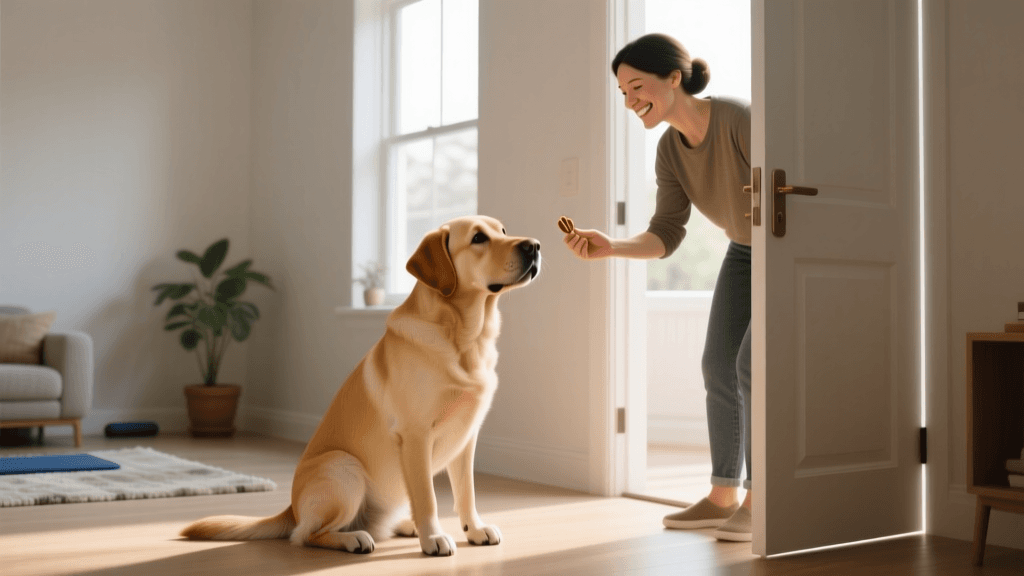
When you notice your dog exhibiting signs of needing to go out, such as sniffing the door or pacing, walk to the button. Say "Outside," press the button yourself, and immediately open the door to let them out. Do not grab your dog's paw and force them to press it; this can cause physical resistance and fear.
Step 3: Capturing the Behavior
Over time, your dog will realize that the sound from the button predicts the door opening. Eventually, they will press it themselves to initiate the action. When they do, reward them heavily with praise and the desired outcome.
4-Week Canine AAC Progression Chart
To track your progress and avoid overwhelming your dog, follow a structured timeline. Here is a recommended four-week progression chart for beginner AAC training.
| Week | Focus Area | Buttons Introduced | Goal |
|---|---|---|---|
| Week 1 | Targeting & Mechanics | Blank / Unrecorded | Dog reliably touches button with paw/nose for a treat. |
| Week 2 | First Core Association | Outside or Play | Dog associates button sound with the immediate action. |
| Week 3 | Expanding Vocabulary | Add "All Done" & "Treat" | Dog begins to press buttons independently to request items. |
| Week 4 | Spatial Mapping | Arrange on HexTile Mat | Dog navigates the mat to find specific words reliably. |
This chart assumes daily training sessions of no more than five to ten minutes. Dogs learn best through short, high-frequency intervals rather than long, exhausting marathons. If your dog shows signs of stress, such as lip licking, yawning, or walking away from the board, immediately end the session and return to basic obedience tasks they enjoy.
Top 10 Starter Buttons for Dogs
When selecting your initial vocabulary, prioritize words that hold high value and immediate relevance to your dog's daily life. The top ten starter buttons recommended by canine behaviorists include:
- Outside: For potty and yard time.
- Play: For initiating games like fetch or tug.
- All Done: To signal the end of an activity or training session.
- Walk: For leash walks and outdoor exploration.
- Treat: For requesting food or high-value snacks.
- Water: To indicate thirst or a need for a water bowl refill.
- Help: To request assistance when stuck or anxious.
- Toy: To ask for a specific item or play session.
- Bed: To request settling down or going to their crate.
- Love You: For social bonding and affection.
Avoid introducing abstract concepts like "later" or "why" until your dog has mastered concrete nouns and verbs.
Troubleshooting Common Pitfalls
As your dog's vocabulary expands, you will inevitably encounter the "broken record" phase. This occurs when a dog repeatedly presses a favorite button, such as "Treat" or "Play," dozens of times in a row. It is vital not to scold your dog for this behavior, as it indicates they have successfully learned the button's function but lack the impulse control to moderate its use. Instead, implement the "All Done" button. When your dog presses "Treat," provide the treat, then press "All Done" and put the treats away. If they press "Treat" again, point to the "All Done" button and ignore the request. Consistency is key; giving in to the broken record phase will only reinforce the spamming behavior.
Another common issue is spatial confusion. If you frequently move the soundboard from the living room to the kitchen, your dog may become frustrated and stop using the buttons entirely. Dogs rely heavily on environmental context and spatial mapping. Dedicate a permanent, low-traffic area of your home for the soundboard. Ensure the mat is placed on a non-slip surface so the buttons do not slide across hardwood floors when pressed, which can startle noise-sensitive dogs and deter future interaction.
The Science Behind the Trend
The viral nature of talking dogs has sparked serious academic interest. The UC San Diego TheyCanTalk study is currently the largest scientific investigation into canine AAC, analyzing data from thousands of pets to understand how dogs combine words and express complex thoughts. Furthermore, resources from the American Kennel Club emphasize that mental stimulation through advanced training exercises like AAC significantly reduces destructive behaviors caused by boredom. As FluentPet's science team notes, spatial memory plays a massive role in how dogs learn; they often memorize the physical location of a button on the mat just as much as the auditory feedback it produces. Therefore, once you establish a button layout, avoid rearranging the tiles unnecessarily.
"Dogs are not just responding to cues; they are actively participating in a shared communication system when given the right tools and patient modeling."
By embracing this viral trend with a foundation of positive reinforcement and scientific curiosity, you can unlock a fascinating new dimension of communication with your best friend. Remember that every dog learns at their own pace, so celebrate the small victories and enjoy the journey of discovering how your dog views the world.
marcus-aldridge
All our authors care for dogs every day — read more of their work on the authors page.