Winter Indoor Dog Training: Tricks to Beat Cabin Fever
Keep your dog mentally stimulated this winter. Learn indoor obedience and trick training routines to beat cabin fever and burn energy without going outside.
Surviving the Freeze: The Winter Behavioral Challenge
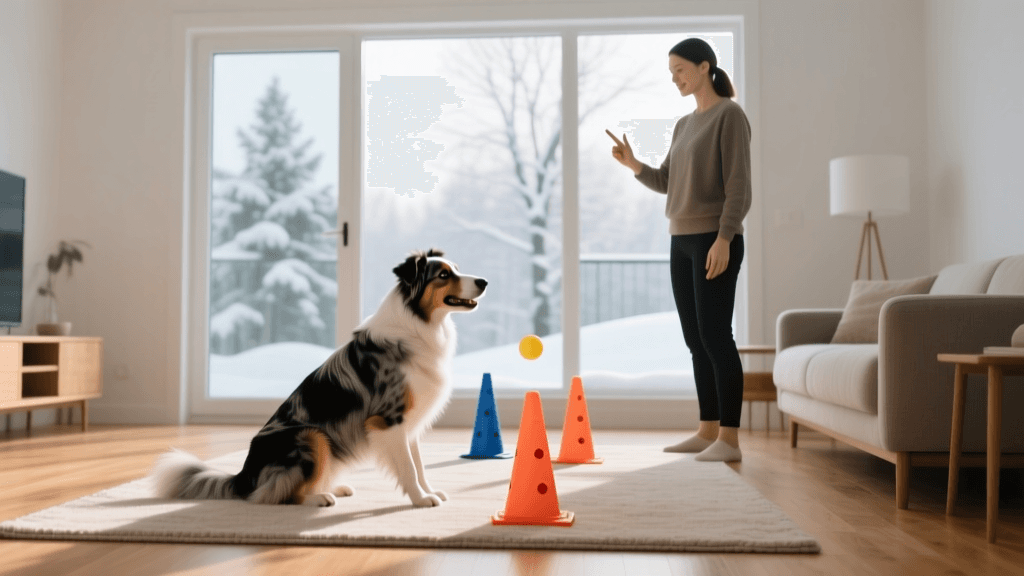
As winter sets in, freezing temperatures, icy sidewalks, and shorter daylight hours severely limit the time our dogs spend outdoors. For high-energy breeds and working dogs, this sudden drop in physical activity can quickly lead to a behavioral phenomenon commonly known as 'cabin fever.' According to the ASPCA, cold weather poses significant risks to canine health, making prolonged outdoor sessions dangerous or uncomfortable for many breeds. Furthermore, the de-icing salts and chemical ice melts used on winter roads can cause severe irritation and chemical burns to your dog's paw pads, making long walks not just unpleasant, but potentially hazardous.
When a dog's physical and mental needs are not met, they will invent their own activities. This often translates to shredded couch cushions, obsessive pacing, excessive barking, or regression in basic obedience. Fortunately, veterinary behaviorists agree that mental exertion can be just as tiring as physical exercise. In fact, fifteen minutes of focused, reward-based indoor training can burn as much energy as a brisk one-hour walk in the park. By shifting your focus to indoor trick teaching, scent work, and impulse control, you can transform the winter months into a period of profound behavioral growth for your dog.
The Science of Canine Mental Enrichment
Understanding the canine brain is crucial for effective winter training. Dogs are natural problem solvers, bred for specific jobs that require intense focus and decision-making. When we remove their 'job' due to weather constraints, we must replace it with structured cognitive tasks. Research highlighted by Fear Free Happy Homes demonstrates that mental enrichment reduces stress hormones and increases dopamine production in dogs, leading to a calmer, more balanced pet.
Indoor training is not merely about keeping your dog busy; it is about fulfilling their biological need to work. By utilizing positive reinforcement, you can engage their olfactory senses, challenge their spatial awareness, and reinforce foundational obedience, all from the comfort of your living room. This seasonal shift in training focus builds a more resilient, confident dog who is less reliant on sheer physical exhaustion to maintain a calm household demeanor.
Essential Gear for Indoor Winter Training
You do not need a massive indoor agility course to achieve great results. A few strategic, budget-friendly tools can drastically elevate your training sessions and protect your home environment:
- Snuffle Mat ($20 - $35): A fabric mat with deep fleece strips used to hide dry kibble or small treats. It forces your dog to use their nose, mimicking natural foraging behaviors and slowing down fast eaters.
- Interactive Puzzle Toys ($15 - $30): Brands like Outward Hound or Nina Ottosson offer multi-level puzzles that require sliding, lifting, and spinning to access treats, providing excellent independent problem-solving opportunities.
- Target Stick or Wand ($10 - $15): Essential for teaching spatial awareness tricks like weaving through legs or spinning without bending over constantly, saving your back during long winter training sessions.
- High-Value Training Treats ($8 - $12): Soft, pea-sized treats (like Zuke's Mini Naturals or boiled chicken breast) that can be consumed quickly without interrupting the flow of the training session.
- Non-Slip Yoga Mat ($15 - $25): Crucial for providing traction on hardwood or tile floors, preventing joint strain, splaying, or injury while your dog learns active tricks indoors.
Comparing Indoor Energy-Burning Activities
Not all indoor activities are created equal. The following table breaks down different training methods, their primary benefits, and their estimated energy-burn equivalence compared to outdoor walking.
| Activity Type | Skill Focus | Session Duration | Energy Equivalence |
|---|---|---|---|
| Scent Work (Find It) | Olfactory stimulation, confidence | 10-15 mins | 45-min walk |
| Shaping Tricks (Spin/Weave) | Spatial awareness, coordination | 10-15 mins | 30-min walk |
| Impulse Control (Place) | Obedience, emotional regulation | 15-20 mins | 20-min walk |
| Puzzle Toy Foraging | Independent problem solving | 20-30 mins | 15-min walk |
Step-by-Step Winter Training Routines
1. Scent Work: The 'Find It' Game
Scent work is arguably the most exhausting mental exercise you can provide indoors. The American Kennel Club highly recommends nose work games for burning off excess energy when outdoor access is limited by snow or ice.
Step 1: Start with your dog in a 'sit-stay' or have a partner hold them in another room. Show them a high-value treat and place it on the floor in plain sight.
Step 2: Give the cue 'Find it!' and encourage them to eat it. Praise enthusiastically to build drive for the game.
Step 3: Gradually increase the difficulty. Place treats behind table legs, under the edge of a rug, or on low shelves.
Step 4: Expand the search area to multiple rooms. Eventually, hide a specific scented item (like a cotton swab rubbed with safe birch essential oil) and reward heavily when they locate the source.
Pro Tip: Never use toxic essential oils (like tea tree or eucalyptus) and always ensure the search area is free of hazardous household chemicals or small choking hazards.
2. Active Tricks: Leg Weaves and Spins
Physical movement is still necessary, even indoors. Teaching your dog to weave through your legs or spin in tight circles engages their core muscles and improves hind-end awareness without requiring a large yard.
The Leg Weave: Stand with your feet wide apart. Lure your dog through your legs from back to front using a treat in your hand. As they pass through, step forward, widening your stance again, and lure them back through the other way. Use the verbal cue 'Weave' or 'Through.' Keep sessions to 5 minutes to prevent physical fatigue or frustration.
The Spin: Hold a treat close to your dog's nose and slowly draw a wide circle in the air. As they follow the treat, their body will naturally turn. Mark the behavior with a clicker or a 'Yes!' the moment they complete the circle, then reward. Gradually fade the lure by using just your hand signal, and finally, add the verbal cue 'Spin' or 'Twist.'
3. Impulse Control: The 'Place' Command
Winter often means more time indoors, which can lead to dogs becoming overly attached to their owners or reactive to indoor stimuli (like delivery drivers or window noises). The 'Place' command teaches your dog to settle on a specific mat or bed until released, fostering emotional regulation.
Step 1: Choose a distinct, portable mat. Lure your dog onto the mat and reward them for having all four paws on it.
Step 2: Introduce a release word like 'Okay' or 'Free.' Toss a treat off the mat, and when they return, reward them for staying on the mat.
Step 3: Begin adding duration. Wait 3 seconds before rewarding, then 5, then 10. If they break the command, calmly guide them back without a treat and reset the timer.
Step 4: Add distance and distractions. Take one step away, return, and reward. Turn on the TV, drop a toy nearby, or ring the doorbell, rewarding heavily for maintaining the 'Place' position.
Troubleshooting Common Indoor Training Frustrations
Transitioning to indoor training can present unique behavioral hurdles. Here is how to troubleshoot the most common winter training issues:
- Dog loses interest quickly: Your criteria may be too high, or your treats may not be valuable enough. Lower the difficulty of the trick, break the behavior into smaller micro-steps, and upgrade to freeze-dried liver or boiled chicken.
- Dog gets overly excited (Zoomies): If active tricks are causing over-arousal, immediately pivot to scent work or 'Place' training. Scent work naturally lowers a dog's heart rate and encourages a calmer mental state.
- Slipping on hard floors: Never attempt active tricks on slippery tile or hardwood. Always use a non-slip yoga mat or invest in canine paw grips to prevent cruciate ligament injuries.
Designing a Winter Enrichment Schedule
To truly beat cabin fever, consistency is key. Rather than one long, exhausting training session, break your dog's mental enrichment into micro-sessions throughout the day. Here is a sample winter schedule for a medium-to-high energy dog:
- 7:00 AM (Breakfast): Serve morning kibble inside a Snuffle Mat or frozen Kong to encourage 15 minutes of foraging.
- 9:00 AM (Active Session): 10 minutes of Leg Weaves and Spin tricks in the living room to get the blood flowing.
- 1:00 PM (Settle Training): Practice the 'Place' command for 15 minutes while you work at your desk or watch TV.
- 4:00 PM (Short Outdoor Break): A 15-minute brisk walk for bathroom breaks and fresh air (ensure paws are wiped clean of ice-melt salts with a warm, damp cloth upon return).
- 6:00 PM (Dinner): Hide half of their dinner around the house for a 'Find It' scent work game.
- 8:00 PM (Wind Down): 10 minutes of gentle massage and passive puzzle toy work to lower their heart rate before bed.
Conclusion: Embracing the Indoor Season
Winter does not have to be a season of regression for your dog's training. By embracing the unique opportunities that indoor environments provide, you can deepen your bond, refine complex tricks, and build a foundation of impulse control that will serve your dog well when the spring thaw finally arrives. Remember, a tired dog is a good dog, and mental fatigue is a powerful tool in your seasonal care arsenal. Stay warm, stay consistent, and enjoy the process of indoor discovery with your canine companion.
aaron-whyte
All our authors care for dogs every day — read more of their work on the authors page.