Stop Leash Pulling: Diagnose and Fix Dog Walking Issues
Diagnose why your dog pulls on the leash and discover proven, step-by-step solutions to stop leash reactivity and enjoy peaceful walks.
The Epidemic of Leash Pulling and Reactivity
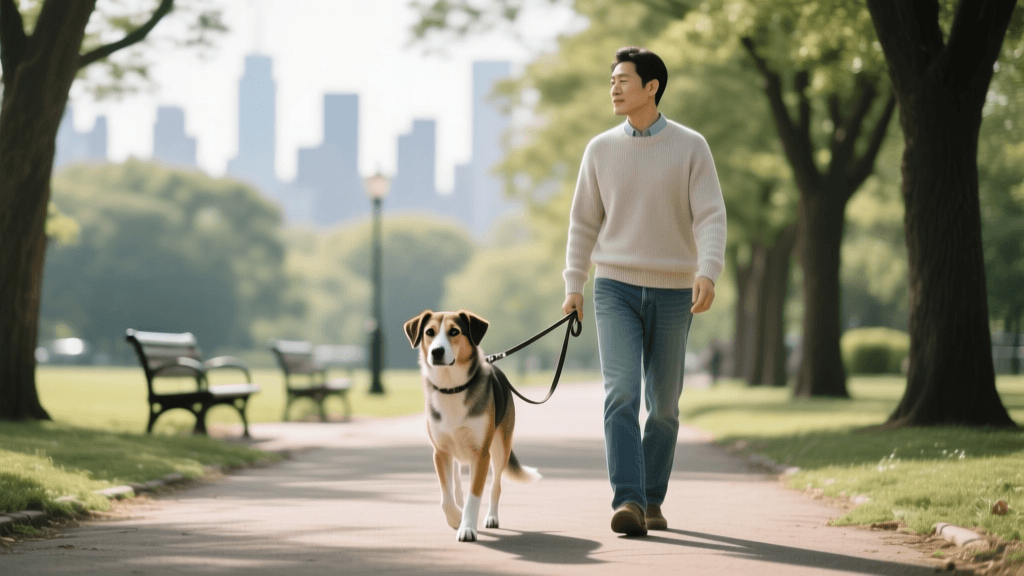
For many dog owners, daily walks are a source of immense frustration rather than relaxation. If your arm feels like it is being pulled from its socket, or if your dog transforms into a barking, lunging mess at the sight of another dog, you are not alone. Leash pulling and reactivity are among the most common behavioral issues reported by pet parents. According to the ASPCA, improper leash manners are a primary reason dogs are surrendered to shelters or abandoned in backyards. However, these behaviors are not signs of a 'bad' dog; they are symptoms of unmet needs, environmental overstimulation, and a lack of clear communication.
To fix the problem, we must first move away from generic training advice and adopt a 'Problem Diagnosis and Solutions' approach. By identifying the specific root cause of your dog's pulling or reactivity, you can implement targeted, actionable conditioning techniques that yield lasting results.
Diagnosing the Root Cause of Your Dog's Pulling
Dogs do not pull on the leash to spite their owners. They pull because it works. When a dog pulls toward a fascinating scent or another dog, and the owner follows, the dog learns that tension on the leash equals forward movement. Furthermore, dogs possess an 'opposition reflex,' meaning they naturally lean into pressure. If you pull back on a standard collar, the dog will instinctively pull harder.
Before implementing a training protocol, observe your dog's specific symptoms to diagnose the underlying issue. Use the diagnostic table below to identify your dog's primary walking challenge.
| Observed Symptom | Probable Root Cause | Immediate Actionable Solution |
|---|---|---|
| Constant forward pulling | Opposition reflex and accidental reinforcement | Stop walking immediately when tension hits the leash. |
| Lunging and barking at dogs | Leash reactivity and barrier frustration | Increase distance to 20+ feet and use high-value treats. |
| Sniffing and ignoring handler | Low handler value and environmental overstimulation | Play the 'Find It' scatter game to reset focus. |
| Biting the leash | Over-arousal or redirected frustration | Redirect to a tug toy or practice mat training indoors. |
Essential Gear for Behavioral Conditioning
You cannot effectively train a dog if your equipment is working against you. Retractable leashes, for example, teach dogs that pulling extends the leash, reinforcing the exact behavior you want to stop. To set up a successful training environment, invest in the following specific gear:
- Front-Clip Harness: The 2 Hounds Design Freedom No-Pull Harness (approx. $40-$45) features a martingale loop on the back and a front-clip ring on the chest. When the dog pulls, the front-clip gently redirects their momentum back toward you without causing tracheal damage.
- Fixed-Length Leash: Use a 6-foot Biothane or leather leash ($30-$40). Biothane is waterproof, easy to clean, and provides a non-slip grip even in the rain. Avoid leashes longer than 6 feet for urban walking training.
- High-Value Treats: Kibble will not compete with the environment. Use Zuke's Mini Naturals (approx. $8 for 16oz), which are only 3 calories each, allowing for high-frequency repetition without causing weight gain.
- Treat Pouch: The Ruffwear Treat Trader ($35) clips securely to your waist, allowing you to dispense rewards within 0.5 seconds of the desired behavior.
Solution 1: The 'Stop and Reset' Technique for Pulling
If your primary issue is a dog that drags you down the street, the 'Stop and Reset' method is your foundational solution. This protocol teaches the dog that a loose leash is the only key to moving forward.
- The Trigger: Begin walking. The moment you feel tension on the leash, stop immediately. Do not yank the dog back; simply become a tree.
- The Wait: Stand completely still. Ignore the dog's whining or pulling. Wait for the dog to voluntarily release the tension, either by taking a step back or turning to look at you.
- The Mark and Reward: The exact millisecond the leash goes slack, use a marker word like 'Yes!' or click a clicker. Immediately deliver a treat at the seam of your pants on the side you want the dog to walk on.
- The Reset: Resume walking. If the leash goes tight again within two steps, stop immediately and repeat the process.
Consistency is critical. According to the American Kennel Club (AKC), owners must never allow the dog to reach their destination (like a fire hydrant or another dog) while the leash is tight, as this rewards the pulling behavior. Your first few walks using this method may take 45 minutes to cover a single block. Patience and strict adherence to the rules will eventually rewire your dog's understanding of leash tension.
Solution 2: Managing Leash Reactivity and Lunging
Reactivity is different from simple pulling. A reactive dog is emotionally overwhelmed by a trigger (another dog, a skateboard, a stranger) and reacts with barking, lunging, or snarling. This is often rooted in fear, anxiety, or severe barrier frustration caused by the leash restricting their natural flight-or-fight response.
To solve reactivity, you must understand the concept of the Threshold. The threshold is the distance at which your dog notices a trigger but remains under their stress tipping point. If your dog is barking and lunging, you are over threshold, and no learning can occur. Your brain's amygdala has hijacked their cognitive functions. The immediate solution is to increase distance—often to 20, 30, or even 50 feet away from the trigger.
The 'Look At That' (LAT) Protocol
Developed by canine behavior expert Leslie McDevitt, the LAT game is a powerful counter-conditioning tool designed to change your dog's emotional response to triggers.
- Step 1: Position yourself and your dog at a sub-threshold distance (e.g., 25 feet) from a stationary trigger, like a person sitting on a bench.
- Step 2: The moment your dog looks at the trigger, mark the behavior with a clicker or the word 'Yes!'
- Step 3: Deliver a high-value treat. The dog will turn away from the trigger to eat the treat.
- Step 4: Wait for the dog to look back at the trigger. Mark and reward again.
Over time, the dog's emotional association shifts from 'That dog is a threat!' to 'Seeing another dog predicts delicious chicken.' The trigger becomes the cue to look at the handler for a reward.
Understanding Trigger Stacking
When diagnosing inconsistent reactivity, owners often overlook 'trigger stacking.' This phenomenon occurs when multiple minor stressors accumulate, causing a dog's cortisol levels to rise until they explode over a seemingly minor event. For example, a dog might tolerate a passing bicycle, a loud truck, and a stranger approaching. But when a squirrel darts across the path, the dog reacts explosively. The squirrel wasn't the sole problem; it was the final drop in an overflowing stress bucket.
The Solution: Implement 'decompression days.' If your dog has a highly reactive walk on Tuesday, skip the busy streets on Wednesday. Instead, engage in 20 minutes of indoor sniffing games, lick mats, or a quiet hike in an empty field on a 15-foot long line. Lowering baseline cortisol is essential for behavioral conditioning to take root.
Proofing the Behavior in High-Distraction Environments
Once your dog has mastered loose-leash walking in your quiet living room and reactivity protocols in your empty driveway, you must 'proof' the behavior. Proofing means testing and reinforcing the training in progressively more challenging environments.
Follow the 3-D rule of dog training: Distance, Duration, and Distraction. Never increase all three at once. If you are moving to a busier park (increasing distraction), you must decrease the duration of the walk and increase the distance from the main pathways. Set your dog up for success by controlling the environment. If an off-leash dog approaches while you are training, do not hesitate to advocate for your dog by stepping between them, tossing a handful of treats to distract the approaching dog, and calmly walking away.
When to Call a Professional
While many pulling and mild reactivity issues can be resolved with dedicated owner-led conditioning, severe aggression, bite histories, or extreme anxiety require professional intervention. If your dog is breaking skin, injuring you, or exhibiting signs of profound distress, stop DIY training immediately.
Seek out a certified behavior consultant who utilizes force-free, science-based methods. You can locate a vetted professional in your area through the Certification Council for Professional Dog Trainers (CCPDT) directory. A professional will help you design a customized behavior modification plan, ensure your management strategies are airtight, and keep both you and your dog safe during the rehabilitation process.
Conclusion
Fixing leash pulling and reactivity is not an overnight process; it is a journey of rebuilding trust and communication. By accurately diagnosing the root cause of your dog's behavior, equipping yourself with the right gear, and consistently applying protocols like the 'Stop and Reset' and 'Look At That' methods, you can transform your daily walks from a stressful chore into a peaceful, bonding experience. Remember that every walk is a training session, and patience is your most valuable tool.
marcus-aldridge
All our authors care for dogs every day — read more of their work on the authors page.