Winter Dog Paw Care: Protecting Paws from Snow, Ice, and Salt
Learn how to protect your dog's paws from winter hazards like ice, snow, and toxic salts. Discover essential cold weather safety tips and gear.
The Hidden Dangers of Winter for Dog Paws
Winter transforms the outdoors into a magical wonderland, offering crisp air and exciting new scents for your canine companion. However, the freezing temperatures, abrasive ice, and chemical de-icers used on sidewalks pose severe threats to your dog's paw pads. Many pet owners mistakenly believe that dogs are naturally immune to the cold due to their fur coats and the unique structure of their paws. While it is true that a dog's paw pads contain a specialized network of blood vessels that help prevent freezing, they are still highly susceptible to environmental damage, chemical burns, and frostbite when exposed to harsh winter elements for prolonged periods.
According to the ASPCA Cold Weather Safety Tips, ice-melting agents are among the most common winter hazards for pets. These chemicals can cause severe irritation, dry out the paw pads, and lead to painful cracking. Furthermore, if a dog licks their paws after walking on treated surfaces, they can ingest toxic levels of sodium chloride or calcium chloride, leading to gastrointestinal distress and drooling.
Understanding Cold Weather Thresholds for Dogs
Not all dogs experience the cold in the same way. A dog's tolerance to freezing temperatures depends heavily on their breed, size, coat type, age, and overall health. Small, short-haired breeds like Chihuahuas or Greyhounds lose body heat much faster than large, double-coated working breeds like Siberian Huskies or Alaskan Malamutes. Understanding these thresholds is critical for planning safe winter walks.
| Temperature (°F) | Small / Short-Haired Dogs | Medium / Thick-Coated Dogs | Large / Working Breeds |
|---|---|---|---|
| 45°F and above | Safe | Safe | Safe |
| 32°F to 44°F | Monitor closely; limit time | Safe for active exercise | Safe for active exercise |
| 20°F to 31°F | Risk of hypothermia; use gear | Monitor for shivering | Safe with frequent breaks |
| 10°F to 19°F | Unsafe; indoor play only | Limit walks to 15 mins | Monitor paws closely |
| Below 10°F | Extreme Danger | Risk of frostbite | Limit to 10 mins max |
Note: Always factor in wind chill and dampness, which can drastically lower the effective temperature and increase the risk of frostbite on exposed paw pads.
Essential Winter Paw Care Routine
Protecting your dog's paws requires a proactive, three-step routine: preparation before the walk, protection during the walk, and thorough cleaning afterward.
1. Pre-Walk Preparation and Paw Balms
Before stepping out into the snow, apply a high-quality, pet-safe paw balm to create a protective barrier against ice and chemicals. Products like Musher's Secret Paw Protection Natural Dog Wax (typically costing around $16 for a 2 oz tin) are formulated with food-grade waxes and oils that condition the pads while repelling moisture. Massage a generous layer into the paw pads and between the toes about 15 minutes before your walk to allow the wax to absorb and set.
2. Grooming the Paw Pads
Long fur between the toes acts like a magnet for snow, leading to the formation of painful "ice balls" that stretch the skin and cause micro-tears. Use a pair of blunt-nosed grooming scissors or a specialized pet trimmer to carefully clip the hair flush with the paw pads. Doing this every two to three weeks during the winter months significantly reduces ice accumulation.
3. Using and Training for Dog Booties
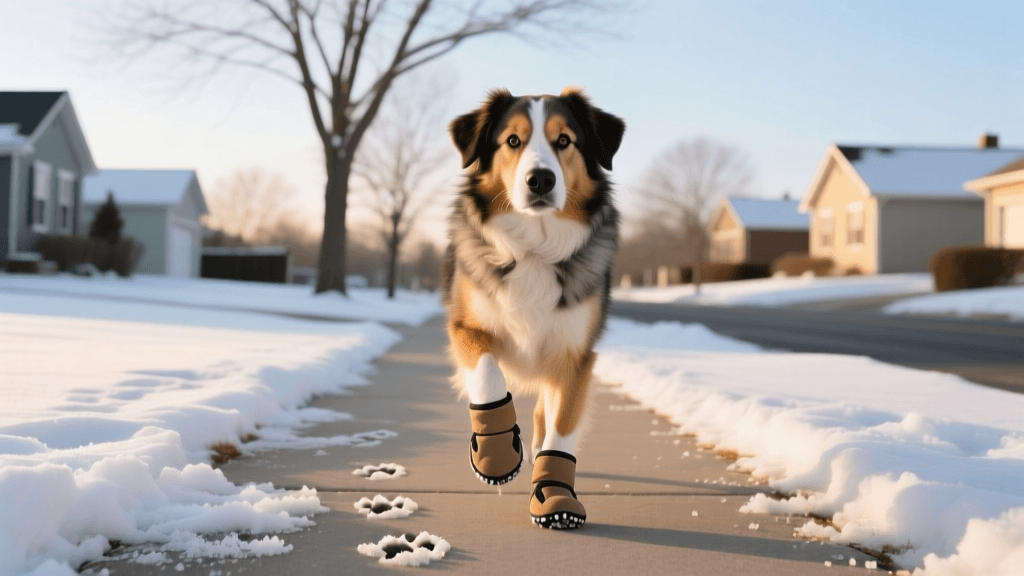
For extreme cold or heavily salted urban sidewalks, dog booties are the ultimate defense. The Ruffwear Polar Trex Dog Boots (approximately $90 for a set of four) offer excellent insulation and Vibram outsoles for traction on ice. However, most dogs will initially reject wearing them. To train your dog:
- Step 1: Leave the booties near their bed with high-value treats to create a positive association.
- Step 2: Put one bootie on a single paw, immediately reward with a treat, and take it off after 10 seconds.
- Step 3: Gradually increase the number of booties and the duration they are worn indoors before attempting an outdoor walk.
- Step 4: Ensure a snug fit. Measure your dog's paw width by having them stand on a piece of paper, marking the widest point, and measuring in millimeters.
4. Post-Walk Cleanup
Never let your dog air-dry after a winter walk. Keep a dedicated "paw towel" and a basin of lukewarm water by the door. Gently wash each paw to remove any residual salt, antifreeze, or chemical de-icers. Pay special attention to the spaces between the toes. After washing, dry the paws thoroughly and apply a lightweight, hydrating paw cream to replenish moisture lost to the cold, dry air.
Safe De-Icing Alternatives for Your Yard
If you own a home, the products you use on your driveway directly impact your dog's health. Traditional rock salt (sodium chloride) is highly corrosive to paw pads and toxic if ingested. Instead, opt for pet-safe ice melts. Products like Safe Paw Ice Melter (around $25 for an 8 lb jug) use a modified crystalline amide formula that is non-toxic and safe for concrete and vegetation. Alternatively, magnesium chloride-based melts are generally safer for pets than sodium chloride, though they can still cause mild irritation if not washed off promptly. Always use the minimum amount required to maintain traction, and consider using sand or non-clumping kitty litter for grip without the chemical burn risk.
Recognizing and Treating Cold-Related Injuries
Despite your best efforts, accidents happen. The American Kennel Club (AKC) warns that frostbite most commonly affects a dog's paws, ears, and tail. Signs of early frostbite include skin that appears pale, gray, or bluish, and feels unusually cold or brittle to the touch. As the tissue thaws, it may become red, swollen, and extremely painful.
If you suspect frostbite, immediately move your dog to a warm environment. Do not rub the affected paws, as this can cause severe tissue damage. Instead, soak the paws in warm (not hot) water—around 100°F to 104°F—for 20 minutes. Wrap the paws in a clean, dry bandage and contact your veterinarian immediately, as frostbitten tissue is highly susceptible to secondary bacterial infections and may require prescription pain management or antibiotics.
Dietary Adjustments and Hydration
Winter care extends beyond the paws to overall systemic health. Dogs burn more calories trying to maintain their core body temperature in the cold. If your dog spends a significant amount of time outdoors playing in the snow, consult your vet about increasing their daily caloric intake by 10% to 15%. Conversely, if winter weather forces your dog into a more sedentary indoor lifestyle, you may need to reduce their food portion to prevent unhealthy weight gain.
Hydration is equally critical. Indoor heating systems drastically reduce ambient humidity, leading to dry skin and cracked paw pads. Running a humidifier in the rooms where your dog spends the most time can help maintain skin elasticity. Additionally, supplementing your dog's diet with Omega-3 fatty acids, such as wild-caught salmon oil (approximately 1000mg per day for a 40 lb dog), supports the skin's natural lipid barrier, keeping paw pads supple and resistant to cracking.
Indoor Alternatives for Winter Exercise
When temperatures plummet below safe thresholds, mental and physical stimulation must move indoors. The American Veterinary Medical Association (AVMA) emphasizes that lack of exercise can lead to destructive behaviors and anxiety. Replace outdoor walks with indoor enrichment activities:
- Snuffle Mats and Puzzle Toys: Engage your dog's natural foraging instincts by hiding kibble in a snuffle mat, providing mental fatigue equivalent to a long walk.
- Indoor Agility: Use household items like chairs, broomsticks, and blankets to create a makeshift agility course in your living room.
- Treadmill Training: For high-energy breeds, training your dog to walk on a human treadmill (at a slow, supervised pace) or investing in a specialized dog treadmill can maintain their cardiovascular health safely indoors.
By combining proactive paw protection, safe environmental management, and indoor enrichment, you can ensure your dog remains healthy, happy, and comfortable throughout the harshest winter months.
anouk-beaumont
All our authors care for dogs every day — read more of their work on the authors page.