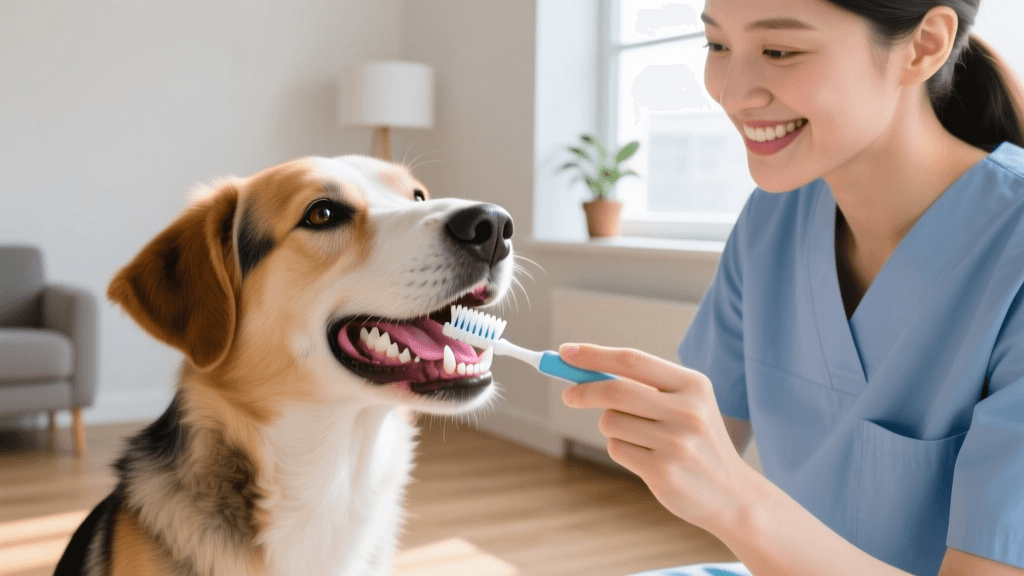
Step-by-Step Guide to Training Your Dog for Toothbrushing
Learn how to train your dog to accept toothbrushing with our step-by-step guide. Prevent dental disease and save on vet bills with daily canine oral care.
The Hidden Epidemic of Canine Periodontal Disease
Dental disease is widely considered the most common clinical condition affecting adult dogs. According to the Cornell University College of Veterinary Medicine, over 80 percent of dogs exhibit signs of periodontal disease by the time they reach three years of age. Left untreated, the bacteria from infected gums can enter the bloodstream, potentially causing severe, irreversible damage to the heart, liver, and kidneys. While professional veterinary cleanings under anesthesia are a vital component of canine healthcare, daily home care remains the absolute gold standard for preventing plaque and tartar buildup. However, forcing a toothbrush into an unprepared dog's mouth can lead to fear, aggression, and a breakdown of trust. By utilizing cooperative care techniques, desensitization, and positive reinforcement, you can train your dog to willingly participate in their own dental hygiene routine, turning a stressful chore into a bonding experience.
Understanding Canine Dental Anatomy
Before beginning your training, it is highly beneficial to understand what you are cleaning. Adult dogs have 42 permanent teeth, evolutionarily designed for tearing, gripping, and shearing meat. The most critical teeth to focus on during brushing are the canine teeth (the four long 'fangs') and the carnassial teeth (the large upper fourth premolars and lower first molars located at the back of the mouth). Plaque accumulates most rapidly on the buccal (outer) surfaces of these teeth due to the shape of the gumline and the flow of saliva. Fortunately, a dog's rough tongue naturally keeps the lingual (inner) surfaces relatively clean. This means you only need to focus your training and brushing efforts on the outside of the teeth and the gingival margin, significantly reducing the time and physical manipulation required during each session.
Essential Supplies for Canine Dental Training
Setting up for success requires the right tools. Never use human toothpaste, as ingredients like xylitol, fluoride, and foaming agents are highly toxic and can cause severe gastrointestinal distress or neurological issues in dogs. Gather the following supplies before starting your training protocol:
- Enzymatic Dog Toothpaste: Virbac C.E.T. Enzymatic Toothpaste (Poultry, Beef, or Seafood flavor) is a top veterinary recommendation. It contains a dual-enzyme system that continues to break down plaque and inhibit bacterial growth even after brushing is complete. Cost: $10 to $15 per tube.
- Dual-Headed Dog Toothbrush: These brushes are specifically angled to clean both the top and bottom teeth simultaneously while massaging the gums. Brands like Hartz or Arm & Hammer offer affordable, ergonomic options. Cost: $5 to $8.
- Alternative Brushes: A soft silicone finger brush can be incredibly useful for the initial desensitization phase, especially for toy breeds, brachycephalic (flat-faced) dogs, or puppies. Cost: $3 to $5.
- High-Value Training Treats: Use soft, strongly scented treats that your dog only receives during dental training sessions. Zuke's Mini Naturals, small pieces of boiled chicken breast, or freeze-dried liver work exceptionally well. Cost: $6 to $12.
- A Non-Slip Mat: A silicone grooming mat or a standard yoga mat provides secure footing, reducing your dog's physical anxiety and preventing slipping during the process.
Step-by-Step Training Guide to Toothbrushing
Training your dog to accept toothbrushing relies heavily on classical conditioning and systematic desensitization. Do not rush these steps. Depending on your dog's temperament, previous experiences, and age, this process can take anywhere from two to six weeks of daily, short sessions.
Step 1: Taste Introduction and Positive Association (Days 1-5)
The goal of the first phase is to teach your dog that the toothpaste is a high-value reward. Squeeze a pea-sized amount of the enzymatic toothpaste onto your finger and allow your dog to lick it off. Immediately follow this with verbal praise and a training treat. Repeat this process twice a day for about 30 seconds. If your dog is hesitant, try mixing a tiny dab of the toothpaste with a lick of xylitol-free peanut butter or low-sodium chicken broth to entice them. By day five, your dog should be eagerly anticipating the toothpaste and offering enthusiastic licking behavior.
Step 2: Lip Lifting and Gum Touching (Days 6-12)
Once your dog loves the taste, introduce physical touch to the mouth. With your dog sitting comfortably beside you, use your non-dominant hand to gently lift their upper lip. Use your index finger to lightly rub their gums and the outer surfaces of their canine teeth. If your dog allows this without pulling away, immediately reward them with a treat and a 'jackpot' of toothpaste. If your dog pulls away, you have moved too fast. Return to Step 1 for a few more days. Gradually increase the duration of the gum rubbing from two seconds to ten seconds over the course of a week, always pairing the touch with a food reward.
Step 3: Introducing the Brush (Days 13-20)
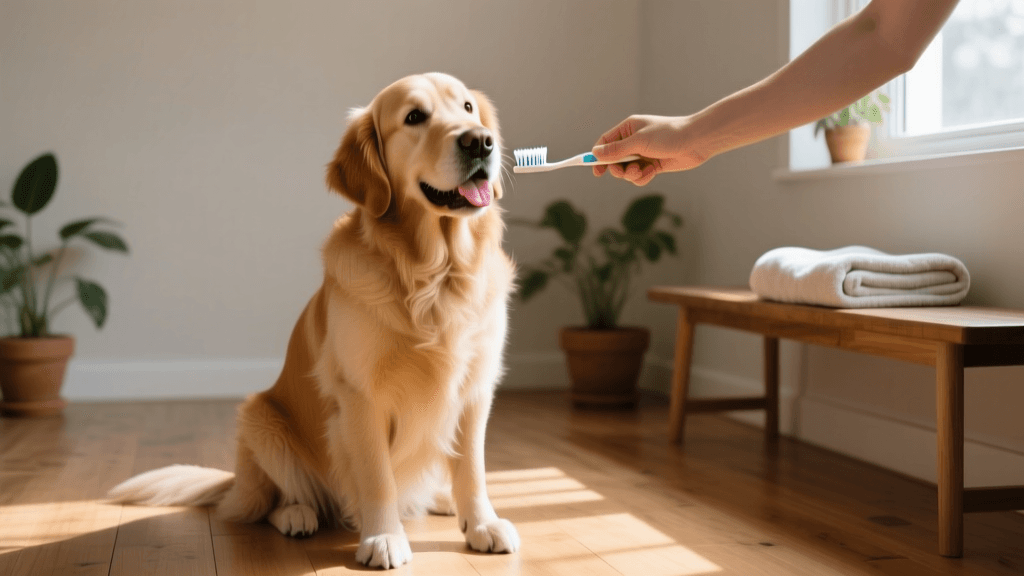
Now, introduce the toothbrush without making any brushing motions. Apply a generous layer of toothpaste to the dual-headed brush and let your dog lick it directly off the bristles. Next, gently lift the lip and touch the back of the brush to the dog's cheek, then to the canine teeth, without moving it. Reward heavily. The American Kennel Club emphasizes that introducing the brush gradually prevents the dog from associating the tool with forced restraint or fear. Let your dog investigate the brush on their own terms, rewarding any sniffing, licking, or calm behavior.
Step 4: The Brushing Motion (Days 21 and Beyond)
When your dog is completely comfortable with the brush touching their teeth, begin the actual brushing motion. Lift the upper lip to expose the gumline. Using gentle, circular motions, brush the outer surfaces of the canine teeth and the large carnassial teeth in the back. Aim for a 45-degree angle to ensure the bristles reach slightly under the gumline where periodontal disease begins. Start with just three to five seconds of brushing per side, followed by a reward. Over several weeks, gradually build up to a full 30 to 60 seconds of brushing for the entire mouth, fading out the food rewards to an intermittent schedule.
Comparison of Canine Dental Care Tools
While a toothbrush and enzymatic paste are the gold standard, some dogs with severe trauma or advanced dental pain may never fully tolerate a brush. Below is a comparison of alternative dental care methods recognized by veterinary professionals. For a comprehensive list of clinically proven dental products, always refer to the Veterinary Oral Health Council (VOHC) seal of acceptance when shopping.
| Dental Tool | Effectiveness | Estimated Cost | Best For |
|---|---|---|---|
| Dual-Head Toothbrush & Enzymatic Paste | High (Gold Standard) | $15 - $25 (Initial Kit) | Dogs trained via cooperative care; maximum plaque removal. |
| Silicone Finger Brush | Medium | $3 - $8 | Small breeds, puppies, and initial desensitization training. |
| Dental Wipes (e.g., Petkin) | Medium-Low | $8 - $12 (per box) | Dogs that fear bristles; good for wiping accessible front teeth. |
| VOHC-Approved Dental Chews | Medium | $20 - $35 (monthly) | Dogs that cannot be handled for brushing; requires chewing action. |
| Water Additives (e.g., TropiClean) | Low | $10 - $15 (per bottle) | Senior dogs or highly aggressive dogs where oral handling is unsafe. |
The Role of Diet in Canine Dental Health
A common misconception among dog owners is that feeding dry kibble automatically cleans a dog's teeth. In reality, most dogs shatter kibble with their back teeth and swallow it whole, resulting in zero abrasive action on the tooth surface. Standard dry food does not prevent plaque accumulation. If your dog struggles with brushing, consult your veterinarian about prescription dental diets, such as Hill's Prescription Diet t/d or Purina Pro Plan Veterinary Diets DH. These specialized kibbles are engineered with a larger size and a unique matrix that forces the dog to chew through the kibble, creating a mechanical scraping action against the tooth surface. While not a replacement for brushing, dental diets are an excellent supplementary tool for comprehensive oral care.
Troubleshooting Common Training Hurdles
Even with careful desensitization, you may encounter behavioral roadblocks. Here is how to address the most common issues:
- The Dog Bites the Brush: This is usually a sign that the dog views the brush as a chew toy rather than a grooming tool. Switch to a finger brush temporarily, and only present the brush when the dog is in a calm, settled state. If they bite, calmly remove the brush and withhold the reward until they are calm and offer a soft mouth.
- The Dog Runs Away: If your dog flees when they see the toothpaste tube, you have likely progressed too quickly or used too much physical restraint. Move your training sessions to a different room, sit on the floor, and let the dog come to you. Toss treats away from the brush to build positive associations without the pressure of confinement.
- Sensitivity or Pain: If your dog whines, pulls away sharply, or paws at their mouth during brushing, stop immediately. Adult dogs with existing tartar buildup or gingivitis may have painful, inflamed gums. Brushing an already diseased mouth is painful and will ruin your training progress. Schedule a veterinary dental exam to address any underlying pain before resuming home training.
Maintaining the Routine and Veterinary Checkups
Consistency is the cornerstone of canine dental health. Aim to brush your dog's teeth daily, or at an absolute minimum, three to four times a week. Plaque hardens into calculus (tartar) within 24 to 48 hours, and once tartar forms, it cannot be removed with a toothbrush—it requires professional ultrasonic scaling under general anesthesia. Combine your daily home training with annual veterinary wellness exams. Your veterinarian will assess the degree of periodontal disease and recommend professional cleanings when necessary. By investing a few minutes each day into step-by-step cooperative care training, you are not only saving thousands of dollars in potential veterinary dental surgeries and systemic disease treatments, but you are also ensuring your dog lives a longer, healthier, and pain-free life.
anouk-beaumont
All our authors care for dogs every day — read more of their work on the authors page.