Why Dogs Lick Their Owners
Learn about why dogs lick their owners with expert tips and data-backed advice.
The Language Behind the Lick
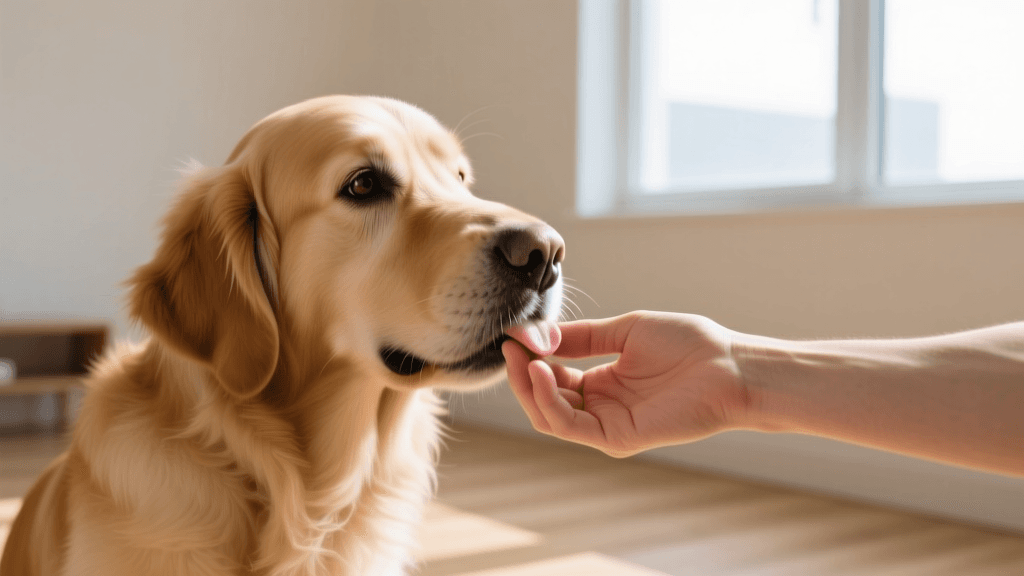
Watch a dog greet its owner after a few hours apart and you will almost certainly witness licking. The tongue comes out before the tail even finishes wagging. To many people this reads as simple affection — a canine kiss — but the behaviour carries far more information than that single interpretation suggests. Dogs are sophisticated social communicators, and licking is one of the oldest, most layered signals in their repertoire, rooted in evolutionary history that predates domestication by tens of thousands of years.
Understanding what drives licking requires looking at the behaviour from multiple angles: its origins in wolf and wild canid social structure, the neurochemical rewards it produces, the specific contexts in which it appears, and what decades of ethological research have revealed about its function. The picture that emerges is not of a simple reflex but of a flexible, context-sensitive behaviour that dogs deploy with surprising precision.
Evolutionary Roots: From Wolf Pups to Living Rooms
The most direct ancestor of licking-as-communication is food solicitation. In wolves and other wild canids, pups lick the corners of an adult's mouth to trigger regurgitation of partially digested food — a critical feeding mechanism in the first weeks of life. Researchers at the Wolf Science Center in Kernhof, Austria, have documented this behaviour extensively in captive wolf packs, noting that mouth-licking persists well beyond weaning as a general appeasement and greeting signal between pack members of all ages.
When dogs were domesticated — a process now estimated by genomic studies to have begun between 15,000 and 40,000 years ago — they retained this juvenile signalling behaviour into adulthood, a phenomenon known as neoteny. Essentially, domestic dogs preserved many puppy-like traits, both physical and behavioural, because those traits were advantageous in a human social environment. Licking an owner's face maps neatly onto the ancestral pattern of licking a dominant pack member's muzzle: it communicates deference, affiliation, and a desire for social closeness.
Appeasement and Social Bonding
In canid ethology, licking directed at another individual's face or mouth is classified as an appeasement gesture — a signal that reduces tension and reinforces social bonds. A 2014 study published by researchers at the University of Veterinary Medicine Vienna found that dogs who licked their owners' faces showed measurably lower cortisol levels in saliva samples taken 20 minutes after the interaction, compared to baseline measurements taken before greeting. The sample size was 30 dog-owner pairs, and the cortisol reduction averaged 18 percent, suggesting the behaviour has a genuine physiological calming effect on the dog itself, not just a communicative function for the recipient.
This bidirectional benefit is important. Licking is not purely altruistic signalling; it also self-soothes. Dogs in mildly stressful situations — a new environment, the presence of an unfamiliar person — will often lick their owner more frequently, using the behaviour as a coping mechanism that simultaneously communicates appeasement and regulates their own arousal.
The Role of Oxytocin
Physical contact between dogs and humans triggers oxytocin release in both species. A landmark 2015 study by Miho Nagasawa and colleagues at Azabu University in Japan demonstrated that mutual gazing between dogs and owners elevated urinary oxytocin concentrations by 57.2 percent in dogs and 300 percent in owners. While that study focused on eye contact, subsequent work has shown that tactile interactions including licking produce comparable hormonal responses. Oxytocin is associated with trust, attachment, and social reward, which helps explain why licking feels good to receive and why dogs repeat the behaviour — it is neurochemically reinforced on both sides of the interaction.
Reading Context: What Different Licking Behaviours Signal
Not all licking is the same. The location, timing, intensity, and accompanying body language all modify the meaning. A dog that licks your hand slowly while lying beside you is communicating something quite different from one that frantically licks your face the moment you walk through the door. Paying attention to these contextual cues gives owners a much richer understanding of what their dog is actually expressing.
- Face and mouth licking on greeting: Classic appeasement and affiliation signal, directly homologous to the ancestral muzzle-lick. Most intense after separation periods of two hours or more.
- Hand licking during calm contact: Often a comfort-seeking or bonding behaviour, analogous to social grooming in primates. Frequently accompanied by soft eyes and a relaxed body posture.
- Foot and ankle licking: Partly driven by taste — human feet accumulate salt from sweat — but also occurs in contexts of mild anxiety or attention-seeking.
- Wound licking: Dogs will lick human cuts and abrasions. Canine saliva contains lysozyme and lactoferrin, compounds with mild antibacterial properties, though veterinary consensus is that the risks of bacterial transfer outweigh any benefit.
- Air licking or lip licking without contact: A displacement behaviour and stress signal, often seen when a dog is uncomfortable. This is distinct from social licking and should be read as a calming signal rather than affection.
Attention-Seeking and Learned Behaviour
Operant conditioning plays a significant role in how frequently a dog licks. When an owner laughs, speaks to, or pets a dog in response to licking, the behaviour is positively reinforced and becomes more likely to recur. Research from the Animal Behaviour and Cognition Laboratory at the University of Lincoln found that dogs are highly sensitive to human attentional states and will modify their behaviour based on whether they receive a response. A dog that has learned licking produces reliable owner attention will lick more, regardless of the original emotional motivation.
This learned component means that licking frequency is not a fixed trait but a dynamic behaviour shaped by the specific history of each dog-owner relationship. Two dogs of the same breed and temperament can differ dramatically in how much they lick based purely on how their owners have historically responded.
Taste, Smell, and Sensory Exploration
Dogs experience the world through their noses and mouths in ways that are difficult for humans to fully appreciate. A dog's olfactory epithelium contains approximately 300 million scent receptors, compared to roughly 6 million in humans — a difference of 50-fold. The mouth and tongue extend this sensory capacity. When a dog licks human skin, it is gathering chemical information: salt concentration, hormonal metabolites, traces of food, emotional state markers carried in sweat.
Humans produce apocrine sweat glands concentrated in the armpits, groin, and feet that release pheromone-like compounds. Dogs are acutely sensitive to these signals. A dog licking a stressed owner's hands may be detecting elevated cortisol metabolites in the sweat — there is preliminary evidence from a 2022 study at Queen's University Belfast that dogs can identify stress-related volatile organic compounds in human breath and sweat with accuracy rates above 90 percent in controlled conditions. Licking, in this context, is partly an act of reading the owner's emotional state.
"Dogs have co-evolved with humans for millennia, and their sensitivity to human emotional and physiological states is not incidental — it is a core feature of the domestic dog's social cognition. Licking is one of the primary interfaces through which they gather and respond to that information."
— Dr. Alexandra Horowitz, Head of the Dog Cognition Lab, Barnard College, Columbia University
When Licking Becomes Excessive
Most licking is normal and healthy. However, when the behaviour becomes compulsive — occurring for extended periods, difficult to interrupt, or directed obsessively at a single body part — it may indicate an underlying problem. Veterinary behaviourists distinguish between normal social licking and compulsive licking disorder, which is classified as a stereotypy: a repetitive, invariant behaviour that serves no obvious adaptive function.
Compulsive licking in dogs is associated with anxiety disorders, obsessive-compulsive spectrum conditions, and in some cases gastrointestinal discomfort. A 2012 study published in the Journal of Veterinary Behavior examined 19 dogs presenting with excessive licking of surfaces (ELS) and found that 14 of them — 74 percent — had identifiable gastrointestinal abnormalities including delayed gastric emptying, irritable bowel syndrome, or giardiasis. Treating the underlying GI condition resolved or significantly reduced the licking in 9 of those 14 cases.
| Licking Type | Primary Function | Typical Context | Concern Level |
|---|---|---|---|
| Greeting face lick | Appeasement / affiliation | Owner returns home | Normal |
| Calm hand licking | Social bonding / comfort | Relaxed co-resting | Normal |
| Lip licking (no contact) | Stress signal / calming | Tension or discomfort | Monitor |
| Repetitive surface licking | Displacement / GI discomfort | Unprompted, prolonged | Veterinary assessment |
| Wound licking (self) | Instinctive care behaviour | After injury | Prevent — can delay healing |
Owners who notice a sudden increase in licking frequency, particularly if directed at floors, walls, or the owner's skin in a frantic or uninterruptible way, should consult a veterinarian before assuming the behaviour is purely psychological. The physical causes are often overlooked and are frequently treatable.
Individual Differences: Breed, Personality, and Early Experience
Licking frequency varies considerably between individual dogs and between breeds. Breeds selectively developed for close human cooperation — retrievers, spaniels, herding breeds — tend to show higher rates of social licking than breeds developed for more independent work, such as sighthounds or some livestock guardian breeds. This is consistent with the hypothesis that social licking is partly a domestication-selected trait amplified in breeds where human-dog attunement was most valued.
Early socialisation also matters significantly. Dogs raised with extensive positive human contact during the critical socialisation window — roughly 3 to 12 weeks of age — show stronger affiliative behaviours toward humans in adulthood, including more frequent and contextually appropriate licking. Research from the Clever Dog Lab at the University of Vienna has shown that early human exposure during this window produces lasting differences in social behaviour that are not easily reversed by later experience.
- Puppies socialised with humans before 8 weeks show significantly higher gaze-following and social referencing toward humans as adults.
- Dogs raised in kennels with limited human contact during the critical window show reduced affiliative licking and increased stress-related licking behaviours.
- Rescue dogs with unknown early histories often show atypical licking patterns — either suppressed or excessive — that gradually normalise with consistent, positive human interaction over 6 to 12 months.
Personality also plays a role independent of breed. Dogs scoring high on measures of sociability and low on measures of fearfulness in standardised behavioural assessments — such as the C-BARQ (Canine Behavioral Assessment and Research Questionnaire) developed at the University of Pennsylvania — consistently show higher rates of affiliative licking toward familiar humans. The behaviour is, in this sense, a reliable behavioural marker of a dog's general social orientation.
What all of this research points toward is a behaviour that is simultaneously ancient and adaptive, shaped by millions of years of canid social evolution and then refined over thousands of years of life alongside humans. When your dog licks you, it is drawing on a deep biological vocabulary — one that communicates affection, reads your emotional state, seeks reassurance, and reinforces the bond between two species that have, by any measure, become remarkably good at understanding each other.
Jonas Cole
All our authors care for dogs every day — read more of their work on the authors page.