Why Dogs Bark At Night And How To Help
Learn about why dogs bark at night and how to help with expert tips and data-backed advice.
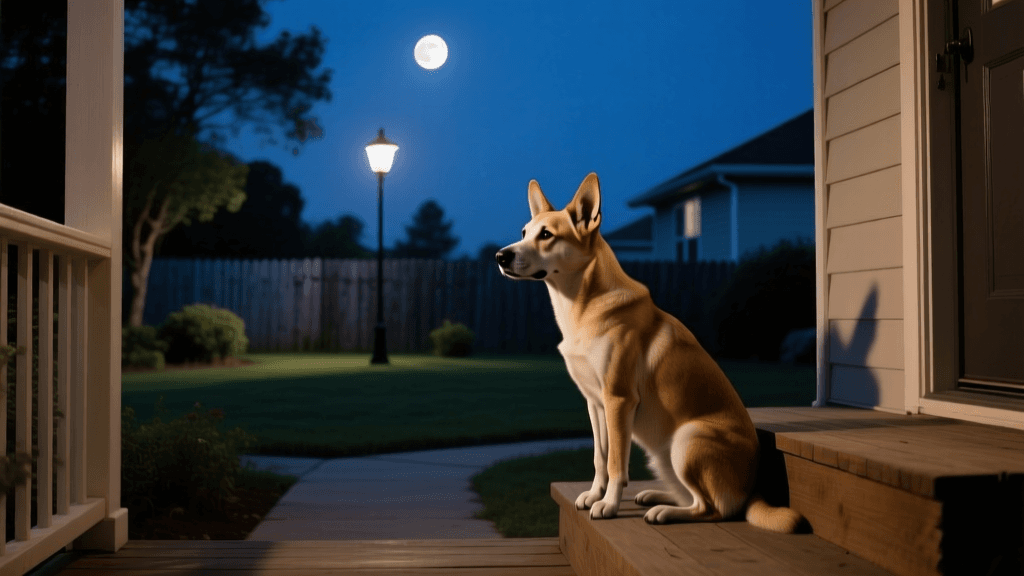
The Nighttime Bark: More Than Just Noise
Few things disrupt a household quite like a dog erupting into frantic barking at two in the morning. For many owners, the instinct is to shush the dog and go back to sleep. But canine behaviorists have spent decades studying exactly this behavior, and what they've found is that nighttime barking is rarely random. It is a structured, purposeful form of communication rooted in millions of years of evolutionary history — and understanding it is the first step toward addressing it effectively.
Dogs are not simply being difficult when they bark at night. They are responding to stimuli, emotional states, and social needs that are just as real to them at midnight as they are at noon. The difference is that the nighttime environment strips away the daytime distractions that normally buffer those responses, leaving the dog's nervous system more reactive and its vocalizations more pronounced.
What Canine Ethology Tells Us About Barking
Ethology — the scientific study of animal behavior in natural conditions — has produced some of the most illuminating research on why dogs vocalize. Dr. Alexandra Horowitz, director of the Dog Cognition Lab at Barnard College, Columbia University, has written extensively about how dogs perceive and interact with their environment. Her work emphasizes that dogs experience the world primarily through scent and sound, and that their vocalizations are tightly coupled to what they detect through those senses.
Stanley Coren, professor emeritus of psychology at the University of British Columbia and author of How Dogs Think, has catalogued bark types across dozens of breeds and contexts. His research identifies at least six acoustically distinct bark patterns in domestic dogs, each associated with a different emotional or communicative function. Nighttime barking most commonly falls into two of those categories: the alert bark and the distress bark — and they sound noticeably different to a trained ear.
The alert bark is typically sharp, repetitive, and evenly spaced. The distress bark tends to be higher in pitch, more erratic in rhythm, and often accompanied by whining. Recognizing which type your dog is producing gives you immediate diagnostic information about what is driving the behavior.
The Role of Acoustic Ecology After Dark
The nighttime soundscape is fundamentally different from the daytime one. Research published by the Cornell Lab of Ornithology found that ambient noise levels in suburban environments drop by an average of 12 to 18 decibels between 10 p.m. and 4 a.m. For a dog whose hearing range extends to approximately 65,000 Hz — compared to the human ceiling of around 20,000 Hz — this acoustic quieting means that sounds which were previously masked by traffic, voices, and activity suddenly become audible. A raccoon moving through a yard three houses away, a car door closing two blocks distant, or a coyote calling from a field half a mile out can all register clearly in a dog's auditory field when the neighborhood goes quiet.
This is not a flaw in the dog's design. It is a feature. Ancestral canids that could detect threats during the vulnerable hours of darkness had a survival advantage. The domestic dog retains that wiring even when the "threat" is a neighbor's cat crossing a fence.
Scent Drift and Territorial Triggers
Beyond sound, scent plays a significant role in nighttime arousal. Cool nighttime air causes scent molecules to settle closer to the ground and travel farther laterally, a phenomenon well-documented in tracking and search-and-rescue literature. Dogs sleeping near windows or in yards can detect the olfactory signatures of passing animals, unfamiliar humans, or even other dogs' urine markings with far greater clarity at night than during warmer daytime hours. For dogs with strong territorial instincts — many herding and guarding breeds in particular — this olfactory information can be enough to trigger sustained barking even when nothing is visually present.
Common Scenarios and What They Signal
Understanding the context of nighttime barking helps owners respond appropriately rather than reactively. Below are several real-world scenarios that veterinary behaviorists encounter frequently in clinical practice.
Scenario 1: The dog barks at a fixed time each night. This pattern often points to a recurring external stimulus — a neighbor who arrives home at the same hour, a garbage truck on a predictable route, or wildlife following a habitual path through the yard. Dogs are extraordinarily good at learning temporal patterns. A study from the Max Planck Institute for Evolutionary Anthropology found that dogs could anticipate their owner's return home with greater than 80% accuracy based on scent concentration alone, suggesting their internal clocks are calibrated to environmental cues in ways humans rarely appreciate.
Scenario 2: The dog barks only when left alone at night. This is a hallmark of separation-related distress. The American Veterinary Medical Association estimates that separation anxiety affects between 14% and 20% of the domestic dog population in the United States. Nighttime isolation amplifies the distress because the dog lacks the daytime social activity that normally provides reassurance. These dogs are not being defiant; they are experiencing genuine anxiety.
Scenario 3: An older dog begins barking at night after years of silence. New-onset nighttime vocalization in senior dogs is a recognized clinical sign that warrants veterinary attention. Canine cognitive dysfunction syndrome — sometimes called doggy dementia — affects an estimated 28% of dogs aged 11 to 12 years and up to 68% of dogs aged 15 to 16 years, according to research published in the Journal of Veterinary Behavior. Disorientation, disrupted sleep cycles, and anxiety are all symptoms that can manifest as nighttime barking.
Reading the Body Language That Accompanies the Bark
A bark never occurs in isolation. The body language surrounding it carries as much information as the vocalization itself. Patricia McConnell, an applied animal behaviorist and adjunct professor at the University of Wisconsin-Madison, has described the importance of reading the whole dog rather than reacting to the sound alone.
Key signals to observe include:
- Tail position: A tail held high and stiff during barking indicates high arousal and potential territorial aggression. A tail tucked low or between the legs alongside barking suggests fear or anxiety as the primary driver.
- Ear orientation: Ears pitched sharply forward indicate the dog is focused on a specific external stimulus. Ears flattened back suggest the dog is distressed rather than alert.
- Hackles: Piloerection along the spine — raised hackles — signals intense arousal. It is not exclusively a sign of aggression; it can accompany fear, excitement, or uncertainty.
- Pacing vs. stationary barking: A dog that barks while pacing is more likely experiencing anxiety or cognitive confusion. A dog that plants itself at a window or door and barks in a directed way is more likely responding to a specific external trigger.
- Yawning or lip-licking between barks: These are calming signals — the dog's own attempt to self-regulate. Their presence suggests the dog is stressed rather than simply alert.
Medical Causes That Are Frequently Overlooked
Before attributing nighttime barking entirely to behavioral causes, it is worth ruling out physical contributors. Pain is a significant and underrecognized driver of nighttime vocalization. Dogs with arthritis, dental disease, gastrointestinal discomfort, or neurological conditions may bark at night because lying still for extended periods exacerbates their discomfort. A dog that was quiet for years and suddenly begins vocalizing at night deserves a thorough veterinary examination before any behavioral intervention is attempted.
Thyroid dysfunction, particularly hypothyroidism, can also alter a dog's sleep architecture and increase nighttime restlessness. Hearing loss — paradoxically — sometimes increases nighttime barking because the dog can no longer self-monitor the volume of its own vocalizations and may startle more easily from sleep.
"The dog that barks at night is not trying to annoy you. It is doing exactly what its biology and its emotional state are telling it to do. Our job is to figure out what that state is — not to silence it, but to address it."
— Dr. Karen Overall, veterinary behaviorist and researcher, University of Pennsylvania School of Veterinary Medicine
Evidence-Based Strategies to Reduce Nighttime Barking
Once the underlying cause is identified, intervention becomes far more targeted and effective. The following approaches are grounded in behavioral science and recommended by certified applied animal behaviorists.
Environmental management is often the fastest and most effective first step for stimulus-triggered barking. White noise machines placed near the dog's sleeping area can reduce the acoustic clarity of outside sounds. Research from the Colorado State University College of Veterinary Medicine found that classical music and certain white noise frequencies reduced stress-related behaviors in shelter dogs by measurable margins, with heart rate variability improving within 30 minutes of exposure. Blackout curtains or repositioning the dog's sleeping area away from street-facing windows can similarly reduce visual triggers.
Systematic desensitization and counter-conditioning are the gold-standard behavioral interventions for dogs that bark in response to specific stimuli. This involves controlled, gradual exposure to the trigger at a level below the dog's reaction threshold, paired with high-value rewards, until the dog learns to associate the previously alarming stimulus with something positive. This process takes weeks to months and requires consistency, but the outcomes are durable in a way that punishment-based suppression is not.
Structured exercise and mental enrichment during daylight hours directly reduce nighttime arousal. A dog that has had adequate physical exercise and cognitive engagement — puzzle feeders, scent work, training sessions — enters the night with a lower baseline stress level. The relationship is physiological: exercise increases serotonin and dopamine availability and reduces cortisol, the primary stress hormone. Veterinary behaviorists at the Animal Behavior Clinic at Tufts University Cummings School of Veterinary Medicine routinely prescribe structured daily exercise as a component of treatment for anxiety-related barking.
Sleep environment optimization matters more than most owners realize. Dogs are polyphasic sleepers — they cycle through sleep stages more frequently than humans — and disruptions to their sleep environment can increase nighttime wakefulness. A consistent sleeping location, a comfortable orthopedic surface (particularly important for older dogs), and a predictable pre-sleep routine all contribute to more settled nighttime behavior.
For dogs with confirmed separation anxiety or cognitive dysfunction, veterinary-prescribed pharmacological support may be appropriate alongside behavioral intervention. Medications such as fluoxetine or trazodone are not sedatives; they reduce the neurological hyperreactivity that makes behavioral modification difficult to implement. They are tools that create a window for learning, not permanent solutions on their own.
A Practical Framework for Owners
Addressing nighttime barking effectively requires moving through a logical sequence rather than reaching for the nearest quick fix. The following framework reflects the approach used by veterinary behaviorists in clinical settings.
- Document the pattern. Keep a log for one to two weeks noting the time, duration, apparent trigger (if identifiable), and the dog's body language. Patterns that are invisible in the moment become obvious in a written record.
- Rule out medical causes. Schedule a veterinary examination, particularly if the barking is new, if the dog is over seven years old, or if it is accompanied by other behavioral changes.
- Identify the category. Is this alert barking, distress barking, or something else? The body language signals described above will help you distinguish between them.
- Implement environmental management first. Reduce or eliminate the triggering stimuli where possible before attempting behavioral modification.
- Begin a structured desensitization protocol if a specific trigger has been identified. Consider working with a certified applied animal behaviorist (CAAB) or a veterinary behaviorist (Dip ACVB) for complex cases.
- Evaluate progress at four-week intervals. Behavioral change in dogs is measurable but not instantaneous. Consistent application of the correct intervention over four to eight weeks typically produces clear improvement.
The following table summarizes the most common nighttime barking causes alongside their distinguishing features and primary interventions:
| Cause | Key Indicators | Primary Intervention |
|---|---|---|
| External stimulus (wildlife, noise) | Directed barking, forward ears, fixed gaze | Environmental management, desensitization |
| Separation anxiety | Barking only when alone, pacing, destructive behavior | Graduated alone-time training, possible medication |
| Canine cognitive dysfunction | Senior dog, disorientation, disrupted sleep cycle | Veterinary evaluation, environmental enrichment, medication |
| Pain or physical discomfort | New onset, position changes, reluctance to lie down | Veterinary diagnosis and treatment |
| Territorial arousal | Hackles raised, stiff posture, high tail | Stimulus reduction, counter-conditioning |
| Boredom or under-stimulation | Generalized restlessness, younger dog, insufficient exercise | Increased daily exercise and enrichment |
Nighttime barking is one of the most common reasons dog owners seek behavioral guidance, and it is also one of the most solvable — provided the approach is grounded in understanding rather than suppression. Dogs that are heard, understood, and helped sleep better. So do their owners.
Jonas Cole
All our authors care for dogs every day — read more of their work on the authors page.