Why Dogs Follow You Everywhere In The House
Learn about why dogs follow you everywhere in the house with expert tips and data-backed advice.
The Velcro Dog Phenomenon
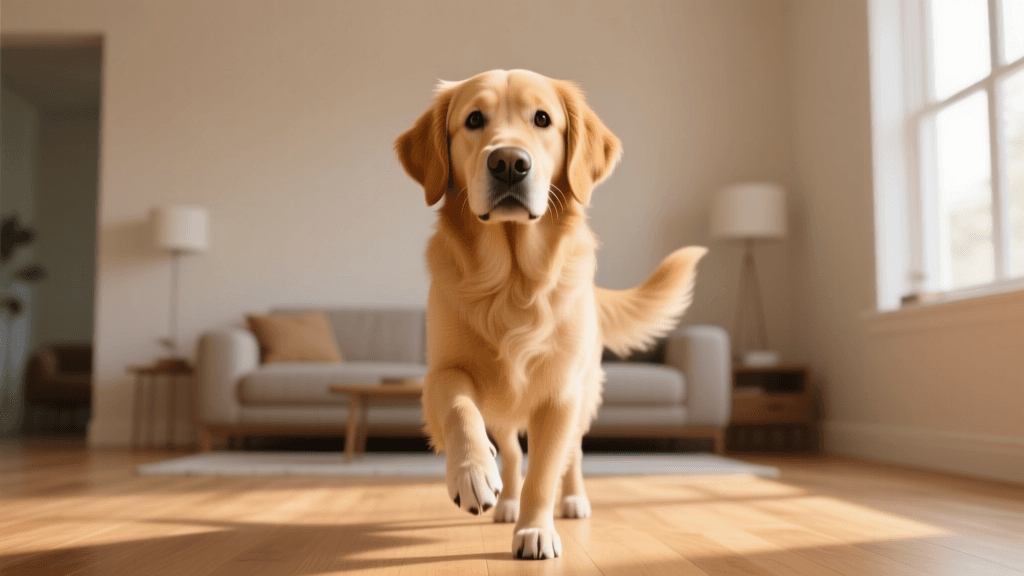
You step into the kitchen to pour a glass of water. Within seconds, four paws are clicking across the tile behind you. You move to the bathroom, and a wet nose appears at the crack of the door. You settle back onto the couch, and a warm body immediately presses against your leg. If you share your home with a dog, this shadow-like behaviour is almost certainly familiar — and it is far more than simple affection. It is a window into thousands of years of evolutionary history, neurological wiring, and the specific social dynamics your dog has built with you as an individual.
Researchers and ethologists have spent decades unpacking exactly why domestic dogs track their human companions so persistently. The answers draw on wolf pack sociology, the neuroscience of attachment, selective breeding records, and controlled behavioural experiments. What emerges is a picture of an animal whose entire cognitive architecture has been shaped, generation by generation, to orient toward people.
Evolutionary Roots of Human-Following Behaviour
The domestic dog, Canis lupus familiaris, diverged from a wolf-like ancestor somewhere between 15,000 and 40,000 years ago, with genetic studies from the University of Chicago placing the most likely domestication window at approximately 11,000–16,000 years before present. That process was not simply one of taming wild animals — it involved a profound restructuring of social cognition. Dogs were selected, consciously or otherwise, for their willingness to treat humans as social partners rather than competitors or threats.
One of the most cited demonstrations of this shift comes from a landmark study conducted at the Max Planck Institute for Evolutionary Anthropology in Leipzig, Germany. Researchers found that domestic dogs outperform chimpanzees — our closest living relatives — on tasks requiring them to follow human communicative cues such as pointing and gaze direction. Wolves raised by humans performed significantly worse than dogs on the same tasks, suggesting the difference is not simply a product of exposure to people but of genuine genetic change in social orientation (Hare et al., 2002, Science).
Following you around the house, then, is not a quirk or a trained behaviour in most dogs. It is the expression of a deeply embedded social instinct: stay close to the human, monitor the human's movements, and remain available for interaction. From an evolutionary standpoint, the dogs whose ancestors did this most reliably were the ones most likely to receive food, protection, and reproductive opportunity.
The Role of Selective Breeding
Different breeds show markedly different intensities of following behaviour, and this variation maps closely onto their historical working roles. Herding breeds such as Border Collies and Australian Shepherds were selected over centuries to work in tight coordination with a single handler, often at distances of several hundred metres but always with constant visual reference to that person. The result is a dog that finds it genuinely uncomfortable to lose sight of its owner.
Toy breeds present a different but equally instructive case. Dogs like the Cavalier King Charles Spaniel were bred specifically as companion animals for European aristocracy, with written records from the 17th century describing their role as lap warmers and emotional companions. Their following behaviour is less about working coordination and more about the social bonding function that was their entire purpose.
Attachment Theory Applied to Dogs
In the 1990s, researchers began applying the framework of attachment theory — originally developed by John Bowlby to describe infant-caregiver bonds — to the dog-human relationship. Studies at Eötvös Loránd University in Budapest, Hungary, led by ethologist Ádám Miklósi, demonstrated that dogs show a clear "secure base effect" with their owners. In experimental settings, dogs explored novel environments more confidently when their owner was present, showed distress when the owner left, and sought proximity upon reunion — all hallmarks of secure attachment in human infants.
This research established that the person a dog follows is not interchangeable. Dogs form specific attachments to specific individuals. In multi-person households, most dogs show a clear preference for one person, typically the individual who provides the most consistent care and positive interaction. Following behaviour is therefore not random proximity-seeking — it is directed social behaviour aimed at a particular attachment figure.
What Your Dog Is Actually Reading
When your dog follows you from room to room, it is not simply tracking your location. It is continuously reading a stream of behavioural and physiological information that you are broadcasting, largely without awareness.
Dogs have approximately 300 million olfactory receptors in their noses, compared to roughly 6 million in humans. This means they can detect hormonal changes associated with stress, excitement, fear, and even early illness. A 2019 study published in PLOS ONE found that dogs could identify stress-related changes in human breath and sweat samples with an accuracy rate of 93.75%. When you move toward the kitchen, your dog may be responding not just to the visual cue of your movement but to subtle shifts in your scent profile that signal you are about to engage in a food-related activity.
Beyond scent, dogs are extraordinarily sensitive to human body language. Research from the Dog Cognition Centre at the University of Portsmouth found that dogs pay particular attention to the left side of a human face — the side that more reliably expresses genuine emotion — suggesting they have developed specialised perceptual strategies for reading human emotional states. Your dog following you may partly be an ongoing effort to maintain the visual access needed to keep reading your emotional cues.
Anticipatory Behaviour and Routine Mapping
Dogs are exceptional pattern learners. Studies using accelerometers attached to dogs in home environments have shown that many dogs can predict their owner's return from work with accuracy up to 10 minutes before arrival, apparently by tracking changes in the owner's scent concentration in the home as it fades throughout the day. This same capacity for temporal and behavioural pattern recognition drives much of the following behaviour seen indoors.
Your dog has almost certainly mapped your daily routine in considerable detail. It knows that when you move toward the coat rack, a walk is likely. It knows that when you walk to the kitchen at a particular time of day, feeding may follow. Following you is partly a strategy for positioning itself to be present at the moments that matter most — meals, walks, play sessions, and departures.
"Dogs have co-evolved with humans for so long that they have essentially become specialists in reading us. They are not just following a moving object — they are following a social partner whose behaviour carries enormous predictive value for their own wellbeing."
— Dr. Alexandra Horowitz, Head of the Dog Cognition Lab, Barnard College, Columbia University
Anxiety, Insecurity, and When Following Becomes a Problem
Not all following behaviour reflects healthy attachment. For some dogs, the inability to be separated from their owner — even briefly — is a symptom of separation anxiety, a condition that affects an estimated 14–20% of the domestic dog population according to data compiled by the American Veterinary Medical Association. These dogs do not simply prefer your company; they experience genuine physiological distress when you are out of sight.
The distinction between normal following and anxiety-driven following often lies in the dog's emotional state during the behaviour. A securely attached dog may follow you to the kitchen, settle nearby, and relax. An anxious dog may follow with visible tension — panting, pacing, whining, or immediately repositioning if you shift even slightly. Physiological markers tell the same story: anxious dogs show elevated cortisol levels, increased heart rate, and disrupted sleep patterns even during brief separations within the home.
Several factors increase the likelihood of anxiety-driven following:
- Rescue dogs with histories of abandonment or inconsistent care
- Dogs that experienced extended isolation during critical socialisation periods (3–12 weeks of age)
- Breeds with very high human-orientation scores, including Vizslas, Weimaraners, and Velcro breeds generally
- Dogs whose owners have recently changed work schedules, creating sudden shifts in the established routine
- Dogs that have experienced a significant loss, such as the death of another household pet or a family member
If following is accompanied by destructive behaviour, inappropriate elimination, or vocalisation when alone, a consultation with a veterinary behaviourist is warranted. Separation anxiety responds well to structured desensitisation protocols, and in moderate to severe cases, pharmacological support with medications such as fluoxetine or clomipramine — both FDA-approved for canine separation anxiety — can significantly improve outcomes.
The Neurochemistry of Canine Companionship
The bond that drives your dog to follow you has a measurable neurochemical basis. A landmark study by Miho Nagasawa and colleagues at Azabu University in Japan, published in Science in 2015, demonstrated that mutual gazing between dogs and their owners produces a significant rise in oxytocin — the same neuropeptide associated with mother-infant bonding in mammals — in both species. Dogs that gazed at their owners for longer periods showed urinary oxytocin increases of up to 130% compared to baseline.
This finding has profound implications for understanding following behaviour. Each time your dog follows you and receives attention, eye contact, or physical contact, it receives a neurochemical reward that reinforces the behaviour. The relationship is genuinely bidirectional: your oxytocin levels rise too, which makes you more likely to respond warmly to the dog's proximity, which in turn reinforces the following. Over months and years of shared life, this feedback loop builds an attachment of considerable neurobiological depth.
| Behaviour | Likely Motivation | Associated Research Finding |
|---|---|---|
| Following to kitchen | Food anticipation, routine mapping | Dogs predict feeding times within ±5 minutes in controlled studies |
| Following to bathroom | Separation discomfort, attachment maintenance | Even brief visual separation activates stress responses in high-attachment dogs |
| Following at departure cues | Anticipatory anxiety, routine recognition | Dogs respond to pre-departure cues up to 30 minutes before owner leaves |
| Following during owner distress | Empathic response, caregiving behaviour | Dogs approach crying strangers more than humming strangers (University of London, 2012) |
| Following new household members | Social assessment, attachment formation | New attachment bonds typically stabilise within 3–6 months of consistent interaction |
How to Respond to Your Dog's Following
Understanding the behaviour does not necessarily mean you need to change it. For most dogs and most owners, following is a benign and even enriching aspect of the relationship. The warmth of having a creature that genuinely wants to be near you is one of the central pleasures of dog ownership, and there is no behavioural or welfare reason to discourage it in a dog that is otherwise relaxed and confident.
That said, there are practical reasons some owners prefer to establish boundaries around the behaviour — particularly in households with young children, elderly members at fall risk, or working environments where a dog underfoot creates hazards. Teaching a reliable "place" or "settle" cue, where the dog learns to go to a specific mat or bed on request and remain there calmly, is the most effective approach. This does not suppress the dog's attachment; it simply gives the dog an alternative behaviour that satisfies its need to be near you while keeping it in a designated location.
For dogs showing signs of anxiety-driven following, the goal is not to punish proximity-seeking but to build the dog's confidence and tolerance for independence. This is best achieved through:
- Graduated departure exercises — beginning with absences of just a few seconds and systematically extending duration only when the dog remains calm
- Enrichment activities that occupy the dog independently, such as food puzzles, long-lasting chews, or sniff-based games
- Avoiding inadvertently reinforcing anxious behaviour by providing attention specifically when the dog is calm and settled rather than when it is actively soliciting contact
- Ensuring adequate physical exercise — dogs receiving less than their breed-appropriate exercise quota show significantly higher rates of anxiety-related behaviours
The dog that follows you everywhere is, at its core, doing exactly what its biology and its history with you have prepared it to do. It is monitoring its most important social relationship, positioning itself for the moments that matter, and expressing an attachment that has been shaped by tens of thousands of years of shared evolution. That the behaviour sometimes needs gentle management does not diminish what it represents: one of the most thoroughly documented and neurobiologically real cross-species bonds in the animal kingdom.
Dr. Hannah Wickes
All our authors care for dogs every day — read more of their work on the authors page.