Why Dogs Dig And How To Manage It
Learn about why dogs dig and how to manage it with expert tips and data-backed advice.
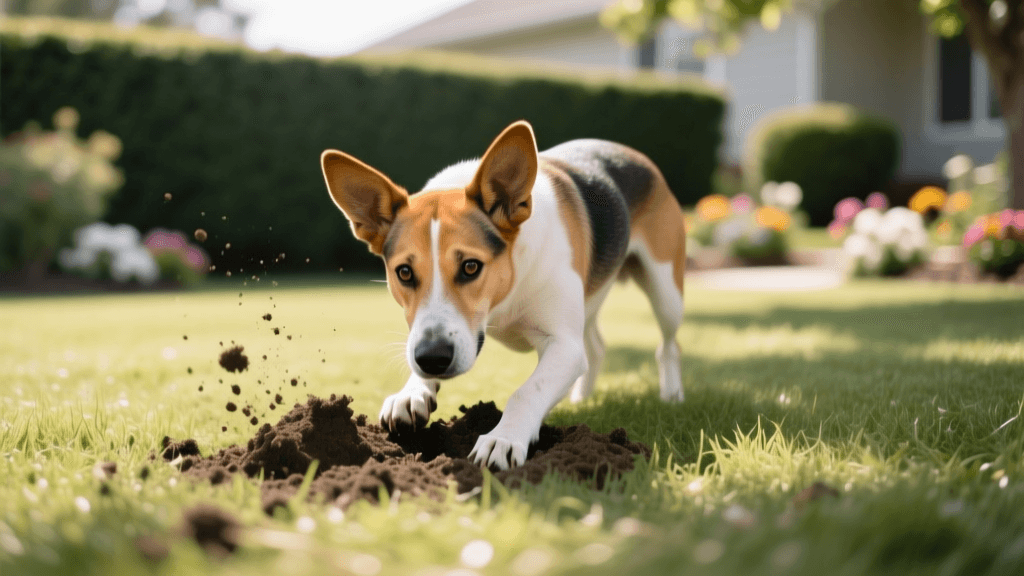
The Evolutionary Roots of Digging Behaviour
Digging is one of the most deeply ingrained behaviours in domestic dogs, and understanding it requires looking back tens of thousands of years. Long before dogs shared our homes, their wild ancestors relied on digging for survival — to cache food, create dens for whelping, regulate body temperature, and flush out prey. The domestic dog (Canis lupus familiaris) retains these instincts even when living in a suburban backyard with no practical need to exercise them. Recognising this evolutionary context is the first step toward managing the behaviour effectively rather than simply punishing it.
Research published by the University of Florida's Department of Animal Sciences found that approximately 68% of dog owners report their dogs engage in digging behaviour at least occasionally, with around 25% describing it as a persistent problem. These numbers suggest that digging is not an aberration — it is a normal expression of canine biology that has simply become inconvenient in a domestic setting.
The Main Motivations Behind Digging
Dogs do not dig for a single reason. Ethologists — scientists who study animal behaviour in natural contexts — have identified at least six distinct motivational categories that drive digging in domestic dogs. Each category calls for a different management strategy, which is why a one-size-fits-all approach rarely works.
Thermoregulation and Comfort
One of the most common reasons dogs dig is to regulate their body temperature. Soil just a few centimetres below the surface can be significantly cooler than the ambient air temperature on a hot day. Dogs will excavate a shallow depression and lie in it to cool down — a behaviour documented extensively in wild canids including wolves and African wild dogs. Conversely, in cold weather, some dogs dig to create an insulated hollow that retains body heat.
A study conducted at the Royal Veterinary College in London noted that brachycephalic breeds (those with shortened muzzles, such as Bulldogs and Pugs) are particularly prone to heat-seeking digging behaviour because they are less efficient at panting and therefore more vulnerable to overheating. If your dog digs primarily in summer and tends to lie in the hole afterward, thermoregulation is almost certainly the driver.
Prey Drive and Scent Tracking
Dogs possess approximately 300 million olfactory receptors in their noses, compared to roughly 6 million in humans — a difference of about 50-fold in raw receptor count. When a dog detects the scent of a burrowing animal such as a mole, vole, or rabbit beneath the soil, the prey drive can become overwhelming. Terrier breeds were specifically developed over centuries to pursue quarry underground, and their digging instinct is so strong it has been selectively reinforced through generations of breeding.
Breeds like the Jack Russell Terrier, Airedale, and Dachshund (whose name literally translates from German as "badger dog") will dig with extraordinary focus and persistence when following a scent trail. This is not disobedience — it is the dog doing precisely what its genetics have prepared it to do.
Anxiety, Boredom, and Frustration
Digging is also a common displacement behaviour — an activity a dog performs when it cannot resolve an underlying emotional state. Dogs left alone for extended periods, dogs with insufficient physical exercise, or dogs experiencing separation anxiety frequently turn to digging as an outlet. The repetitive physical action appears to provide a degree of self-soothing, similar to how humans might pace or tap their fingers when stressed.
The American Veterinary Society of Animal Behavior (AVSAB) has noted in its position statements on canine enrichment (2021) that inadequate mental and physical stimulation is one of the leading contributors to destructive behaviours in domestic dogs, including digging, chewing, and excessive barking. Dogs require an average of 1 to 2 hours of active exercise per day depending on breed, age, and health status — a threshold many pet owners do not consistently meet.
Breed Predispositions and Genetic Factors
Not all dogs are equally likely to dig. Selective breeding has amplified certain behavioural tendencies in specific breed groups, and understanding your dog's heritage can help predict and manage digging behaviour more accurately.
| Breed Group | Digging Tendency | Primary Motivation |
|---|---|---|
| Terriers (Jack Russell, Cairn, Border) | Very High | Prey drive, instinctive burrowing |
| Nordic/Spitz breeds (Husky, Malamute) | High | Thermoregulation, denning |
| Scent Hounds (Beagle, Basset) | Moderate–High | Scent tracking, prey drive |
| Herding breeds (Border Collie, Kelpie) | Moderate | Boredom, frustration, excess energy |
| Toy breeds (Chihuahua, Maltese) | Low–Moderate | Comfort, anxiety |
It is worth noting that individual variation within breeds is substantial. A Border Collie with insufficient daily exercise may dig far more than a well-exercised Jack Russell. Genetics set a predisposition; environment and management determine whether that predisposition becomes a problem.
Reading the Body Language Around Digging
Observing how a dog digs — not just that it digs — provides valuable diagnostic information. The body language accompanying the behaviour often reveals the underlying motivation more clearly than the location or frequency of digging alone.
Signs of Prey-Motivated Digging
A dog digging out of prey drive will typically display a highly focused, almost trance-like state. The ears will be forward and alert, the tail held stiff or wagging rapidly in short arcs, and the dog may pause periodically to sniff deeply into the hole before resuming. The digging is usually concentrated in a specific spot rather than scattered across the yard, and the dog may whine or vocalise with excitement. This is a dog in a high-arousal state, and interrupting it requires a strong competing reinforcer.
Signs of Anxiety-Driven Digging
Anxiety-related digging looks quite different. The dog may appear tense rather than excited — ears back or flattened, body posture low, tail tucked or held low. The digging often occurs near fence lines or gates, reflecting an attempt to escape the source of stress. Some dogs will dig at the same spot repeatedly in a stereotypic pattern, which is a red flag for chronic stress. If digging is accompanied by other anxiety indicators such as excessive vocalisation, destructive chewing, or house soiling when left alone, a consultation with a veterinary behaviourist is warranted.
Practical Management Strategies
Managing digging effectively means addressing the root cause rather than simply blocking the behaviour. Punishment after the fact is particularly ineffective with digging because dogs do not connect a reprimand delivered minutes after the act with the behaviour itself. Studies in applied animal behaviour consistently show that punishment-based approaches increase anxiety without reducing the target behaviour — and in anxiety-driven diggers, this can make the problem significantly worse.
The following strategies are grounded in behavioural science and have demonstrated effectiveness across a range of digging motivations:
- Designated digging zones: Create a sandbox or defined area where digging is permitted and actively encouraged. Bury toys or treats just below the surface to make the zone rewarding. Redirect the dog to this area consistently whenever digging occurs elsewhere. Research from the University of Bristol's Anthrozoology Institute supports the use of environmental enrichment zones as a primary intervention for repetitive digging behaviours.
- Increase physical and mental exercise: For boredom and frustration-driven diggers, the most effective intervention is simply meeting the dog's exercise needs. Aim for at least 45 to 90 minutes of active exercise daily for medium to large breeds, supplemented with puzzle feeders, scent work, and training sessions that engage the dog's mind.
- Address thermoregulation needs: Provide shade, fresh water, and a cool resting surface such as a raised mesh bed or cooling mat. Dogs that dig for temperature regulation will often stop once a more comfortable alternative is available.
- Manage the environment: For persistent diggers, physical barriers such as partially buried chicken wire along fence lines, or large flat stones placed over favourite digging spots, can interrupt the behaviour while longer-term training takes effect.
- Treat underlying anxiety: If anxiety is the driver, management strategies alone will not resolve the problem. Work with a qualified behaviourist or veterinary professional to address the anxiety directly, potentially including behaviour modification protocols and, where appropriate, pharmacological support.
Consistency is critical. Dogs learn through repetition and clear contingencies. If digging in the garden is sometimes ignored and sometimes corrected, the dog receives conflicting information and the behaviour is unlikely to change. Every member of the household needs to respond to digging in the same way, every time.
When Digging Signals a Medical Issue
In a small number of cases, a sudden increase in digging behaviour — particularly in a dog that has not previously shown much interest in it — can signal an underlying medical problem. Cognitive dysfunction syndrome (CDS) in older dogs, which is broadly analogous to dementia in humans, can cause repetitive and seemingly purposeless behaviours including digging. Hormonal changes, particularly in intact females approaching or experiencing a phantom pregnancy, can trigger intense nesting and digging behaviour driven by maternal instinct.
If a dog's digging behaviour changes abruptly in character or intensity, especially in a dog over 8 years of age or an intact female, a veterinary examination is a sensible first step before assuming the cause is purely behavioural.
"Behaviour is never random. Every action a dog takes is an attempt to meet a need or respond to an internal state. Our job as owners and practitioners is to identify what that need is — not simply to suppress the behaviour that expresses it." — Dr. Karen Overall, veterinary behaviourist and author of Manual of Clinical Behavioral Medicine for Dogs and Cats (Elsevier, 2013)
This perspective is worth keeping in mind whenever a dog's behaviour feels frustrating or destructive. The dog is not being spiteful or defiant — it is communicating something. Digging, in all its muddy inconvenience, is simply one of the clearest messages a dog can send about what it needs.
- Observe when and where digging occurs to identify the most likely motivation.
- Rule out medical causes if the behaviour is new or has changed suddenly.
- Match your management strategy to the specific motivation rather than applying a generic fix.
- Be consistent across all household members and across time.
- Seek professional guidance from a certified applied animal behaviourist (CAAB) or veterinary behaviourist if the behaviour is severe, persistent, or accompanied by signs of anxiety.
With patience, observation, and an understanding of what drives the behaviour, most digging problems are entirely manageable — and in many cases, redirectable into activities that satisfy the dog's instincts without sacrificing the garden.
Tom Renshaw
All our authors care for dogs every day — read more of their work on the authors page.