Why Does My Dog Follow Me Everywhere? Velcro Dog Behavior
Discover why your dog follows you everywhere. We answer Google's top questions on Velcro dog behavior, separation anxiety, and independence training.
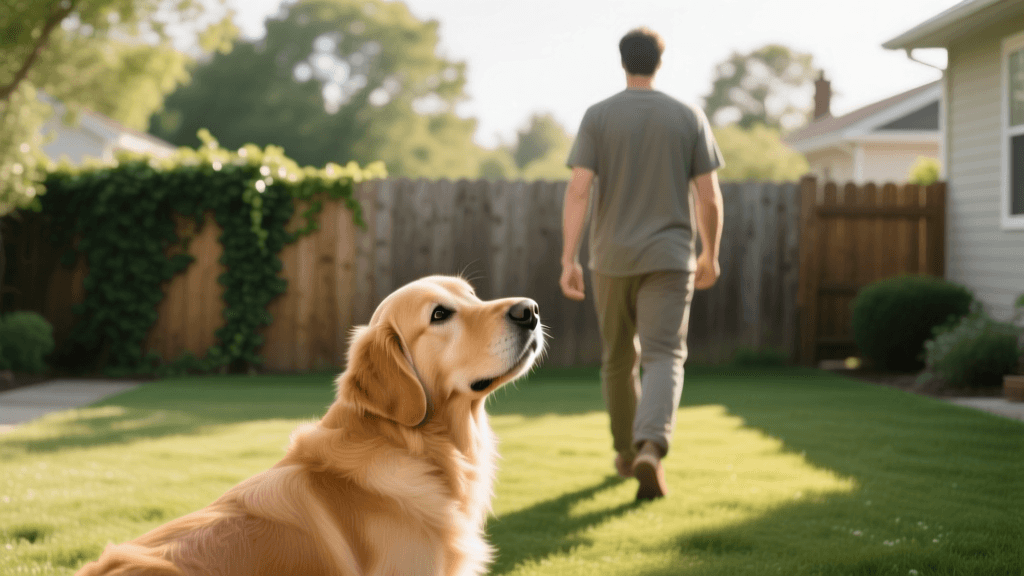
Decoding the 'Velcro Dog': Why Your Pup is Your Shadow
If you have ever found yourself trapped in the bathroom because your dog refuses to let you out of their sight, you have likely typed 'Why does my dog follow me everywhere?' into a search engine. You are not alone. This is consistently one of Google's most-asked questions among pet parents. While it can be endearing to have a furry shadow, it can also be exhausting and sometimes a sign of underlying behavioral issues.
In this comprehensive guide, we are diving deep into the psychology of 'Velcro dogs,' answering the internet's most pressing questions about canine attachment, and providing an actionable, step-by-step training plan to foster healthy independence in your pup.
The Psychology: Why Do Dogs Follow You From Room to Room?
To understand this behavior, we have to look at canine evolution and neurochemistry. Dogs are obligate social animals. In the wild, staying close to the pack meant survival. In your home, you are the center of their pack. However, modern science shows it goes much deeper than simple survival instincts.
A landmark study published in the journal Science revealed that mutual gazing between dogs and their owners significantly increases levels of oxytocin—the 'love hormone'—in both species. When your dog follows you and stares at you, they are quite literally getting a neurochemical reward. They follow you because being in your proximity feels physically and emotionally comforting. Furthermore, dogs are masters of operant conditioning. If following you into the kitchen resulted in a dropped piece of cheese even once, they will follow you into the kitchen every single time in anticipation of that reward.
Google Asks: Is 'Velcro' Behavior the Same as Separation Anxiety?
This is arguably the most critical question in the 'People Also Ask' dropdown. Many owners confuse a clingy dog with an anxious dog. According to the ASPCA, separation anxiety is a severe panic response triggered by being left alone, whereas Velcro behavior is simply a preference for close proximity while you are present.
Comparison Chart: Velcro Dog vs. Separation Anxiety
| Behavioral Sign | Velcro Dog (Normal Attachment) | Separation Anxiety (Clinical Issue) |
|---|---|---|
| Following you room-to-room | Yes, but settles down nearby | Yes, paces and whines if blocked |
| Reaction to closed doors | Scratches once, then waits | Frantic scratching, destroying door frames |
| When you leave the house | Sleeps or plays with toys | Pants, drools, howls, or eliminates indoors |
| Independence in the yard | Checks in visually, but explores | Stares at the door, refuses to sniff or play |
If your dog exhibits the behaviors in the right-hand column, you are likely dealing with separation anxiety, which may require the intervention of a certified veterinary behaviorist (expect to pay $200 to $400 for an initial consultation) and potentially anti-anxiety medication.
Which Breeds Are Most Prone to Clinginess?
Genetics play a massive role in how closely your dog shadows you. The American Kennel Club (AKC) notes that breeds developed to work in tandem with humans (like herding and hunting dogs) are genetically hardwired to watch their handlers closely. Conversely, livestock guardian breeds were bred to make independent decisions far away from human oversight.
Breed Propensity Table: Clingy vs. Independent
| Top 5 'Velcro' Breeds | Top 5 Independent Breeds |
|---|---|
| 1. German Shorthaired Pointer | 1. Chow Chow |
| 2. Doberman Pinscher | 2. Afghan Hound |
| 3. Labrador Retriever | 3. Shiba Inu |
| 4. Border Collie | 4. Great Pyrenees |
| 5. Pug | 5. Basenji |
Rapid-Fire: Answering Google's Most-Asked Follow-Up Questions
Why does my dog follow me and not my husband/wife?
Dogs usually shadow the person who controls the primary resources. If you are the one who feeds them, initiates playtime, and takes them on walks, you are the most valuable person in the room. It can also be a matter of socialization; if a puppy bonded primarily with one person during their critical 8-to-14-week socialization window, they may show a lifelong preference for that individual.
Why does my dog stare at me while following me?
Staring is a canine communication tool. They may be scanning your face for micro-expressions to predict your next move (e.g., 'Are we going for a walk?'). Alternatively, as mentioned earlier, they are trying to trigger that mutual oxytocin loop.
Is it bad to let my dog follow me everywhere?
Not inherently, as long as the dog can also relax independently. The danger arises when the dog loses the ability to self-soothe. If your dog cannot nap in a separate room without panicking, their clinginess has crossed into an unhealthy dependency.
Actionable Plan: How to Train Your Dog to Be Independent
If you need to reclaim your personal space, you must teach your dog that being alone is safe and rewarding. Here is a structured, actionable training protocol.
Step 1: Desensitize Your Departures (Timing: 2 Weeks)
Dogs with clingy tendencies often panic at 'pre-departure cues' like picking up your keys or putting on shoes. Action: Pick up your keys, then sit back down on the couch. Put your coat on, then take it off and make a cup of coffee. Do this 10 to 15 times a day for two weeks. This breaks the psychological association between these actions and you disappearing.
Step 2: Implement the 'Place' Command (Cost: $30 - $60)
You need to teach your dog a specific boundary. Product Recommendation: Invest in a raised cot bed (like the Coolaroo Elevated Pet Bed, approx. $35) or a high-quality orthopedic mat. Action: Lure your dog onto the bed with high-value treats (boiled chicken or freeze-dried liver). Give the cue 'Place.' Reward them for staying there. Start with 5-second intervals and gradually build up to 10 minutes while you sit across the room.
Step 3: Introduce Physical Barriers (Cost: $40 - $80)
Constant visual access reinforces the shadowing behavior. Product Recommendation: Purchase a freestanding pet gate or a pressure-mounted baby gate (e.g., Regalo Easy Step Walk Thru Gate, approx. $45). Action: Place the gate in the doorway of the room you are in, but leave your dog on the outside. Give them a long-lasting chew (like a Yak Cheese Puff or a stuffed KONG Classic, approx. $15) on the other side of the gate. This teaches them that being separated by a barrier results in premium rewards, not abandonment.
Step 4: Mental Enrichment for Solo Time (Cost: $20 - $30)
A tired dog is an independent dog. If your dog is following you out of boredom, you must provide an alternative outlet. Product Recommendation: A Snuffle Mat (approx. $25). Action: Before you need alone time (e.g., taking a shower or working in your home office), scatter 1/2 cup of their daily kibble into the snuffle mat. Foraging engages their olfactory system and naturally lowers their heart rate, encouraging them to stay in one spot rather than pacing after you.
Pro-Tip: Never punish your dog for following you. Scolding a dog for seeking proximity will only increase their anxiety and damage the trust you have built. Always use positive reinforcement to reward the behavior you do want, such as staying on their bed or settling in another room.
Final Thoughts on the Canine Shadow
Ultimately, a dog that follows you everywhere is paying you the highest compliment. It means they view you as their safe space, their provider, and their best friend. By understanding the psychological drivers behind this behavior and utilizing structured independence training, you can maintain that beautiful bond while ensuring your dog has the confidence to relax, even when you aren't right by their side.
beth-carrasco
All our authors care for dogs every day — read more of their work on the authors page.