How Dogs Smell Time and Emotion: The Science of Scent
Discover the science behind how dogs smell time, emotions, and health. Learn actionable scent enrichment tips to boost your dog's mental well-being.
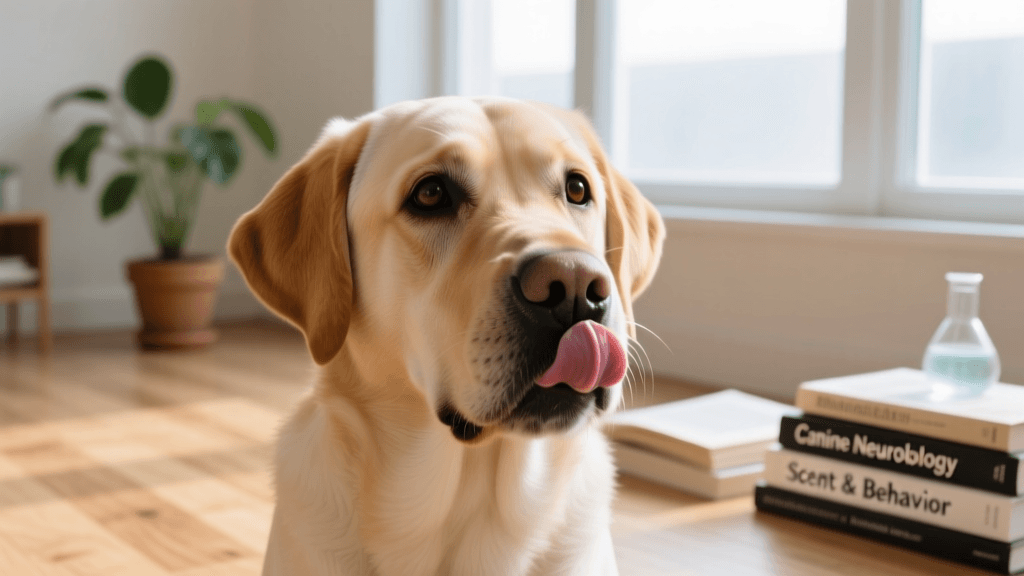
When we walk into a room, we immediately notice the lighting, the arrangement of the furniture, and the people present. We are highly visual creatures, relying primarily on our eyes to interpret the world. Dogs, however, experience reality through an entirely different sensory lens. When a dog walks into that same room, they are reading a complex, invisible newspaper of chemical information. They know who was there, what they ate, how they were feeling, and exactly how long ago they left. Welcome to the fascinating, science-backed world of canine olfaction.
The Anatomy of a Super-Sniffer
To understand why dogs behave the way they do on walks, we must first look at their remarkable nasal anatomy. According to the American Kennel Club, a dog's sense of smell is conservatively estimated to be 10,000 to 100,000 times more sensitive than that of a human. This is not an exaggeration; it is a matter of biological hardware.
While humans possess roughly 5 to 6 million olfactory receptors, a Bloodhound can have up to 300 million. Furthermore, the part of a dog's brain dedicated to analyzing odors—the olfactory bulb—is proportionally about 40 times larger than ours. But the true magic lies in how a dog breathes. When a dog inhales, a specialized fold of tissue inside their snout splits the airflow. About 12 percent of the air goes into a dedicated olfactory region lined with millions of receptor cells, while the rest goes to the lungs for respiration. When they exhale, the air exits through slits on the sides of their nostrils, creating a continuous, unidirectional flow of scent that allows them to sample odors without interruption.
Dogs also possess a secondary olfactory system known as the vomeronasal organ, or Jacobson's organ, located at the bottom of the nasal passage. This organ is specifically designed to detect pheromones—the chemical signals that animals secrete to communicate information about mating, territory, and social status. When you see your dog sniffing a fire hydrant intently and then clicking their teeth or holding their breath, they are actively engaging the Jacobson's organ to process complex chemical data.
How Dogs 'Smell' the Dimension of Time
One of the most profound scientific discoveries regarding canine cognition is their ability to literally smell time. Cognitive scientist Alexandra Horowitz, author of Being a Dog, explains in her research, which was highlighted in an interview on NPR, that odor is inherently tied to the passage of time.
Scents decay and dissipate over time. A strong, concentrated odor means the subject was there recently. A faint, diffuse odor means the subject passed by hours or even days ago. Because dogs can detect the minute concentration gradients of scent molecules in the air, they can perceive the past, present, and future. For example, if you leave for work at 8:00 AM every day, your dog can actually smell your departure time approaching. As the hours pass, the concentration of your lingering scent in the house decays at a predictable rate. Your dog learns to associate a specific, faint level of your scent concentration with the exact moment your car pulls back into the driveway. They aren't just waiting; they are tracking the chronological decay of your olfactory footprint.
Sniffing Emotions: The Chemistry of Feelings
The old adage that 'dogs can smell fear' is deeply rooted in science. When humans experience strong emotions like fear, stress, or joy, our autonomic nervous system triggers physiological changes, including the release of specific hormones like cortisol and adrenaline. These hormones alter the chemical composition of our sweat and breath.
Studies have shown that dogs can detect these chemosignals. When a dog sniffs a stressed human, they are picking up on the volatile organic compounds (VOCs) associated with the fight-or-flight response. This is why therapy dogs are so effective; they can biologically detect when a human's stress levels are rising and intervene with comforting physical contact before the human is even consciously aware of their own anxiety. Conversely, dogs can also smell the oxytocin and endorphin shifts associated with happiness, allowing them to mirror our emotional states with remarkable accuracy.
Human vs. Canine Olfactory Capabilities
To put this incredible biological machinery into perspective, review the comparative data below:
| Olfactory Metric | Humans | Dogs (Average) | Scent Hounds (e.g., Bloodhound) |
|---|---|---|---|
| Olfactory Receptors | 5 - 6 Million | 100 - 200 Million | Up to 300 Million |
| Olfactory Bulb Brain Mass | ~0.01% | ~0.31% | Over 0.35% |
| Vomeronasal Organ | Vestigial / Non-functional | Highly Active | Highly Active |
| Scent Discrimination | Baseline (1x) | 10,000x Better | 100,000x Better |
| Airflow Separation | No (Inhale/Exhale same path) | Yes (Continuous sampling) | Yes (Continuous sampling) |
Actionable Advice: Creating a Science-Backed 'Sniffari'
Understanding your dog's olfactory prowess means realizing that depriving them of sniffing is akin to blindfolding a human. The ASPCA strongly recommends sensory enrichment to prevent behavioral issues born from boredom. Here is how to implement science-backed scent enrichment into your daily routine, complete with costs, measurements, and timing.
1. The 20-Minute 'Sniffari' Walk
A brisk 30-minute walk focused purely on physical exercise does not tire a dog out mentally. Instead, dedicate 20 minutes of your daily routine to a 'Sniffari.'
- Equipment: Use a 10 to 15-foot biothane or cotton training leash (Cost: $25 to $45). Avoid retractable leashes, as they create constant tension and can cause neck injuries.
- Technique: Allow your dog to dictate the pace and direction. If they want to spend 5 minutes sniffing a single patch of grass, let them. This mental processing lowers their heart rate and provides deep cognitive fatigue.
- Timing: Early morning or dusk is best, as cooler, damp air holds scent molecules closer to the ground, making the 'smell-scape' much richer for your dog.
2. DIY Scent Enrichment: The Snuffle Mat
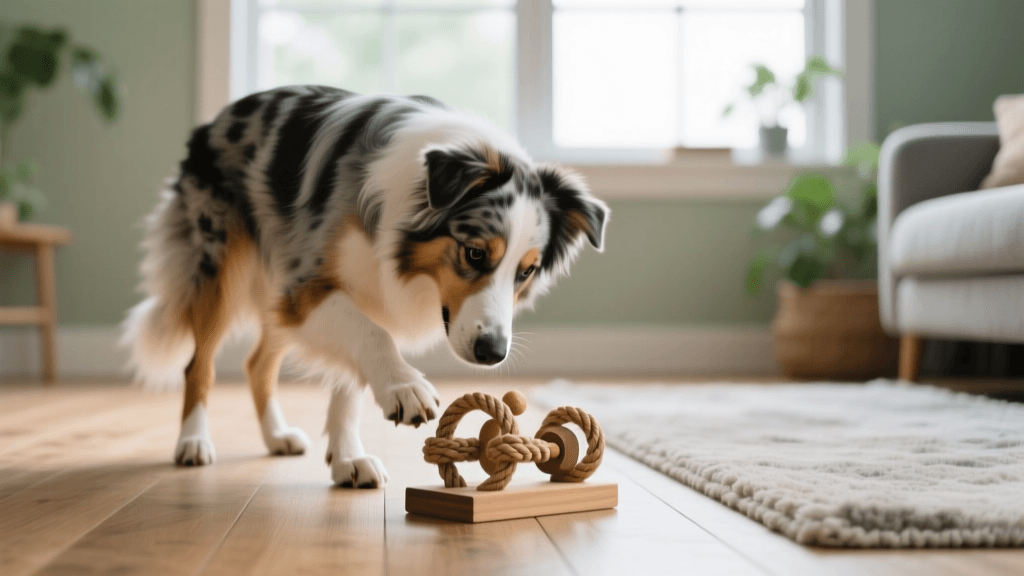
Feeding your dog from a stainless steel bowl takes about 30 seconds and provides zero mental stimulation. A snuffle mat mimics the natural foraging behavior of canines.
- Materials Needed: A heavy-duty rubber sink mat with holes (Cost: $5) and 2 yards of polar fleece fabric (Cost: $12).
- Construction: Cut the fleece into strips measuring 1 inch wide and 8 inches long. Tie each strip through the holes of the sink mat using a double knot.
- Usage: Hide your dog's daily kibble allocation deep within the fleece strips. A 15-minute snuffle mat session burns the same amount of mental energy as an hour of physical fetch. Always supervise your dog to ensure they do not chew and ingest the fabric.
3. Introductory Nose Work Games
You can train your dog to detect specific scents right in your living room, tapping into their natural tracking instincts.
- The Scent: Purchase a small bottle of Sweet Birch or Anise essential oil (Cost: $10 to $15). Put one drop on a cotton swab and place it inside a ventilated metal tin.
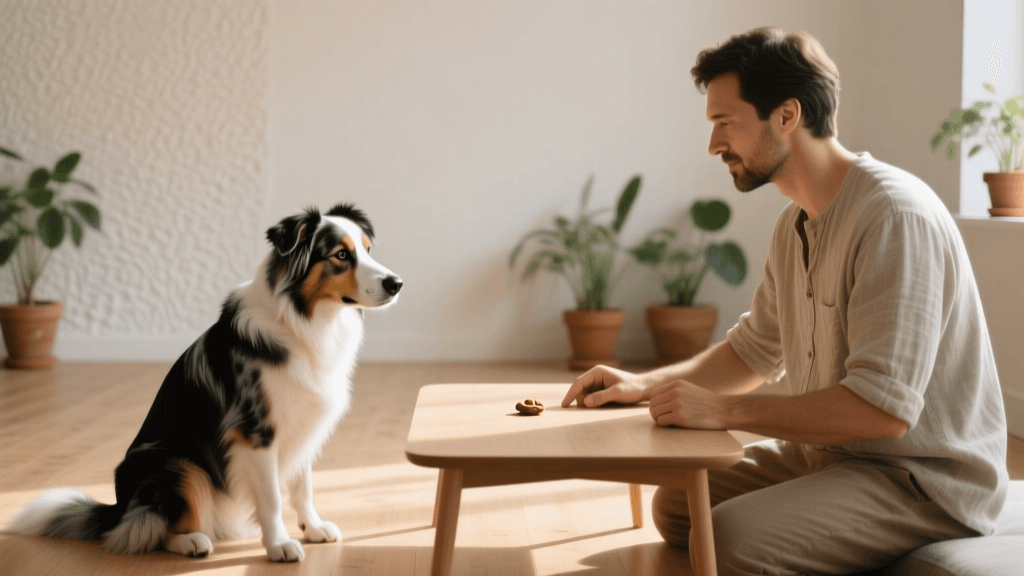
- The Game: Start in a low-distraction room. Hold the tin in your hand; the moment your dog sniffs it, mark the behavior with a 'Yes!' and give a high-value treat (like freeze-dried liver).
- Progression: Once they understand that the tin equals a reward, hide the tin behind a piece of furniture. Keep sessions strictly to 3 to 5 minutes to prevent frustration and keep the dog's drive high.
Conclusion
When we take the time to understand the science of canine olfaction, we fundamentally change how we interact with our pets. By allowing them to smell time, read emotions, and engage in natural foraging behaviors, we aren't just walking a dog—we are honoring their biology. The next time your dog stops to investigate a seemingly empty patch of dirt, remember: they are reading the morning news, and the least we can do is let them finish the article.
anouk-beaumont
All our authors care for dogs every day — read more of their work on the authors page.