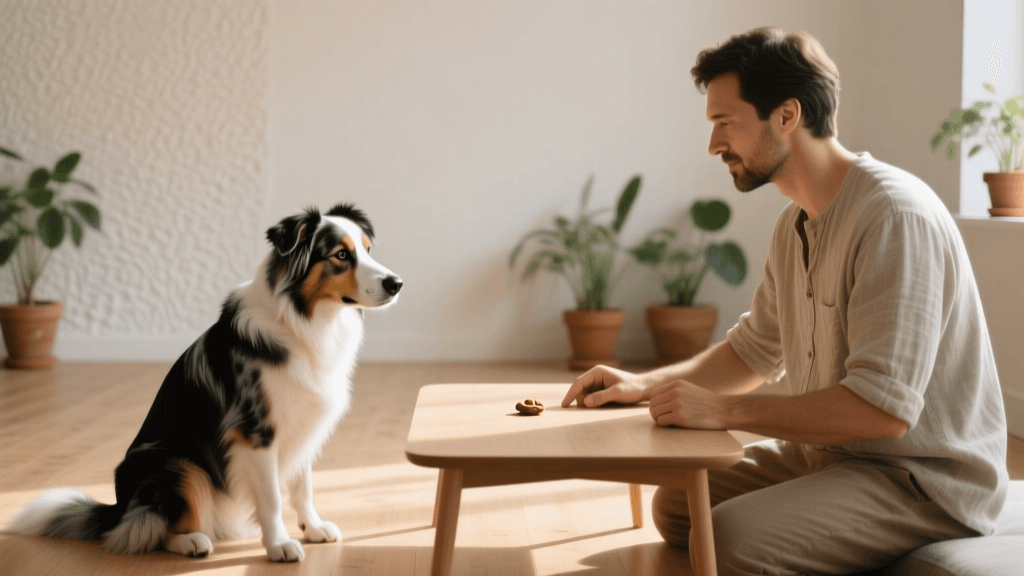
Can Dogs Really Talk? The Viral Button Training Trend Explained
Discover the viral dog speech button trend. Learn the psychology behind AAC canine communication, costs, and a step-by-step guide to teach your dog to talk.
The 'Button Dog' Phenomenon: Viral Trend or Real Science?
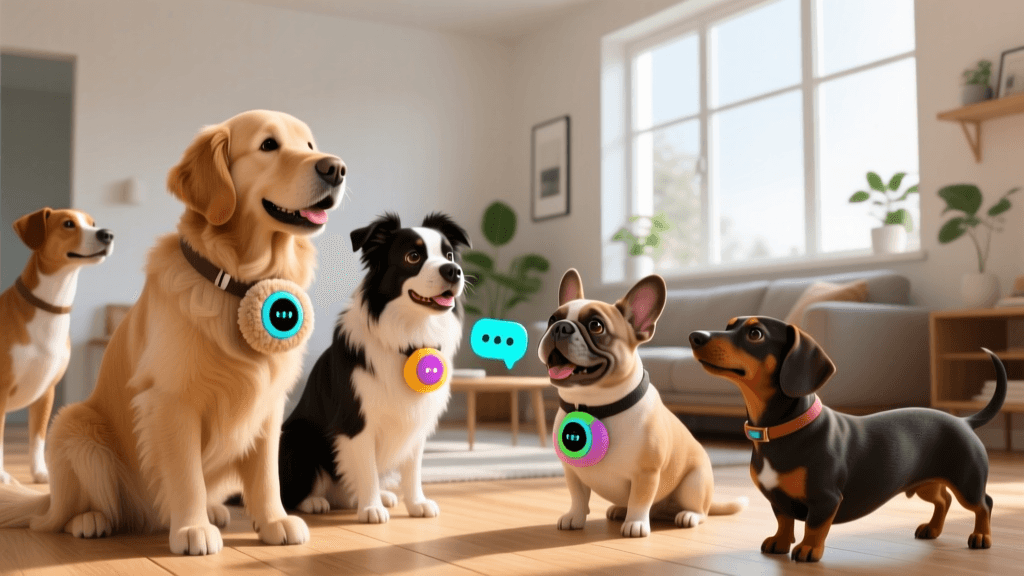
If you have spent any time on TikTok, Instagram, or YouTube over the past few years, you have almost certainly encountered a 'button dog.' From Bunny the Sheepadoodle warning her owners about 'stranger danger' to Stella the Husky demanding 'walk,' dogs pressing soundboards to communicate have taken the internet by storm. But beyond the viral entertainment value, what is actually happening in your dog's brain? Is this just a clever trick for treats, or are we witnessing a genuine breakthrough in canine cognition and interspecies communication?
What you are observing is a canine adaptation of Augmentative and Alternative Communication (AAC). Originally designed for humans with speech and language impairments, AAC uses visual and auditory symbols to facilitate communication. According to the TheyCanTalk research initiative at UC San Diego, led by cognitive scientist Dr. Federico Rossano, dogs possess the cognitive capacity to learn, remember, and use these symbols. The ongoing study aims to understand how animals use soundboards to express their needs, emotions, and even abstract concepts, fundamentally shifting our understanding of the canine mind.
While dogs do not possess the vocal anatomy to produce human speech, their receptive language skills—the ability to understand words and gestures—are remarkably advanced. Studies suggest that the average dog can learn around 165 words, with 'super dogs' capable of learning up to 250 words or more. By giving them a physical outlet to express these concepts, we are unlocking a hidden layer of canine psychology.
The Psychology of Spatial Memory and AAC
To understand why button training works, we must look at how dogs process the world. Unlike humans, who rely heavily on auditory and syntactic processing, dogs are highly visual and spatial learners. They map their environment using spatial memory. This is why the physical layout of the soundboard is just as important as the audio recorded on the buttons.
When a dog learns that the 'Outside' button is located on the bottom left hexagonal tile, they are not just memorizing a sound; they are memorizing a physical location on a map. This cognitive mapping is deeply rooted in their evolutionary history as foragers and hunters who needed to remember the spatial locations of resources. According to the FluentPet science and cognitive mapping research, utilizing interlocking hexagonal mats allows dogs to build a consistent spatial map of their vocabulary, drastically reducing the cognitive load required to find the right word.
If you constantly move loose buttons around the floor, you are forcing your dog to relearn the spatial map every single session, leading to frustration and a breakdown in communication. Consistency in placement is the cornerstone of successful AAC training for dogs.
Gear, Costs, and Setup: Building Your Soundboard
Entering the world of canine AAC requires a small financial investment, but choosing the right equipment is vital for long-term success. You generally have two routes: investing in a purpose-built system or using generic recordable buttons found on e-commerce sites. Below is a detailed comparison to help you decide which route is best for your dog's learning style and your budget.
| Feature | Purpose-Built System (e.g., FluentPet) | Generic Recordable Buttons |
|---|---|---|
| Initial Cost | $34.95 (Starter Kit with 6 buttons & mats) | $15.99 (Pack of 4 standalone buttons) |
| Base Design | Interlocking hexagonal foam mats | None (buttons slide on hard floors) |
| Spatial Mapping | High (supports cognitive mapping) | Low (spatial inconsistency) |
| Durability | High (bite-resistant, recessed buttons) | Low (plastic cracks under heavy paws) |
| Audio Quality | Clear, loud, and easily recordable | Variable, often muffled or quiet |
For serious training, the American Kennel Club (AKC) guide on sound buttons suggests that stability and consistency are key. If a button slides across the hardwood floor when your dog steps on it, the physical feedback is jarring and confusing. The foam mats provided by purpose-built kits solve this issue entirely.
Step-by-Step Actionable Training Guide
Teaching your dog to use sound buttons is not an overnight process. It requires patience, precise timing, and an understanding of operant conditioning. Here is a structured, step-by-step guide to get your first button working reliably.
Step 1: Target Training (Weeks 1-2)
Before introducing the soundboard, your dog must learn how to target an object with their nose or paw. You will need a target stick (such as the Karen Pryor Clicker Training Target Stick, roughly $15) and high-value treats (like Zuke's Mini Naturals, about $6 per bag).
- Action: Present the target stick near your dog's nose.
- Timing: The exact millisecond their nose touches the tip, click your clicker and give a treat.
- Progression: Gradually move the stick further away, requiring your dog to take a step to touch it. Once they reliably touch the stick, transition to targeting a flat lid or a silicone cup on the floor.
Step 2: Modeling the Behavior (Weeks 3-4)
Now, introduce your first button. The best first button is 'Outside' or 'Play,' as these are highly motivating activities. Do not ask your dog to press the button yet; simply model the behavior.
- Action: Say the word 'Outside,' press the button yourself, and immediately open the door to let them out.
- Timing: The button press must happen concurrently with your movement toward the door. The 1-second rule of associative learning dictates that the cause (button press) and the effect (door opening) must be linked almost instantly in the dog's mind.
- Repetition: Do this every single time you let the dog out for a potty break or a walk, for at least two weeks.
Step 3: Shaping and Fading the Prompt (Weeks 5-8)
Once your dog shows anticipation when you reach for the button, it is time to let them take the lead.
- Action: Stand near the door and wait. Look at the button, then look at your dog. If they sniff or paw at the button, immediately open the door and praise enthusiastically.
- Cost of Mistakes: If they press the button at 3:00 AM, you must still open the door. If you ignore the button press, you teach the dog that the communication tool is unreliable, and they will stop using it. This is a critical commitment to the training process.
Reading Canine Body Language: Avoiding Frustration
As with any training, it is crucial to monitor your dog's body language for signs of stress or frustration. Button training requires intense mental focus, and cognitive fatigue sets in much faster than physical fatigue. A 10-minute session is often the maximum limit for a beginner dog.
Watch closely for the following calming signals and stress indicators:
- Whale Eye: Showing the whites of their eyes while looking away from the board.
- Lip Licking: Quick, repetitive flicks of the tongue when no food is present.
- Yawning: Out of context yawning is a classic sign of canine anxiety or mental overload.
- Avoidance: Sniffing the ground, scratching, or walking away from the soundboard.
'If your dog walks away from the soundboard, never force them back. Respect their choice to end the session. Forcing interaction turns a communication tool into a source of anxiety, completely defeating the purpose of AAC training.' — Canine Behavior Specialists
Conclusion: A New Era of Understanding
The viral trend of talking dogs is much more than a fleeting internet fad; it is a gateway into the complex, emotionally rich inner lives of our canine companions. By investing the time, patience, and resources into setting up an AAC soundboard, you are not just teaching a trick. You are giving your dog a voice. Whether they are asking to go outside, requesting a favorite toy, or simply telling you they love you, the psychological bond forged through this shared language is truly unparalleled. Start small, respect their cognitive limits, and prepare to be amazed by what your dog has to say.
marcus-aldridge
All our authors care for dogs every day — read more of their work on the authors page.