Why Do Dogs Tilt Their Heads? Answering Google's Top FAQs
Discover why dogs tilt their heads. We answer Google's most-asked questions about this quirky canine behavior, from vision to medical signs.
Introduction: The Internet's Favorite Canine Quirk
If you have ever spoken to your dog in a high-pitched, animated voice, you have likely been rewarded with one of the most endearing sights in the animal kingdom: the classic canine head tilt. According to Google Trends and 'People Also Ask' data, 'Why do dogs tilt their heads?' remains one of the most searched canine behavior questions on the internet. As dog owners, we want to know if our furry friends are trying to understand our words, showing empathy, or simply reacting to a strange sound. In this comprehensive guide, we dive deep into Google's most-asked questions about dog head tilting, separating behavioral science from old wives' tales. We will also cover when this quirky habit might actually signal a medical emergency, ensuring you have all the practical, actionable advice you need to understand your dog's psychology and health.
Question 1: Why Do Dogs Tilt Their Heads When You Talk to Them?
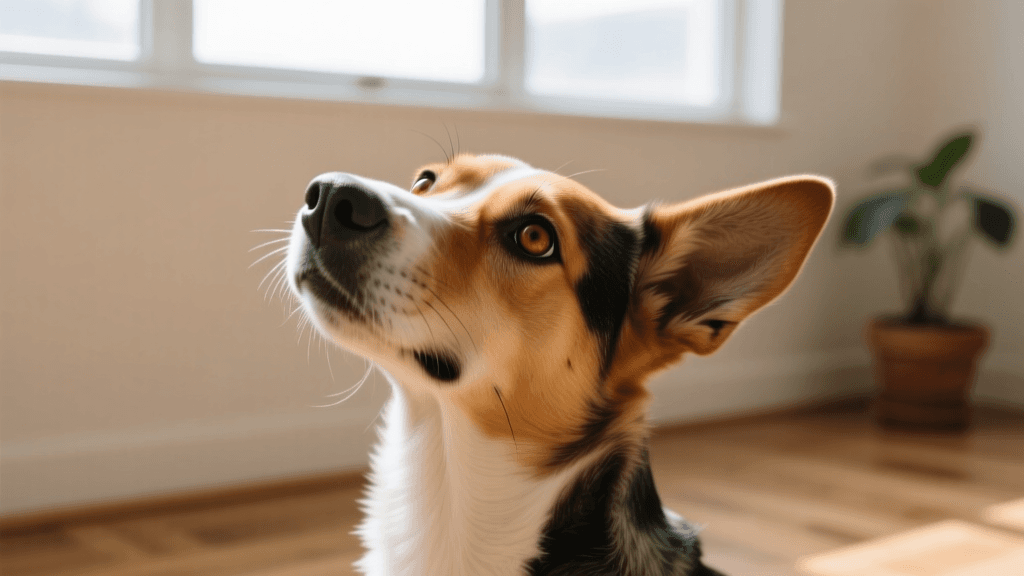
When you ask Google why dogs tilt their heads, you will find three primary scientific theories: auditory adjustment, visual obstruction, and cognitive empathy. According to the American Kennel Club (AKC), dogs have highly mobile ear flaps (pinnae) that they use to pinpoint the exact location of a sound. When you make a strange noise or speak in an unusual tone, your dog may tilt their head to adjust their ear positioning, allowing their brain to calculate the sound's origin and distance more accurately.
The Visual Obstruction Theory
However, hearing is only part of the story. Dr. Stanley Coren, a renowned canine psychology expert, proposed a fascinating visual theory. According to research highlighted in Psychology Today, a dog's muzzle can actually obstruct their lower field of vision. When humans speak, we use our mouths and lower facial expressions to convey emotion and intent. By tilting their head, dogs are essentially moving their muzzle out of the way to get a clearer view of your mouth, helping them read your facial cues and understand your emotional state.
The Empathy and Cognitive Processing Angle
Finally, behaviorists suggest that head tilting is a sign of intense concentration and empathy. Dogs are masters of human body language. When they tilt their heads, they are often processing complex auditory information, trying to pick out familiar words like 'walk,' 'treat,' or 'car.' It is a visual representation of your dog saying, 'I am listening closely, and I am trying to understand you.'
Question 2: Is Head Tilting Ever a Sign of a Medical Problem?
While a behavioral head tilt is transient and usually triggered by a specific sound or interaction, a persistent head tilt is a major red flag. Google searches frequently spike from worried owners asking, 'Why is my dog's head tilted to one side all the time?' If your dog's head remains tilted without a stimulus, or if it is accompanied by a loss of balance, circling, or rapid eye movements (nystagmus), you are likely dealing with a medical issue.
Vestibular Disease and Ear Infections
The most common culprits are severe inner ear infections (otitis interna) or Idiopathic Vestibular Disease, often referred to as 'old dog vestibular syndrome.' The Merck Veterinary Manual notes that the vestibular system, located in the inner ear and brain, controls balance and spatial orientation. When inflamed by infection or disease, the system misfires, causing the dog to hold their head at an angle to compensate for the feeling of falling.
Actionable Advice: When to See the Vet and Expected Costs
- Immediate Action: If the tilt is constant, accompanied by vomiting, or your dog cannot walk straight, seek veterinary care within 24 hours.
- Diagnostic Costs: Expect to pay between $75 and $150 for a basic veterinary exam and ear cytology.
- Treatment Costs: If an ear infection is found, prescription ear drops (like MometaMax or Osurnia) typically cost between $30 and $60. If advanced imaging (CT/MRI) is required to rule out neurological tumors, costs can range from $1,500 to $3,000.
- Home Care: Never insert cotton swabs into your dog's ear canal. Use a veterinarian-approved cleanser like Epi-Otic Advanced to gently flush the outer ear flap only.
Question 3: Do Certain Breeds Tilt Their Heads More Than Others?
Returning to Dr. Coren's visual obstruction theory, the shape of your dog's skull plays a massive role in how often they exhibit this behavior. Dogs with longer muzzles have a more obstructed view of the lower human face and therefore tilt their heads more frequently to compensate. Brachycephalic (flat-faced) breeds do not experience the same visual blockage.
Breed Comparison Chart: Head Tilt Frequency
| Skull Type | Example Breeds | Muzzle Shape | Tilt Frequency |
|---|---|---|---|
| Dolichocephalic | Greyhound, Borzoi, Collie | Long and Narrow | High (60%+ tilt often) |
| Mesocephalic | Golden Retriever, Labrador, Beagle | Medium / Proportionate | Moderate (40% - 50%) |
| Brachycephalic | Pug, French Bulldog, Boxer | Short and Flat | Low (Under 20%) |
Note: While brachycephalic breeds may tilt their heads less frequently for visual reasons, they may still tilt them to adjust their ear canals, which are often narrower and more prone to wax buildup.
Question 4: How Can I Train or Encourage This Behavior?
Because the head tilt is universally considered adorable, many owners search for ways to train their dogs to do it on command. You cannot force a dog to tilt its head, but you can 'capture' the behavior using positive reinforcement and operant conditioning.
Step-by-Step Training Guide
- Gather Your Tools: You will need a clicker (such as the PetSafe Clik-R, costing around $5) and high-value, low-calorie training treats. We recommend Zuke's Mini Naturals (approx. $6 for a 6oz bag) or Charlie Bear Crunchies to avoid overfeeding.
- Elicit the Behavior: Make a strange, novel sound. Try whistling, making a kissing noise, or asking an enthusiastic question like, 'Do you want a treat?' while slightly obscuring your face.
- Mark the Behavior: The exact millisecond your dog's head tilts, click the clicker or say a sharp 'Yes!' Timing is critical; you must mark the behavior within 1.5 seconds.
- Reward Immediately: Follow the click with a treat.
- Add a Cue: Once your dog is tilting their head reliably for the sound, introduce a verbal cue like 'Listen?' or 'What's that?' right before you make the noise.
- Fade the Lure: Over a period of two to three weeks, gradually stop making the weird noises and only use the verbal cue, rewarding heavily when they offer the tilt.
Question 5: What Other Weird Dog Behaviors Are People Googling?
The head tilt is just the tip of the iceberg when it comes to canine communication queries. Here are quick answers to two other highly searched behavioral questions:
Why Does My Dog Sigh When Lying Down?
A deep sigh while lying down with half-closed eyes is a universal canine signal of contentment and relaxation. It indicates that your dog feels safe in their environment and is transitioning into a restful state. However, if the sigh is accompanied by wide-open eyes and pacing, it can signal frustration or disappointment (e.g., you stopped playing fetch).
Why Do Dogs Spin in Circles Before Lying Down?
This is an evolutionary hangover from their wild ancestors. In the wild, dogs would trample down tall grass, snow, or leaves to create a comfortable, level nesting area while simultaneously scaring away hidden snakes or insects. Even though your dog is lying on a plush orthopedic bed in a climate-controlled living room, the instinctual 'nesting' dance remains hardwired into their DNA.
Conclusion: Understanding Your Dog's Unique Communication
Ultimately, the internet's fascination with the dog head tilt is well-founded. It is a beautiful intersection of canine anatomy, evolutionary psychology, and the deep empathetic bond between humans and dogs. By understanding the 'why' behind the behavior, you can better appreciate your dog's efforts to communicate with you. More importantly, by knowing the difference between a curious behavioral tilt and a pathological medical tilt, you are equipped to protect your dog's health and well-being. The next time your furry companion cocks their head to the side, you will know exactly what they are trying to say.
aaron-whyte
All our authors care for dogs every day — read more of their work on the authors page.