DIY Snuffle Mats: Tap Into Your Dog's Foraging Psychology
Learn how to build DIY snuffle mats and foraging boxes to satisfy your dog's natural scent instincts, reduce anxiety, and prevent destructive boredom.
The Canine Nose: A Window into Their Psychology
Have you ever watched your dog ignore a bowl of premium kibble, only to spend twenty minutes meticulously sniffing a single blade of grass in the yard? This seemingly contradictory behavior is deeply rooted in canine psychology and evolutionary biology. To truly understand your dog, you must first understand how they perceive the world. While humans are primarily visual creatures, dogs are olfactory processors. A dog's brain is dominated by an olfactory bulb that is proportionally 40 times larger than ours, equipped with up to 300 million scent receptors. When a dog sniffs, they aren't just smelling; they are reading a complex, invisible newspaper of their environment.
According to veterinary behaviorists, engaging a dog's nose is one of the most effective ways to lower their heart rate and induce a state of calm. Sniffing triggers the release of dopamine, the brain's reward chemical, which naturally soothes anxiety and hyperactivity. Yet, in modern domestic settings, we often rob dogs of this vital psychological outlet by serving their meals in sterile stainless-steel bowls, requiring zero mental effort to consume. This is where DIY homemade solutions bridge the gap between modern convenience and primal instinct, allowing us to support our dogs' mental health using simple household items.
The Evolutionary Drive to Forage
In the wild, canids spend up to 80% of their waking hours searching for, stalking, and scavenging food. This 'foraging drive' is a hardwired instinct. When a domestic dog is denied the opportunity to work for their food, that pent-up mental energy often manifests as destructive behavior, excessive barking, or neurotic pacing. By creating homemade foraging environments, we aren't just playing games; we are fulfilling a deep-seated biological need.
The VCA Animal Hospitals strongly advocates for environmental enrichment, noting that scent-based foraging mimics natural hunting behaviors and significantly reduces stress-related behaviors in both shelter and home environments. Furthermore, the American Kennel Club highlights that 15 minutes of intense sniffing and foraging can tire a dog out as much as a one-hour physical walk, making DIY scent games an invaluable tool for high-energy breeds or dogs recovering from surgery.
DIY Project 1: The Classic Fleece Snuffle Mat
A snuffle mat is a tactile, fleece-based puzzle that forces your dog to use their nose to root out hidden kibble or treats. It mimics the sensation of foraging in tall grass.
Materials Needed (Total Cost: ~$11)
- 1 yard of anti-pill fleece fabric in two different colors (approx. $6)
- 1 rubber sink mat with a grid of holes (approx. $5)
- Sharp fabric scissors
- High-value, smelly training treats or your dog's daily kibble ration
Step-by-Step Instructions (Time: 45 Minutes)
- Cut the Fleece: Cut your fleece into strips that are roughly 1.5 inches wide and 7 inches long. You will need about 150 to 200 strips depending on the size of your sink mat.
- Tie the First Layer: Take one strip of fleece and push it through a hole in the rubber mat. Tie a simple overhand knot on the underside so the strip stands up like a blade of grass. Repeat this across the entire mat, leaving no empty holes.
- Add the Second Layer: To create depth and complexity, tie a second layer of fleece strips directly over the first layer, using the same knots. This creates a dense, shaggy carpet that will easily hide treats.
- Fluff and Hide: Fluff the fleece strips outward. Sprinkle a small handful of kibble deep into the base of the mat, shaking it gently so the food falls to the bottom of the fleece strands.
DIY Project 2: The Layered Cardboard Foraging Box
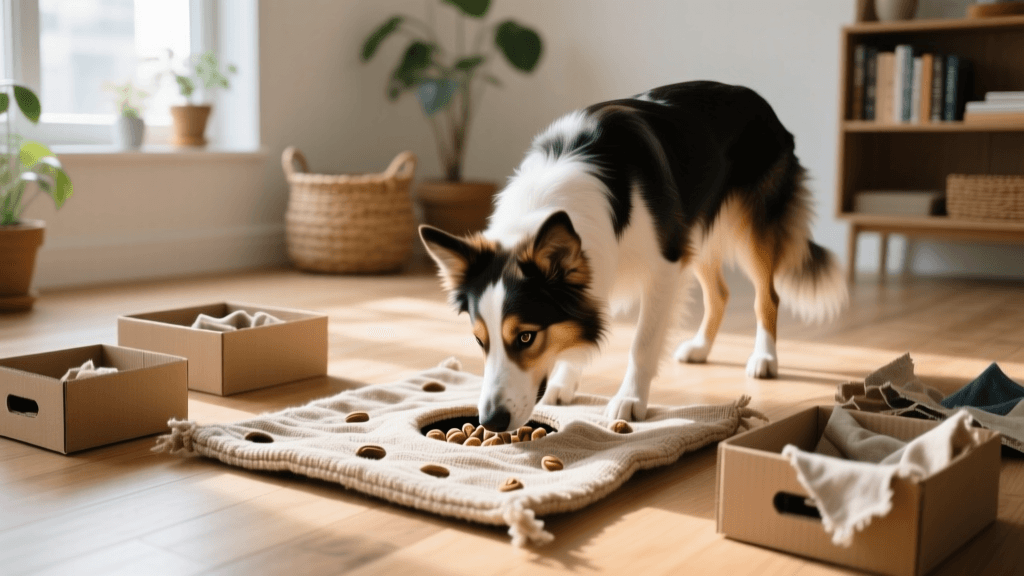
While snuffle mats are great for grazing, foraging boxes tap into a dog's instinct to dig, tear, and dismantle. The Humane Society of the United States frequently recommends upcycled cardboard toys as safe, cost-effective enrichment that satisfies the urge to shred without destroying your furniture.
Materials Needed (Total Cost: $0)
- 1 large, sturdy cardboard box (e.g., a shipping box)
- 5-10 empty toilet paper or paper towel rolls
- Crumpled packing paper or old, clean towels
- Dry treats or kibble
Step-by-Step Instructions (Time: 10 Minutes)
- Prepare the Inserts: Take the empty toilet paper rolls and fold the ends inward to close them off. Drop a few treats inside each roll before sealing them.
- Layer the Box: Place a layer of crumpled packing paper at the bottom of the large box. Scatter a handful of loose kibble over the paper.
- Build the Puzzle: Add the treat-filled cardboard rolls into the box. Cover them with more crumpled paper, old towels, or even small, safe branches from your yard to add natural scent profiles.
- Present to Your Dog: Place the box on the floor and encourage your dog to dig in. They will need to push aside the paper, sniff out the rolls, and figure out how to tear the cardboard to access the rewards.
Enrichment Comparison Chart
Understanding which DIY solution to use depends on your dog's specific behavioral needs and energy levels. Refer to the table below to choose the right homemade enrichment tool.
| Enrichment Method | Estimated Cost | Prep Time | Best For (Psychological Need) | Durability |
|---|---|---|---|---|
| DIY Fleece Snuffle Mat | $11 | 45 Minutes | Anxiety reduction, slow feeding, and calming hyperactive dogs. | High (Machine washable) |
| Cardboard Foraging Box | $0 (Upcycled) | 10 Minutes | Destructive chewers, diggers, and dogs needing an outlet for shredding instincts. | Low (Single-use/Destructible) |
| Store-Bought Puzzle Toy | $25 - $45 | 1 Minute | Highly intelligent dogs needing complex, multi-step cognitive challenges. | Very High (Hard plastic/wood) |
Reading Your Dog's Body Language During Foraging
As you introduce these DIY solutions, it is crucial to observe your dog's body language to understand how they are processing the activity. A dog engaged in healthy foraging will display a relaxed posture, a softly wagging or neutral tail, and 'soft' eyes. You may even notice them sneezing while they sniff; in canine communication, a 'sniffing sneeze' is often a calming signal, indicating to themselves and to you that they are relaxed and playing.
Conversely, if your dog begins to frantically paw at the snuffle mat, whine, or exhibit a stiff, high tail carriage, they may be experiencing frustration rather than enrichment. If this happens, the puzzle is too difficult. Make it easier by placing treats on the very top of the fleece or leaving the foraging box open and unlayered. The goal is to build confidence, not induce stress.
Safety, Hygiene, and Behavioral Troubleshooting
While DIY enrichment is incredibly beneficial, safety must always come first. Never leave a dog unattended with a cardboard foraging box, as ingesting large amounts of wet cardboard can cause gastrointestinal blockages. Once your dog has extracted all the treats and begins to eat the cardboard itself, calmly intervene and remove the box.
For the snuffle mat, hygiene is paramount. Dog noses are wet, and fleece can trap saliva and food oils, leading to bacterial growth. Wash your snuffle mat in the washing machine on a gentle cycle with a pet-safe, unscented detergent every week. Avoid using fabric softeners, as the strong artificial fragrances can overwhelm and irritate your dog's highly sensitive olfactory system.
Conclusion
Understanding your dog means looking past their role as a companion and recognizing them as a complex, instinct-driven animal. By taking the time to build a DIY snuffle mat or a layered foraging box, you are doing more than just saving money on commercial toys. You are actively participating in your dog's psychological well-being, honoring their evolutionary heritage, and providing a vital outlet for their natural behaviors. The next time your dog ignores their food bowl, you won't be frustrated—you'll know exactly what to do to turn mealtime into a fulfilling, mind-engaging adventure.
aaron-whyte
All our authors care for dogs every day — read more of their work on the authors page.