Best Puppy Breeds for Remote Workers in 2026: Top 5
Discover the top 5 best puppy breeds for remote workers in 2026. Learn how these low-anxiety dogs boost WFH mental health and fit your daily routine.
The WFH Wellness Connection: Why Remote Workers Need Puppies in 2026
As we navigate the deeply entrenched remote and hybrid work landscape of 2026, the boundaries between our home offices and living spaces have completely blurred. While working from home offers unparalleled flexibility, it has also ushered in a well-documented rise in sedentary behavior, screen fatigue, and professional isolation. For remote workers seeking a holistic approach to their daily wellbeing, bringing a puppy into the home office is proving to be one of the most effective lifestyle interventions available.
According to research highlighted by the National Institutes of Health (NIH), interacting with pets can significantly decrease cortisol levels and lower blood pressure, directly counteracting the physiological stress responses triggered by high-stakes Zoom calls and tight deadlines. Furthermore, the American Veterinary Medical Association (AVMA) emphasizes that the human-animal bond provides crucial emotional support, reducing feelings of loneliness that often plague solo remote workers.
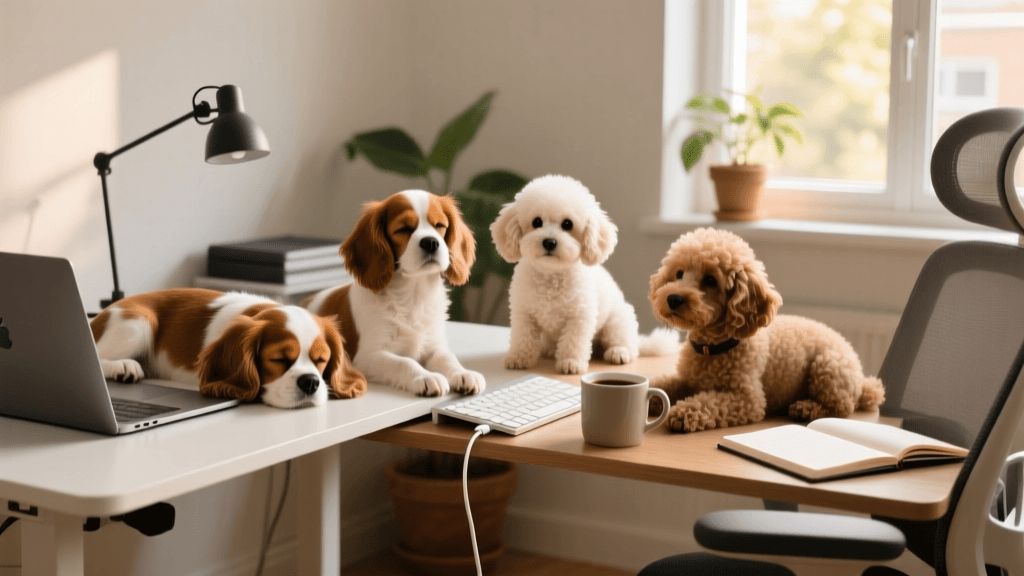
However, not every puppy is suited for a home office environment. A high-drive herding breed might disrupt your deep-focus blocks with constant nudging, while a vocal hound could ruin your quarterly presentation. To protect both your productivity and your mental health, you need a breed that is adaptable, relatively quiet, and content to lounge near your standing desk. Here is your comprehensive guide to the best puppy breeds for remote workers in 2026.
Criteria for the Ideal WFH Puppy
When evaluating puppy breeds for a remote work setup, veterinary behaviorists recommend focusing on three core wellness and behavioral traits:
- Low Vocalization: Puppies that are genetically predisposed to bark at every passing leaf or delivery driver will cause chronic low-grade stress and disrupt virtual meetings.
- Adaptable Energy Levels: The ideal WFH puppy has 'off-switch' capabilities. They should enjoy a morning walk but be perfectly content to nap under your desk for a four-hour deep-work sprint.
- Low Separation Anxiety Risk: Even remote workers leave the house. Whether you are heading to a local co-working space, grabbing a coffee, or running errands, your puppy must possess the emotional resilience to self-soothe when left alone.
Top 5 Puppy Breeds for Remote Workers in 2026
1. Cavalier King Charles Spaniel
The Cavalier King Charles Spaniel remains the undisputed champion of the home office. Known for their profound empathy and gentle disposition, these puppies are essentially emotional support animals in the making. They thrive on proximity, meaning they will happily curl up on a designated dog bed beneath your desk without demanding constant active play. Their exercise needs are moderate—easily met with a 30-minute neighborhood walk during your lunch break—making them perfect for busy professionals.
2. Havanese
If you want a slightly more playful but equally quiet companion, the Havanese is an exceptional choice. Originating from Cuba, this breed is highly adaptable to apartment living and small home offices. Havanese puppies are incredibly attuned to their owner's emotional state, often providing comforting physical contact when they sense you are stressed. They are also highly trainable, making it easy to teach them the 'settle' command for when you are on camera.
3. Shih Tzu
Bred specifically for companionship, the Shih Tzu requires far less physical exercise than most breeds, which is a massive benefit for remote workers who struggle to step away from their monitors. A quick morning potty break and a brief indoor play session with a puzzle toy are usually sufficient. They are notoriously quiet dogs, ensuring your microphone won't pick up unexpected barking during client calls.
4. Basset Hound
For those who prefer a larger dog but still need a low-energy office mate, the Basset Hound puppy is a surprisingly excellent fit. While they can be stubborn during training, their defining trait is their love for lounging. A Basset Hound will happily sleep through your entire afternoon of spreadsheet work. Their calm demeanor provides a grounding presence in the room, actively promoting a relaxed nervous system for the owner.
5. Bichon Frise
The Bichon Frise brings a cheerful, resilient energy to the home office without being overly demanding. They are highly social but do not typically suffer from the severe separation anxiety that plagues other companion breeds. Their hypoallergenic, low-shedding coat is also a major wellness benefit for remote workers who suffer from indoor allergies, ensuring your sinuses stay clear during long workdays.
WFH Puppy Breed Comparison Chart
Use the table below to compare the top breeds based on metrics that directly impact your remote work routine and home environment.
| Breed | Adult Weight | Bark Level | Daily Exercise Need | WFH Compatibility Score |
|---|---|---|---|---|
| Cavalier King Charles | 12-18 lbs | Low | 30-45 mins | 10/10 |
| Havanese | 7-13 lbs | Low-Medium | 30-45 mins | 9/10 |
| Shih Tzu | 9-16 lbs | Low | 20-30 mins | 9/10 |
| Basset Hound | 40-65 lbs | Medium | 30-40 mins | 8/10 |
| Bichon Frise | 12-18 lbs | Medium | 30-45 mins | 8.5/10 |
Structuring Your 2026 WFH Day with a Puppy
Bringing a puppy into your home office requires a structured routine to protect both your productivity and the puppy's developmental health. Puppies thrive on predictability. Here is a veterinarian-approved daily schedule designed for the remote worker:
- 7:30 AM - The Morning Reset: Take the puppy out for a 20-minute walk. This exposes you to morning sunlight, regulating your circadian rhythm and boosting morning alertness before you even open your laptop.
- 9:00 AM - Deep Work Block: Provide the puppy with a long-lasting enrichment activity, such as a frozen KONG Classic or a snuffle mat. This engages their brain and allows you 90 minutes of uninterrupted focus.
- 12:00 PM - The Midday Movement: Use your lunch break for a second walk. This combats the sedentary nature of desk work, improving your posture and cardiovascular health.
- 3:00 PM - Training & Socialization: Dedicate 15 minutes to positive reinforcement training. This mental stimulation tires the puppy out faster than physical exercise, ensuring they nap through your late-afternoon meetings.
- 5:30 PM - Hard Stop & Play: Close the laptop and transition into active play. This creates a psychological boundary between 'work time' and 'personal time,' a crucial mental health boundary for remote workers.
Preventing Separation Anxiety in Hybrid Setups
One of the most significant wellbeing risks for WFH puppies is the development of separation anxiety. If your puppy is with you 24/7 in the home office, they may panic when you eventually need to leave the house. The ASPCA strongly recommends practicing intentional absences from day one.
To build emotional resilience, utilize a baby gate or a playpen in a different room for 30 minutes a day while you are still home. Provide them with a high-value chew toy during this time. Gradually increase the duration and begin leaving the house for short errands without making a big fuss upon departure or return. This proactive approach ensures your puppy remains confident and relaxed, preventing the destructive behaviors and chronic stress that can severely impact your own mental health and home environment.
Final Thoughts on Canine Companionship
Choosing the right puppy breed is an investment in your long-term health and professional sustainability. By selecting a low-anxiety, adaptable breed like the Cavalier King Charles Spaniel or the Havanese, you are not just getting a pet; you are integrating a powerful, natural wellness tool into your daily routine. In 2026, the most successful remote workers are those who recognize the importance of holistic health, and a quiet, loving puppy by your desk might just be the ultimate productivity hack.
hannah-wickes
All our authors care for dogs every day — read more of their work on the authors page.