2026 Guide: Best No-Pull Dog Harnesses For Joint Health
Discover how front-clip no-pull dog harnesses protect canine shoulder joints and tracheas in 2026. Compare top veterinary-approved models and fitting tips.
The Biomechanics of Pulling: Why Traditional Gear Fails
As we navigate the evolving landscape of canine physical therapy in 2026, veterinary professionals are placing unprecedented emphasis on the biomechanical impact of walking gear. For decades, standard flat collars and back-clip harnesses were the default choices for dog owners. However, modern gait analysis and orthopedic research have revealed the hidden dangers these traditional tools pose to a dog's skeletal and respiratory systems. When a dog pulls against a flat collar, the force is concentrated directly on the delicate structures of the neck. This can lead to tracheal collapse, a painful and progressive condition particularly common in small and toy breeds, as well as long-term damage to the cervical vertebrae and thyroid gland.
Back-clip harnesses, while effective at removing pressure from the neck, introduce a different set of biomechanical issues. According to the American Kennel Club, back-clip harnesses can inadvertently trigger a dog's opposition reflex. When pressure is applied to the chest or back, a dog's natural instinct is to lean into it and pull harder, effectively turning the harness into a sled-dog rig. Furthermore, many older or poorly designed harnesses feature a horizontal strap that cuts directly across the dog's shoulder joints, restricting the natural forward extension of the scapula and altering their natural gait.
The Orthopedic Advantage of Y-Shaped Front-Clip Harnesses
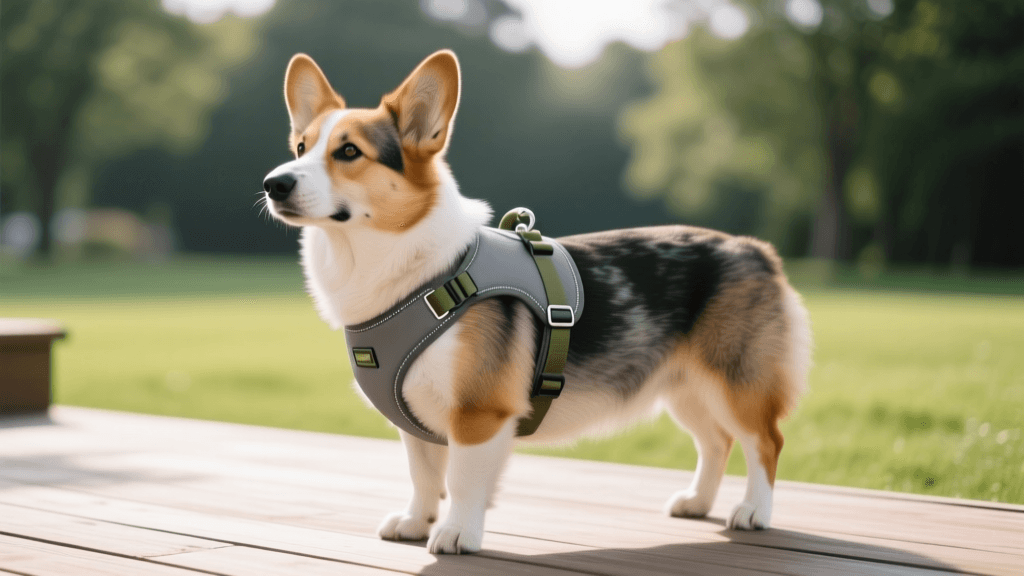
The solution championed by canine rehabilitation specialists in 2026 is the Y-shaped front-clip no-pull harness. Unlike restrictive T-shaped or vest-style harnesses, a true Y-shaped harness features a chest plate that rests on the dog's sternum (breastbone) and splits into two straps that go around the ribcage, completely clearing the shoulder joints and the bicipital groove. This design allows for full, unhindered scapular extension and flexion, which is critical for preventing shoulder dysplasia and bicipital tenosynovitis over a dog's lifetime.
The front-clip mechanism, typically located on a reinforced ring at the center of the chest, fundamentally changes the physics of the walk. When the dog pulls forward, the tension on the front ring gently redirects the dog's center of gravity back toward the handler. Instead of meeting resistance that they can lean into, the dog is naturally turned sideways, breaking their forward momentum without applying any harmful force to their joints or spine. The ASPCA consistently recommends front-clip harnesses as a primary tool for safe, humane leash management, especially for strong pullers or dogs undergoing physical rehabilitation.
2026 Veterinary-Approved No-Pull Harness Comparison
Not all front-clip harnesses are created equal. The market in 2026 is saturated with options, but only a few meet the strict biomechanical standards required to protect joint health. Below is a comprehensive comparison of the top three veterinary-recommended no-pull harnesses available this year.
| 2026 Harness Model | Chest Plate Design | Front Clip Location | Best For | Avg. 2026 Price |
|---|---|---|---|---|
| Ruffwear Front Range (2026 Update) | Y-Shape, Foam Padded | Reinforced Sternum Ring | Active breeds, hiking, daily walks | $45.00 |
| Balance Harness by Blue-9 | Customizable Y-Shape | Stainless Steel O-Ring | Deep-chested breeds, gait therapy | $52.00 |
| Rabbitgoo 3M Reflective No-Pull | Modified Y-Shape | Zinc Alloy Chest Ring | Budget-conscious owners, night walks | $24.00 |
The Ruffwear Front Range remains a top contender in 2026 due to its updated lightweight, breathable foam that prevents chafing during high-output activities. Its Y-shape is meticulously engineered to sit below the bicipital tendon. The Balance Harness is the gold standard for canine physical therapists because it offers six points of adjustment, ensuring a custom fit that accommodates asymmetrical muscle development in dogs recovering from orthopedic surgery. The Rabbitgoo model provides an excellent, affordable entry point with high-visibility 3M reflectivity, though its padding is slightly less robust for extreme endurance activities.
Proper Fitting: The Key to Preventing Shoulder Dysplasia
Even the most biomechanically advanced harness will cause joint damage if it is fitted incorrectly. A poorly fitted front-clip harness can ride up into the dog's armpits, causing severe chafing, restricting lymph node drainage, and impeding shoulder movement. Follow these precise steps to ensure a joint-safe fit:
- Measure the Girth: Use a soft measuring tape to measure the widest part of your dog's ribcage, typically just behind the front elbows. Add two inches to this measurement for the initial strap setting.
- Measure the Neck: If the harness slips over the head, measure the widest part of the skull and neck to ensure it can pass over comfortably without forcing the ears or jaw.
- The Y-Shape Check: Once the harness is on, observe the front chest plate. The junction of the 'Y' must sit flat against the sternum. The straps extending upward must clear the shoulder joints entirely. Run your fingers along the front of the shoulder; you should feel no strap crossing over the joint itself.
- The Two-Finger Rule: You should be able to comfortably slide two fingers under any strap. If it is tighter, it will restrict blood flow and cause friction burns; if it is looser, the front clip will sag and fail to redirect pulling force effectively.
'A properly fitted Y-shaped harness should never cross the bicipital groove. If the strap rests on the dog's shoulder joint rather than the sternum, it restricts natural extension and can lead to long-term gait abnormalities and chronic inflammation.' - Canine Rehabilitation Guidelines, 2026.
Skin Health and Harness Maintenance
Orthopedic health is deeply connected to skin and coat health. A harness that traps moisture and dirt against the skin can lead to bacterial folliculitis or yeast infections in the armpits, which will cause a dog to alter their gait to avoid pain, subsequently putting uneven stress on their joints. In 2026, veterinary dermatologists recommend washing your dog's harness at least once every two weeks, or immediately after exposure to mud, saltwater, or heavy rain.
Use a mild, hypoallergenic pet-safe detergent and allow the harness to air dry completely in a well-ventilated area. Never put a nylon or foam-padded harness in a high-heat dryer, as this will degrade the structural integrity of the stitching and the reflective elements. Regularly inspect the hardware, particularly the front-clip D-ring, for signs of metal fatigue or rust, which could lead to a catastrophic failure during a walk.
Behavioral Transitioning: Making the Front-Clip Work
Transitioning from a collar or back-clip harness to a front-clip no-pull harness requires a brief period of behavioral adjustment. Because the front clip redirects the dog's momentum, some dogs may initially stop and refuse to walk, confused by the new sensation. The AKC's guide on stopping leash pulling emphasizes the importance of positive reinforcement during this transition.
Begin in a low-distraction environment like your backyard or living room. Use high-value treats to lure your dog forward, rewarding them heavily for maintaining a loose leash. When the dog pulls, the harness will gently turn them toward you. Stop walking immediately, wait for them to make eye contact and release the tension on the leash, and then reward them before continuing forward. This teaches the dog that tension on the leash results in a cessation of movement, while a loose leash results in forward progress and rewards. Never use the front-clip harness to jerk or correct the dog; the mechanism is designed for gentle redirection, not aversive punishment.
When to Consult a Canine Physical Therapist
While a high-quality no-pull harness is a vital preventive tool, it cannot reverse existing orthopedic damage. If your dog exhibits signs such as a shortened stride in the front limbs, reluctance to jump into the car, visible muscle atrophy over the shoulders, or a 'bunny-hopping' gait in the rear, it is crucial to consult a certified canine rehabilitation practitioner. In 2026, advanced therapies such as underwater treadmill conditioning, therapeutic laser, and targeted joint mobilization are widely available and can significantly improve your dog's quality of life. Pairing these professional treatments with a properly fitted, biomechanically sound front-clip harness will ensure your dog enjoys safe, comfortable, and pain-free walks for years to come.
jonas-cole
All our authors care for dogs every day — read more of their work on the authors page.