Step-by-Step Guide to Walking Two Dogs on Leash Together
Learn how to walk two dogs on a leash together with our step-by-step training guide. Master multi-dog leash manners for peaceful daily walks.
The Challenge of Tandem Dog Walking
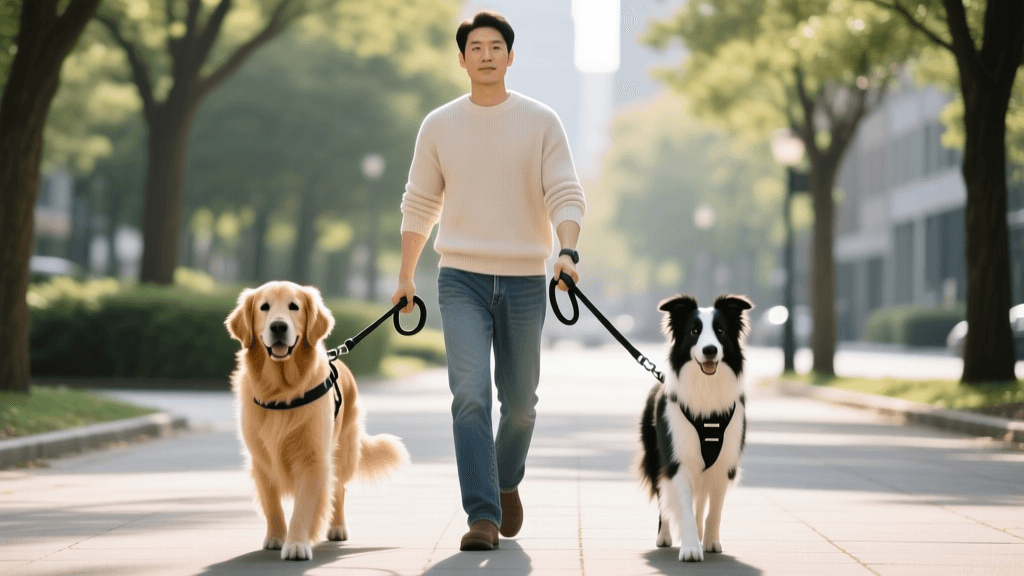
Walking a single dog is a wonderful way to bond, get exercise, and enjoy the outdoors. However, walking two dogs simultaneously can quickly devolve into an extreme sport if they lack proper leash manners. Multi-dog households often face the chaotic reality of tangled leashes, mismatched walking paces, and compounded reactivity to neighborhood triggers. When one dog pulls toward a squirrel, the second dog often joins in, creating a domino effect of pulling that can lead to handler injury or escaped pets.
Transitioning from individual walks to peaceful tandem walks requires patience, the right equipment, and a structured training plan. This step-by-step guide will help you establish a harmonious walking routine, ensuring that your daily outings are enjoyable for both you and your canine companions.
Essential Gear for Multi-Dog Walks
Before you attempt to walk two dogs together, you must equip yourself with the proper tools. Relying on retractable leashes or collar-only setups is a recipe for disaster when managing multiple dogs. You need maximum control, durability, and the ability to deliver quick, precise corrections or rewards.
| Equipment Type | Recommended Specification | Estimated Cost | Best For |
|---|---|---|---|
| Harness | Front-clip, Y-shaped design | $25 - $45 each | Pullers, Multi-dog control |
| Leash | 4 to 6-foot, Biothane or Leather | $20 - $40 each | Durability, Preventing tangles |
| Treat Pouch | Magnetic closure, multiple pockets | $15 - $30 | Fast reward delivery |
| Leash Coupler | Bungee, 12 to 18-inch split | $15 - $25 | Advanced tandem walkers only |
Pro Tip: Use a 4-to-6-foot leash for each dog. Biothane is highly recommended for multi-dog walks because it is waterproof, easy to clean, and doesn't tangle as easily as nylon. Cut your training treats into pea-sized pieces to allow for rapid reinforcement without overfeeding.
Step 1: Solidify Individual Leash Manners
You cannot build a successful tandem walking routine if the individual dogs do not already understand basic leash pressure. Before combining your dogs, each must be able to walk politely on a loose leash alone. According to the American Kennel Club (AKC), teaching a dog not to pull involves stopping immediately when the leash goes tight and only moving forward when there is slack.
Spend at least two weeks working on individual loose-leash walking. Practice the "Red Light, Green Light" game: walk forward, and the moment the leash pulls taut, stop completely (Red Light). Wait for your dog to look back at you or take a step back to create slack, then mark the behavior with a "Yes!" and move forward again (Green Light). If either dog consistently pulls, lunges, or reacts to triggers on an individual basis, they are not ready for tandem walks. Consider consulting a certified professional dog trainer for individual reactivity issues first.
Step 2: The Indoor "Pack" Introduction
Once both dogs walk well individually, it is time to introduce the concept of walking together in a zero-distraction environment: your living room. Put both dogs on their harnesses and attach their 4-foot leashes. Hold one leash in your left hand and the other in your right hand, keeping the leashes crossed in front of your body to form an "X". This prevents the dogs from crossing over and tangling the leashes.
Begin walking around your kitchen island or living room furniture. Keep your sessions short—about 5 to 10 minutes. Reward both dogs simultaneously when they walk with slack in their leashes. Use a marker word like "Together" or "Good Pack" to reinforce the concept that walking side-by-side yields high-value rewards. If they become overly excited or start playing with each other, calmly separate them, ask for a "sit," and try again once they are calm.
Step 3: Low-Distraction Outdoor Practice
Move the training to your backyard or a quiet, empty driveway. The outdoor environment introduces new smells, sounds, and visual stimuli that can easily break a dog's focus. Start by walking in large circles or figure-eights. This keeps the dogs engaged with your movements and prevents them from fixating on the perimeter of the yard.
Implement the "U-Turn Drill." Walk forward, and before the dogs reach the end of the yard or driveway, cheerfully say "Let's go!" and make a 180-degree turn in the opposite direction. This teaches the dogs to pay attention to your body language and changes of direction rather than forging ahead on autopilot. Reward heavily when they catch up to your side and maintain a loose leash. Practice this for 15 minutes a day for a full week before venturing onto the sidewalk.
Step 4: Navigating the Neighborhood
When you finally hit the pavement, choose a time of day when neighborhood traffic, pedestrians, and other dogs are at a minimum. Early mornings or late evenings are usually best. Keep your dogs on the same side of your body if possible, or one on each side if they are prone to crowding each other.
As you encounter mild triggers (like a distant car or a neighbor walking by), proactively feed high-value treats (like boiled chicken or freeze-dried liver) to both dogs before they have a chance to react. This builds a positive association with tandem walking in the presence of distractions. If one dog begins to pull toward a trigger, use your body weight to anchor the leash, stop walking, and wait for the dog to disengage and look at you. The ASPCA emphasizes that consistency in not allowing pulling to result in forward movement is the key to long-term leash manners.
Step 5: Managing Different Energy Levels and Paces
One of the most common hurdles in multi-dog households is mismatched energy levels. Walking a high-drive adolescent dog alongside a senior dog with arthritis requires strategic management. Never force the senior dog to keep up with the younger dog's pace, as this can lead to joint pain and exhaustion.
To manage this, use the younger dog's need for speed as a reward. Walk at the senior dog's comfortable pace for 10 minutes. Then, ask the younger dog for a "sit" and "stay" (or have a partner hold the senior dog), and release the younger dog for a 2-minute "sniffari" or a brief game of tug on a long line. Alternatively, tire out the high-energy dog with a 20-minute fetch or flirt-pole session in the yard before embarking on the tandem neighborhood walk. A tired dog is a much better tandem walking partner.
When to Use a Leash Coupler
A leash coupler (a single leash that splits into two attachments) is a popular tool for walking two dogs, but it should only be used by advanced tandem walkers. Couplers are excellent for dogs of similar size and walking speed who already have impeccable loose-leash manners. However, if one dog stops to sniff while the other keeps walking, a coupler will drag the sniffing dog forward or cause the walking dog to be jerked backward. Avoid bungee couplers until both dogs have proven they can maintain a synchronized pace for at least a month on two separate leashes.
Troubleshooting Common Multi-Dog Walking Issues
- The Leash Tangle: If your dogs cross paths and tangle the leashes, do not panic or yank. Stop walking, drop the leashes (if in a safe, enclosed area), and use a treat to lure each dog back to their designated side. Untangle the handles calmly.
- Competitive Reactivity: Sometimes, one dog is calm alone but becomes reactive when paired with the second dog. This is called "competitive reactivity" or "pack mentality." If this occurs, increase the distance between the dogs by using a longer 10-foot training line for the reactive dog, giving them more space to process triggers without feeding off the other dog's energy.
- Resource Guarding on Walks: If your dogs fight over dropped treats or sniff the same patch of grass aggressively, feed treats simultaneously by tossing them in opposite directions. This prevents competition and encourages them to focus on their own reward rather than stealing from their sibling.
Final Thoughts on Tandem Dog Walking
Walking two dogs together is a highly rewarding experience that strengthens the bond between you and your entire canine family. However, it is not a skill that can be mastered in a single afternoon. By investing time in individual training, utilizing the proper harness and leash setups, and gradually increasing environmental distractions, you will transform your chaotic multi-dog walks into peaceful, enjoyable daily adventures. Remember to celebrate the small victories, keep your training sessions short and positive, and always prioritize safety and control over distance.
hannah-wickes
All our authors care for dogs every day — read more of their work on the authors page.