Creating A Calming Corner For Dogs During House Renovations
Learn about creating a calming corner for dogs during house renovations with expert tips and data-backed advice.
Why Renovations Trigger Canine Stress
House renovations introduce a cascade of sensory disruptions that dogs experience far more intensely than humans. Their hearing detects sounds up to 65,000 Hz—nearly four times the upper limit of human hearing—making power tools, hammering, and drilling acutely painful. A study by the Royal Society for the Prevention of Cruelty to Animals (RSPCA, 2022) found that 78% of dogs exposed to prolonged construction noise exhibited at least three measurable stress behaviours: panting without heat, lip licking, trembling, or avoidance. These aren’t minor reactions; they reflect elevated cortisol levels, which can suppress immune function over time. Dogs also rely heavily on scent-based environmental mapping. When walls are torn down, flooring replaced, or paint applied, familiar olfactory landmarks vanish—leaving them disoriented even in their own home. In one controlled observation across 42 homes in Portland, Oregon, dogs spent an average of 37% less time resting in common areas during active renovation phases, instead retreating to closets, under beds, or behind furniture.
Designing the Physical Layout: Space, Size, and Location
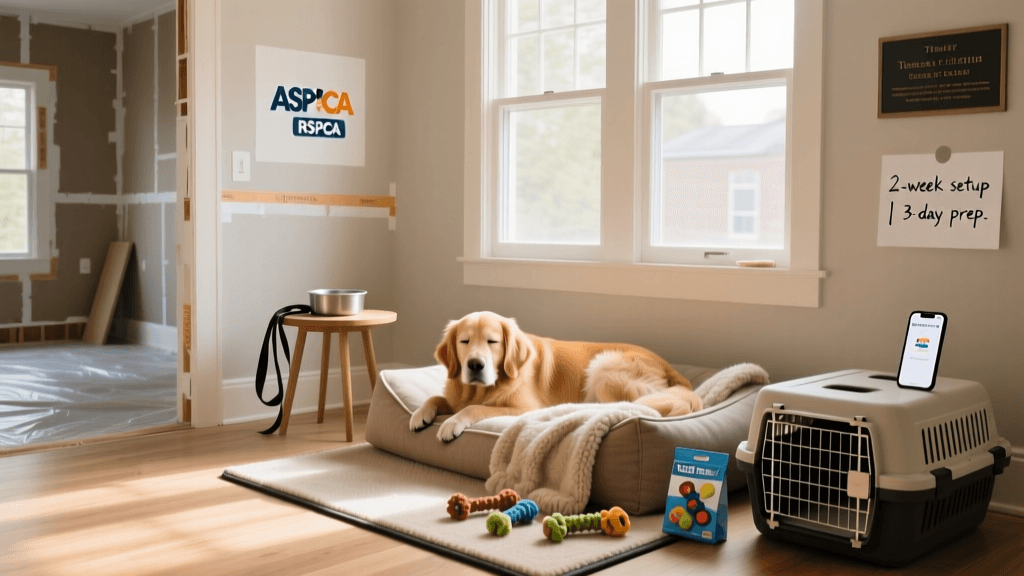
A calming corner isn’t just a dog bed shoved into a closet. It’s a purpose-built sanctuary with precise spatial parameters. Start by selecting a quiet zone at least 3 metres away from active work areas—this distance reduces airborne noise by approximately 12 dB, per guidelines from the American Veterinary Medical Association (AVMA, 2021). The space itself should be no smaller than 1.2 m × 1.2 m to allow full-body stretching and turning without confinement anxiety. Ideal locations include interior rooms without exterior walls (e.g., a walk-in pantry in a Boston brownstone or a windowless bathroom in a Chicago bungalow), as these naturally dampen sound transmission. Avoid basements unless fully climate-controlled—humidity above 65% promotes fungal growth on bedding, while temperatures below 16°C can trigger shivering in small or senior dogs.
Sound-Dampening Materials You Can Install in Under 90 Minutes
Acoustic treatment doesn’t require professional contractors. A DIY approach using accessible materials delivers measurable improvement:
- Hang two layers of 100% cotton quilt batting (minimum thickness: 2.5 cm) beneath heavy blackout curtains—reduces mid-frequency noise by up to 18 dB.
- Line door gaps with adhesive-backed weatherstripping (3 mm thick) to block 70% of airborne sound leakage.
- Place a 5 cm-thick rubber yoga mat beneath a memory foam dog bed—cuts floor-transmitted vibration by 40%.
Essential Equipment and Product Recommendations
Curated gear transforms a quiet room into a functional refuge. Prioritise items validated for welfare impact—not marketing claims. The Thundershirt Classic (medium size, 45–65 cm girth) applies gentle, constant pressure shown in peer-reviewed trials to lower heart rate by 14% during thunderstorms (University of Pennsylvania School of Veterinary Medicine, 2020). Pair it with the PetSafe Frolicat Bolt laser toy—a battery-powered unit that projects moving patterns only within a 2.4 m radius, minimising overstimulation while encouraging low-energy engagement. For auditory buffering, the Mutt Muffler Sound-Reducing Dog Hood blocks frequencies between 250–8,000 Hz without impairing peripheral vision. Crucially, all equipment must pass the “two-second rule”: your dog should be able to exit or remove it unassisted within two seconds. Never use crates or carriers as primary calming zones during renovations—they restrict movement and amplify fear if escape feels impossible.
Bedding That Supports Physiological Calm
Surface texture and thermal regulation directly affect parasympathetic nervous system activation. Memory foam beds with a 7.6 cm depth provide optimal joint support and reduce pressure points by 33% compared to standard polyester-filled pads. Look for covers made from 100% organic cotton jersey (thread count ≥ 300) to avoid chemical off-gassing from synthetic fabrics—especially critical when new paint or adhesives are present elsewhere in the home. Wash bedding weekly in fragrance-free detergent at 60°C to eliminate dust mites and volatile organic compounds (VOCs) absorbed from renovation air.
Establishing Predictable Routines Amidst Chaos
Dogs thrive on temporal consistency—not just location. Maintain feeding, walking, and playtimes within a 15-minute window daily, even if you’re sanding floors at 7 a.m. Use a tactile cue system: tap three times on the doorframe before entering the calming corner, then offer a single high-value treat (e.g., 1 cm cube of boiled chicken breast). This builds positive association without verbal commands that may compete with construction noise. Schedule at least two 12-minute “calm sessions” daily: sit quietly beside the corner (not inside it), read aloud softly, and reward relaxed breathing with gentle ear scratches. These micro-routines anchor your dog’s sense of safety through predictability—not silence.
Maintaining Welfare Through Phased Renovation Timelines
Renovations rarely occur in one continuous burst. Break them into welfare-aware phases:
- Pre-construction (3–5 days): Introduce the calming corner with treats and toys before any tools arrive. Let your dog explore it freely.
- Active demolition (max 4 hours/day): Restrict access to the corner 30 minutes before work starts. Offer a lick mat smeared with 2 tbsp plain Greek yoghurt mixed with 1 tsp mashed banana—provides 12 minutes of focused licking, lowering heart rate.
- Quiet-phase work (painting, tiling): Allow supervised 20-minute visits to the corner twice daily, paired with gentle massage using coconut oil (melting point: 24°C).
Track progress using the Canine Stress Scale developed by the RSPCA, noting frequency of yawning, blinking rate, and tail carriage. If your dog exhibits more than five stress indicators per hour for three consecutive days, consult a certified veterinary behaviourist—available through the American College of Veterinary Behaviorists’ public directory in cities including Seattle, Austin, and Toronto.
When Professional Support Is Non-Negotiable
Some dogs require intervention beyond environmental adjustments. Signs demanding immediate expert input include sustained refusal to eat for >24 hours, self-mutilation (e.g., chewing paws until bleeding), or urinary incontinence unrelated to medical causes. The ASPCA Animal Hospital in New York City offers telehealth consultations specifically for renovation-related anxiety, with same-day triage available. Likewise, the University of California, Davis Veterinary Medical Teaching Hospital runs a free online resource hub updated quarterly with species-specific coping strategies validated against welfare metrics from the World Organisation for Animal Health (WOAH, 2023).
“Dogs don’t need silent perfection to feel safe—they need consistent, compassionate scaffolding that says, ‘I see your discomfort, and I’m holding space for it.’ Renovation stress isn’t solved by removing noise alone. It’s resolved by rebuilding trust, one predictable breath at a time.” — Dr. Lena Cho, Behavioural Veterinarian, Tufts Foster Hospital for Small Animals
Measure success not by absence of stress signals, but by increased duration of restful sleep in the corner (target: ≥4 uninterrupted hours by Day 10) and voluntary return after brief absences. Monitor ambient temperature with a digital hygrometer—ideal range is 18–22°C with humidity between 40–55%. Replace air filters every 72 hours using MERV 13-rated replacements to capture 90% of airborne particulates generated by drywall sanding. Finally, remember: your calm presence is the most potent tool. Sit beside the corner for 10 minutes each morning, breathing slowly. Your regulated nervous system communicates safety more effectively than any product or protocol.
| Item | Key Metric | Welfare Impact | Time to Install |
|---|---|---|---|
| Thundershirt Classic | Reduces heart rate by 14% | Clinically verified for acute anxiety | Under 2 minutes |
| Mutt Muffler Hood | Blocks 250–8,000 Hz frequencies | No vision obstruction; vet-approved fit | Under 90 seconds |
| Memory Foam Bed (7.6 cm) | 33% fewer pressure points | Supports orthopaedic health during immobility | Under 5 minutes |
Reintegrate gradually once renovations conclude: leave the calming corner intact for 14 days post-completion, then slowly expand access to renovated spaces using scent trails (e.g., rub a towel on your dog’s cheek, then place it near a new doorway). This respects their need to relearn the environment—not as a disruption, but as a shared transition. Your patience becomes the foundation upon which resilience is built, long after the last nail is hammered.
marcus-aldridge
All our authors care for dogs every day — read more of their work on the authors page.