Master the Viral TikTok Toy Recognition Fetch Trick
Learn how to teach your dog the viral TikTok toy recognition trick. A step-by-step positive reinforcement guide to fetching specific toys by name.
The Viral 'Toy Recognition' Trend Explained
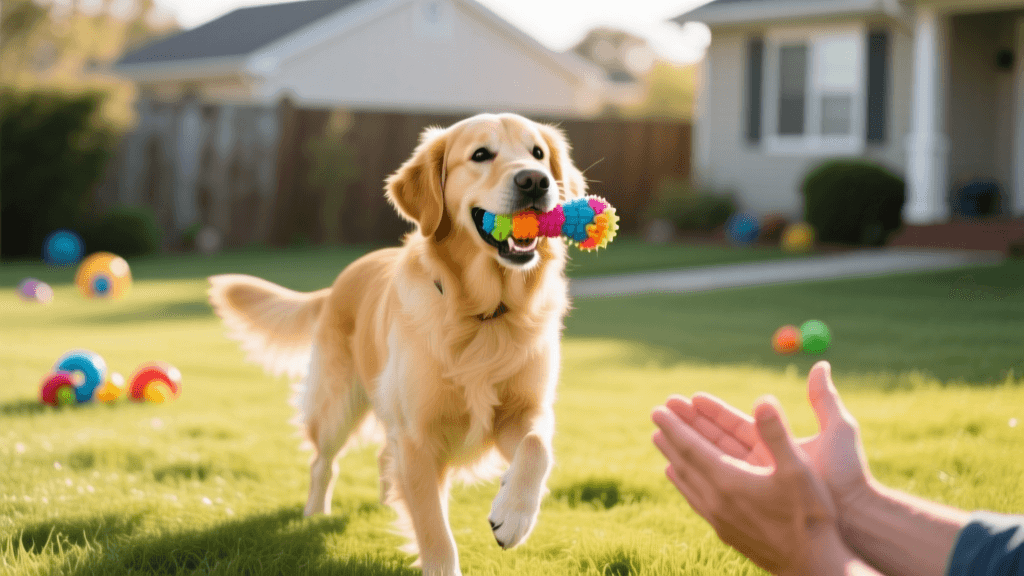
If you have spent any time on TikTok or Instagram Reels lately, you have likely seen the viral 'toy recognition' trend. In these videos, a dog owner calls out the specific name of a toy—such as 'Mr. Hedgehog' or 'Blue Rope'—and the dog bypasses a pile of dozens of other toys to retrieve the exact requested item. While it looks like magic or a sign of canine genius, this viral trick is actually rooted in well-established behavioral conditioning and cognitive enrichment techniques. Teaching your dog to fetch specific toys by name is not just a party trick for social media; it is a powerful mental workout that tires out your dog's brain, reduces destructive boredom behaviors, and strengthens your mutual bond.
Unlike generic obedience commands like 'sit' or 'stay,' toy recognition requires your dog to engage in 'fast mapping' and object discrimination. This means they must associate a novel sound (the toy's name) with a specific visual and tactile object, and then recall that association on command. In this comprehensive guide, we will break down exactly how to train the viral toy recognition trick using positive reinforcement, complete with specific gear recommendations, timing protocols, and a troubleshooting chart to ensure your dog succeeds without frustration.
The Science of Canine Word Mapping
Before diving into the training steps, it is helpful to understand the science behind how dogs learn words. Research published in Nature Scientific Reports highlights that while most dogs learn commands through associative conditioning (e.g., sit equals treat), a subset of dogs can learn object names through a process similar to human toddlers called 'fast mapping.' The study, which observed 'Gifted Word Learner' dogs, found that consistent, playful repetition of a toy's name during the act of retrieving it is the most effective way to build a canine vocabulary.
'Playful interaction and the repetition of the object's name in the context of the toy's function are critical for forming long-term memory traces in canine cognition.' — Adapted from findings on canine word learning.
Even if your dog is not a Border Collie or a designated 'gifted' learner, the principles of associative learning apply to all breeds. By isolating the toy, naming it consistently, and rewarding the correct interaction, you can build a robust mental catalog of toy names for your pet.
Prerequisites and Gear
To set your dog up for success, you need the right environment and tools. Avoid using toys that look or sound too similar when first starting out.
- Distinct Toys: Start with 3 to 5 highly distinct toys. For example, use a Kong Classic Red Rubber Toy (tactile, bouncy), an Outward Hound Hide-A-Squirrel Plush (soft, squeaky), and a Chuckit! Ultra Ball (hard, round). Do not use two different plush animals initially, as visual discrimination will be too difficult.
- High-Value Treats: Use pea-sized, soft treats that your dog can consume in under two seconds. Zuke's Mini Naturals (approx. 3 calories each) or boiled chicken breast cubes (1/4 inch) are ideal. You will be dispensing a high volume of rewards, so keeping calories low is vital.
- Clicker or Marker Word: A standard i-Click clicker or a consistent marker word like 'Yes!' to pinpoint the exact moment your dog makes the correct choice.
- Training Mat: A designated snuffle mat or a raised cot (like the Coolaroo Elevated Pet Bed) to serve as the 'waiting zone' while you set up the toys.
Step-by-Step Training Guide
Phase 1: Naming the Object (Days 1 to 5)
The goal of Phase 1 is to create a strong associative bond between the verbal cue and the specific toy. Choose a quiet room with zero distractions. Present only one toy to your dog. Let us use the Outward Hound Squirrel and name it 'Squirrel.'
Hold the toy, say 'Squirrel' clearly, and encourage your dog to interact with it. The moment their nose touches or their mouth grabs the toy, click your clicker (or say 'Yes!') and immediately deliver a treat. Repeat this 10 to 15 times in short, 3-minute sessions. According to the American Kennel Club (AKC), keeping training sessions under five minutes prevents cognitive fatigue and keeps the dog's enthusiasm high. Do not introduce any other toys during this phase. You are essentially teaching your dog that the word 'Squirrel' is the key to unlocking the reward when interacting with that specific object.
Phase 2: The Discrimination Test (Days 6 to 14)
Once your dog reliably grabs the 'Squirrel' upon hearing the word, it is time to introduce a distractor toy. Let us introduce the Kong Classic and name it 'Rubber.' Spend a few days teaching 'Rubber' in isolation, just as you did in Phase 1.
Now, place both the Squirrel and the Rubber toy on the floor, about two feet apart. Ask your dog to 'Find Squirrel.' If they move toward and touch the Squirrel, mark and reward heavily (give 3 treats in a row, known as a 'jackpot'). If they move toward the Rubber toy, say nothing, gently interrupt them by calling them back to you, and reset the scenario. Do not punish or say 'no'; simply withhold the reward for the incorrect choice. This errorless learning approach builds confidence. Gradually move the toys closer together until they are touching, and eventually, scatter them among a pile of 5 to 10 'decoy' toys that your dog has never been formally trained to retrieve.
Phase 3: Adding the Fetch and Delivery (Days 15+)
Recognition is only half the viral trick; the fetch and delivery complete the loop. The ASPCA notes that a reliable fetch requires a dog to willingly relinquish the item. To train this, pair the toy's name with your established 'Fetch' or 'Get It' cue. Say, 'Find Squirrel, Fetch!'
When your dog picks up the correct toy, encourage them to bring it back to you by backing away and using an enthusiastic voice. When they drop it in your hand, mark and reward. If your dog struggles with dropping the toy, implement a 'two-toy trade' system or use a treat scatter on the floor to encourage them to open their mouth, allowing you to retrieve the toy without triggering resource guarding.
Training Timeline and Troubleshooting Chart
Every dog learns at their own pace. Below is a structured timeline and troubleshooting guide to help you navigate common roadblocks during the viral toy recognition training process.
| Training Phase | Estimated Time | Common Issue | Actionable Solution |
|---|---|---|---|
| Phase 1: Naming | 3 to 7 Days | Dog loses interest quickly. | Shorten sessions to 2 minutes. Upgrade to higher-value treats like freeze-dried beef liver. |
| Phase 2: Discrimination | 1 to 3 Weeks | Dog grabs the closest toy, ignoring the verbal cue. | Increase the distance between toys. Point to the correct toy initially, then fade the hand signal. |
| Phase 3: Delivery | 1 to 2 Weeks | Dog retrieves the right toy but won't drop it. | Play 'trade up' games. Offer a high-value treat near their nose to trigger a voluntary release. |
| Advanced: Toy Pile | Ongoing | Dog gets frustrated and starts digging randomly. | Reduce the pile size from 10 toys back to 3. End the session on a successful, easy rep. |
Keeping Training Safe and Frustration-Free
While viral videos make this trick look effortless, it requires immense mental energy from your dog. Cognitive enrichment burns calories and creates fatigue just like a long physical walk. Limit your toy recognition training to a maximum of 15 minutes per day, split into three 5-minute sessions.
Always monitor your dog's body language for signs of stress or frustration, such as excessive panting, lip licking, yawning, or walking away. If your dog fails two cues in a row, you have pushed too fast. Go back to the previous, easier step to rebuild their confidence. Furthermore, ensure that the toys you use are size-appropriate to prevent choking hazards, and regularly inspect plush toys for torn seams or exposed squeakers that could be ingested. By prioritizing your dog's mental welfare over the desire to create a perfect social media video, you ensure that training remains a joyful, bonding experience rather than a chore.
Final Thoughts
Teaching your dog the viral TikTok toy recognition trick is a deeply rewarding endeavor that showcases the incredible intelligence of our canine companions. By utilizing distinct toys, high-value rewards, and a structured, errorless learning progression, you can build a mental vocabulary that will impress your friends and, more importantly, provide your dog with vital mental stimulation. Remember that consistency, patience, and positive reinforcement are the true secrets behind every viral dog video. Grab your clicker, pick out 'Mr. Hedgehog,' and start building your dog's toy catalog today!
marcus-aldridge
All our authors care for dogs every day — read more of their work on the authors page.