Step-by-Step Guide to Understanding Leash Reactivity
Learn the psychology behind canine leash reactivity. Follow our step-by-step threshold training guide to help your dog stay calm on walks.
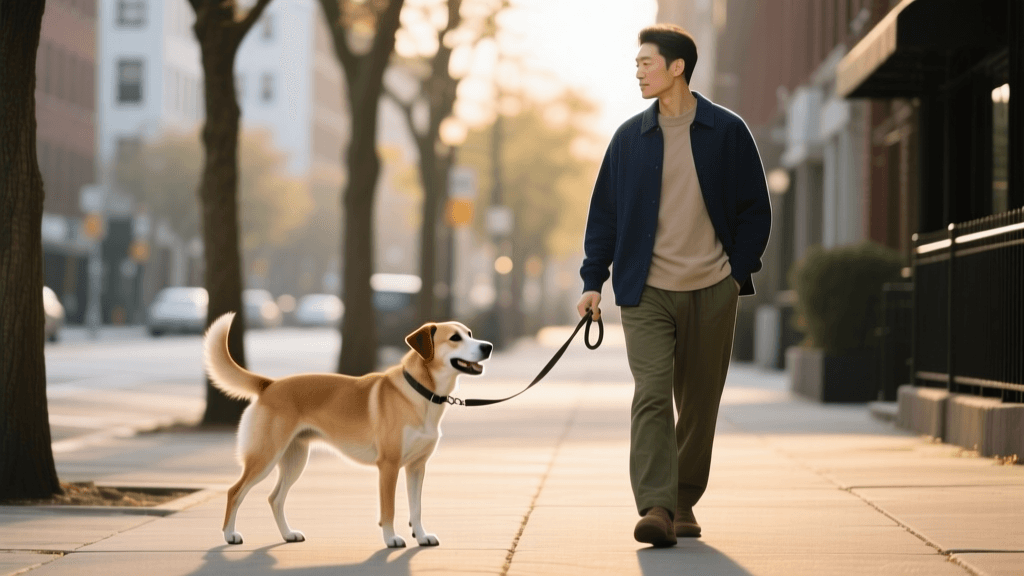
The Psychology Behind Leash Reactivity
Leash reactivity is one of the most common, yet deeply misunderstood, behavioral challenges in modern dog ownership. When a dog lunges, barks, or growls at the end of a leash, owners often feel embarrassed and assume their dog is inherently aggressive. However, from a canine psychology perspective, leash reactivity is rarely about unprovoked malice. It is typically rooted in fear, anxiety, or barrier frustration. Understanding the 'why' behind your dog's behavior is the critical first step before you can implement any successful training protocol. This comprehensive, step-by-step guide will walk you through the psychology of the canine threshold, the exact tools you need, and a measurable counter-conditioning program to rewrite your dog's emotional response to triggers.
The Psychology of the Canine Threshold
Every dog has a 'threshold'—an invisible spatial boundary that dictates their emotional state. When a trigger (like another dog, a skateboard, or a stranger) is outside this threshold, your dog is 'under threshold.' Their parasympathetic nervous system is engaged, meaning they can think, learn, and process treats. When the trigger crosses into their threshold, the amygdala hijacks their brain, triggering a 'fight or flight' response. At this point, learning is biologically impossible. According to the ASPCA, fear-based reactivity is a defensive mechanism designed to increase the distance between the dog and the perceived threat. Your goal in training is not to suppress the outward behavior through intimidation, but to change the underlying emotional response by keeping the dog strictly under their threshold distance.
Reading Early Warning Body Language Signals
Before a dog lunges or barks, they communicate their discomfort through subtle body language. Recognizing these early signals allows you to intervene before your dog crosses their emotional threshold.
- Lip Licking and Yawning: When not related to food or sleep, these are classic 'calming signals' indicating rising stress.
- Whale Eye: Showing the whites of the eyes while keeping the head turned away from the trigger is a sign of high anxiety and potential defensive aggression.
- Piloerection: Hair raised along the spine (hackles) indicates physiological arousal. While not always aggressive, it means the dog's sympathetic nervous system is activated.
- Tension on the Leash: A sudden stiffening of the body and a hard stare are the final warnings before a reactive outburst. By learning to read these micro-expressions, you can pivot and create distance before the amygdala fully hijacks your dog's brain.
Essential Tools for Reactivity Training
Before stepping outside, you must equip yourself with the right gear. Standard retractable leashes and choke chains exacerbate reactivity by creating physical tension that mimics the feeling of being trapped.
- Front-Clip Harness: A well-fitted front-clip harness (e.g., Rabbitgoo No-Pull Harness, approx. $25) redirects forward momentum without applying dangerous pressure to the trachea.
- Biothane Long Line: A 15-foot to 20-foot waterproof long line (e.g., Mendota Products, approx. $30) gives you precise control while allowing the dog enough slack to feel unconfined.
- High-Value Reinforcers: Kibble will not compete with a barking German Shepherd. You need high-value, aromatic treats like Stella & Chewy's Freeze-Dried Beef Liver (approx. $15 per bag).
- Quick-Release Treat Pouch: A magnetic-closure pouch (e.g., Ruffwear Treat Trader, approx. $35) ensures you can deliver rewards within the critical 0.5-second timing window required for classical conditioning.
Step-by-Step Counter-Conditioning: The Engage-Disengage Game
Developed by canine behaviorists, the Engage-Disengage game leverages classical and operant conditioning to rewire your dog's brain.
Step 1: Establish the Baseline Distance
Find a location where your dog can see a trigger but remains completely relaxed. For some dogs, this is 20 feet; for others, it is 100 feet. This is your starting baseline.
Step 2: Mark the Engagement (Classical Conditioning)
The exact moment your dog looks at the trigger, use a marker word like 'Yes!' or click a clicker. Within one second, deliver a high-value treat. You are not asking your dog to do anything; you are simply pairing the sight of the trigger with a positive outcome. Repeat this 10 to 15 times per session.
Step 3: Wait for Disengagement (Operant Conditioning)
Once your dog understands the pairing, wait for them to look at the trigger and then voluntarily turn their head back toward you. The moment they disengage, mark with 'Yes!' and reward heavily.
Step 4: The Treat Scatter
If your dog is highly aroused, toss the treats on the ground. Sniffing naturally lowers a dog's heart rate and engages their parasympathetic nervous system, helping them decompress.
Step 5: Decrease Distance Incrementally
Only move 3 to 5 feet closer to the trigger after your dog has successfully completed three consecutive sessions with zero reactive outbursts. If your dog reacts, you have crossed the threshold. Calmly retreat 10 feet and start over.
Reactivity Training Schedule & Milestones
| Phase | Focus | Target Distance | Success Metric | Est. Timeline |
|---|---|---|---|---|
| Phase 1 | Classical Conditioning | 50+ feet | Dog eats treats readily, no vocalization | Weeks 1-2 |
| Phase 2 | Operant Disengagement | 30-50 feet | Dog voluntarily turns head to owner for treat | Weeks 3-5 |
| Phase 3 | Distance Closure | 15-30 feet | Maintains loose leash, offers sit/eye contact | Weeks 6-10 |
| Phase 4 | Real-World Application | 10-15 feet | Casual passing with trigger on standard walks | Months 3-6+ |
Understanding Breed-Specific Triggers
Canine psychology is heavily influenced by genetics. Understanding your dog's breed instincts will help you anticipate triggers. Herding breeds (like Border Collies and Australian Shepherds) are visually stimulated and often react to fast-moving objects like bicycles or cars. Terriers possess a high prey drive and may react explosively to squirrels or small dogs. Livestock Guardian breeds (like Great Pyrenees) are wired to be suspicious of novel stimuli and strangers encroaching on their perceived territory. Tailoring your training environment to avoid your dog's specific genetic triggers during the early stages of desensitization is crucial for success.
Common Mistakes and How to Avoid Them
Flooding: Forcing a dog to face their fears at close range until they 'give up' is known as flooding. This leads to learned helplessness and often results in a sudden, severe bite when the dog realizes shutting down isn't working.
Using Aversive Punishment: Prong collars and e-collars suppress the warning signs of fear (growling, barking) without fixing the underlying anxiety. The American Veterinary Society of Animal Behavior (AVSAB) strongly advises against aversive methods, noting they can increase stress and exacerbate aggression.
Inconsistent Timing: If you deliver the treat three seconds after the dog looks at the trigger, you may accidentally reward the dog for staring or whining. Precision timing is the bedrock of behavioral modification.
Conclusion
Overcoming leash reactivity is not a weekend project; it is a journey of neurological rewiring. By respecting your dog's threshold, utilizing high-value reinforcement, and practicing the Engage-Disengage game with mechanical precision, you can transform your dog's walks from a stressful chore into a relaxing bonding experience. As highlighted by training experts at the American Kennel Club (AKC), patience and consistency are your greatest assets. Celebrate the micro-victories—a single second of eye contact or a voluntary sit when a jogger passes—and remember that every positive interaction is building a calmer, more confident companion.
jonas-cole
All our authors care for dogs every day — read more of their work on the authors page.