Step-by-Step Guide to Curing Canine Resource Guarding
Discover the psychology behind resource guarding and follow our step-by-step training guide to safely modify your dog's behavior with positive reinforcement.
Understanding the Psychology of Resource Guarding
Resource guarding is one of the most common, yet profoundly misunderstood, behavioral issues in the canine world. To effectively modify this behavior, we must first step back and understand the psychology driving it. When a dog growls, snaps, or stiffens over a bone, a toy, or even a favorite human, they are not attempting to assert "dominance" or claim "alpha" status. Instead, resource guarding is rooted in a deep-seated survival instinct and an emotional response driven by the fear of loss.
From an evolutionary perspective, wild canids had to protect their limited food sources to survive. While our domestic dogs no longer need to hunt for their meals, the neurological hardware remains. When a dog perceives that a valuable resource might be taken away, their amygdala triggers a fight-or-flight response. Understanding this psychological baseline is crucial: your dog is not being "bad" or "stubborn"; they are experiencing genuine anxiety about losing something they perceive as vital to their well-being.
According to the American Kennel Club (AKC), resource guarding is a natural behavior that can be managed and modified through empathy, patience, and strategic positive reinforcement. By shifting our perspective from "correcting bad behavior" to "alleviating canine anxiety," we can build a foundation of trust that makes step-by-step training highly effective.
Recognizing the Subtle Warning Signs
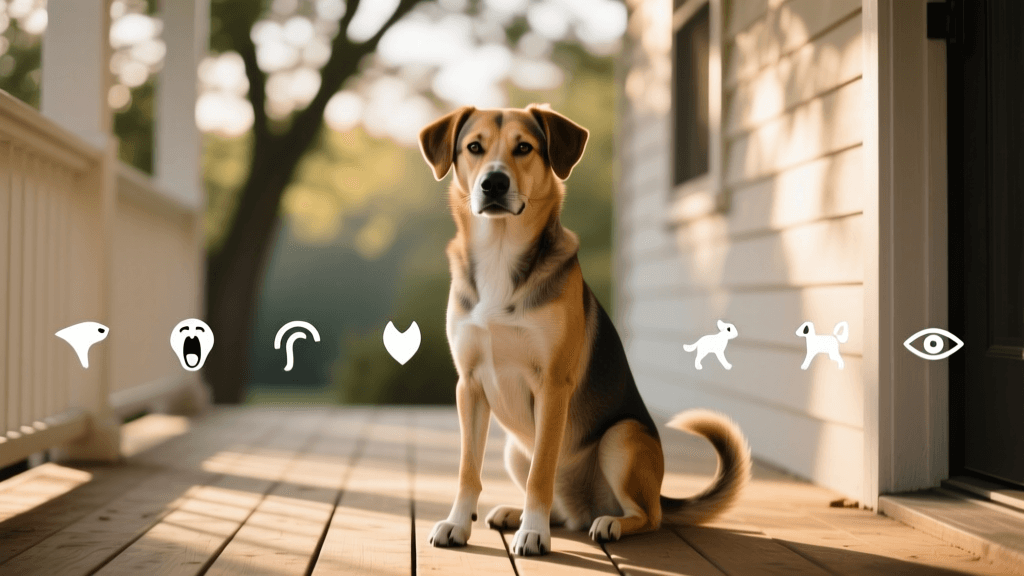
Before a dog ever resorts to a growl or a bite, they communicate their discomfort through a series of subtle body language signals. Recognizing these early warnings is the first step in preventing an escalation. If you miss these signals, your dog may learn that subtle communication doesn't work, leading them to skip the warnings and jump straight to biting in future encounters.
- Whale Eye: The dog turns their head slightly away but keeps their eyes fixed on you, revealing the whites of their eyes.
- Freezing: A sudden, rigid stillness when you approach or reach toward their item.
- Lip Licking and Yawning: Displacement behaviors that indicate internal stress and conflict.
- Accelerated Consumption: Gulping down food or chewing frantically as you enter the room.
- Hovering: Standing stiffly over an item with ears pinned back and weight shifted forward.
By learning to read these micro-expressions, you can intervene before your dog's emotional threshold is crossed, keeping both you and your pet safe during the training process.
Essential Training Tools and Costs
Successful behavior modification requires the right environment and the right incentives. You cannot train a dog out of resource guarding using low-value kibble; you must change their emotional response using high-value rewards. Here is a breakdown of the tools you will need, including estimated costs:
- High-Value Training Treats ($15 - $25): Opt for single-ingredient, high-reward items like Stella & Chewy's freeze-dried beef liver or Zuke's Mini Naturals (salmon flavor). The treat must be significantly more valuable to the dog than the item they are guarding.
- Wearable Treat Pouch ($15 - $30): A pouch like the Ruffwear Treat Trader allows you to keep your hands free and deliver treats within the critical 0.5-second marking window.
- Baby Gates and Pens ($30 - $50): Environmental management is critical. Baby gates allow you to separate your dog from high-traffic areas during meal times or chew sessions, preventing rehearsals of the guarding behavior.
- Long-Handled Tongs ($10): Useful for safely delivering and retrieving high-value chews (like bully sticks) without putting your hands near the dog's mouth during the early stages of training.
Step-by-Step Training Guide to Stop Resource Guarding
The goal of this protocol is not to teach your dog to simply "tolerate" you taking their things, but to change their underlying emotional response so they feel happy and excited when you approach them while they have a resource. This is achieved through Desensitization and Counter-Conditioning (DS/CC).
Step 1: Environmental Management (Weeks 1-2)
Before active training begins, you must stop the dog from practicing the unwanted behavior. Every time your dog successfully guards an item (e.g., they growl, and you back away), the behavior is reinforced.
- Feed your dog in a separate room or behind a baby gate. Do not approach them while they eat.
- Pick up all toys when not in active play sessions.
- Only offer long-lasting chews (like yak cheese or bully sticks) when the dog is safely confined to a crate or a separate room.
Step 2: The "Trade-Up" Game (Weeks 3-4)
This step teaches your dog that giving up an item results in something even better.
- Offer your dog a low-value toy (e.g., a rope toy).
- Once they take it, present a high-value treat (e.g., a piece of freeze-dried liver) right at their nose.
- The moment they drop the toy to eat the treat, use a marker word like "Yes!" and let them eat it.
- After they finish the treat, give the toy back. This is a critical psychological step: the dog learns that relinquishing an item doesn't mean losing it forever; it means a "bonus" treat plus the return of the original item.
Step 3: Proximity Desensitization (Weeks 5-8)
Now we address the fear of approach.
- Give your dog a moderate-value chew in their safe space.
- Stand at a distance where the dog notices you but does not show any warning signs (e.g., 10 feet away).
- Toss a high-value treat toward them. Do not make eye contact, and do not reach toward them.
- Repeat this 5-10 times, then calmly walk away.
- Over multiple sessions, decrease the distance by 1 foot, provided the dog remains relaxed. If they stiffen, you have moved too close too fast. Increase the distance and proceed more slowly.
The ASPCA strongly emphasizes that you should never force a dog to endure an approach that triggers their anxiety, as this will only deepen the psychological association between your presence and the threat of loss.
Step 4: The "Drop It" Cue (Weeks 9+)
Once your dog is happily anticipating your approach and readily trading items, you can attach a verbal cue. Say "Drop It" exactly one second before you present the high-value treat. Eventually, the dog will drop the item upon hearing the cue, anticipating the reward.
The Resource Guarding Severity Scale
Understanding where your dog falls on the severity scale is vital for determining whether you can handle the training at home or if you need professional intervention. Use the table below to assess your dog's current behavioral threshold.
| Severity Level | Canine Body Language & Actions | Recommended Action Plan |
|---|---|---|
| Level 1 (Mild) | Freezing, eating faster, subtle whale eye. | Implement management and Step 2 (Trade-Up) games. |
| Level 2 (Moderate) | Lip curling, low rumbling growl, stiff posture. | Strict management, Step 3 (Proximity Desensitization). Avoid punishment. |
| Level 3 (Severe) | Loud growling, snapping at the air, lunging without making contact. | Hire a certified behaviorist. Muzzle condition for safety. Do not attempt solo approach training. |
| Level 4 (Critical) | Biting that makes contact, puncture wounds, or rapid multiple bites. | Immediate veterinary behavioral consultation. Strict environmental confinement. |
Common Mistakes That Worsen Guarding Behavior
When dealing with resource guarding, human intuition often leads us astray. Many well-meaning owners inadvertently worsen the psychological anxiety driving the behavior. Avoid these common pitfalls:
- The "Alpha" Approach: Forcing your hand into the dog's bowl or physically pinning them down to "show them who is boss" is incredibly dangerous. As noted by the Humane Society of the United States, confrontational training methods increase fear and aggression, often suppressing warning signs like growling. A dog that is punished for growling will simply learn to bite without warning next time.
- Chasing or Cornering: If your dog steals a sock and runs, chasing them turns it into a game of keep-away or triggers a panic response, causing them to swallow the item or bite when cornered.
- Inconsistency: Allowing the dog to guard a toy on Tuesday but scolding them for it on Wednesday creates confusion and heightens baseline anxiety.
When to Call a Professional
While mild to moderate resource guarding can often be resolved with a dedicated step-by-step training guide, severe cases require professional eyes. If your dog is displaying Level 3 or Level 4 behaviors, or if they are guarding multiple unpredictable items (like dropped food on the street or sleeping spaces), it is time to seek help. Look for a Certified Applied Animal Behaviorist (CAAB) or a veterinary behaviorist who utilizes force-free, science-based methods.
Conclusion
Curing canine resource guarding is not an overnight fix; it is a journey of rebuilding trust. By understanding the survival psychology behind the behavior, respecting your dog's body language, and methodically applying desensitization and counter-conditioning, you can transform your dog's anxiety into confidence. Remember, the ultimate goal is not just compliance, but a dog who looks up at you with a wagging tail when you approach, knowing that your presence only ever means good things are about to happen.
beth-carrasco
All our authors care for dogs every day — read more of their work on the authors page.