Understanding Border Collie Herding Instincts and Needs
Discover why Border Collies stare, nip, and herd. Learn actionable strategies to manage their instincts and keep your working dog mentally fulfilled.
The Working Mind: Introduction to the Border Collie
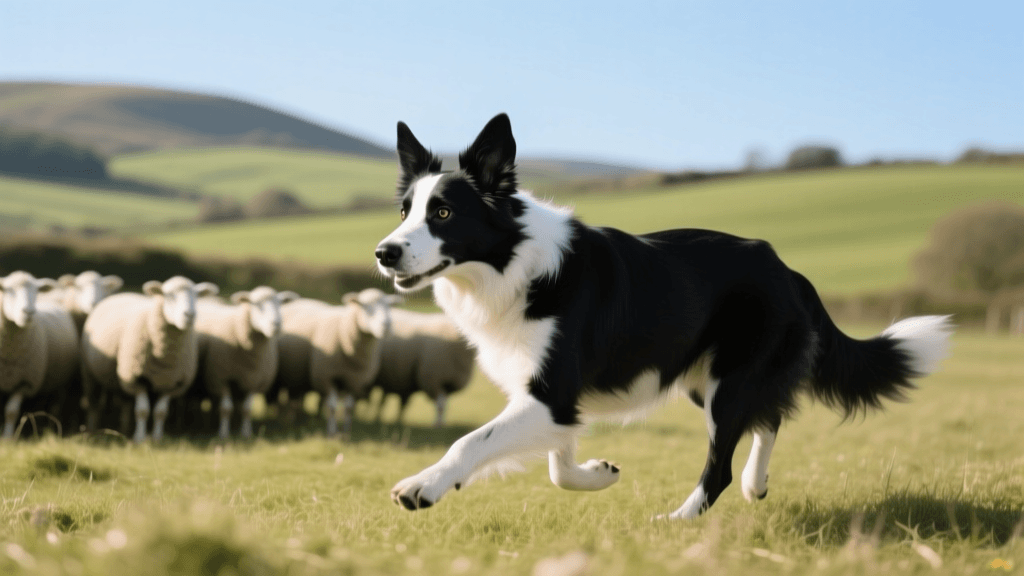
The Border Collie is widely regarded as one of the most intelligent and energetic dog breeds in the world. Originally developed in the Anglo-Scottish border region for herding livestock, these dogs were bred not for their appearance, but for their intense working ability and cognitive stamina. According to the American Kennel Club, the Border Collie's defining characteristic is its unique herding style, which relies on an intense, hypnotic stare known as 'the eye.' However, when placed in a modern suburban home without a flock of sheep to manage, these deeply ingrained instincts can manifest as behavioral challenges. Understanding the psychology behind your Border Collie's behavior is the first step toward a harmonious relationship.
The Psychology Behind the Stare and the Nip
To understand a Border Collie, you must understand the predatory motor sequence. In wild canines, the sequence of hunting is: Eye -> Stalk -> Chase -> Grab-Bite -> Kill-Bite -> Dissect -> Consume. Through centuries of selective breeding, humans have exaggerated certain parts of this sequence in herding dogs while completely suppressing others.
Why Do They Stare?
The Border Collie's famous 'eye' is an exaggerated manifestation of the 'Eye' and 'Stalk' phases of the predatory sequence. When your dog locks eyes with a moving object—whether it is a sheep, a toddler, a skateboarder, or a squirrel—they are not necessarily being aggressive. They are engaging their genetically hardwired herding instinct. The stare is a tool used to control the movement of the flock from a distance.
Nipping and Chasing: Instinct vs. Aggression
While the 'Grab-Bite' and 'Kill-Bite' phases have been heavily suppressed in Border Collies, the 'Chase' instinct remains incredibly strong. When a Border Collie nips at the heels of running children or chases moving vehicles, they are attempting to 'gather' and control the movement of their environment. It is crucial for owners to recognize that this is a breed-specific working behavior, not malicious aggression. However, because it can be dangerous or frightening to children and strangers, it must be redirected into appropriate outlets.
The Cost of Understimulation: Shadow Chasing and OCD Behaviors
Border Collies are genetically predisposed to obsessive-compulsive behaviors if their cognitive needs are unmet. Shadow chasing, light fixation, and fly-snapping are not just quirky habits; they are neurological misfires caused by chronic under-stimulation and environmental stress. When a working dog's brain is starved of complex problem-solving tasks, it will invent its own jobs. A reflection of light on the wall becomes a flock of sheep that must be controlled. If you notice your dog fixating on shadows or staring blankly at walls, it is a critical red flag that their current enrichment routine is failing. Immediate intervention through structured scent work and impulse control training is required to break these obsessive loops.
Actionable Strategies: Fulfilling the Working Dog's Needs
Physical exercise alone is rarely enough to exhaust a Border Collie. A common mistake owners make is believing that a three-mile run will tire the dog out. While physical exercise builds cardiovascular health and muscle tone, it does little to drain the cognitive battery of a working breed. As noted by experts at Fear Free Pets, mental enrichment is critical for preventing anxiety, destructive behavior, and hyperactivity in high-drive dogs.
1. Treibball (Urban Herding)
Treibball is a competitive dog sport that mimics herding using large exercise balls. It is an excellent, low-impact way to satisfy your dog's need to gather and drive objects.
- Equipment Needed: 4 to 8 large yoga/exercise balls and a whistle.
- Sizing: Use 65cm balls for dogs under 40 lbs, and 75cm to 85cm balls for larger dogs.
- Cost: Approximately $20 to $30 per ball. A starter set of 4 balls will cost around $80 to $120.
- Timing: 15 to 20 minutes of active training and ball-pushing is equivalent to an hour of physical running.
2. Flirt Pole Training for Impulse Control
A flirt pole is a giant cat wand for dogs. It is highly effective for teaching impulse control commands like 'leave it,' 'drop it,' and 'wait,' while satisfying the chase instinct in a controlled environment.
- Recommended Product: Outward Hound Tail Teaser Flirt Pole ($15 - $20).
- Rule of Thumb: Keep sessions to 10 minutes maximum to prevent joint strain and overheating.
- Training Integration: Make the dog perform a 'sit' or 'down' before releasing them to chase the lure.
3. Advanced Puzzle Toys and Scent Work
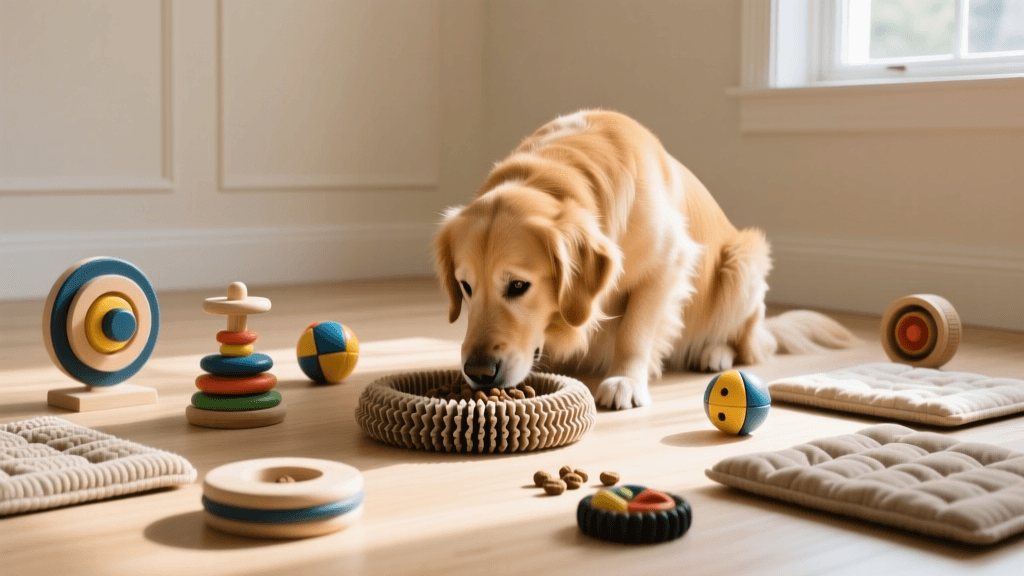
The ASPCA strongly recommends scent-based enrichment for dogs, as olfactory processing requires immense brain power. For a Border Collie, basic kibble-dispensing toys are insufficient.
- Recommended Product: Nina Ottosson Dog Brick Interactive Puzzle ($15 - $30) or the Wooly Snuffle Mat ($40).
- Implementation: Feed your dog's entire daily kibble allowance through puzzle toys and snuffle mats rather than a standard food bowl.
Comparison Chart: Physical vs. Mental Exhaustion
Understanding the difference between physical and mental fatigue is key to managing a herding breed. Use the table below to structure your Border Collie's daily routine.
| Activity Type | Specific Activity | Duration | Estimated Cost | Primary Benefit |
|---|---|---|---|---|
| Physical | Leash Walking / Jogging | 45 - 60 mins | $0 (or $50 for harness) | Cardiovascular health, muscle maintenance |
| Mental / Instinctual | Treibball (Ball Herding) | 15 - 20 mins | $80 - $120 (initial setup) | Satisfies gathering/drive instincts, deep mental fatigue |
| Mental / Olfactory | Snuffle Mat / Scent Games | 10 - 15 mins | $20 - $40 | Calms the nervous system, engages olfactory cortex |
| Mixed (Physical + Mental) | Flirt Pole with Impulse Control | 10 mins | $15 - $25 | Teaches 'drop it' / 'leave it', satisfies prey chase safely |
| Mixed (Sport) | Agility Course Training | 30 - 45 mins | $100+ (classes/equipment) | Handler bonding, spatial awareness, high-level focus |
Managing the Environment: Setting Your Dog Up for Success
Because Border Collies are highly sensitive to motion and sound, environmental management is just as important as active training. If your dog spends hours staring out the front window at passing cars and barking, they are practicing and reinforcing their herding instincts in a frustrated manner.
Window Film and Safe Spaces
Apply opaque privacy window film (such as Gila Privacy Static Cling, approx. $10 per roll) to the bottom half of your front windows. This blocks the visual trigger of passing cars and pedestrians. Additionally, create a 'mat station' or a covered crate in a quiet room where your dog can decompress. Teach the 'place' command using high-value treats like freeze-dried beef liver, rewarding them heavily for choosing to settle on their mat when the doorbell rings or when guests enter the home.
Conclusion: Embracing the Working Breed Lifestyle
Owning a Border Collie is not merely about having a pet; it is about managing a highly specialized working athlete. By shifting your perspective from simply 'exercising' your dog to actively 'fulfilling their instincts,' you will see a dramatic reduction in problematic behaviors like nipping, staring, and hyper-vigilance. Invest in mental enrichment tools like Treibball balls, snuffle mats, and flirt poles, and dedicate just 20 to 30 minutes a day to structured cognitive work. When a Border Collie's mind is properly engaged, their body will finally be able to rest, resulting in a happier, healthier, and more balanced companion.
marcus-aldridge
All our authors care for dogs every day — read more of their work on the authors page.