Best Puzzle Toys to Support Your Dog's Foraging Instincts
Discover how puzzle toys and snuffle mats satisfy your dog's natural foraging instincts. Compare top enrichment products to reduce boredom and anxiety.
The Science Behind Your Dog's Foraging Instinct
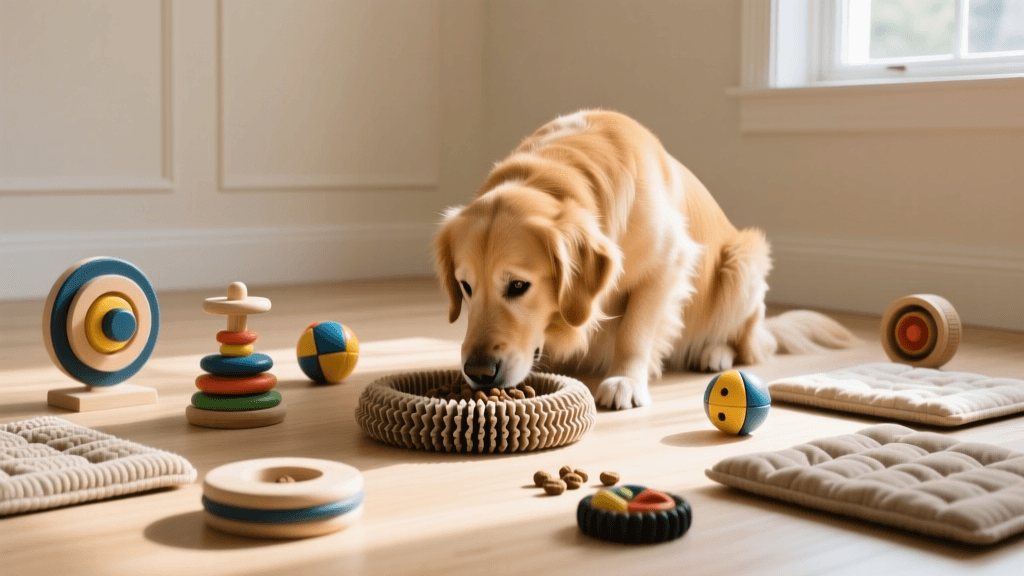
To truly understand your dog, you must first look at their evolutionary history. Long before dogs were lounging on living room sofas, their wild ancestors spent up to 80% of their waking hours scavenging, hunting, and foraging for food. This deeply ingrained survival mechanism has not disappeared simply because we now serve kibble in a stainless-steel bowl. According to experts at VCA Animal Hospitals, mental stimulation and foraging activities are critical for a dog's psychological well-being, helping to prevent behavioral issues born from boredom and excess energy.
When your dog sniffs the ground, they are not just smelling; they are processing complex environmental data. A dog's olfactory bulb is proportionally 40 times larger than a human's, and they possess up to 300 million olfactory receptors. Engaging this sense through foraging triggers the release of dopamine, the feel-good neurotransmitter, which naturally calms the nervous system and provides profound mental satisfaction.
Why Traditional Bowl Feeding Fails Modern Dogs
Feeding a dog their daily caloric intake in a bowl takes approximately 30 seconds. This leaves the remaining 23 hours and 59 minutes of the day entirely devoid of their primary natural instinct: working for food. When a dog's foraging instinct is suppressed, it often manifests in destructive ways. Chewing on furniture, excessive barking, digging in the yard, and even separation anxiety can be traced back to a lack of mental enrichment. By replacing the food bowl with interactive puzzle toys and snuffle mats, you transform a mundane daily chore into a rewarding psychological exercise.
Buyer's Guide: Top Enrichment Products Reviewed
Not all puzzle toys are created equal. To help you match the right product to your dog's specific cognitive level and chewing style, we have reviewed the top enrichment tools on the market.
1. Nina Ottosson by Outward Hound Dog Brick
Best for: Beginners and intermediate problem solvers.
Estimated Cost: $15 - $20
The Dog Brick is a fantastic entry-level puzzle. It features three distinct treat-hiding compartments: flip caps, sliding covers, and removable bone-shaped blocks. This multi-step puzzle requires your dog to use their paws and snout in different ways to access the reward. The bright colors are visually stimulating, and the heavy-duty plastic is durable enough for most dogs, though it is not meant to be chewed. It is highly recommended to supervise your dog during the initial learning phase to prevent frustration.
2. PAW5 Wooly Snuffle Mat
Best for: Heavy sniffers, fast eaters, and senior dogs.
Estimated Cost: $45
If your dog prefers using their nose over their paws, the PAW5 Wooly Snuffle Mat is the gold standard. Handmade from upcycled, non-toxic felt, the mat mimics the texture of thick grass. You simply scatter dry kibble or treats into the depths of the fabric strands. The American Kennel Club (AKC) frequently highlights snuffle mats as an excellent tool for mental enrichment, noting that 15 minutes of intense sniffing can tire a dog out as much as a one-hour walk. The Wooly mat is also machine washable, making it a hygienic choice for daily feeding.
3. KONG Classic Dog Toy (Red Rubber)
Best for: Power chewers and dogs prone to separation anxiety.
Estimated Cost: $15 - $25
The KONG Classic needs little introduction, but its value as a foraging tool is immense. The unpredictable bounce satisfies the prey drive, while the hollow center allows for endless stuffing combinations. By filling a KONG with wet food, peanut butter, and kibble, and then freezing it overnight, you create a time-released foraging challenge that can keep a dog occupied for 45 minutes or more. This is particularly effective for understanding and managing separation anxiety, as it creates a positive association with your departure.
4. Sniffiz SmellyMatty Anti-Slip Snuffle Mat
Best for: Advanced foragers and highly intelligent breeds.
Estimated Cost: $35
For dogs who master standard snuffle mats in minutes, the Sniffiz SmellyMatty offers a complex, multi-layered challenge. It features five different textured pockets and book-like flaps that require dogs to unfasten velcro and lift layers to find hidden treasures. This product brilliantly mimics the complex problem-solving required in the wild when extracting food from tight crevices or under debris. The anti-slip backing ensures the mat stays in place even for enthusiastic, large-breed dogs. It is an exceptional tool for working breeds like Border Collies or Belgian Malinois who require intense cognitive fatigue to settle down in the evening.
Product Comparison Chart
| Product Name | Enrichment Type | Difficulty Level | Est. Cost | Best Suited For |
|---|---|---|---|---|
| Nina Ottosson Dog Brick | Cognitive Puzzle | Level 2 (Intermediate) | $18 | Dogs who like pawing and flipping |
| PAW5 Wooly Snuffle Mat | Olfactory Foraging | Level 1 (Beginner) | $45 | Sniffers, fast eaters, seniors |
| KONG Classic (Red) | Chewing and Licking | Adjustable | $20 | Chewers, anxiety management |
| Sniffiz SmellyMatty | Complex Foraging | Level 3 (Advanced) | $35 | Highly intelligent, bored dogs |
Understanding Your Dog's Frustration Threshold
When introducing puzzle toys, it is vital to understand your dog's frustration threshold. If a puzzle is too difficult, your dog will not learn; they will simply give up or attempt to destroy the toy to get the food. The Humane Society of the United States advises starting with the easiest possible configuration to build your dog's confidence.
For sliding puzzles, leave the covers completely open at first so the dog understands that the toy holds food. Gradually close the covers halfway, then fully, over the course of a week. Always use high-value, strongly scented treats like freeze-dried liver or small pieces of cheese when introducing a new foraging concept. If your dog begins to bark at the toy, paw at it frantically without success, or walk away, the difficulty has exceeded their current cognitive threshold. Step back, make it easier, and let them win.
Safety and Maintenance Tips
- Supervision is Key: Never leave a dog alone with hard plastic puzzles until you are absolutely certain they will not chew and swallow the pieces.
- Caloric Management: The treats used in puzzle toys must be subtracted from your dog's daily caloric intake to prevent obesity. Use a portion of their regular kibble for easier puzzles.
- Hygiene: Snuffle mats and fabric toys should be washed weekly. Hard plastic puzzles can be wiped down with pet-safe enzymatic cleaners or washed in the top rack of the dishwasher if the manufacturer permits.
Final Thoughts on Canine Enrichment
Understanding your dog means recognizing that they are not just pets; they are intelligent, instinct-driven animals that need a job to do. By integrating puzzle toys and snuffle mats into your daily routine, you are honoring their evolutionary biology. You will likely notice a decrease in destructive behaviors, a calmer demeanor, and a deeper bond between you and your dog. Investing in their mental health is just as important as investing in their physical health, and the right foraging tools make that investment both fun and rewarding.
hannah-wickes
All our authors care for dogs every day — read more of their work on the authors page.