Understanding Your Dog's Springtime Behavioral Shifts
Discover why your dog's behavior changes in spring. Learn to manage seasonal prey drive, scenting instincts, and spring activities safely.
The Psychology of the Spring Awakening
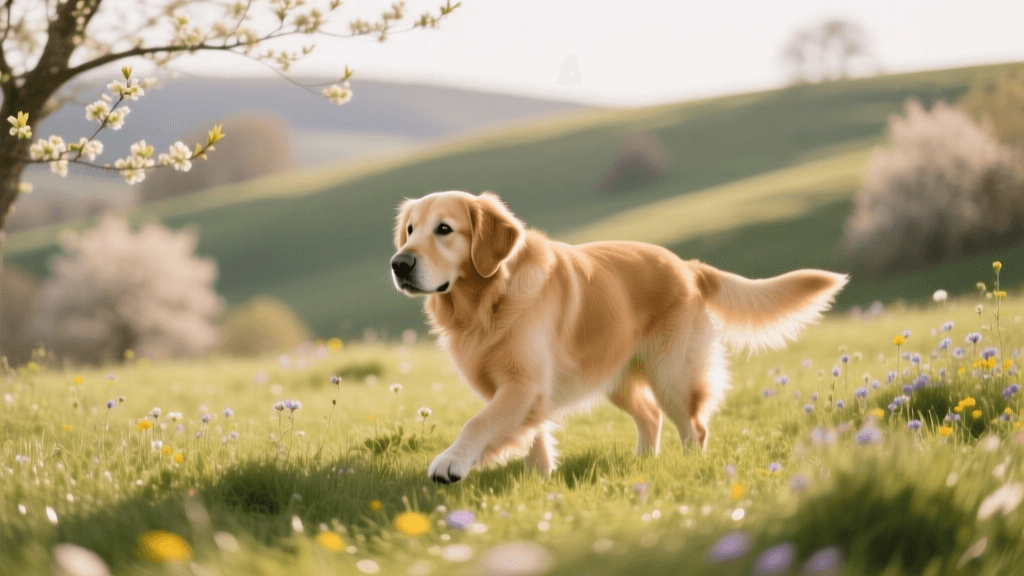
As the winter frost thaws and daylight hours begin to extend, dog owners frequently notice a distinct, sometimes puzzling, shift in their canine companions. Your dog may suddenly become more easily distracted on walks, exhibit heightened territorial barking, or display an intense, almost obsessive interest in the bushes and tree lines. This is not merely a coincidence or a random behavioral quirk; it is a profound psychological and physiological response to seasonal changes. Understanding your dog's springtime behavioral shifts requires looking through the lens of canine ethology, sensory processing, and ancestral instincts.
From an endocrine perspective, the increase in daylight alters your dog's circadian rhythms. The pineal gland reduces its production of melatonin as photoperiods lengthen, leading to increased energy levels, wakefulness, and a general state of environmental arousal. For a species that evolved to be highly attuned to seasonal shifts for hunting, foraging, and mating, spring represents a sensory explosion. To effectively care for your dog during this transitional period, we must decode the specific instincts that awaken and provide targeted, seasonally appropriate activities to channel this newfound energy.
Olfactory Overload: The Thawing Earth
During the winter months, cold temperatures and snow cover effectively suppress scent molecules, locking them close to the ground and limiting their dispersal. When spring arrives, the warming earth and increased humidity create the perfect atmospheric conditions for scent molecules to volatilize and travel. For a dog possessing up to 300 million olfactory receptors (compared to our mere 6 million), this is the equivalent of stepping out of a silent, dark room into a blaring, neon-lit carnival.
This olfactory overload explains why your dog's sniffing frequency and duration increase dramatically in the spring. They are processing complex chemical narratives left by passing wildlife, neighboring dogs, and decaying organic matter. The vomeronasal organ, or Jacobson's organ, located in the roof of the mouth, works in tandem with the primary olfactory bulb to analyze pheromones. When your dog pauses to flick their tongue or stare blankly while sniffing a fire hydrant, they are engaging in deep cognitive processing. Interrupting this process can lead to frustration and leash reactivity. Recognizing this biological imperative is the first step in adapting your seasonal care routine.
Ancestral Instincts: Prey Drive in the Spring
Springtime triggers a massive resurgence in local wildlife activity. Squirrels emerge from torpor, rabbits begin nesting, and migratory birds return. Consequently, your dog's prey drive—an innate, hardwired behavioral sequence consisting of eye-stalk, chase, grab-bite, and kill-bite—becomes highly activated. According to the American Kennel Club, prey drive is a natural instinct that varies in intensity across breeds but is universally present in domestic dogs.
When a dog spots a darting squirrel, the sudden movement triggers the visual cortex, bypassing the prefrontal cortex (the area responsible for impulse control) and sending an immediate adrenaline-fueled signal to the motor neurons. This is why a dog that normally has excellent recall may suddenly become "deaf" to commands when a rabbit crosses the path. Managing this seasonal spike in prey drive requires proactive environmental management and providing safe, legal outlets for the chasing instinct.
Seasonal Behavioral Shifts & Management Strategies
| Season | Primary Instinct Trigger | Behavioral Manifestation | Management Strategy |
|---|---|---|---|
| Winter | Conservation of energy, pack bonding | Increased sleeping, lethargy, clinginess | Indoor puzzle toys, short structured training sessions |
| Spring | Prey drive, territorial patrolling | Distractibility, chasing, fence-running, barking | Long-line sniffaris, flirt pole exercises, scent work |
| Summer | Thermoregulation, foraging | Seeking shade, water-seeking, digging | Early morning walks, frozen enrichment, splash pads |
| Autumn | Resource guarding, nesting | Hoarding treats, increased alertness to falling leaves | Scatter feeding, decompression hikes in quiet woods |
Actionable Spring Activities for Mental Enrichment
To prevent your dog from developing frustrating behavioral habits like fence-fighting or excessive leash pulling, you must provide activities that satisfy their springtime instincts in a controlled manner. Below are specific, actionable activities tailored to the spring awakening.
1. The 30-Foot "Sniffari" Decompression Walk
A traditional heel-walk around the block does little to satisfy a dog's springtime olfactory needs. Instead, transition to "Sniffaris"—unstructured walks where the dog dictates the pace and direction, guided entirely by their nose.
- Equipment: Invest in a 15 to 30-foot Biothane long-line leash (Cost: $25 - $45). Biothane is ideal for spring because it does not absorb mud or water and is easy to wipe clean. Pair this with a Y-shaped, front-clip harness (Cost: $35 - $60) to prevent tracheal damage if the dog suddenly lunges at a scent.
- Timing: Schedule these walks during early morning hours (6:00 AM - 8:00 AM). This timing coincides with peak wildlife scent deposition from the night before, providing the richest olfactory data for your dog, while avoiding the heavy neighborhood foot traffic that can cause overstimulation.
- Location: Seek out unmowed fields, wooded trails, or quiet suburban perimeters. Allow your dog to spend up to 15 minutes investigating a single area if they choose. Studies show that 20 minutes of intense sniffing can lower a dog's heart rate and provide the same mental fatigue as a two-mile physical run.
2. Backyard Scent Tracking and Discrimination
If you have a secure yard, you can harness your dog's springtime nose work instincts by introducing formal scent tracking. This channels their desire to hunt into a cooperative game with you. The AKC Nose Work guide highlights that scent work builds confidence and tires dogs out mentally without requiring high-impact physical exertion.
- Setup: Purchase a basic canine scent work kit containing essential oils like Birch, Anise, or Clove (Cost: $20 - $30).
- The Game: Place a single drop of Birch oil on a cotton swab and hide it inside a small, ventilated tin. Start by placing the tin in plain sight in the grass, encouraging your dog to "find it." When they put their nose on the tin, mark the behavior with a "Yes!" and reward with a high-value treat like freeze-dried liver.
- Progression: Gradually hide the tin behind spring garden planters, under patio furniture, or tucked into the lower branches of blooming shrubs. This mimics the natural foraging and tracking sequences your dog's brain is craving during the spring thaw.
3. Flirt Pole Sessions for Prey Drive Outlet
For high-prey-drive breeds (such as Terriers, Herding breeds, and Hounds), the sight of darting wildlife can be intoxicating. A flirt pole—a long pole with a bungee cord and a lure attached—is an excellent tool to simulate the chase sequence safely.
- Measurements & Safety: Use a pole that is at least 6 feet long to keep the dog at a safe distance from your body. Ensure the lure is made of durable fleece rather than small plastic parts that could be swallowed.
- Protocol: Drag the lure along the ground in erratic, unpredictable movements to mimic a fleeing rodent. Allow your dog to stalk, chase, and eventually "catch" the lure every 30 to 45 seconds.
- The Catch: Always let the dog win the game and physically bite the lure. Denying the final "kill-bite" phase of the prey sequence can lead to immense frustration and redirected biting. End the 15-minute session with a clear "all done" cue and trade the lure for a chew toy or a stuffed Kong.
Managing Territorial Reactivity as Days Lengthen
Spring also brings an increase in human and animal traffic. Delivery drivers return to dropping packages at the door, neighbors begin doing yard work, and windows are left open to catch the breeze. For dogs with territorial instincts, this heightened activity can trigger chronic stress and nuisance barking.
To manage this, apply environmental modifications. If your dog reacts to people walking past the living room window, apply translucent window film (Cost: $15 for a large roll) to the bottom half of the glass. This blocks the visual trigger while still allowing natural light to enter. Furthermore, be mindful of springtime yard hazards. As noted in the ASPCA Spring Pet Care Tips, the use of chemical fertilizers, pesticides, and toxic spring bulbs (like tulips and daffodils) poses a significant risk to dogs who are naturally inclined to dig and forage in the freshly turned soil. Always opt for pet-safe, organic lawn treatments and supervise your dog closely when they are exploring newly planted garden beds.
Conclusion
Your dog's springtime behavioral shifts are not acts of defiance or sudden lapses in training; they are the beautiful, complex manifestations of millions of years of evolutionary biology responding to the changing earth. By acknowledging the profound impact of the spring thaw on your dog's olfactory landscape, endocrine system, and prey drive, you can transition from a place of frustration to one of deep understanding. Equip yourself with a long-line leash, introduce structured scent games, and provide safe outlets for their ancestral instincts. In doing so, you will not only improve your dog's behavioral wellness but also forge a deeper, more empathetic bond as you navigate the vibrant season of spring together.
hannah-wickes
All our authors care for dogs every day — read more of their work on the authors page.