Do Dog Talking Buttons Actually Work? The Science Explained
Are viral dog talking buttons real communication or just tricks? Discover the science behind canine AAC devices and how to train your dog.
The Viral Phenomenon of Dog Talking Buttons
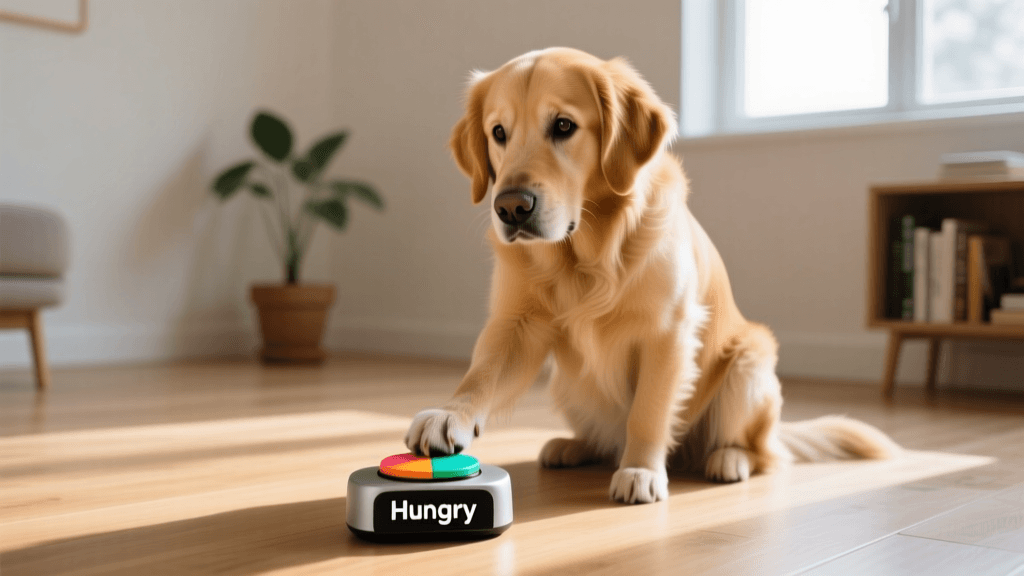
If you have spent any time on TikTok or Instagram over the past few years, you have likely encountered a viral video of a dog talking. From Bunny the Sheepadoodle pondering the concept of time to Stella the Cavapoo demanding a trip to the park, canine influencers pressing soundboards have taken the internet by storm. But as a dog owner, you might be wondering: is this genuine interspecies communication, or just an elaborate trick? In this deep dive into canine psychology and behavioral science, we explore the truth behind dog talking buttons, how Augmentative and Alternative Communication (AAC) applies to our pets, and how you can ethically and effectively teach your own dog to use a soundboard.
The Science Behind Canine AAC Devices
Augmentative and Alternative Communication (AAC) has long been used in human speech therapy to help individuals with conditions like autism or ALS communicate their needs. Recently, cognitive scientists and animal behaviorists have adapted these principles for dogs. The most prominent ongoing research in this field is the TheyCanTalk project, led by cognitive scientist Dr. Federico Rossano at the University of California, San Diego. This massive citizen-science study tracks thousands of pets using soundboards to understand the limits and capabilities of canine language acquisition.
Dogs do not possess the vocal cords required for human speech, nor do they process syntax and grammar the way we do. However, they are masters of associative learning. By pairing a specific physical action (pressing a button) with a predictable outcome (going outside, receiving a treat, or playing fetch), dogs learn to use these buttons as functional tools to manipulate their environment and express their desires.
Real Language or the Clever Hans Effect?
Skeptics of the viral dog button trend often point to the Clever Hans effect. Clever Hans was a famous early 20th-century horse who supposedly knew how to do math by tapping his hoof. In reality, Hans was simply reading the microscopic, unconscious body language cues of his trainer, stopping when the human tensed up in anticipation of the correct answer. Could talking dogs just be pressing buttons when their owners subtly lean forward or shift their weight?
According to an investigation by NPR featuring insights from cognitive researchers, while the Clever Hans effect is a valid concern in animal cognition studies, many dogs using AAC devices initiate interactions when their owners are entirely out of the room or not paying attention. Furthermore, dogs frequently combine buttons in novel ways—such as pressing stranger and outside when the mail carrier arrives—which suggests a level of cognitive mapping that goes beyond simple operant conditioning or reading human micro-expressions.
How to Start Training with Dog Buttons
If you want to tap into your dog's cognitive potential, introducing a soundboard requires patience, consistency, and an understanding of canine operant conditioning. Here is a practical, step-by-step guide to getting started.
Recommended Starter Kits and Costs
| Brand | Price Range | Key Features | Best For |
|---|---|---|---|
| FluentPet | $60 - $130 | Hexagonal tiles, compact buttons, travel-friendly | Small to medium dogs, spatial memory mapping |
| Hunger For Words | $35 - $80 | Larger buttons, velcro mats, loud volume | Large breeds, dogs with heavy paw strikes |
| Generic Recordable | $15 - $25 | Bulk packs, no mats, basic recording | Budget testing, advanced DIY setups |
Step 1: Target Training (Weeks 1-2)
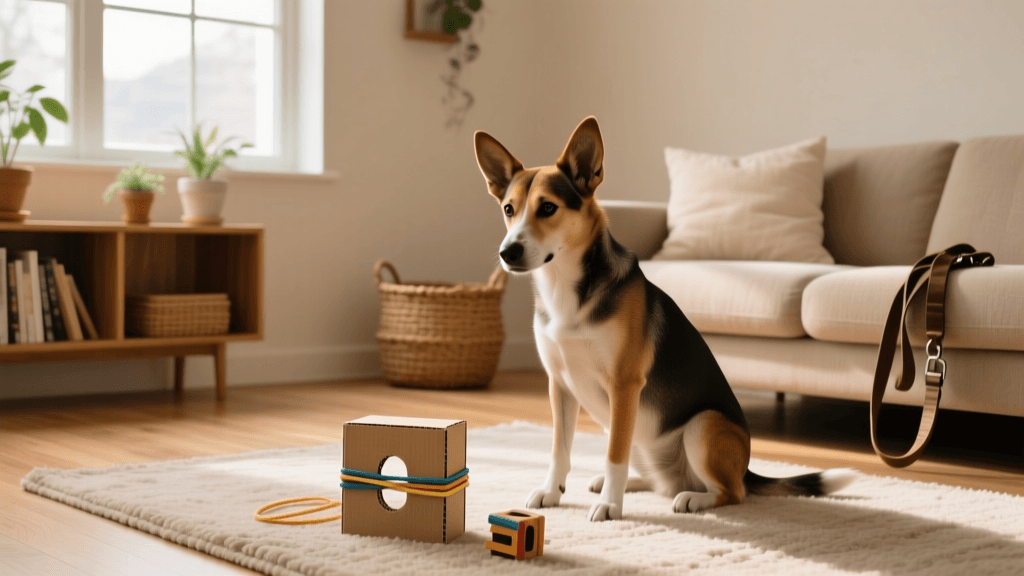
Before introducing the soundboard, your dog must understand how to target an object with their nose or paw. Hold a high-value treat near the button. When your dog sniffs or paws at the button to get the treat, immediately mark the behavior with a clicker or a verbal Yes! and reward them. Repeat this in 10-minute sessions until your dog confidently touches the button on command. This builds the foundational motor skill required for AAC use.
Step 2: Modeling the Behavior (Weeks 3-4)
Modeling is the most critical phase of canine AAC training. You must demonstrate the button's meaning without forcing your dog. Every single time you take your dog outside, say Outside, press the Outside button yourself, and immediately open the door. Do not physically grab your dog's paw and push the button for them. Forcing creates physical aversion and psychological frustration. Simply model the behavior consistently so your dog builds the association between the sound, the button location, and the outcome.
Step 3: Fading the Prompt and Adding Vocabulary (Month 2+)
Once your dog begins pressing the first button independently, you can introduce a second button, such as Play or Water. Place new buttons in a logical spatial arrangement. Spatial memory is highly developed in canines, meaning they often remember where a button is located just as much as what it sounds like. Keep the soundboard in a high-traffic area where your dog can easily access it without needing to ask for permission to enter a room.
Breed Predispositions and Psychological Factors
While any dog can learn to use AAC buttons, breed instincts play a significant role in how quickly they adapt and which concepts they grasp first. Herding breeds, such as Border Collies and Australian Shepherds, are genetically wired for high-level communication and cooperative work with humans. They tend to excel at button training and often learn abstract concepts like later or where.
On the other hand, independent scent hounds like Beagles or Bloodhounds are highly motivated by environmental stimuli rather than human-directed tasks. They may require higher-value treats and shorter, more engaging training sessions to maintain focus. Understanding your dog's breed-specific psychology is vital for managing your expectations and tailoring your training approach to their natural instincts.
Common Mistakes to Avoid
Many owners abandon button training due to avoidable psychological pitfalls. To ensure your dog views the soundboard as an empowering tool rather than a source of stress, avoid these common errors:
- Over-prompting: Staring at your dog or repeatedly asking them to press a button creates performance anxiety. Let them initiate the interaction.
- Button Baiting: Placing treats on top of the buttons confuses the dog. They will press the button for the food, not to communicate a need.
- Ignoring the Button: If your dog presses the Play button, you must engage in play immediately, even if it is just for two minutes. Ignoring their requests teaches them that the buttons are broken tools.
- Adding Too Many Words: Introducing ten buttons at once overwhelms canine cognitive processing. Stick to one or two functional, highly rewarding words (like Outside or Treat) until mastery is achieved.
Training a dog to use AAC devices is not about teaching them human language; it is about giving them a new medium to express their canine needs. Respect their psychology, and the communication will follow.
Final Thoughts
The viral trend of dog talking buttons is more than just a fleeting internet fad; it represents a fascinating intersection of canine cognition, behavioral psychology, and modern technology. While your dog may never write a novel or debate philosophy, giving them a soundboard can profoundly deepen your bond by reducing frustration and giving them agency over their daily lives. By approaching AAC training with scientific principles, patience, and a deep respect for your dog's unique psychological makeup, you can unlock a whole new world of interspecies communication.
aaron-whyte
All our authors care for dogs every day — read more of their work on the authors page.