The Ultimate Puppy Potty Training Schedule for First-Time Owners
Master puppy potty training with our step-by-step schedule, crate training tips, and expert advice designed specifically for first-time dog owners.
Welcome to Puppy Parenthood: Why Potty Training Feels Hard
Bringing a new puppy home is one of the most exciting milestones in life, but it can quickly become overwhelming when you are constantly cleaning up puddles on your favorite rug. For first-time dog owners, potty training often feels like an insurmountable challenge. You might find yourself asking, "Why doesn't my puppy get it?" or "Will I ever sleep through the night again?" The secret to success is not a magical product or a special breed trait; it is entirely about biology, consistency, and a structured schedule.
As a first-time owner, it is crucial to understand that your puppy is not being stubborn or spiteful. They are simply learning a completely new set of rules in a foreign environment. By setting up a proactive routine rather than reacting to accidents, you will save yourself months of frustration and build a foundation of trust with your new best friend.
The Biology of a Puppy's Bladder
Before diving into the schedule, you must understand the physical limitations of your puppy. A general rule of thumb recommended by veterinarians is that a puppy can hold their bladder for about one hour per month of age, up to a maximum of about eight hours. However, this applies to resting or crated puppies. An active, playing puppy will need to go much more frequently.
| Puppy Age | Maximum Hold Time (Crated/Resting) | Active Potty Break Frequency |
|---|---|---|
| 8 Weeks (2 Months) | 2 to 3 Hours | Every 30 to 60 Minutes |
| 12 Weeks (3 Months) | 3 to 4 Hours | Every 1 to 2 Hours |
| 16 Weeks (4 Months) | 4 to 5 Hours | Every 2 Hours |
| 6 Months | 6 to 7 Hours | Every 3 to 4 Hours |
Understanding this table is your first step toward empathy and realistic expectations. If you are leaving an eight-week-old puppy alone in a playpen for four hours while you work from home, an accident is a biological certainty, not a behavioral failure.
Essential Potty Training Gear for Beginners
You do not need to spend a fortune, but having the right tools on hand before your puppy arrives is critical. Here is a starter kit with estimated costs:
- Enzymatic Cleaner (e.g., Nature's Miracle or Rocco & Roxie): $15 - $25. Standard household cleaners do not break down the uric acid crystals in dog urine. If a puppy can still smell their previous accident, they will return to that spot. Enzymatic cleaners are non-negotiable.
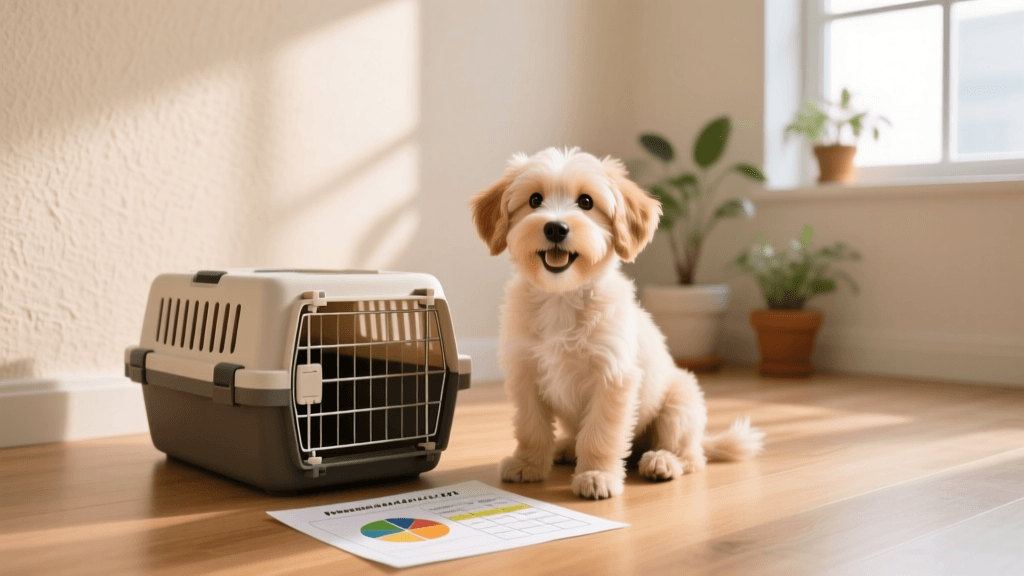
- Wire Crate with a Divider Panel (e.g., MidWest Homes for Pets): $50 - $80. The divider allows you to buy a crate sized for your adult dog but block off the back so the puppy only has enough room to stand, turn around, and lie down. Dogs naturally avoid soiling their sleeping area, making this a powerful training tool.
- Treat Pouch (e.g., Kurgo or PetSafe): $10 - $20. You need immediate access to rewards the second your puppy finishes eliminating outside.
- High-Value Training Treats (e.g., Zuke's Mini Naturals or boiled chicken): $8 - $15. Keep these small and soft so they can be consumed quickly without distracting the puppy from the task at hand.
The First-Time Owner's Daily Potty Schedule
Consistency is the bedrock of potty training. Puppies thrive on routine. Below is a sample schedule for a 10-to-12-week-old puppy. Adjust the times to fit your household, but keep the intervals consistent.
- 7:00 AM - Wake Up & Immediate Potty: Carry your puppy directly outside the moment they wake up. Do not let them walk, as the movement can stimulate their bladder and cause an indoor accident.
- 7:15 AM - Breakfast: Feed your puppy their measured morning meal. Puppies usually need to eliminate 15 to 30 minutes after eating.
- 7:45 AM - Post-Meal Potty: Take them back to their designated outdoor bathroom spot.
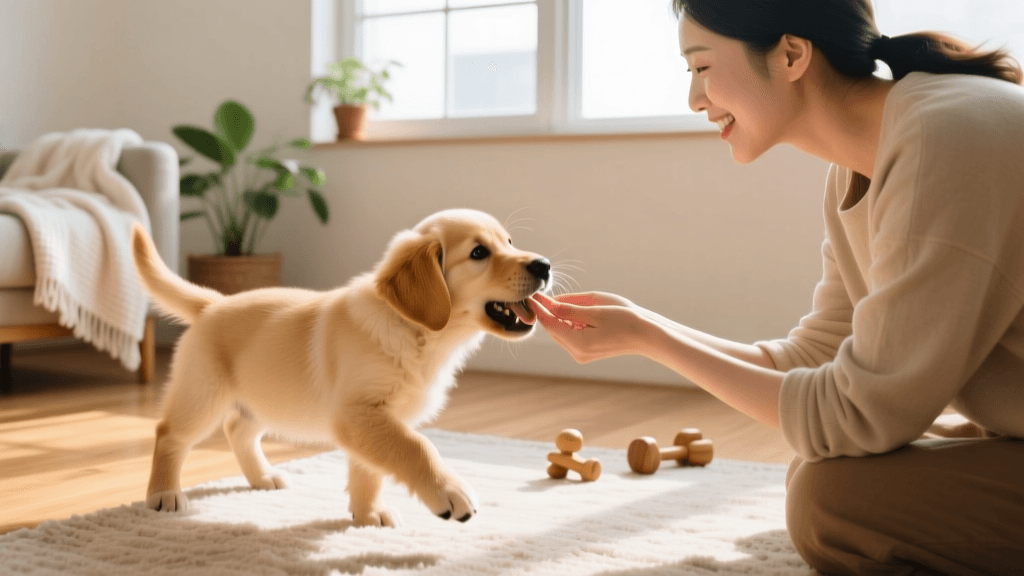
- 8:00 AM - Supervised Play & Training: Engage in short, 10-minute training sessions. Mental stimulation tires a puppy out faster than physical exercise.
- 8:30 AM - Potty & Nap Time: After play, take them out one more time, then place them in their crate for a morning nap.
- 10:30 AM - Wake, Potty, Play: Repeat the cycle. Every transition (waking up, eating, playing, drinking water) requires a potty break.
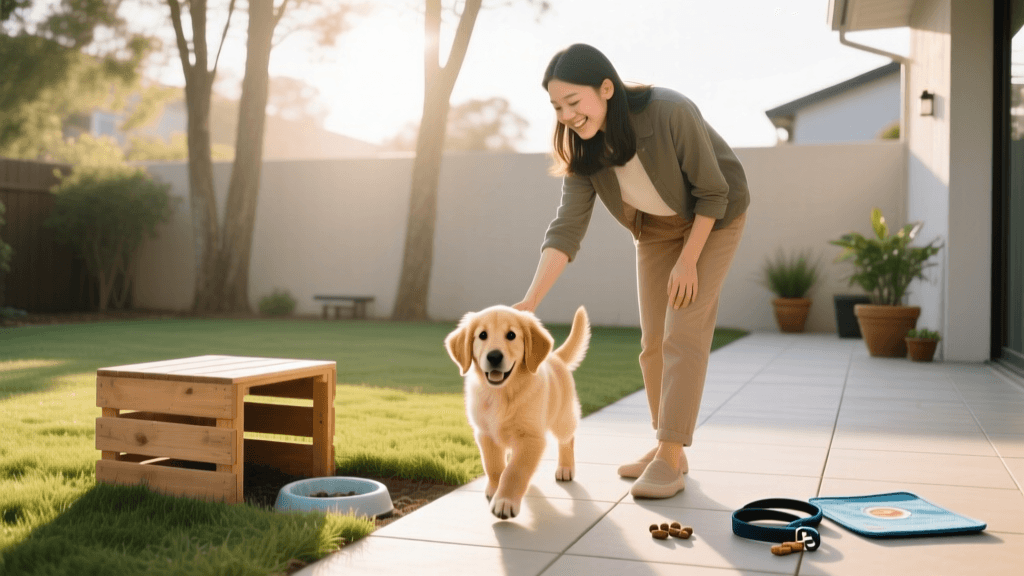
The Golden Rule: Always take your puppy to the exact same spot outside. The scent of their previous visits will act as a natural trigger to encourage them to go.
Surface Generalization: A Pro-Tip for New Owners
Many first-time owners make the mistake of only letting their puppy potty on grass. This creates a "surface preference." If you ever travel, move to an apartment with a concrete balcony, or walk in a city where grass is scarce, your puppy may refuse to go, leading to painful retention and eventual indoor accidents. Intentionally expose your puppy to different surfaces during their first few months: grass, gravel, mulch, dirt, and concrete. Reward them equally for eliminating on all acceptable outdoor surfaces.
Crate Training: Your Secret Weapon
The ASPCA heavily advocates for crate training, noting that it taps into a dog's natural denning instinct. When introduced properly, a crate becomes a safe haven for your puppy, not a punishment zone. To use the crate for potty training, ensure the space is only large enough for them to sleep comfortably. If the crate is too large, the puppy will designate one corner as a bedroom and the opposite corner as a bathroom, entirely defeating the purpose of the training.
Feed your puppy their meals inside the crate with the door open to build positive associations. Provide a safe chew toy, like a Kong stuffed with frozen peanut butter, to keep them occupied during their downtime.
Surviving the Night Shift
Nighttime potty breaks are the most dreaded part of the first few weeks. Set an alarm on your phone for 3 to 4 hours after your puppy goes to sleep. For a 10-week-old puppy going to bed at 10:00 PM, set an alarm for 1:30 AM. When the alarm goes off, keep the lights dim and interaction to an absolute minimum. Carry the puppy outside, use a boring, calm voice to say "go potty," reward them quietly, and put them straight back to bed. This teaches the puppy that nighttime wake-ups are strictly for business, not for play.
Handling Accidents Like a Pro
Accidents will happen. How you react will determine how quickly your puppy learns. If you catch your puppy in the act, clap your hands loudly once to interrupt them, immediately scoop them up, and carry them outside to finish. Praise them lavishly if they finish outdoors.
If you find an accident after the fact, do not punish your puppy. Rubbing their nose in it or yelling will only teach them that you are a scary, unpredictable person who gets angry when they eliminate. According to the American Kennel Club, punishing a dog for a past accident does not connect the punishment to the action; it merely creates anxiety. Instead, clean the area thoroughly with your enzymatic cleaner to remove the scent markers. As the Humane Society of the United States advises, avoiding ammonia-based cleaners is vital, as ammonia smells like urine to a dog and will actually attract them back to the spot.
"Punishing a puppy for an accident you didn't catch in the act only teaches them to hide from you when they need to go. Supervision and prevention are your best tools." - Expert Dog Training Consensus
Final Thoughts on Consistency
Potty training is a marathon, not a sprint. For the first month, act as your puppy's shadow. Use baby gates or a leash tied to your waist indoors to ensure they never have the opportunity to sneak behind a sofa and have an accident. Celebrate the small victories, keep your cleaning supplies handy, and remember that every single outing is a step toward a fully house-trained, happy adult dog. You've got this!
priya-sutaria
All our authors care for dogs every day — read more of their work on the authors page.