Golden Retriever vs Labrador: Which Puppy Fits Your Family?
Compare Golden Retriever and Labrador Retriever puppies. Discover differences in energy, training, feeding costs, and early socialization needs.
The Great Puppy Debate: Golden Retriever vs. Labrador Retriever
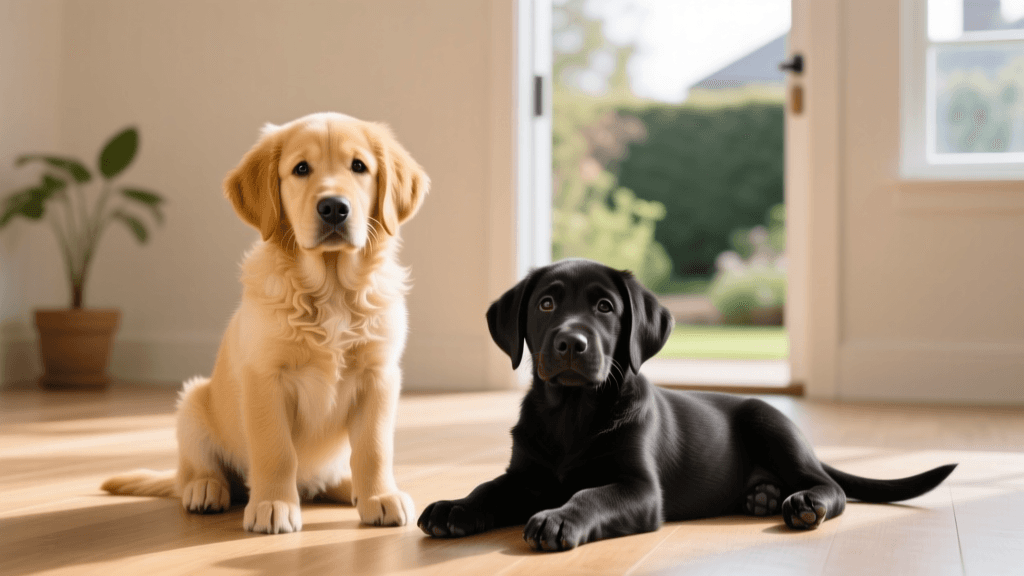
When welcoming a new furry friend into your home, the decision often narrows down to two of the most beloved family dogs in the world: the Golden Retriever and the Labrador Retriever. Consistently ranking in the top three most popular breeds according to the American Kennel Club, both dogs are famously friendly, highly trainable, and eager to please. However, when it comes to the gritty reality of puppy care, early development, and daily management, these two breeds have distinct differences that prospective owners must understand before making a selection.
Choosing between a Golden and a Lab is not just about coat color or facial structure; it is about matching a puppy's developmental needs, energy output, and early socialization requirements with your family's lifestyle. In this comprehensive breed comparison, we will break down the first year of life for both breeds, covering feeding schedules, teething challenges, exercise limitations, and expected financial costs to help you select the perfect companion.
Energy Levels and Exercise Needs in the First Year
Labrador Retriever puppies are frequently described by veterinarians and trainers as 'bouncy' and 'high-octane.' From the moment they wake up until they collapse into a deep sleep, Lab puppies operate at maximum capacity. They are highly driven by their environment and require strict management to prevent destructive behaviors born from boredom. Golden Retriever puppies, while still incredibly active and playful, tend to mature slightly faster in terms of impulse control. They are often more content to engage in a calm cuddle session after a play bout, whereas a Lab puppy might immediately look for the next game of fetch.
The 5-Minute Rule for Puppy Walks
Regardless of which breed you choose, protecting their developing joints is paramount. Both breeds are prone to hip and elbow dysplasia, meaning forced exercise on hard surfaces must be avoided during the first year. Veterinary professionals recommend the '5-minute rule': five minutes of structured, leashed walking per month of age, up to twice a day. Therefore, a 4-month-old Golden or Lab should only walk for 20 minutes at a time. Free play in a soft, fenced yard is unlimited, but forced jogging or long hikes must wait until their growth plates close between 12 and 18 months of age.
Early Socialization and Temperament
The critical socialization window for all puppies occurs between 3 and 14 weeks of age. During this time, puppies are highly receptive to new experiences, and positive exposure is vital for preventing fear-based behaviors later in life. The American Veterinary Medical Association emphasizes that proper socialization is just as crucial as early vaccination protocols. Both Golden and Lab puppies are naturally outgoing, but their reactions to novel stimuli can differ.
Labrador puppies tend to be boisterous and may jump, bark, or pull on the leash when meeting new people or dogs. Their enthusiasm can easily overwhelm smaller children or timid pets. Golden Retriever puppies are generally softer in their approach, often exhibiting a gentle curiosity rather than overwhelming exuberance. However, Goldens can be more sensitive to loud noises and chaotic environments, requiring a more patient, reward-based approach to desensitization during their fear periods (typically around 8 to 10 weeks and again at 6 to 14 months).
Teething, Chewing, and Bite Inhibition
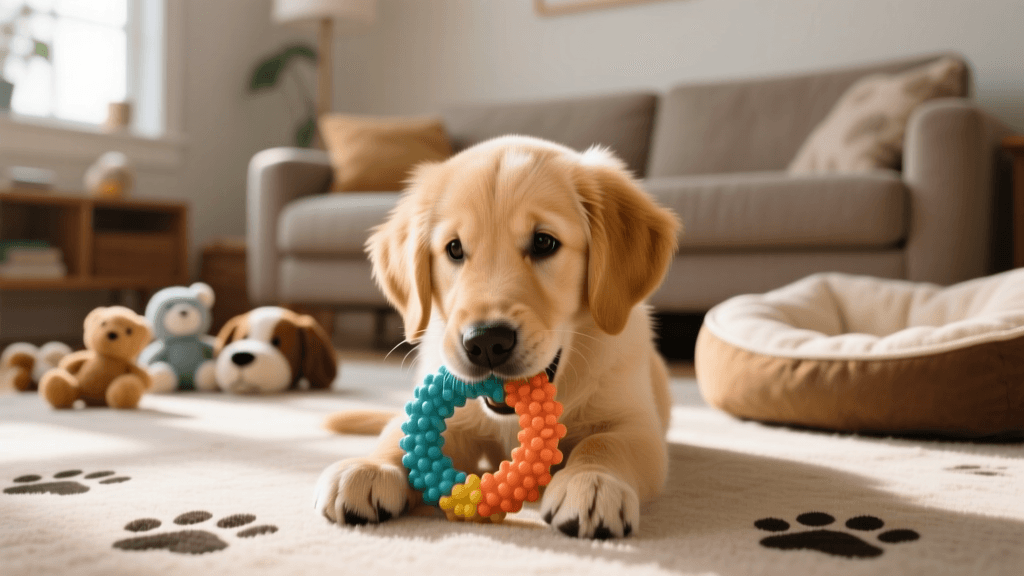
Retrievers are genetically hardwired to carry things in their mouths, making both breeds notoriously 'mouthy' as puppies. However, the intensity of the chewing phase varies. Labrador puppies are widely considered one of the most destructive chewing breeds in the canine world. Between 12 weeks and 6 months, a Lab puppy will attempt to chew through baseboards, shoes, furniture, and even drywall if left unsupervised. Golden Retrievers also chew, but they generally have a 'softer mouth' and are slightly easier to redirect.
Actionable Teething Management
- Crate Training: Both breeds require strict crate training when unsupervised to prevent destructive chewing and accidental ingestion of foreign objects.
- Appropriate Chew Toys: Invest in durable, puppy-specific toys. The KONG Puppy Toy (made of softer pink or blue rubber) stuffed with frozen plain yogurt or peanut butter is excellent for soothing inflamed gums. For aggressive Lab chewers, a Nylabone Dura Chew provides a safe alternative to furniture legs.
- Bite Inhibition: When puppy teeth make contact with human skin, immediately let out a high-pitched yelp and withdraw attention for 10 seconds. This mimics littermate behavior and teaches the puppy to moderate their bite force.
Feeding Schedules, Growth Rates, and Costs
Proper nutrition during the first year is critical for large-breed puppies to ensure steady growth and prevent orthopedic issues. You must feed a diet specifically formulated for 'Large Breed Puppies,' which contains controlled calcium and phosphorus levels. Below is a comparison of expected growth milestones, daily feeding requirements, and associated costs for the first year.
| Metric | Golden Retriever Puppy | Labrador Retriever Puppy |
|---|---|---|
| Adult Weight Target | 55 - 75 lbs | 55 - 80 lbs |
| Weight at 3 Months | 20 - 25 lbs | 22 - 28 lbs |
| Weight at 6 Months | 40 - 50 lbs | 45 - 55 lbs |
| Daily Food (2-4 Months) | 2 to 2.5 cups | 2.5 to 3 cups |
| Daily Food (6-12 Months) | 3 to 4 cups | 3.5 to 4.5 cups |
| Estimated Annual Food Cost | $600 - $800 | $700 - $900 |
Note: Food amounts are based on high-quality large-breed puppy kibble providing roughly 350-400 calories per cup. Always adjust based on your puppy's body condition score.
Pro Tip: Labs are highly food-motivated and prone to rapid eating, which can lead to life-threatening gastric dilatation-volvulus (bloat). Always use a slow-feeder bowl for your Lab puppy and enforce a strict rest period for one hour after meals.
Grooming Needs for Puppy Coats
While adult Goldens are famous for their flowing, feathered coats and Labs for their dense, water-resistant double coats, the puppy grooming experience is quite similar for the first six months. Both breeds possess a soft, fluffy puppy coat that requires weekly brushing with a slicker brush to prevent matting and accustom the puppy to handling.
Around 6 to 9 months of age, both breeds will blow their puppy coat, transitioning to their adult double coat. During this period, shedding increases dramatically. Golden Retrievers will develop longer feathering on their legs, chest, and tail, requiring more frequent line-brushing to prevent painful tangles. Labrador coats remain short but incredibly dense; a rubber curry brush or deshedding tool will be necessary to manage the inevitable tumbleweeds of fur in your home. Budget approximately $50 to $100 for professional grooming or specialized at-home tools during the first year.
Health Screenings: What to Ask Your Breeder
Because both breeds are susceptible to specific genetic conditions, selecting a reputable breeder is the most crucial step in your puppy care journey. According to the AKC Golden Retriever Breed Standard and health initiatives, responsible breeders must provide proof of Orthopedic Foundation for Animals (OFA) clearances for hips and elbows, as well as eye certifications from a veterinary ophthalmologist. For Golden Retrievers, you should also ask about cardiac clearances due to the breed's predisposition to Subvalvular Aortic Stenosis (SAS). For Labradors, inquire about Exercise Induced Collapse (EIC) DNA testing.
Expect to pay between $1,500 and $3,000 for a well-bred puppy from health-tested parents. While this initial cost is high, it pales in comparison to the $5,000+ surgical costs associated with treating hip dysplasia or the emotional toll of losing a puppy to a preventable genetic heart condition. Additionally, budget $500 to $800 for first-year veterinary care, including a series of DHPP and Rabies vaccinations, deworming, flea/tick prevention, and spay/neuter surgery.
Final Verdict: Choosing Your Perfect Companion
Ultimately, the choice between a Golden Retriever and a Labrador Retriever puppy comes down to your household's tolerance for energy and your training experience. If you have an active, outdoorsy family with older children who can handle a boisterous, high-energy, and intensely food-driven puppy, the Labrador Retriever is an unparalleled, resilient companion. If you prefer a slightly more sensitive, gentle, and eager-to-please puppy that thrives on calm bonding and is well-suited for families with younger children or a quieter home environment, the Golden Retriever is the ideal selection. Whichever breed you choose, committing to early socialization, structured feeding, and patient, positive-reinforcement training will ensure your retriever puppy grows into the magnificent, loyal adult dog you envision.
priya-sutaria
All our authors care for dogs every day — read more of their work on the authors page.