Turkey Tail Mushroom For Dog Immunity: 2026 Holistic Guide
Discover how turkey tail mushroom extracts support canine immunity in 2026. Learn holistic dosing, benefits, and top vet-recommended brands for dogs.
The Rise of Holistic Canine Immunology in 2026
As we navigate the veterinary landscape of 2026, pet parents and integrative veterinarians alike are increasingly turning to functional mushrooms to support canine health. Among the most extensively researched and widely utilized is the Turkey Tail mushroom (Trametes versicolor). No longer just a fringe alternative therapy, Turkey Tail extract has firmly established itself in mainstream holistic veterinary medicine as a powerful immune modulator, gut health promoter, and adjunctive therapy for chronic illnesses. According to the American Holistic Veterinary Medical Association, the integration of medicinal fungi into daily canine wellness routines has seen a massive surge over the last three years, driven by a growing body of peer-reviewed clinical data and a shift toward preventive, natural care.
Understanding Trametes versicolor: Beyond the Hype
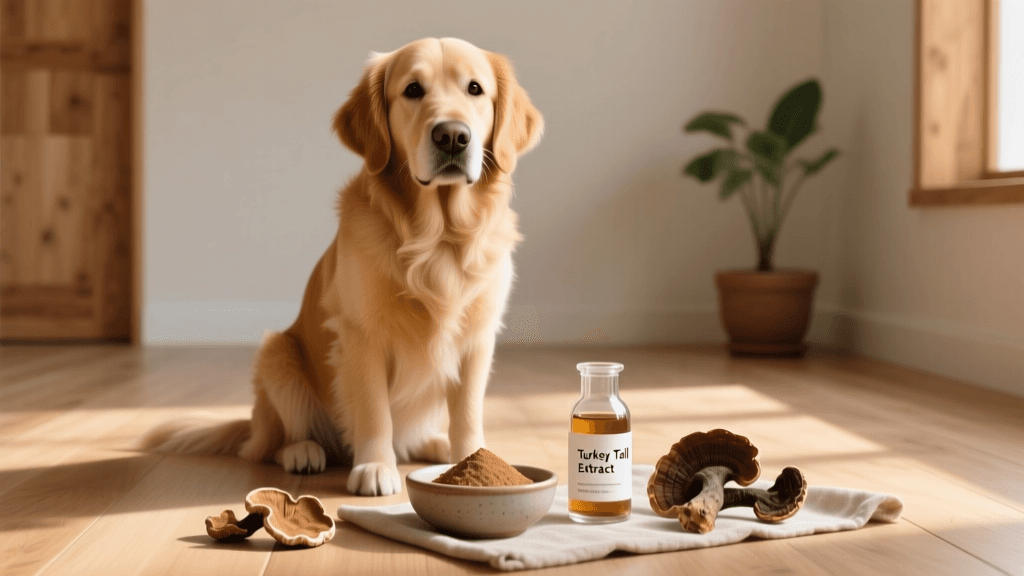
Turkey Tail gets its common name from its vibrant, multi-colored concentric rings that resemble the tail feathers of a wild turkey. In the wild, it is a common saprophytic fungus found on decaying hardwood logs across the globe. However, feeding raw, wild-harvested Turkey Tail to your dog is not recommended and can be dangerous. Raw mushrooms contain chitin, a tough cellular wall material that dogs lack the natural enzymes to break down. In 2026, the gold standard for canine supplementation relies entirely on professionally extracted formulations that break down this chitin barrier, unlocking the bioactive compounds necessary for therapeutic benefits.
The Crucial Role of Beta-Glucans and Polysaccharides
The primary therapeutic value of Turkey Tail lies in its rich concentration of polysaccharopeptides, specifically Polysaccharide-K (PSK) and Polysaccharide Peptide (PSP). These compounds are classified as beta-glucans. When ingested by dogs, beta-glucans interact with specific receptors on the surface of macrophages and natural killer (NK) cells in the immune system. Rather than simply 'boosting' the immune system—which can be detrimental in cases of autoimmune disease—beta-glucans act as immunomodulators. They help upregulate a sluggish immune response in senior or immunocompromised dogs while promoting homeostasis.
Furthermore, the American Kennel Club notes that functional mushrooms like Turkey Tail act as potent prebiotics. The polysaccharides that are not absorbed in the upper gastrointestinal tract travel to the colon, where they ferment and feed beneficial gut bacteria such as Bifidobacterium and Lactobacillus. Given that nearly 70% of a dog's immune system resides in the gut-associated lymphoid tissue (GALT), supporting the microbiome is a foundational holistic approach to systemic immunity.
Why Extraction Methods Matter for Canine Digestion
When shopping for Turkey Tail supplements in 2026, the extraction method is the most critical factor to evaluate. Because dogs cannot digest raw chitin, the mushroom must undergo an extraction process to isolate the water-soluble beta-glucans.
- Hot Water Extraction: This is the minimum acceptable standard. Boiling the mushroom fruiting body breaks down the chitin and extracts the vital beta-glucans.
- Dual Extraction (Water and Alcohol):strong> While dual extraction is popular for human supplements (to extract alcohol-soluble triterpenes like those in Reishi), Turkey Tail's primary active compounds (PSK and PSP) are strictly water-soluble. Therefore, a high-quality, concentrated hot water extract of the 100% fruiting body is actually superior to a dual extract for this specific mushroom.
- Mycelium on Grain (MOG): Avoid products that list 'mycelium' or 'mycelial biomass' as the primary ingredient without specifying fruiting body. MOG products are often mostly ground-up rice or oats, offering high starch content but very low levels of therapeutic beta-glucans.
Dosing Guide: How Much Turkey Tail Does Your Dog Need?
Dosing medicinal mushrooms should be based on the concentration of beta-glucans rather than just the total weight of the powder. However, for standardized, high-quality fruiting body extracts (typically guaranteed to contain at least 25-30% beta-glucans), the following general dosing guidelines are recommended by holistic practitioners. Always start at half the recommended dose for the first week to allow your dog's gastrointestinal tract to adjust.
| Dog Weight (lbs) | Maintenance Dose (Daily) | Therapeutic Dose (Daily) |
|---|---|---|
| 1 - 15 lbs | 1/8 teaspoon (approx. 250mg) | 1/4 teaspoon (approx. 500mg) |
| 16 - 30 lbs | 1/4 teaspoon (approx. 500mg) | 1/2 teaspoon (approx. 1000mg) |
| 31 - 60 lbs | 1/2 teaspoon (approx. 1000mg) | 1 teaspoon (approx. 2000mg) |
| 61 - 90 lbs | 1 teaspoon (approx. 2000mg) | 1.5 teaspoons (approx. 3000mg) |
| 90+ lbs | 1.5 teaspoons (approx. 3000mg) | 2 teaspoons (approx. 4000mg) |
Note: The therapeutic dose is typically utilized for dogs undergoing active illness recovery, senior dogs with cognitive decline, or those receiving adjunctive cancer care under veterinary supervision.
Top Vet-Approved Turkey Tail Products for 2026
The supplement market is saturated, but a few brands have consistently maintained rigorous third-party testing and transparent sourcing protocols. Here are the top recommendations for 2026:
1. Real Mushrooms Turkey Tail (Canine Formula)
Real Mushrooms remains a top-tier choice because they use 100% certified organic fruiting bodies and strictly avoid starchy fillers. Their 2026 canine-specific formula includes a touch of organic MCT oil powder to enhance the absorption of fat-soluble nutrients that may accompany the extract. Priced around $34.95 for a 60-day supply for a medium-sized dog, it offers exceptional value and verified beta-glucan levels exceeding 30%.
2. Four Leaf Rover Turkey Tail Mushroom Extract
Four Leaf Rover has built a stellar reputation in the holistic dog community. Their Turkey Tail extract is cultivated on natural wood logs rather than grain, which closely mimics the mushroom's wild growing environment and promotes a richer polysaccharide profile. At $39.99 per jar, it is slightly more expensive but highly favored by veterinary oncologists as an adjunctive supportive supplement.
3. Host Defense Turkey Tail Capsules (Opened and Sprinkled)
While technically formulated for humans, Host Defense (founded by renowned mycologist Paul Stamets) utilizes a proprietary dual-extraction method that includes both the fruiting body and the mycelium. For dogs that refuse the taste of loose powders, opening a 500mg capsule and sprinkling the contents over wet food is a highly effective, albeit slightly pricier, workaround. Expect to pay around $49.99 for 120 capsules.
Synergistic Holistic Pairings for Maximum Efficacy
To maximize the holistic benefits of Turkey Tail, integrative veterinarians often recommend pairing it with complementary natural therapies:
- Omega-3 Fatty Acids (EPA/DHA): High-quality fish oil or phytoplankton oil reduces systemic inflammation, allowing the immune-modulating effects of the beta-glucans to work in a less inflamed cellular environment.
- Bone Broth: Mixing Turkey Tail powder into warm, homemade, low-sodium bone broth not only masks the earthy taste for picky eaters but also provides additional collagen and amino acids for joint and gut lining support.
- Probiotics: Since Turkey Tail acts as a prebiotic, introducing a multi-strain canine probiotic ensures that the beneficial bacteria have the necessary colonies to thrive on the mushroom polysaccharides.
Safety, Side Effects, and Contraindications
Turkey Tail is widely considered one of the safest functional mushrooms available for canine consumption. The Cornell University College of Veterinary Medicine's Integrative Medicine resources frequently highlight the favorable safety profile of medicinal mushrooms when properly extracted. However, because it stimulates the digestive tract, some dogs may experience mild, transient gastrointestinal upset, including soft stools or increased flatulence, during the first few days of supplementation. This is why a gradual introduction phase is vital.
Contraindications: Dogs currently taking immunosuppressive drugs (such as cyclosporine or high-dose corticosteroids for autoimmune conditions) should not be given Turkey Tail without direct veterinary oversight, as the mushroom's immunomodulatory effects could theoretically counteract the medication. Additionally, because functional mushrooms can mildly affect blood sugar levels, dogs on strict insulin regimens should be monitored closely for hypoglycemia when introducing high doses of beta-glucans.
Integrating Turkey Tail with Conventional Veterinary Care
The most effective holistic approach in 2026 does not reject conventional medicine but rather works in tandem with it. If your dog has been diagnosed with a serious condition such as hemangiosarcoma, lymphoma, or severe autoimmune disease, Turkey Tail should be viewed as a powerful adjunctive therapy, not a standalone cure. Always share your complete supplement list with your primary veterinarian or veterinary oncologist to ensure there are no contraindications with ongoing chemotherapy, radiation, or pharmaceutical protocols. By combining the best of modern veterinary diagnostics with the time-tested, natural immune support of Turkey Tail mushroom, you can provide your dog with a comprehensive, deeply nurturing approach to lifelong health and vitality.
priya-sutaria
All our authors care for dogs every day — read more of their work on the authors page.