2026 Guide: Best No-Pull Dog Harnesses For Joint Health
Discover how front-clip no-pull dog harnesses protect your dog's joints and trachea in 2026. Compare top orthopedic-friendly picks and veterinary gait insights.
Walking your dog should be a source of mutual joy, cardiovascular exercise, and mental enrichment. However, for many pet owners, daily walks devolve into a frustrating tug-of-war that compromises both the human's patience and the dog's physical health. As we navigate the advanced veterinary and biomechanical standards of 2026, canine rehabilitation therapists and orthopedic specialists have reached a definitive consensus: the equipment you use to walk your dog profoundly impacts their long-term joint health, spinal alignment, and respiratory safety.
In this comprehensive guide, we explore the anatomical realities of canine pulling, why traditional gear is being phased out by veterinary professionals, and how to select the best no-pull dog harnesses in 2026 to protect your dog's orthopedic wellbeing.
The Hidden Dangers of Traditional Walking Gear
For decades, standard flat collars and back-clip harnesses were the default choices for dog walking. However, modern veterinary science has illuminated the severe physical toll these tools take on a dog's body when they pull.
Tracheal and Cervical Damage from Collars
When a dog pulls against a traditional neck collar, the entire force of their body weight is concentrated on the delicate structures of the neck. This puts immense pressure on the trachea, the esophagus, and the cervical spine. According to the Cornell University College of Veterinary Medicine, chronic pressure on the neck is a leading environmental aggravator for tracheal collapse, a progressive and potentially life-threatening condition particularly common in small and toy breeds. Even in large breeds, repetitive jerking against a collar can lead to cervical disc herniation and chronic neck pain.
The Opposition Reflex and Back-Clip Harnesses
While back-clip harnesses successfully remove pressure from the neck, they inadvertently trigger a canine neurological response known as the 'opposition reflex.' When a dog feels pressure against their chest or back, their instinctual biomechanical response is to lean into that pressure and push forward. This means a back-clip harness actually encourages pulling. Furthermore, many poorly designed back-clip harnesses feature horizontal chest straps that rest directly across the biceps brachii, restricting the natural forward extension of the shoulder joint and altering the dog's natural gait, which can lead to premature joint wear and shoulder dysplasia over time.
The Biomechanics of the Front-Clip No-Pull Harness
The front-clip no-pull harness represents a paradigm shift in canine orthopedic care. By placing the leash attachment point on a reinforced D-ring located on the center of the dog's chest (the sternum), the mechanics of walking are entirely altered.
When a dog pulls forward while wearing a front-clip harness, the leash tension gently redirects their center of gravity. Instead of allowing the dog to barrel forward using their powerful hindquarters, the front clip turns the dog's shoulders slightly toward the handler. This redirection of momentum neutralizes the opposition reflex without causing pain or relying on aversive choking mechanisms. The dog learns that pulling results in a loss of forward progress, promoting loose-leash walking while keeping the cervical spine completely safe.
2026 Orthopedic Harness Comparison Chart
Not all no-pull harnesses are created equal. The most critical factor for joint health is 'scapular clearance'—ensuring the harness straps do not impede the movement of the shoulder blades. Below is a comparison of the top orthopedic-friendly no-pull harnesses available in 2026.
| Harness Model | Clip Configuration | Scapular Clearance | Best For | 2026 Est. Price |
|---|---|---|---|---|
| Blue-9 Balance Harness | Front & Back (Dual) | Excellent (Y-Shape) | Custom fit, odd proportions | $75.00 |
| Ruffwear Front Range | Front & Back (Dual) | Good (Padded Y-Shape) | Active, athletic breeds | $44.95 |
| Rabbit Go Air Mesh | Front (No-Pull Only) | Excellent (Deep V-Neck) | Small breeds, tracheal risk | $38.00 |
| Perfect Fit Harness | Front & Back (Dual) | Excellent (Modular) | Greyhounds, deep-chested dogs | $65.00 |
Top 3 Vet-Approved No-Pull Harnesses for 2026
1. Blue-9 Balance Harness: The Gold Standard for Customization
The Blue-9 Balance Harness remains a favorite among canine rehabilitation veterinarians in 2026 due to its unparalleled adjustability. It features six points of adjustment, including independent buckles on both sides of the neck and girth. This means you do not have to force the harness over your dog's head or manipulate their painful joints to put it on. The chest strap forms a perfect Y-shape, sitting below the suprasternal notch and entirely clearing the scapula, allowing for a full, unrestricted range of motion during the trot and gallop.
2. Ruffwear Front Range: Durability Meets Biomechanics
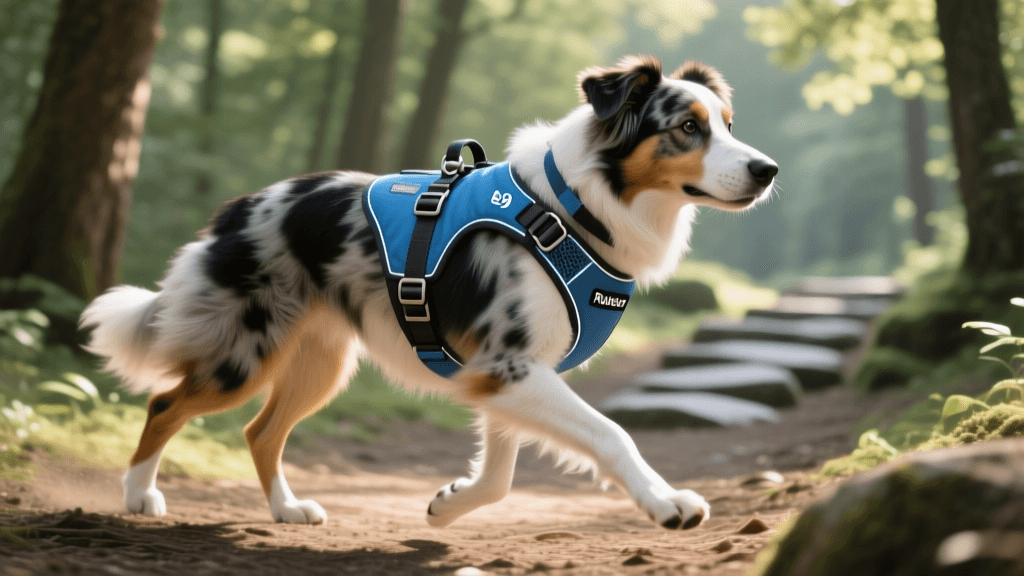
For highly active dogs who hike, run, and explore, the Ruffwear Front Range harness offers a robust, dual-clip solution. The 2026 iteration of this harness features updated, lighter-weight foam padding that conforms to the dog's ribcage without trapping excess heat. The front chest leash ring is mounted on a specialized fabric hinge that swivels, reducing friction and wear on the chest fur while effectively redirecting pulling dogs. While it offers excellent durability, owners of barrel-chested breeds like Bulldogs must carefully measure the girth to ensure the padded edges do not rub against the axilla (armpit).
3. Rabbit Go Air Mesh: Tracheal Protection for Small Breeds
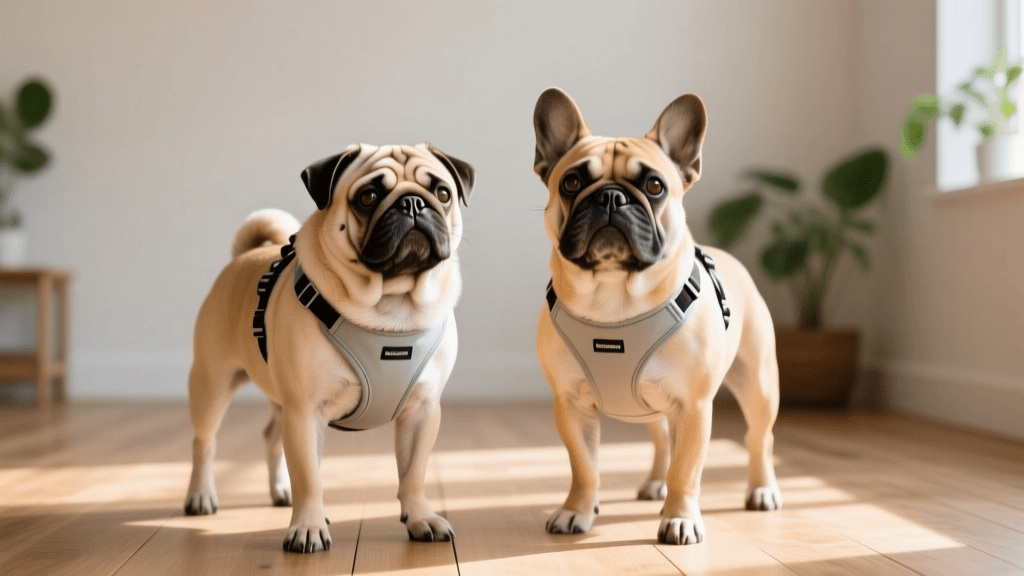
Small breeds such as Pomeranians, Yorkshire Terriers, and Chihuahuas are at the highest risk for tracheal issues. The Rabbit Go Air Mesh is specifically engineered with a deep V-neck design that completely bypasses the throat, distributing any residual force across the broad, sturdy muscles of the chest and shoulders. The breathable micro-mesh material is incredibly lightweight, ensuring that small dogs are not burdened by heavy hardware, making it an essential preventative tool for respiratory health.
How to Fit a Harness Without Restricting Gait
Purchasing an orthopedic harness is only half the battle; improper fitting can cause severe chafing and alter your dog's biomechanics. Follow these veterinary-recommended fitting steps to ensure optimal joint health:
- The Two-Finger Rule: You should be able to comfortably slide two fingers under every strap of the harness. If it is tighter, it will restrict blood flow and lymphatic drainage; if looser, the dog may slip out or experience friction burns.
- Check the Axilla (Armpit): The girth strap must sit at least two inches behind the dog's front elbow joint. A strap that sits too close to the armpit will slice into the skin during forward movement and restrict the biceps brachii muscle.
- The Scapula Test: Stand over your dog and place your hands on their shoulder blades. Have them take a few steps forward. You should feel the shoulder blades gliding freely back and forth without hitting or rubbing against the harness straps.
- Observe the Trot: Watch your dog from the front and side as they trot. Their stride length should be equal on both sides, and their head should remain level. Any shortening of stride or head bobbing indicates the harness is too tight or poorly balanced.
Integrating Harness Use with Behavioral Wellness
The benefits of a no-pull harness extend far beyond physical orthopedics; they play a crucial role in your dog's mental health and behavioral wellness. Dogs that constantly pull on the leash are often in a state of high arousal or frustration. This chronic stress elevates cortisol levels, which can suppress the immune system and exacerbate inflammatory joint conditions like osteoarthritis.
By utilizing a front-clip no-pull harness, you remove the physical struggle from the walk. The American Kennel Club (AKC) notes that reducing the physical tension on the leash directly correlates to a reduction in canine reactivity and leash aggression. When a dog is not physically straining against their equipment, their nervous system can down-regulate, allowing them to engage in beneficial sniffing and environmental processing.
Furthermore, the Humane Society of the United States emphasizes that positive reinforcement training paired with humane, non-aversive walking equipment builds a foundation of trust between the dog and the handler. When your dog realizes that walking politely on a loose leash results in forward movement and access to interesting scents, the walk transforms from a battleground into a mutually rewarding bonding experience.
Conclusion: Investing in Your Dog's Long-Term Mobility
As veterinary medicine continues to advance in 2026, the focus on preventative orthopedic care has never been sharper. Transitioning from a traditional collar or restrictive back-clip harness to a properly fitted, front-clip no-pull harness is one of the most impactful, cost-effective investments you can make in your dog's long-term health. By protecting the trachea, preserving the natural rotation of the scapula, and reducing systemic stress, you are ensuring that your canine companion remains mobile, comfortable, and happy for years to come. Always consult with your primary care veterinarian or a certified canine rehabilitation therapist to ensure your chosen harness meets the specific anatomical needs of your individual dog.
priya-sutaria
All our authors care for dogs every day — read more of their work on the authors page.