Decoding the Viral Guilty Dog Look: What It Really Means
Discover the science behind the viral guilty dog look. Learn what your dog's body language really means and how to reduce their stress today.
The Internet's Favorite Meme: The 'Guilty' Dog
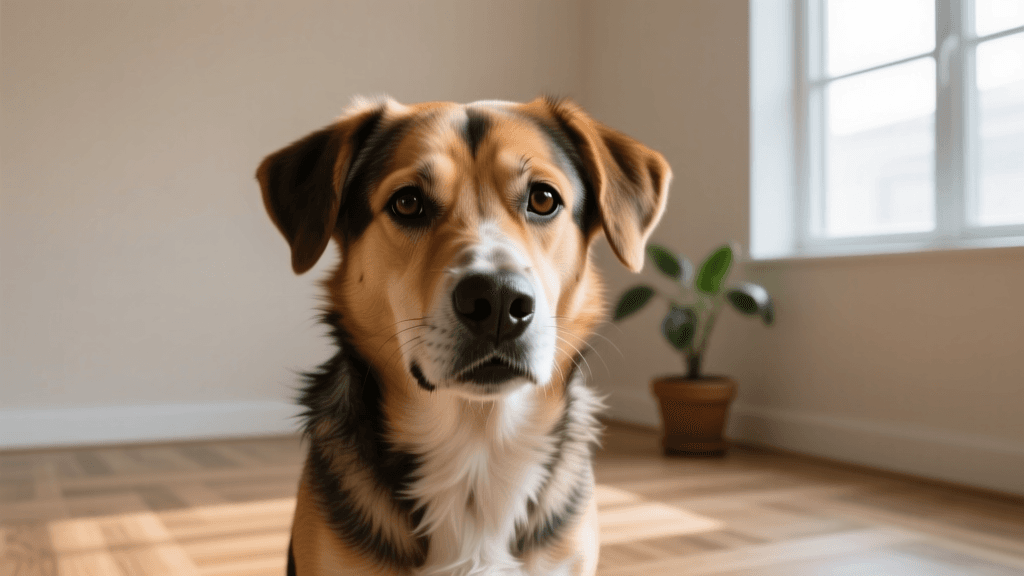
If you have spent any time on TikTok, Instagram, or YouTube Shorts, you have undoubtedly encountered the 'guilty dog' meme. The scenario is almost always the same: a pet parent comes home to find a destroyed couch cushion, a tipped-over trash can, or a mysterious puddle on the rug. The camera pans to the dog, who is usually cowering in the corner, ears pinned back, eyes wide, and tail tucked firmly between their legs. The internet laughs, shares the video, and captions it with phrases like 'He knows exactly what he did' or 'The guilt is real.' But as our understanding of canine psychology and behavioral science evolves, we must ask ourselves a critical question: Is your dog actually feeling guilt, or are we projecting complex human emotions onto an animal that operates on an entirely different communicative wavelength?
Understanding the truth behind these viral moments is not just an academic exercise; it is fundamental to how we treat, train, and bond with our canine companions. When we misinterpret stress signals as moral failings, we risk damaging the trust our dogs place in us. In this deep dive, we will unpack the science of the 'guilty look,' decode the viral body language trends, and provide actionable, science-backed strategies to help your dog feel safe and secure in your home.
The Science of the 'Guilty Look': What Researchers Say
To understand why dogs look 'guilty,' we have to look at the landmark research conducted by Dr. Alexandra Horowitz, a cognitive scientist and founder of the Horowitz Dog Cognition Lab at Barnard College. In her famous 2009 study, Horowitz tested whether dogs actually feel guilt after doing something they are not supposed to do, like eating a forbidden treat.
The study's findings were groundbreaking and completely debunked the myth of canine guilt. Horowitz discovered that the 'guilty look' had absolutely nothing to do with whether the dog had actually eaten the treat. Instead, the look was entirely dependent on the owner's behavior. Dogs exhibited the most intense 'guilty' body language when they were scolded by their owners, regardless of whether they were actually guilty of the infraction or completely innocent. In fact, dogs who were innocent but scolded often displayed a more pronounced 'guilty' posture than dogs who had actually eaten the treat but were not scolded.
'The guilt look in dogs is not evidence of guilt. It is an appeasement behavior, a response to the owner's angry or upset tone and body language. The dog is trying to diffuse a perceived social threat, not confessing to a moral failing.' - NPR Coverage of Dr. Alexandra Horowitz's Study
Dogs do not possess the complex cognitive architecture required to feel secondary emotions like guilt, shame, or pride. These emotions require a sense of self, an understanding of societal norms, and the ability to reflect on past actions in a moral context. Dogs live primarily in the present moment. When they destroy a pillow while you are away, they are acting on instinct, boredom, or anxiety. By the time you walk through the door, the act is long forgotten. The 'guilt' you see is actually a fear response to your immediate anger.
Decoding the Viral Body Language: What Your Dog is Actually Saying
When we label a dog's behavior as 'guilty,' we are ignoring a rich tapestry of canine communication. What the internet calls a 'guilty look' or the viral 'bombastic side eye' is actually a collection of calming signals and stress indicators. According to the ASPCA's guidelines on canine body language, dogs use these signals to communicate discomfort, anxiety, and a desire to de-escalate a tense situation.
1. The 'Whale Eye' or 'Bombastic Side Eye'
One of the most popular audio trends on social media involves dogs showing the whites of their eyes, often referred to as 'whale eye.' While humans might find this expression humorous or sassy, in dog psychology, showing the sclera (the white part of the eye) while turning the head away is a massive red flag. It indicates high levels of stress, fear, and a feeling of being trapped. Your dog is not rolling their eyes at you; they are desperately trying to keep you in their peripheral vision while simultaneously signaling that they want the interaction to end.
2. Pinned Ears and Lowered Head
Ears pulled tightly back against the skull and a lowered head are classic appeasement behaviors. In the wild, subordinate canines use these postures to signal to a dominant pack member that they are not a threat. When your dog does this after you discover a mess, they are reading your aggressive posture, raised voice, or angry facial expressions and trying to say, 'Please do not hurt me; I am not a threat.' Punishing a dog for this behavior is incredibly counterproductive, as it only confirms their fear that you are unpredictable and dangerous.
3. Excessive Lip Licking and Yawning
Unless your dog is eating or just waking up, sudden lip licking and exaggerated yawning are profound indicators of nervous system arousal and stress. These are displacement behaviors—actions a dog performs when they feel conflicted or overwhelmed. If you are scolding your dog and they start yawning or licking their lips, they are not bored or tired; they are desperately trying to self-soothe and calm you down.
Viral Dog Memes vs. Actual Canine Psychology
To help bridge the gap between internet humor and behavioral science, here is a breakdown of common viral dog behaviors and what they actually mean.
| Viral Trend / Meme | What Humans Think | What It Actually Means (Science) |
|---|---|---|
| The 'Guilty' Cower | 'He knows he did something wrong and feels bad about it.' | Appeasement behavior; the dog is reacting to the owner's current anger and tone of voice, trying to avoid conflict. |
| Bombastic Side Eye | 'My dog is judging me or being sassy.' | 'Whale eye'; a sign of high stress, fear, or feeling cornered. The dog is monitoring a perceived threat while trying to look away. |
| The 'Smile' (Teeth Bared) | 'My dog is smiling happily for the camera!' | Often a submissive grimace or a sign of extreme tension. True dog smiles usually involve relaxed eyes and open, soft mouths. |
| Yawning During Scolding | 'My dog doesn't care and is bored of my lecture.' | A displacement behavior and calming signal; the dog is overwhelmed and trying to lower their own heart rate and de-escalate the situation. |
Actionable Steps: Managing Stress and Preventing 'Bad' Behavior
Now that we understand that the 'guilty look' is actually a stress response, how do we handle the underlying behaviors, like destructive chewing or house soiling, without resorting to punishment? The key lies in proactive management, environmental enrichment, and positive reinforcement.
1. Manage the Environment (Don't Rely on Willpower)
Dogs are opportunistic scavengers. If a trash can is accessible, it is an invitation. Instead of getting angry when your dog gets into the garbage, remove the temptation entirely. Invest in a high-quality baby gate, such as the Regalo Easy Step Walk Thru Gate (typically around $40 and standing 30 inches tall), to block off the kitchen when you are not home. This removes the dog's ability to make the 'wrong' choice, thereby eliminating the need for scolding and the subsequent stress response.
2. Provide Appropriate Enrichment
Destructive behavior is often a symptom of under-stimulation. A dog left alone for eight hours with nothing to do will create their own 'fun,' usually at the expense of your furniture. Provide mentally stimulating puzzle toys. The KONG Classic (ranging from $15 to $20 depending on size) is a gold standard. Fill it with a mixture of plain pumpkin puree, low-sodium chicken broth, and their daily kibble, then freeze it for 4 to 6 hours. This can keep a dog occupied for up to 45 minutes, providing a massive dopamine release and reducing separation anxiety.
3. Monitor Without Projecting
If you suffer from separation anxiety and want to understand what your dog does when you are gone, use a pet camera like the Furbo 360 Dog Camera (approx. $200). This allows you to observe their baseline behavior without your presence influencing them. You may notice that your dog doesn't destroy the couch out of spite, but rather paces and whines due to distress. If you observe clinical signs of separation anxiety, consult a certified veterinary behaviorist immediately rather than attempting DIY punishment-based training.
4. Master the Timing of Rewards
Dogs associate consequences with events that happen within 1 to 3 seconds. If you come home and scold your dog for a puddle on the floor that occurred four hours ago, your dog is associating your anger with your arrival at the door, not the act of urination. This leads to dogs who hide when you come home (the 'guilty' look). Instead, focus entirely on rewarding the behaviors you want. When your dog eliminates outside, offer a high-value treat (like freeze-dried liver) within exactly one second of them finishing. Consistency and precise timing are the cornerstones of effective canine communication.
Moving Beyond the Memes: Building a Deeper Bond
While viral videos are entertaining, they often perpetuate outdated dominance theories and anthropomorphism that harm our relationship with our pets. By stripping away the human concepts of guilt, spite, and stubbornness, we can finally see our dogs for who they truly are: emotionally vulnerable creatures who rely entirely on us to navigate a complex human world.
The next time your dog gives you the 'guilty look,' take a deep breath. Lower your voice, soften your posture, and recognize that your best friend is telling you they are scared and overwhelmed. Forgive the chewed-up shoe, set up a better management system for tomorrow, and choose empathy over ego. Understanding your dog's true language is the most profound act of love you can offer them.
marcus-aldridge
All our authors care for dogs every day — read more of their work on the authors page.