Diagnosing Dog Leash Reactivity: Fear vs Frustration
Is your dog reactive on walks? Learn how to diagnose fear versus barrier frustration and apply targeted, actionable training solutions to restore peace.
Understanding the Root of Leash Reactivity
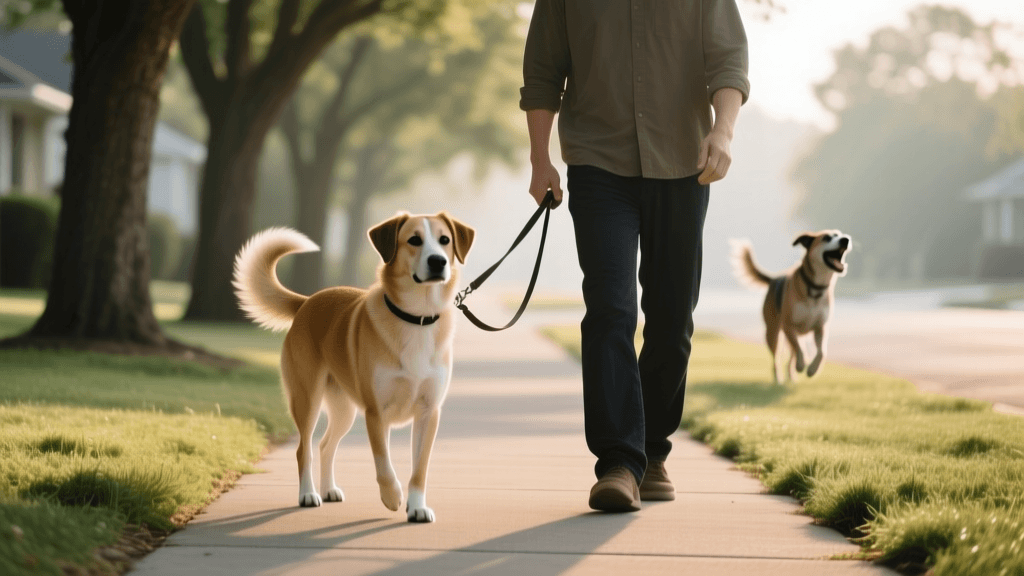
Leash reactivity is one of the most stressful and misunderstood behavioral issues in canine ownership. Characterized by lunging, barking, growling, or pulling when a dog is tethered, it can turn a simple neighborhood walk into an embarrassing and physically exhausting ordeal. Many owners mistakenly label this behavior as "aggression." However, according to the ASPCA, true aggression is relatively rare; most leash reactivity is actually rooted in either fear or barrier frustration.
Diagnosing the underlying emotional driver is the most critical step in solving the problem. A training protocol designed to calm a fearful dog will often fail if applied to a frustrated dog, and vice versa. By understanding your dog's psychology, mapping their triggers, and utilizing the correct equipment and conditioning protocols, you can effectively dismantle reactive behaviors and restore peace to your daily walks.
The Core Diagnostic: Fear vs. Barrier Frustration
Before implementing a solution, you must determine why your dog is reacting. The two primary culprits are fear-based reactivity (a desire to increase distance from a trigger) and barrier frustration (a desire to decrease distance to a trigger, thwarted by the leash).
| Behavioral Metric | Fear-Based Reactivity | Frustration-Based Reactivity |
|---|---|---|
| Primary Motivation | Increase distance from trigger (avoidance) | Decrease distance to trigger (greeting/chasing) |
| Off-Leash Behavior | Hides, flees, or shows submissive posturing | Runs up to greet, plays, or investigates happily |
| Body Language | Pinned ears, tucked tail, whale eye, cowering | Wagging tail (often high/stiff), play bows, whining |
| Post-Reaction | Remains stressed and vigilant after trigger passes | Quickly resets and relaxes once trigger is gone |
The Off-Leash Test: The most reliable way to diagnose your dog's intent is to observe them in a secure, off-leash environment (like a private Sniffspot rental or a fenced yard). If your dog happily greets other dogs off-leash but turns into a lunging monster on-leash, you are likely dealing with barrier frustration, not fear.
Step-by-Step Diagnosis and Threshold Mapping
Once you have identified the emotional root, you must map your dog's "threshold." The threshold is the exact distance at which your dog notices a trigger but remains under their cognitive learning limit. If your dog is over threshold, their brain is flooded with adrenaline and cortisol, making learning impossible.
Step 1: Identify the Trigger Distance
Take your dog to a controlled environment, such as a quiet park or a pet store parking lot on a weekday morning. Note the exact distance (in feet) at which your dog first notices a trigger (e.g., another dog, a skateboarder). If your dog locks on and stiffens at 40 feet, but doesn't bark until 20 feet, your working threshold is 45 feet. You must begin all training outside this distance.
Step 2: Identify Environmental Amplifiers
Reactivity is rarely triggered by a single factor; it is usually cumulative. Keep a log of environmental amplifiers that lower your dog's threshold, such as:
- Wind and Rain: Decreases visibility and carries erratic scents.
- Tight Spaces: Narrow sidewalks increase a fearful dog's feeling of being trapped.
- Time of Day: Dusk and dawn trigger predatory drift in some breeds due to low light.
Essential Gear for Reactivity Training
You cannot train a reactive dog effectively if you lack physical control or the right motivational tools. Ditch the retractable leash and standard flat collar immediately. Invest in the following specific gear:
- Front-Clip Harness: The Ruffwear Front Range Harness (approx. $40) or the 2 Hounds Design Freedom No-Pull Harness (approx. $35). A front-clip redirects the dog's momentum back toward you when they lunge, preventing tracheal damage and giving you mechanical leverage.
- Fixed-Length Leash: A 6-foot, 1-inch wide Biothane leash (approx. $25). Biothane is waterproof, easy to sanitize if dropped, and won't burn your hands. Avoid leashes longer than 6 feet for urban walks to maintain a tight communication loop.
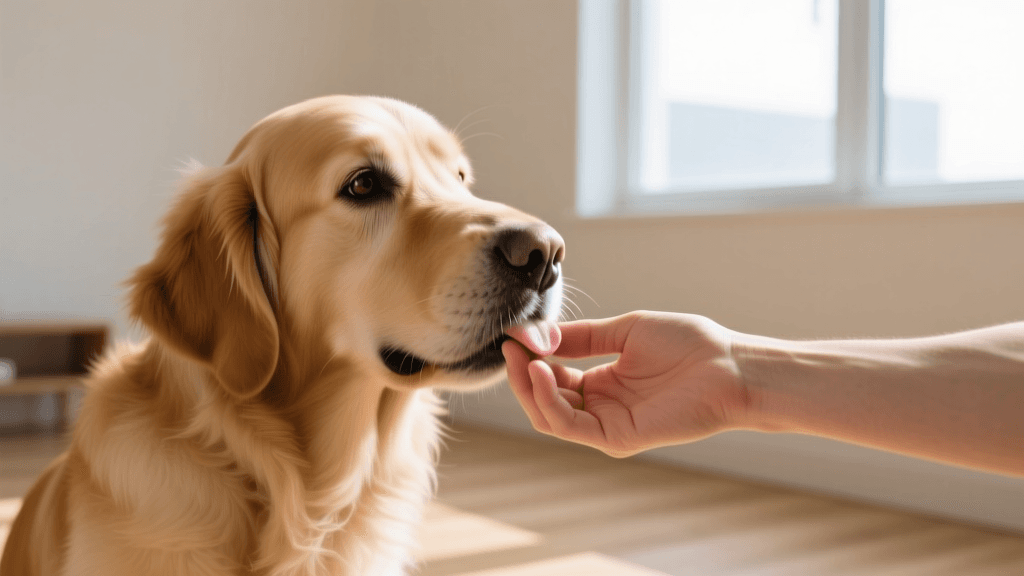
- High-Value Treats: Kibble will not override a dog's adrenaline response. Use Ziwi Peak Air-Dried Beef (approx. $35 per bag) or boiled chicken breast, cut into pea-sized pieces. The treat must be smelly, soft, and easily swallowed in under one second.
Targeted Training Solutions
With your diagnosis complete and your gear secured, you can apply the correct behavioral modification protocol. The American Kennel Club emphasizes that consistency, timing, and positive reinforcement are the pillars of overcoming reactivity.
Protocol A: Solving Fear-Based Reactivity (Desensitization & Counter-Conditioning)
If your dog reacts out of fear, your goal is to change their emotional response from "that thing is dangerous" to "that thing predicts amazing food." We use the Engage-Disengage Game.
- The Setup: Stand with your dog at their mapped threshold distance (e.g., 50 feet away from another dog).
- The Mark (Engage): The exact millisecond your dog looks at the trigger, use a verbal marker like "Yes!" or click a clicker. Timing is critical: the mark must occur within 0.5 seconds of them noticing the trigger, before they have time to bark.
- The Reward (Disengage): Deliver the high-value treat within 1.5 seconds. Your dog should have to turn their head away from the trigger to eat the treat. This physically breaks their fixation.
- Repetition: Repeat this 10-15 times per session. Over weeks, you will notice your dog looking at the trigger and then immediately looking back at you for a treat. This is called "spontaneous disengagement" and proves the emotional association is changing.
Protocol B: Solving Barrier Frustration (Impulse Control)
If your dog is frustrated and simply wants to greet or chase, counter-conditioning with food is less effective because their primary desire is access to the trigger, not food. Instead, we use the Premack Principle and the "Look at That" (LAT) protocol.
- Latency Training: When your dog looks at the trigger, mark "Yes!" and reward. However, instead of just giving food, the reward for remaining calm is moving closer to the trigger.
- The "Sit-Wait-Release" Chain: Ask for a sit at the threshold. If the dog holds the sit while the trigger passes, mark and release them to sniff a highly stimulating area (like a fire hydrant) as their reward.
- Punish the Pull, Not the Dog: If the dog lunges or pulls, immediately stop walking and become a "tree." Do not yell or jerk the leash. Simply wait until the leash goes slack. The moment there is slack, mark and resume walking. The dog learns that pulling makes the world stop, while a loose leash makes the world move forward.
When to Call a Professional
While many cases of leash reactivity can be managed with dedicated owner training, some situations require professional intervention. You should seek the help of a certified behaviorist if:
- Your dog has a history of biting or breaking skin.
- Your dog redirects aggression onto you when frustrated.
- You are unable to safely handle your dog's physical strength.
Look for professionals accredited by reputable organizations, such as the International Association of Animal Behavior Consultants (IAABC) or the Certification Council for Professional Dog Trainers (CCPDT). Avoid trainers who rely on "balanced" methods involving shock collars or prong collars for reactivity, as suppressing the outward symptom (barking) with pain often exacerbates the underlying emotional problem (fear), leading to sudden, unprovoked bites later on.
Conclusion
Leash reactivity is not a life sentence of stressful walks. By accurately diagnosing whether your dog is operating out of fear or barrier frustration, mapping their thresholds, and applying targeted, science-based conditioning protocols, you can fundamentally change how your dog perceives the world. Patience, high-value reinforcement, and mechanical consistency will ultimately transform your dog from a reactive liability into a confident, relaxed walking companion.
marcus-aldridge
All our authors care for dogs every day — read more of their work on the authors page.