Travelling in the car with a nervous dog
From shaking in the boot to settling for a two-hour drive — a step-by-step desensitisation plan that works.
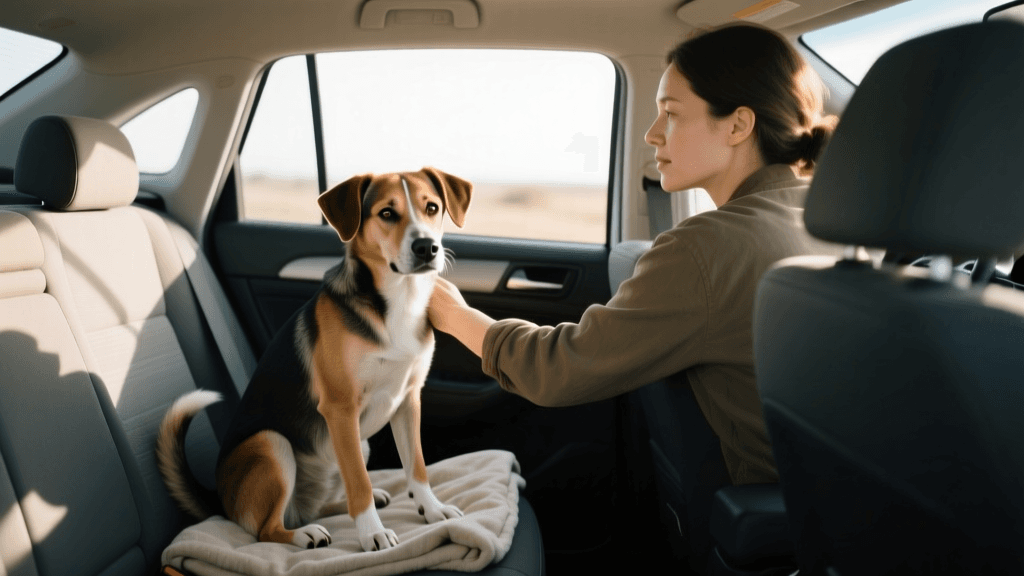
When the Car Becomes a Source of Fear
For millions of dog owners, a simple trip to the vet or a weekend away becomes a stressful ordeal the moment their dog starts panting, drooling, or trembling at the sight of the car keys. Canine travel anxiety is far more common than many people realise. According to the American Kennel Club (AKC, 2023), approximately 17% of dogs experience significant anxiety during car travel, with symptoms ranging from mild restlessness to full-blown panic responses including vomiting and self-injury attempts.
The good news is that nervous car travel is one of the most treatable behavioural challenges in dogs. With the right combination of preparation, desensitisation, and practical tools, most dogs can learn to tolerate — and even enjoy — time in the vehicle. This article draws on veterinary guidance, real owner experiences, and evidence-based training methods to help you get there.
Understanding What Triggers Car Anxiety in Dogs
Before you can address the problem, it helps to understand what is actually frightening your dog. Car anxiety rarely has a single cause. For many dogs, the issue begins with motion sickness. The vestibular system in puppies is not fully developed until around 6 months of age, which means early car rides often produce nausea. If those rides also ended at the vet or a groomer, the dog quickly forms a negative association that can persist for years.
Other dogs are not motion-sick at all — they are simply overwhelmed by the sensory environment of a moving vehicle. The vibration, the engine noise, the rapidly changing visual landscape outside the windows, and the confinement of a small space can all combine into a genuinely distressing experience for a dog with a sensitive nervous system.
Reading the Signs of Distress
Recognising anxiety early allows you to intervene before your dog reaches a state of full panic. Early signs are often subtle and easy to miss. Watch for excessive yawning, lip-licking, and whale eye (where the whites of the eyes become visible) before you even reach the car. Once inside, panting that is disproportionate to the temperature, drooling, and repetitive whining are clear indicators that your dog is struggling.
More severe signs include trembling, attempting to escape the vehicle, vomiting, and in extreme cases, loss of bladder or bowel control. The Dogs Trust (2022) notes that dogs who display these severe symptoms should be assessed by a veterinarian before any training programme begins, as an underlying medical condition — including inner ear disorders — may be contributing to the distress.
The Role of Past Experience
A rescue dog who spent time in a shelter may have had their only car experiences during transport to and from kennels — inherently stressful situations. A dog who was involved in a minor road accident, even as a puppy, may carry that memory forward. Understanding your individual dog's history is the first step toward building a new, positive relationship with the car.
Building Positive Associations Before You Drive Anywhere
The single most effective long-term strategy for a nervous car traveller is systematic desensitisation combined with counter-conditioning. This is not a quick fix — it requires patience measured in weeks, not days — but the results are durable and do not rely on ongoing medication.
Start by simply feeding your dog their meals near the parked car with the engine off. Do this for three to five days until your dog approaches the car without hesitation. Then progress to feeding meals inside the car with the doors open. The goal at this stage is zero pressure: your dog should be able to leave whenever they choose.
Once your dog is comfortable eating inside the stationary car, begin closing the doors for short periods — starting at just 30 seconds and building gradually. Only when your dog is completely relaxed at each stage should you move to the next. The entire process from first introduction to short drives can take anywhere from two to six weeks depending on the individual dog.
Short Trips to Enjoyable Destinations
When you do begin driving, make the destination matter. Drive to the park, to a friend's house where your dog is welcomed, or to a pet-friendly café. Avoid making the vet the only destination for the first several months of your desensitisation programme. Research from the Royal Society for the Prevention of Cruelty to Animals (RSPCA, 2021) found that dogs whose car journeys consistently ended at positive locations showed measurable reductions in travel anxiety within 8 weeks of a structured programme.
Practical Tools and Products That Actually Help
Alongside training, a range of products can meaningfully reduce your dog's stress levels during travel. Not every product works for every dog, but the following have solid evidence or widespread positive owner feedback behind them.
- Adaptil Travel Spray — A synthetic version of the dog-appeasing pheromone (DAP) produced by nursing mothers. Spray it on a blanket or the car seat 15 minutes before travel. Studies published in the Journal of Veterinary Behavior have shown DAP products reduce anxiety-related behaviours in approximately 70% of dogs tested.
- Thundershirt — A wrap-style garment that applies gentle, constant pressure to the dog's torso, similar in principle to swaddling an infant. The manufacturer reports an 80% success rate based on owner surveys, and many veterinary behaviourists recommend it as a first-line non-pharmaceutical intervention.
- Zylkène (alpha-casozepine) — A supplement derived from a protein in cow's milk that has a calming effect on the central nervous system. It is available without prescription in the UK and US and can be started 1–2 days before a planned journey.
- Snuffle mats and lick mats — Keeping a dog's nose and mouth occupied during travel activates the parasympathetic nervous system, promoting calm. A Kong filled with frozen peanut butter or a silicone lick mat attached to the seat can occupy a dog for 20–30 minutes.
- Crates and travel crates — For dogs who are already crate-trained, travelling in a familiar crate can significantly reduce anxiety by providing a defined, enclosed space. The Variocage and Gunner Kennels G1 are both crash-tested to Centre for Pet Safety standards and are widely recommended by veterinary professionals.
Medication and Veterinary Options
For dogs with severe travel anxiety, behavioural modification alone may not be sufficient, at least in the short term. A conversation with your veterinarian can open up several pharmaceutical options that, when used alongside training, can break the cycle of panic and allow learning to occur.
Trazodone is one of the most commonly prescribed medications for situational anxiety in dogs in the United States and is increasingly used in the UK. It is typically given 1.5 to 2 hours before travel and has a relatively short duration of action, making it well-suited to car journeys. Gabapentin is another option, particularly for dogs whose anxiety has a pain or sensory component.
For motion sickness specifically, Cerenia (maropitant citrate) is the only FDA-approved anti-nausea medication specifically for dogs and is highly effective. It can be given as a tablet 2 hours before travel or as an injection by your vet. Many owners report that once motion sickness is controlled, the anxiety component of their dog's car behaviour diminishes significantly on its own.
"We tried everything for two years with our Border Collie, Finn. He would shake so badly that the whole car vibrated. Our vet at Fitzpatrick Referrals suggested a combination of Trazodone for the first month alongside a strict desensitisation programme. By week six, Finn was jumping into the car on his own. We haven't needed the medication in over a year." — Sarah T., Surrey, UK
Safety and Restraint: Protecting Your Dog and Everyone in the Vehicle
Beyond anxiety management, safe restraint is a legal and ethical obligation in many jurisdictions. In the United Kingdom, Rule 57 of the Highway Code states that dogs must be suitably restrained so they cannot distract the driver or injure themselves or others in a sudden stop. Failure to comply can result in a fine of up to £5,000 and invalidation of your car insurance.
The Centre for Pet Safety, based in Reston, Virginia, has conducted crash-test research on pet restraints and found that the majority of harnesses marketed as "crash-tested" failed catastrophically at 30 mph. Only a small number of products passed their rigorous testing protocol.
| Restraint Type | Crash Test Performance | Best For | Approximate Cost |
|---|---|---|---|
| Gunner Kennels G1 Crate | Passed Centre for Pet Safety testing | Medium to large dogs, long journeys | $450–$600 USD |
| Sleepypod Clickit Sport Harness | Passed Centre for Pet Safety testing | Small to medium dogs, everyday use | $90–$110 USD |
| Standard boot barrier | Not crash-tested; prevents forward movement only | Large dogs in estate/SUV boots | $30–$80 USD |
| Standard clip-in harness | Most fail at 30 mph in independent testing | Short, low-speed trips only | $15–$40 USD |
For anxious dogs, the choice of restraint also has a behavioural dimension. A dog who is tethered by a harness but can still see out of every window may find the visual stimulation overwhelming. A crate with a cover, or a dog positioned in the boot behind a barrier with a blanket over part of the space, can reduce visual input and help the dog settle.
Real Owner Stories: What Finally Worked
Theory is useful, but hearing what worked for real dogs in real families often provides the most actionable insight. The following accounts come from owners who shared their experiences through online dog welfare communities and owner forums.
Marcus, a Labrador owner from Melbourne, Australia, spent 18 months trying to manage his dog Biscuit's car anxiety with various supplements and sprays. "Nothing really clicked until I started doing what our trainer called 'non-event' sessions," he says. "I'd open the car, let Biscuit sniff around, give him a treat, and close it again. No driving. Just the car being a normal, boring thing. After about three weeks of that, he stopped associating the car with going somewhere scary."
In contrast, Priya from Toronto found that her rescue Greyhound, Mira, needed a pharmaceutical bridge. "Mira had clearly had a traumatic experience before we adopted her. She would freeze completely at the car door. Our vet at the Ontario Veterinary College prescribed a low dose of gabapentin for the first eight journeys while we worked on desensitisation. It gave Mira enough mental space to actually learn. Now she travels fine without any medication."
These stories reflect a consistent theme in veterinary behavioural literature: there is no single solution, and the most successful outcomes combine environmental management, training, and — where necessary — pharmacological support.
Keeping Journeys Comfortable Once You're Moving
Even a dog who has overcome significant anxiety benefits from a thoughtful travel environment. Temperature regulation is critical: dogs can develop heat stroke at temperatures as low as 19°C (66°F) in a parked car within 10 minutes, according to research from Stanford University Medical Center. Never leave a dog unattended in a vehicle, and ensure adequate ventilation during travel.
Avoid feeding a full meal within two hours of travel to reduce the risk of motion sickness and bloat, particularly in deep-chested breeds. Offer water at every stop — a collapsible silicone bowl takes up almost no space and ensures your dog stays hydrated on longer journeys.
- Stop every 2 hours on journeys longer than 4 hours to allow your dog to toilet, stretch, and rehydrate.
- Keep the car temperature between 15°C and 20°C (59°F–68°F) for most breeds.
- Play calming music or white noise — research from the Scottish SPCA found that classical music and reggae produced the most relaxed physiological responses in kennelled dogs, and similar effects have been observed in car settings.
- Bring a familiar-smelling item — a worn t-shirt or your dog's usual blanket — to provide olfactory comfort in an unfamiliar environment.
- Avoid sudden braking and sharp cornering where possible, as vestibular disruption is a significant trigger for both motion sickness and anxiety.
With consistency, patience, and the right support, the vast majority of nervous car travellers can become confident ones. The journey — in every sense — is absolutely worth taking.
Robin Maitland
All our authors care for dogs every day — read more of their work on the authors page.