How To Keep A Dog Calm During Fireworks
Learn about how to keep a dog calm during fireworks with expert tips and data-backed advice.
Understanding Why Fireworks Frighten Dogs
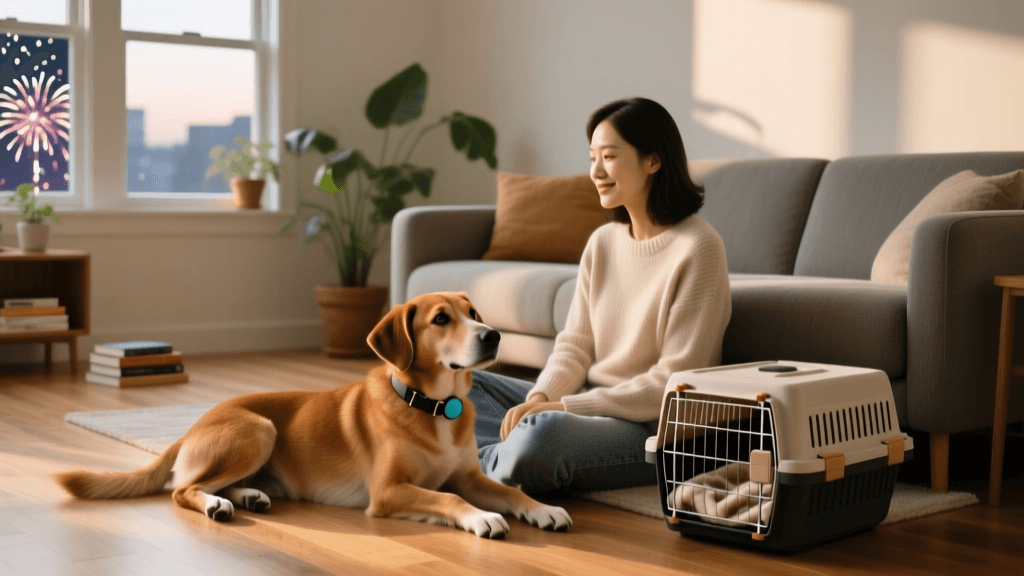
Every November, and increasingly around New Year's Eve, Bonfire Night, and summer celebrations, thousands of dogs across the UK experience genuine distress. The problem is not simply that dogs dislike loud noises — it is that fireworks combine unpredictable sound, sudden flashes of light, and unfamiliar smells into a sensory assault that dogs have no evolutionary framework to process. Unlike thunder, which builds gradually and carries recognisable scent cues, fireworks arrive without warning and can last for hours across multiple evenings.
According to the RSPCA (2023), an estimated 45% of dogs in the UK show signs of fear when they hear fireworks. That translates to millions of animals experiencing elevated heart rates, trembling, destructive behaviour, and in some cases, attempts to escape that result in injury or becoming lost. Understanding the physiological basis of this fear is the first step toward managing it effectively.
Dogs hear frequencies between 40 Hz and 65,000 Hz — roughly twice the upper range of human hearing. A firework explosion that registers as loud to a human is significantly more intense to a dog. The sudden pressure change from a nearby burst can also be physically uncomfortable, not just startling. This is why simply turning up the television rarely provides adequate relief on its own.
Preparing Your Home Before Fireworks Season
Preparation is far more effective than reactive management. If you know fireworks are likely — and in the UK, the period from late October through early January is reliably noisy — you have time to make meaningful changes to your dog's environment and routine.
Creating a Safe Den
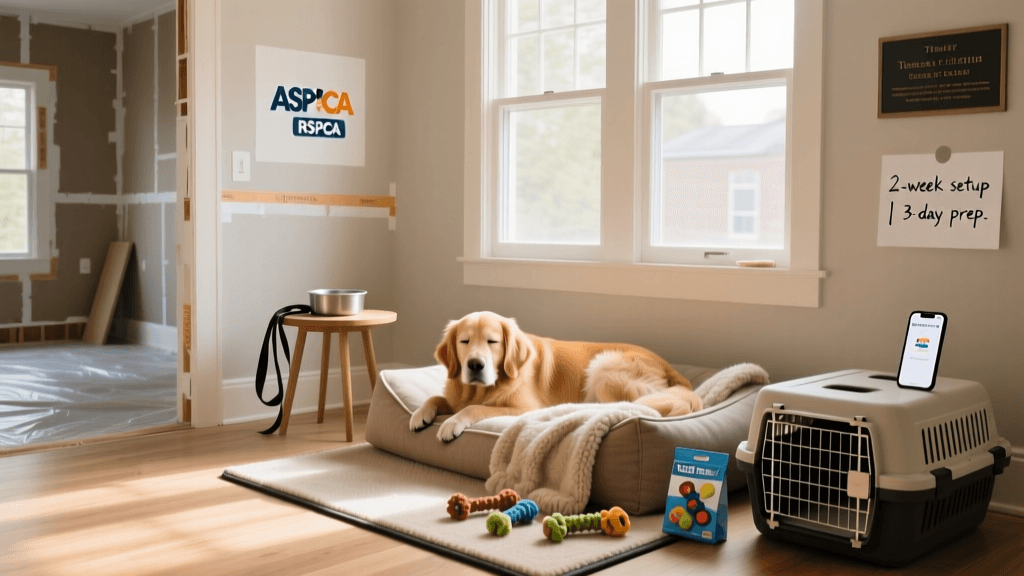
Dogs are den animals by instinct, and a well-established hiding spot can significantly reduce anxiety during a fireworks event. The key word is "established" — a den introduced on the night itself offers little comfort because the dog has no positive associations with it yet. Dogs Trust recommends introducing a den at least two to three weeks before fireworks season begins, allowing your dog to explore and rest in it voluntarily during calm periods.
A suitable den can be a covered crate, a space under the stairs, or a corner of a room with blankets draped over a low table. Place familiar bedding inside, along with an item of your clothing. The goal is to make the space smell safe and feel enclosed. Leave the entrance open at all times — a dog that feels trapped will panic rather than settle.
Soundproofing and Light Management
While you cannot eliminate firework noise entirely, you can reduce its impact. Close all windows and draw curtains or blackout blinds before dark. This dampens both sound and the visual flash of fireworks, which can be just as distressing as the noise for some dogs. Moving your dog to an interior room — one without windows facing the direction of local displays — can reduce sound levels by a meaningful margin.
Playing background noise helps mask the unpredictable peaks of firework sounds. Research published by the University of Glasgow (2020) found that classical music and specific dog-calming audio tracks reduced stress indicators in kennelled dogs by up to 37% compared to silence. Spotify and YouTube both host dedicated playlists designed for this purpose, and the Dogs Trust offers a free sound therapy programme called "Sounds Scary" that desensitises dogs to firework noises over several weeks of gradual exposure.
On the Night: Practical Steps That Actually Help
Even with thorough preparation, the night itself requires active management. Your behaviour matters as much as your dog's environment. Many owners instinctively want to comfort a frightened dog with prolonged fussing, but this can inadvertently reinforce the anxiety response. The RSPCA (2023) advises that you should not ignore your dog, but keep your own demeanour calm and matter-of-fact. Sit near your dog, speak in a normal tone, and engage them with gentle play or a chew if they are willing.
Walk your dog well before dark. On Bonfire Night, aim to have your dog exercised, fed, and settled indoors by 4:30 pm. Informal displays often begin earlier than official ones, and a dog caught outside during an unexpected burst is far harder to calm than one already settled at home. Ensure your dog is microchipped and wearing an ID tag — even dogs that are normally calm can bolt when startled, and the Dogs Trust reports that more dogs go missing around Bonfire Night than at any other time of year.
Feeding and Hydration
Anxiety suppresses appetite in many dogs, but a light meal before the fireworks begin can help stabilise blood sugar and provide a calming distraction. Avoid feeding a large meal immediately before, as stress can cause digestive upset. Keep fresh water available throughout the evening — panting from anxiety increases fluid loss, and dehydration compounds stress.
Long-lasting chews such as bully sticks, deer antlers, or stuffed frozen Kongs give anxious dogs a constructive outlet for nervous energy. The act of chewing releases endorphins and can occupy a dog's attention during quieter intervals between firework bursts. Prepare two or three Kongs in advance and freeze them the day before for maximum longevity.
Products That Can Make a Difference
The market for dog anxiety products has expanded considerably, and while no single product works for every dog, several have meaningful evidence behind them.
"We would always recommend trying behavioural and environmental strategies first, but for dogs with moderate to severe noise phobia, a combination approach — including pheromone products and, where necessary, veterinary medication — tends to produce the best outcomes."
— Dogs Trust Canine Behaviour Team, 2022
The following table summarises commonly used products, their mechanism, and approximate cost:
| Product | Type | Mechanism | Approx. Cost |
|---|---|---|---|
| Adaptil Diffuser | Pheromone plug-in | Synthetic dog-appeasing pheromone (DAP) | £25–£35 starter kit |
| Adaptil Collar | Pheromone collar | Continuous DAP release, lasts ~4 weeks | £18–£22 |
| Thundershirt | Pressure wrap | Constant gentle pressure, similar to swaddling | £35–£45 |
| Zylkène | Supplement (casein) | Alpha-casozepine derived from milk protein | £20–£30 for 30 capsules |
| YuCALM | Supplement | L-theanine, lemon balm, B vitamins | £22–£28 per month |
Pheromone products such as Adaptil work best when started at least 2 weeks before a stressful event, as the calming effect builds gradually. A plug-in diffuser covers approximately 50–70 square metres and should be placed in the room where your dog spends most time. Refills are required monthly at around £15–£18 each.
Pressure wraps like the Thundershirt have a reported efficacy rate of around 80% in owner surveys, though controlled studies show more modest results. They are most effective when introduced during calm periods so the dog associates the garment with relaxation rather than putting it on only during stressful events.
When to Speak to Your Vet
For dogs with severe noise phobia — those that injure themselves trying to escape, lose bladder or bowel control, or remain distressed for hours after fireworks have stopped — over-the-counter products are unlikely to be sufficient. Your vet can prescribe medications including imepitoin (marketed as Pexion), which is licensed specifically for noise aversion in dogs in the UK, or short-term anxiolytics such as alprazolam. These require a consultation and should be trialled before the event, not administered for the first time on the night itself.
The Royal Veterinary College in Hertfordshire has published guidance noting that noise phobia is a progressive condition in many dogs — meaning it tends to worsen each year without intervention. Early treatment, including referral to a clinical animal behaviourist, produces significantly better long-term outcomes than waiting until the fear becomes severe.
Long-Term Desensitisation: Building Resilience Over Time
The most durable solution to firework fear is systematic desensitisation — gradually exposing your dog to recorded firework sounds at very low volume while pairing the experience with positive reinforcement. This process, when done correctly, rewires the dog's emotional response over weeks or months.
The Dogs Trust "Sounds Scary" programme, available free at their website, provides a structured protocol with audio tracks specifically recorded to replicate the acoustic profile of fireworks, thunder, and other common noise triggers. The programme begins with sounds played at barely audible levels during normal, enjoyable activities such as mealtimes or play sessions. Volume is increased only when the dog shows no stress response at the current level.
- Start the programme at least 3 months before fireworks season for best results
- Sessions should last no longer than 5–10 minutes initially
- Never increase volume if your dog shows any sign of anxiety — go back a step
- Pair every session with high-value treats your dog does not receive at other times
- Consistency matters more than session length — daily short sessions outperform occasional long ones
Counter-conditioning works alongside desensitisation. Each time a firework sound plays — even at low volume — immediately offer something your dog loves: a piece of chicken, a favourite toy, a game of tug. Over time, the sound begins to predict good things rather than threat. This is not about distracting your dog from fear; it is about changing the underlying emotional association.
Supporting Rescue Dogs and Dogs with Trauma Histories
Dogs rehomed from shelters, or those with unknown histories, often arrive with pre-existing noise sensitivities that their new owners are unaware of. Battersea Dogs & Cats Home in London reports that noise phobia is one of the most commonly cited behavioural concerns among dogs returned to their care after adoption, particularly in the weeks following Bonfire Night.
If you have recently adopted a dog, do not assume they will cope with fireworks simply because they seem settled in other respects. Introduce the den, begin sound therapy, and speak to your vet or a qualified behaviourist before October. The Association of Pet Behaviour Counsellors (APBC) maintains a directory of accredited practitioners who can assess your dog and design an individualised programme.
- Ask your rescue centre for any known history of noise sensitivity before adoption
- Request a behaviourist referral if your dog shows any anxiety during the first weeks at home
- Avoid exposing a newly rehomed dog to fireworks within the first 30 days if at all possible — this is a critical settling period
- Keep a simple diary of your dog's behaviour to share with your vet or behaviourist
Patience is essential. A dog that has experienced trauma does not recover on a human timeline. Progress may be slow and non-linear, with setbacks during particularly intense fireworks events. What matters is the overall trajectory over months, not performance on any single night.
With the right combination of environmental preparation, behavioural support, and — where needed — veterinary input, the majority of dogs can be helped to cope significantly better with fireworks. The investment of time and effort in the weeks before fireworks season pays dividends not just on Bonfire Night, but in your dog's overall confidence and wellbeing throughout the year.
Tom Renshaw
All our authors care for dogs every day — read more of their work on the authors page.