From Panic to Peace: Transforming Canine Separation Anxiety
Discover how understanding the psychology of separation anxiety transformed a panicked dog into a confident companion using proven desensitization steps.

The "Before": A Household in Crisis
When Mark adopted Buster, a three-year-old Labrador mix, he expected a loyal companion for his weekend hikes and evening jogs. What he got instead was a household in crisis. Every time Mark left for his shift at the local hospital, Buster would descend into a state of sheer terror. The "before" phase of Buster's life was marked by shredded drywall around the front door, chewed window sills, and noise complaints from neighbors who were subjected to hours of frantic howling. Mark was exhausted, facing thousands of dollars in property damage, and seriously considering rehoming the dog he loved.
Buster's story is not unique. According to the ASPCA, separation anxiety is one of the most common behavioral issues reported by dog owners. However, treating it requires a fundamental shift in how we understand canine psychology. It is not about a dog being "spiteful" or "naughty"; it is about a profound psychological panic response. To transform Buster's behavior, we first had to understand the root of his fear and then implement a structured, science-based before-and-after transformation protocol.
Understanding the Psychology: Why Dogs Panic
Dogs are obligate social animals. In the wild, isolation from the pack often meant death. When a dog with separation anxiety is left alone, their brain does not register that their owner is simply at work; it registers a life-threatening abandonment. The amygdala triggers a massive release of cortisol and adrenaline, plunging the dog into a fight-or-flight survival state. The destruction of door frames and windows is not an act of revenge; it is a desperate, instinctual attempt to escape a perceived trap and reunite with their social group.
As noted by veterinary behaviorists at VCA Hospitals, true separation anxiety is characterized by extreme distress that occurs exclusively when the dog is separated from their primary attachment figure. Punishing a dog for this behavior only compounds the anxiety, associating the owner's departure with physical fear. The transformation from a panicked dog to a confident one requires counter-conditioning and systematic desensitization, fundamentally rewiring the dog's emotional response to being alone.
The Setup: Tools, Measurements, and Environment
Before beginning the behavioral protocol, we needed to restructure Buster's environment to set him up for success. This required a modest financial investment and precise measurements to ensure his safety and comfort.
- The Safe Space (Crate): We opted for a Midwest iCrate (42-inch model, costing approximately $65). The sizing was critical: we measured Buster from the tip of his nose to the base of his tail and added 4 inches, and from the floor to the top of his head, adding 2 inches. A crate that is too large allows a panicked dog to pace and build momentum; one that is too small causes claustrophobia. The 42-inch crate provided a den-like, secure feeling.
- Monitoring Technology: To track Buster's stress signals (panting, pacing, whining) without hovering over him, we installed a Wyze Cam v3 ($35) with two-way audio and night vision. This allowed us to monitor his baseline heart rate and breathing patterns remotely.
- Enrichment Tools: We purchased a Large Red Kong Classic ($15) and a Snuffle Mat ($25). The goal was to shift Buster's brain from a state of panic to a state of foraging, which naturally lowers cortisol levels and releases dopamine.
- Deep Pressure Therapy: A Thundershirt ($40) was introduced to provide gentle, constant pressure, mimicking the calming effect of a swaddled infant.
The Transformation Protocol: Step-by-Step Desensitization
The core of Buster's transformation relied on a strict 30-day desensitization protocol. The golden rule of this protocol is to never push the dog past their threshold of panic. If the dog shows signs of distress, the step was too big, and we had to regress to the previous successful step.
Week 1: Neutralizing Departure Cues
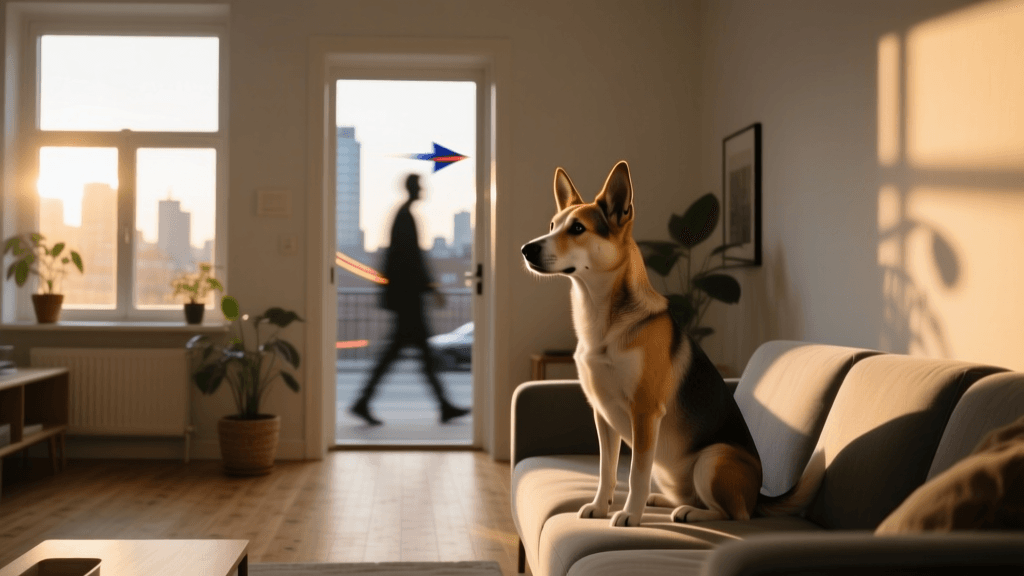
Dogs are masters of pattern recognition. Buster knew Mark was leaving the moment he picked up his keys or put on his shoes. For the first week, Mark performed these actions repeatedly without actually leaving. He would put on his coat, sit on the couch, and watch TV. He would jingle his keys and then make a cup of coffee. By decoupling the cue from the departure, we stripped the triggers of their anxiety-inducing power.
Week 2: Micro-Departures
We began stepping out of the front door and immediately stepping back in. The timing was meticulously tracked. We started with 1-second departures, gradually building to 5 seconds, then 10 seconds. Buster was given a frozen Kong stuffed with peanut butter and kibble exactly two minutes before the departure to create a positive association with the door closing. If Buster remained relaxed on the Wyze camera, the duration was increased by 5-second increments. If he paced or whined, the session was ended calmly, and the next session started at a shorter duration.
Week 3 and 4: Duration Building and Independence
Once Buster could handle 5-minute departures without a spike in cortisol (evidenced by relaxed body posture and steady chewing on his Kong), we began extending the time. We moved from 5 minutes to 15 minutes, then to 30 minutes. We also introduced the Snuffle Mat for low-intensity foraging right before Mark left. By the end of the fourth week, Buster was comfortably resting in his crate for up to two hours while Mark ran errands.
Before & After: A Behavioral Comparison
The transformation in Buster's behavior was profound. The following table illustrates the stark contrast between his psychological state and daily routine before and after the implementation of the desensitization protocol.
| Metric | The "Before" (Panic State) | The "After" (Confident State) |
|---|---|---|
| Reaction to Keys | Frantic pacing, whining, panting | Relaxed observation, occasional tail wag |
| First 10 Minutes Alone | Howling, scratching at the door | Settling in crate, chewing on Kong |
| Heart Rate / Breathing | Rapid, shallow panting (high cortisol) | Steady, deep breathing (rest and digest) |
| Property Damage | Chewed drywall, broken blinds | Zero damage, environment intact |
| Owner's Emotional State | High stress, guilt, exhaustion | Confident, relaxed, secure |
The Financial and Emotional ROI
Transforming a dog's behavior requires an investment of time and patience, but the financial return is undeniable. Before the protocol, Mark was spending $35 a day on doggy daycare to prevent Buster from destroying his apartment. That amounted to over $700 a month. The total cost of the transformation tools (crate, camera, Kong, Snuffle Mat, and Thundershirt) was approximately $180. Even factoring in the cost of a few sessions with a certified applied animal behaviorist ($150 per session), the long-term savings were massive. More importantly, the emotional return on investment was priceless. Mark no longer dreaded leaving his home, and Buster no longer lived in a state of perpetual fear.
The "After": A New Normal
Today, Buster is a transformed dog. He still experiences a brief moment of FOMO (Fear Of Missing Out) when Mark leaves, but it is a normal, healthy canine reaction, not a debilitating panic attack. He voluntarily enters his crate to nap, and the Wyze camera now captures him snoring peacefully while Mark is at work.
Understanding your dog's psychology is the most powerful tool in your behavioral toolkit. Separation anxiety is not a life sentence for your furniture or your sanity. By approaching the issue with empathy, utilizing systematic desensitization, and providing the right environmental support, you can guide your dog from a place of profound panic to a state of lasting peace. The journey requires dedication, but the "after" is always worth the effort.
jonas-cole
All our authors care for dogs every day — read more of their work on the authors page.