Training Quiet Apartment Dogs: Reactivity & Potty Guide 2026
Discover expert training techniques for quiet apartment dog breeds in 2026. Master hallway reactivity, indoor potty routines, and separation anxiety.
Why Quiet Breeds Still Need Specialized Apartment Training
When you think of apartment living in 2026, the first concern that comes to mind is usually noise. While selecting a naturally quiet dog breed like a Greyhound, Basenji, or Cavalier King Charles Spaniel is a fantastic first step, genetics alone will not guarantee a peaceful living environment. Even the most stoic and silent breeds can develop nuisance behaviors, hallway reactivity, or indoor potty accidents if they are not properly conditioned to the unique stimuli of high-density housing.
Apartment environments present a specific set of challenges: shared walls, echoing hallways, frequent encounters with strangers, and limited immediate access to outdoor relief areas. According to the American Kennel Club (AKC), adapting a dog to apartment life requires proactive environmental management and consistent behavioral conditioning, regardless of their baseline vocalization levels.
Top Quiet Apartment Breeds and Their Training Profiles
Not all quiet dogs are quiet for the same reasons, and their training needs vary wildly. Below is a breakdown of popular low-vocalization breeds and the specific training hurdles you must address in an apartment setting.
| Breed | Vocalization Tendency | Primary Apartment Challenge | Recommended Training Focus |
|---|---|---|---|
| Greyhound | Extremely Low | Separation anxiety, cold sensitivity | Crate conditioning, indoor potty pads |
| Basenji | Low (Yodels instead of barks) | Destructive boredom, high prey drive | Scent work, puzzle feeder conditioning |
| Cavalier King Charles Spaniel | Low to Moderate | Doorbell reactivity, clinginess | Desensitization to hallway noises |
| Shiba Inu | Low (Unless alarmed) | Stubborn potty habits, leash reactivity | Strict outdoor routine, threshold training |
Conquering Hallway and Doorbell Reactivity
Even if your dog rarely barks at you, the sound of footsteps in the hallway or a delivery driver dropping off a package can trigger alarm barking or frantic scratching at the door. This is known as territorial reactivity. In 2026, smart home technology has made desensitization easier than ever, but it still requires classical conditioning.
Step-by-Step Doorbell Desensitization
- Change the Chime: Use your smart doorbell app to change the entry chime to a soft, non-threatening melody. Loud, sudden electronic beeps trigger a startle response.
- Record and Playback: Record the sounds of your specific apartment hallway—elevator dings, neighbor chatter, heavy footsteps. Play these sounds on a Bluetooth speaker at a very low volume while feeding your dog high-value treats like freeze-dried liver.
- Increase Volume Gradually: Over two weeks, slowly increase the volume. If your dog shows signs of stress (panting, lip licking, ear pinning), lower the volume immediately.
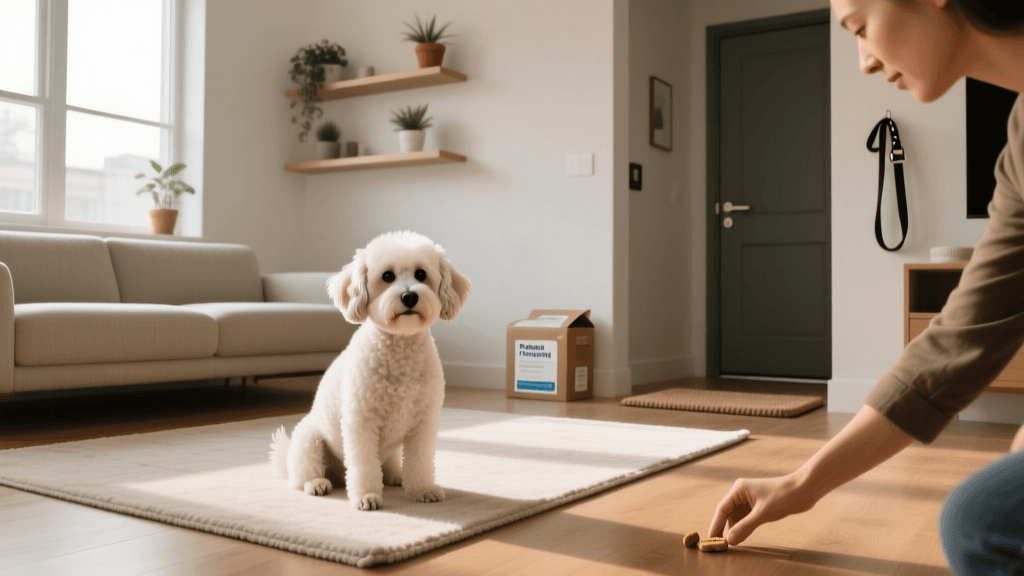
- The 'Place' Command: Train your dog to go to a specific mat or bed when the doorbell rings. Reward heavily for staying on the mat while you simulate opening the door.
By pairing the previously neutral or scary sounds with high-value rewards, you rewire your dog's emotional response. The ASPCA emphasizes that treating the underlying emotional trigger is far more effective than attempting to suppress the bark with punitive devices.
Potty Training Low-Energy and Cold-Sensitive Breeds
One of the most common reasons quiet apartment dogs are surrendered or face eviction is inappropriate indoor elimination. Breeds like Greyhounds and Italian Greyhounds have very low body fat and despise cold or wet weather. When winter hits, they will simply refuse to go outside, leading to accidents on your rugs.
Establishing a Balcony or Indoor Relief Station
For high-rise apartments, utilizing a balcony potty system or an indoor hydroponic grass patch is a game-changer for 2026 apartment dwellers. However, transitioning a dog to use these requires strict protocol:
- Scent Association: Place a small amount of your dog's previous outdoor waste on the indoor grass patch to signal its purpose.
- Leash Guidance: Even indoors or on a balcony, keep your dog on a short leash during potty breaks. This prevents them from wandering off and reinforces that this is a business trip, not playtime.
- Enzymatic Cleaning: If an accident occurs elsewhere in the apartment, use a 2026-formulation enzymatic cleaner that breaks down uric acid crystals at the molecular level. Standard household cleaners will not eliminate the scent markers that invite repeat offenses.
For comprehensive guidance on establishing a reliable routine, the AKC's potty training guidelines stress the importance of taking the dog to the exact same spot every single time to build a strong surface preference.
Managing Separation Anxiety Without the Noise
A common misconception is that separation anxiety always presents as howling and destructive barking. In many quiet breeds, separation distress manifests as 'silent anxiety'—pacing, excessive licking, shedding, or inappropriate elimination while you are away. Because they are not disturbing the neighbors, owners often miss the signs until the dog develops a severe stress disorder.
Enrichment and Departure Conditioning
To prevent silent anxiety, you must condition your dog to view your departure as a positive or entirely neutral event.
- Desensitize Departure Cues: Pick up your keys, put on your coat, and then sit back down on the couch. Repeat this until your dog no longer reacts to these triggers.
- Automated Enrichment: Utilize smart treat-dispensing cameras. Program them to release a small kibble reward every 30 minutes during your workday. This breaks up the monotony of waiting and provides mental stimulation without requiring physical exertion.
- Licking and Chewing: Provide frozen enrichment toys filled with dog-safe yogurt and bone broth. The physical act of licking releases endorphins in a dog's brain, naturally soothing their nervous system.
2026 Smart Home Integrations for Dog Training
The modern apartment is a connected ecosystem, and you can leverage this for behavioral conditioning. Smart blinds can be programmed to close automatically if your dog begins to visually react to pigeons or pedestrians outside the window, effectively removing the trigger before the reactivity cycle begins. Furthermore, indoor air purifiers with pet-specific HEPA filters help maintain the air quality in smaller spaces, ensuring your dog remains physically comfortable, which directly correlates to better behavioral outcomes.
DIY Enrichment Recipes for Quiet Dogs
Mental fatigue is just as effective as physical exercise for tiring out a dog in a small apartment. Try these simple enrichment recipes:
- The Snuffle Mat Scavenger Hunt: Hide your dog's daily kibble ration inside a dense snuffle mat. This forces them to use their nose, mimicking natural foraging behaviors and burning mental energy.
- Frozen Bone Broth Blocks: Freeze low-sodium chicken bone broth with pieces of carrots and blueberries in a silicone mold. This provides a long-lasting, hydrating treat that keeps them occupied on their mat.
- Cardboard Shredding Box: For breeds that like to destroy (like Basenjis), place treats inside empty toilet paper rolls, then put those rolls inside a larger cardboard box. Let them shred the box to find the rewards. Always supervise to prevent ingestion of cardboard.
Final Thoughts on Apartment Harmony
Choosing a quiet breed is an excellent foundation for apartment living, but it is your dedication to proactive, positive-reinforcement training that will ultimately ensure a harmonious environment. By addressing hallway reactivity, establishing foolproof indoor potty protocols, and managing silent separation anxiety, you and your canine companion can thrive in any high-rise or multi-family dwelling in 2026 and beyond.
hannah-wickes
All our authors care for dogs every day — read more of their work on the authors page.