Training High-Drive vs Low-Drive Breeds: Selection Guide
Discover how to select and train high-drive working breeds versus low-drive companion dogs. Compare training costs, timelines, and essential gear.
Understanding Canine Drive: Working vs. Companion Breeds
When selecting a dog, prospective owners often focus on appearance, size, or shedding levels. However, from a professional dog training perspective, the most critical factor in breed selection is canine drive. Drive refers to the innate, genetically hardwired motivations that dictate how a dog interacts with its environment. According to the American Kennel Club (AKC), understanding these innate traits is the first step toward successful behavioral conditioning and long-term ownership satisfaction.
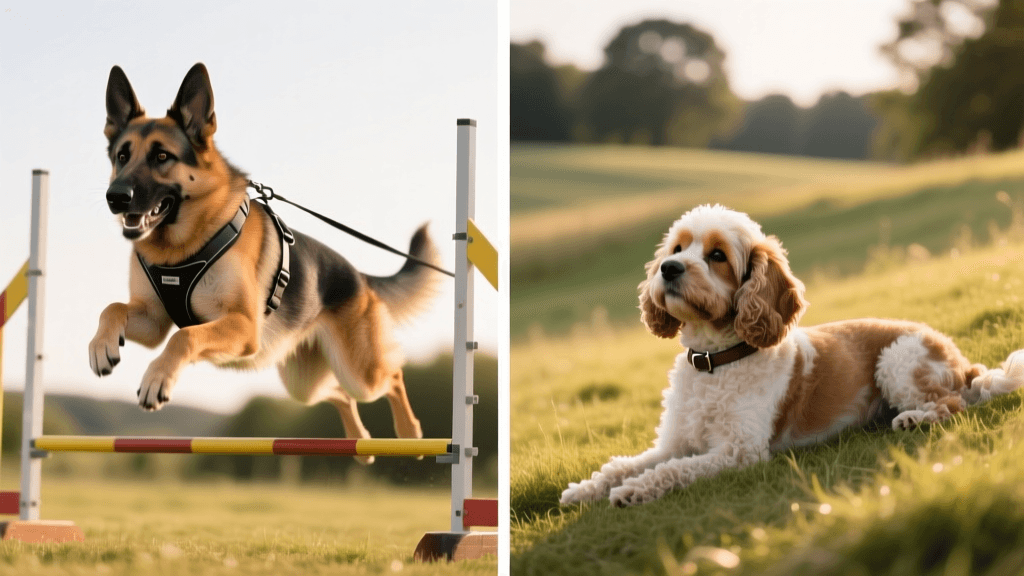
High-drive working breeds, such as the Belgian Malinois, Border Collie, and German Shepherd, possess intense prey and pack drives. They require rigorous physical exertion and complex cognitive tasks to prevent destructive behavioral conditioning. Conversely, low-drive companion breeds, like the Cavalier King Charles Spaniel, Basset Hound, or Shih Tzu, were selectively bred for companionship. Their training requirements focus more on basic manners, leash walking, and gentle socialization rather than high-stakes impulse control. Meeting the puppy's parents can provide invaluable insight into their baseline temperament and drive levels. If the mother displays hyper-vigilance or an inability to settle in a neutral environment, it is highly likely the offspring will inherit these intense working traits, requiring a significantly higher training investment.
Breed Comparison Chart: Training Needs & Timelines
To make an informed selection, compare the practical realities of training these two distinct breed categories. The following table outlines the baseline expectations for a high-drive working breed versus a low-drive companion breed.
| Metric | High-Drive (e.g., Belgian Malinois) | Low-Drive (e.g., Cavalier King Charles Spaniel) |
|---|---|---|
| Daily Mental Stimulation | 2 to 3 hours (scent work, agility, advanced obedience) | 20 to 30 minutes (puzzle toys, basic trick training) |
| Obedience Timeline | 12 to 18 months for reliable off-leash recall | 4 to 6 months for reliable basic household manners |
| Recommended Training Budget | $3,000 - $5,000+ (specialized trainers, board-and-train) | $500 - $1,200 (group classes, basic private sessions) |
| Best Training Method | Operant conditioning, high-value luring, drive-building | Positive reinforcement, gentle shaping, capture methods |
| Socialization Focus | Neutrality, environmental stability, impulse control | Confidence building, handling tolerance, gentle exposure |
Selecting the Right Breed for Your Training Capacity
Before bringing a puppy home, you must honestly assess your capacity for the financial and temporal demands of breed-specific training. The ASPCA emphasizes that behavioral issues are the leading cause of dogs being surrendered to shelters, often stemming from a mismatch between the dog's genetic drive and the owner's lifestyle.
Time Commitments
High-drive breeds require a minimum of two hours of dedicated, structured training and exercise daily. This is not merely a walk around the block; it involves active engagement, such as teaching complex obedience chains, practicing scent detection, or engaging in flirt pole sessions. Low-drive breeds typically thrive on 30 to 45 minutes of daily activity, split between a leisurely sniffari walk and a short 10-minute indoor training session focusing on tricks or basic commands.
Financial Commitments
The cost of professional training varies wildly based on breed requirements. For a high-drive working breed, you may need to consult a specialized behavioral conditioner or protection sport trainer. These professionals typically charge between $150 and $300 per hour. Furthermore, many owners of high-drive breeds opt for intensive board-and-train programs, which can cost anywhere from $2,500 to $4,500 for a 3-to-4-week immersion. In contrast, companion breeds usually do well with standard group obedience classes ($150 to $250 for a 6-week course) or general private trainers ($80 to $120 per hour).
Essential Gear for High-Drive vs. Low-Drive Training
Selecting the correct training equipment is vital for safety and effective communication. The wrong gear can inadvertently reinforce pulling or cause physical harm.
Gear for High-Drive Working Breeds
- Long Lines: A 15-foot to 30-foot Biothane long line (approx. $45-$60). Biothane is waterproof, easy to clean, and won't burn your hands during sudden lunges. Avoid retractable leashes entirely, as they teach dogs to pull against tension.
- Flirt Poles: The Squishy Face Studio Flirt Pole (approx. $30). This is essential for safely satisfying high prey drive without risking joint damage from repetitive ball-throwing.
- High-Value Rewards: Ziwi Peak Air-Dried Beef or Venison (approx. $40 per lb). High-drive dogs working in high-distraction environments require biologically appropriate, ultra-high-value rewards to maintain focus.
- Advanced Tools: A remote e-collar (e.g., Dogtra 1900S, approx. $220) is often utilized by professional trainers for reliable off-leash recall in high-distraction environments. Furthermore, investing in a GPS tracking collar, such as the Garmin Alpha 200 (approx. $600), is highly recommended for high-drive breeds that will eventually work off-leash in expansive rural areas. These must be introduced under the guidance of a certified professional.
Gear for Low-Drive Companion Breeds
- Headcollars or Harnesses: The Halti Headcollar (approx. $20) or a front-clip harness like the Rabbitgoo No-Pull Harness (approx. $25). These gently redirect forward momentum without causing tracheal damage in smaller, more delicate breeds.
- Standard Leashes: A 6-foot high-quality leather leash (approx. $35). Leather provides a comfortable grip and natural shock absorption for casual walks.
- Low-Calorie Rewards: Zuke's Mini Naturals (approx. $8 per 6oz bag). Companion breeds are often prone to obesity, making low-calorie, pea-sized treats ideal for repetitive trick training.
- Puzzle Toys: The Kong Classic or Outward Hound Dog Brick (approx. $15-$25). These provide adequate mental stimulation for low-drive dogs without overstimulating them.
Actionable Training Timelines by Breed Type
Training timelines are not one-size-fits-all. The critical socialization window, which the American Veterinary Society of Animal Behavior (AVSAB) notes as closing between 12 to 16 weeks of age, must be managed differently depending on the breed's genetic predispositions.
Weeks 8 to 16: The Socialization Window
For high-drive breeds, this period is heavily focused on environmental neutrality. The goal is to expose the puppy to various surfaces, sounds, and sights while teaching them to remain calm and disengaged. If a Malinois puppy learns to react to every moving bicycle, that prey drive will solidify into a dangerous chasing habit.
For low-drive breeds, the focus is on confidence building. Companion breeds can be naturally timid. Training involves pairing novel experiences with high-value food to create positive emotional responses, ensuring they do not develop fear-based reactivity.
Months 4 to 6: Impulse Control and Foundation
High-drive dogs enter their adolescent fear periods and hormonal shifts. This is the time to introduce strict impulse control games, such as "leave it" with high-value toys, and place training (teaching the dog to remain on a raised cot for 30+ minutes). Low-drive dogs at this age are typically mastering basic household manners, such as sit-to-say-please for meals and polite door manners. During this phase, it is also critical to introduce structured handling exercises. Grooming tolerance, nail trimming acceptance, and veterinary exam preparation are vital for all breeds, but low-drive companion breeds often require more desensitization to handling due to their sensitive nature.
Months 6 to 12: Advanced Conditioning
By this stage, high-drive breeds should be transitioning into dog sports (agility, IGP, or advanced scent work) to channel their mature drives constructively. Low-drive breeds are usually refining their trick repertoire and enjoying leisurely, structured community walks.
"Matching a dog's innate drive to an owner's lifestyle is the single most effective preventative measure against behavioral euthanasia and shelter surrender. Training does not change genetics; it merely provides an outlet for them."
Final Thoughts on Breed Selection
Ultimately, successful obedience training begins long before you bring a dog home. It starts with the humility to select a breed whose genetic requirements align with your daily reality. If you work 10-hour days and enjoy quiet weekends, a low-drive companion breed will thrive under your care, and your training journey will be a joyful bonding experience. If you are an active outdoorsman seeking a canine partner for rigorous daily challenges, a high-drive working breed will reward your dedication with unparalleled loyalty and athletic brilliance. Always consult with a certified professional dog trainer or veterinary behaviorist before selecting a high-drive breed to ensure you are fully prepared for the commitment.
aaron-whyte
All our authors care for dogs every day — read more of their work on the authors page.