Senior Dog Training: Cognitive Enrichment Strategies
Discover effective senior dog training strategies. Learn how cognitive enrichment and adapted routines keep aging dogs sharp, happy, and engaged.
The Golden Years: Why Train a Senior Dog?
Many dog owners believe that the adage "you can't teach an old dog new tricks" is a biological fact. In reality, senior dogs not only can learn new behaviors, but they also deeply benefit from continued training. As dogs enter their golden years—typically around age 7 for large breeds and age 10 for small breeds—their physical capabilities may decline, but their need for mental stimulation remains paramount. Training a senior dog requires a shift in perspective: moving away from high-energy obedience and agility, and leaning heavily into cognitive enrichment, low-impact conditioning, and sensory engagement. This life stage care guide will walk you through the specific, actionable strategies needed to keep your aging companion sharp, happy, and deeply bonded to you.
Physical Adaptations for Aging Joints and Senses
Before initiating any new training regimen with an older dog, it is crucial to assess their physical limitations. Osteoarthritis, hip dysplasia, and generalized muscle atrophy are common in senior dogs. Therefore, high-impact commands like "jump," "sit pretty," or repetitive fetching must be retired. Instead, focus on low-impact behaviors.
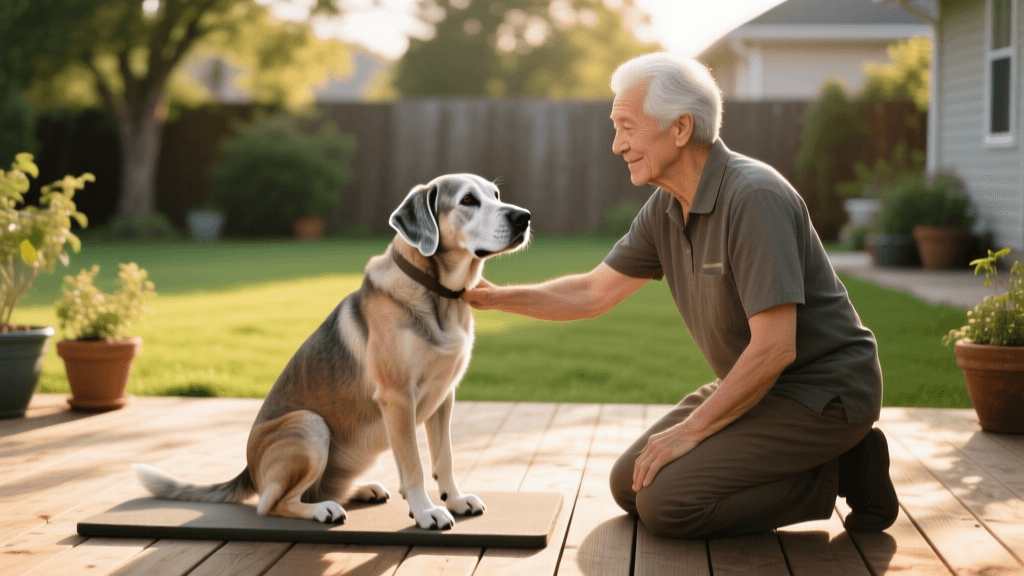
When practicing stationary commands like "down" or "stand," ensure your dog is on a supportive surface. Hardwood floors can cause splaying, which leads to joint pain and training frustration. Invest in non-slip rug pads, such as the Gorilla Grip Extra Strong Rug Pad (approximately $30 for a 5x7 foot roll), or use a dedicated orthopedic training mat. For dogs with severe arthritis, a supportive bed like the Furhaven Orthopedic Sofa ($45) or the premium Big Barker Pillow Top ($240) provides necessary joint relief during rest periods between training reps.
Furthermore, sensory decline is a natural part of aging. Presbycusis (hearing loss) and lenticular sclerosis (clouding of the eye lens) can make traditional verbal and visual cues less effective. Transition to hand signals if your dog is losing their hearing, or use tactile cues—such as a gentle tap on the shoulder paired with a specific scent—so they can still engage with you confidently.
Adapting Basic Commands for Mobility Issues
If your dog struggles with the biomechanics of a traditional "sit" due to hip pain, do not force the position. Forcing a painful sit will create a negative association with training. Instead, substitute the "sit" command with a "touch" (nose to hand) or a "stand-stay" command. These alternatives require minimal joint flexion while still reinforcing impulse control and focus.
To teach a stand-stay, lure your dog forward into a standing position with a high-value, soft treat like Zuke's Mini Naturals (broken into pea-sized pieces to manage caloric intake). Mark the behavior with a clicker or a verbal "yes," and reward. Gradually increase the duration from 2 seconds to 10 seconds. This adaptation keeps the dog's mind engaged without punishing their aging body.
Cognitive Enrichment: Brain Games for Senior Dogs
Cognitive enrichment is the cornerstone of senior dog training. Just as humans do crossword puzzles to stave off cognitive decline, dogs can use interactive brain games to build new neural pathways. Mental fatigue is often more effective than physical fatigue for senior dogs, leaving them relaxed and satisfied without the physical toll of a long run.
Puzzle toys are an excellent investment. The Outward Hound Dog Brick (approximately $15) is a great entry-level puzzle that requires the dog to slide and flip compartments to find treats. For advanced problem solvers, the Nina Ottosson Dog Twister ($25) requires sequential unlocking mechanisms. Always supervise your senior dog with these toys, as dental wear or missing teeth might make them prone to chewing and swallowing plastic pieces.
Scent work is another phenomenal, low-impact activity. A dog's olfactory system remains highly functional even in advanced age. Create a "snuffle mat" (available online for about $15 to $25) or simply hide kibble in a crumpled towel in the living room. Hide-and-seek games where the dog must use their nose to find you or a specific scented object tap into their natural foraging instincts and provide immense mental stimulation.
Comparison Chart: Adult vs. Senior Dog Training
| Feature | Adult Dog (1-7 Years) | Senior Dog (8+ Years) |
|---|---|---|
| Session Length | 15-20 minutes | 5-8 minutes |
| Physical Impact | Moderate to High | Low to None |
| Primary Focus | Obedience, Agility, Recall | Cognitive Enrichment, Scent Work, Bonding |
| Reward Type | High-value chews, toys, praise | Soft, aromatic, low-calorie treats |
| Environment | Indoors and Outdoors | Climate-controlled, non-slip indoor surfaces |
Recognizing and Managing Canine Cognitive Dysfunction (CCD)
As you engage in senior training, you must be vigilant for signs of Canine Cognitive Dysfunction (CCD), the canine equivalent of Alzheimer's disease. According to the American Kennel Club, CCD affects a significant portion of the senior dog population, with symptoms often categorized by the DISHA acronym: Disorientation, altered Interactions with family, Sleep-wake cycle disturbances, House soiling, and changes in Activity levels.
If your previously well-trained senior dog begins pacing at night, staring at walls, or forgetting basic obedience cues, consult your veterinarian immediately. The ASPCA notes that while there is no cure for CCD, early intervention can slow its progression. Alongside prescription medications, veterinarians often recommend antioxidant-rich diets and supplements containing S-adenosylmethionine (SAMe). Products like Nutramax Denamarin Advanced (approximately $45 to $60 for a month's supply) provide liver support and neuroprotection, helping to maintain cognitive clarity so your dog can continue to enjoy their training sessions.
A Sample 7-Day Senior Enrichment Plan
To help you integrate these concepts, here is a practical, low-impact weekly training schedule designed for a medium-sized senior dog. Each session should last no longer than 10 minutes and should be performed on a non-slip surface.
- Monday: Scent Work. Hide 10 pieces of kibble around the living room while your dog waits in another room. Release them to "find it."
- Tuesday: Target Training. Teach your dog to touch a target stick or your palm with their nose. This builds focus without requiring them to sit or lie down.
- Wednesday: Puzzle Toy Day. Serve their breakfast inside an Outward Hound Dog Brick. Let them work for their meal at their own pace.
- Thursday: Gentle Massage and Handling. Practice cooperative care. Gently handle their paws, ears, and tail, rewarding them with soft treats for calm behavior. This maintains trust for veterinary visits.
- Friday: Name Recognition and Recall. Practice low-distraction recall in the hallway using high-value rewards like boiled chicken breast.
- Saturday: Snuffle Mat Session. Roll their daily allotment of treats into a DIY or store-bought snuffle mat for a 15-minute foraging session.
- Sunday: Rest and Bonding. Skip formal training. Focus on gentle petting, brushing, and quiet companionship to reinforce your emotional bond.
Final Thoughts on Life Stage Training
Training a senior dog is less about achieving perfect obedience and more about preserving their quality of life, dignity, and mental acuity. By adapting your expectations, accommodating their physical limitations, and introducing targeted cognitive enrichment, you provide your aging companion with a profound sense of purpose. Remember that patience and empathy are your most valuable training tools during this life stage. Celebrate the small victories, prioritize their comfort, and cherish the quiet, focused moments you share together in their golden years.
beth-carrasco
All our authors care for dogs every day — read more of their work on the authors page.