Dog Leash Reactivity: Problem Diagnosis and Proven Solutions
Discover why your dog lunges on walks. Learn expert problem diagnosis and step-by-step solutions to cure leash reactivity using positive reinforcement.

Understanding Leash Reactivity: More Than Just 'Bad Behavior'
Walking your dog should be a relaxing bonding experience, but for owners of leash-reactive dogs, it often feels like navigating a minefield. Leash reactivity—characterized by lunging, barking, growling, or pulling toward triggers like other dogs, cyclists, or strangers—is one of the most common behavioral issues reported by pet owners. According to the ASPCA, behavioral issues, including reactivity and aggression, are among the leading reasons dogs are surrendered to shelters. However, reactivity is rarely rooted in genuine malice. It is almost always a symptom of an underlying emotional response, such as fear, frustration, or over-arousal. To effectively solve the problem, we must first accurately diagnose the root cause before applying targeted, positive reinforcement solutions.
Diagnosing the Root Cause of Leash Reactivity
Before you can fix the lunging, you need to understand the 'why.' Reactivity generally falls into two distinct categories: fear-based reactivity and frustration-based reactivity. Misdiagnosing the root cause can lead to training methods that inadvertently make the problem worse.
Fear-Based Reactivity vs. Frustration-Based Reactivity
A fear-reactive dog is essentially saying, 'Stay away from me, you are scary!' Their body language will often include a tucked tail, pinned-back ears, 'whale eye' (showing the whites of their eyes), trembling, and attempts to hide behind their handler. When they lunge, it is a defensive maneuver designed to increase the distance between themselves and the perceived threat.
Conversely, a frustration-reactive dog (often called a 'frustrated greeter') is saying, 'I want to go say hi, and this leash is stopping me!' Their body language looks entirely different: a high, stiffly wagging tail, play bows, whining, and forward-leaning posture. If the leash were removed, a frustration-reactive dog would likely run up to the trigger and initiate play, whereas a fear-reactive dog would either flee or bite.
The Role of Handler Leash Tension
One frequently overlooked diagnostic factor is the handler's own physical tension. When an owner spots a trigger, they often instinctively tighten the leash and hold their breath. Dogs are incredibly sensitive to leash pressure and human body language. A tight leash communicates anxiety and confirms to the dog that the approaching trigger is indeed a threat, effectively triggering the fight-or-flight response before the other dog has even done anything.
Understanding the Threshold Concept
In behavioral conditioning, the 'threshold' is the distance at which your dog notices a trigger but remains under their emotional boiling point. Inside the threshold (too close), the dog's cognitive brain shuts down, and the emotional brain takes over; they cannot learn, and treats will be ignored. Outside the threshold (far enough away), the dog can observe the trigger, process the information, and willingly engage with you for rewards.
Actionable Measurement: Start by identifying your dog's specific threshold distance. For some dogs, this might be 20 feet; for others, it might be 150 feet. You must conduct all initial training sessions strictly outside this distance. If your dog reacts, you are too close. Take three steps back, let them decompress, and try again at a greater distance.
Essential Gear for Reactivity Training
Using the wrong equipment can exacerbate reactivity. Retractable leashes, for example, teach dogs that pulling gets them what they want and can cause severe rope burn or snap under the sudden force of a lunging 60-pound dog. The Humane Society strongly advocates against aversive tools like prong or choke collars, as pain and fear only compound the negative emotional associations your dog has with their triggers.
Below is a comparison chart of recommended gear for managing and training a leash-reactive dog:
| Gear Type | Best For | Pros | Cons | Est. Cost |
|---|---|---|---|---|
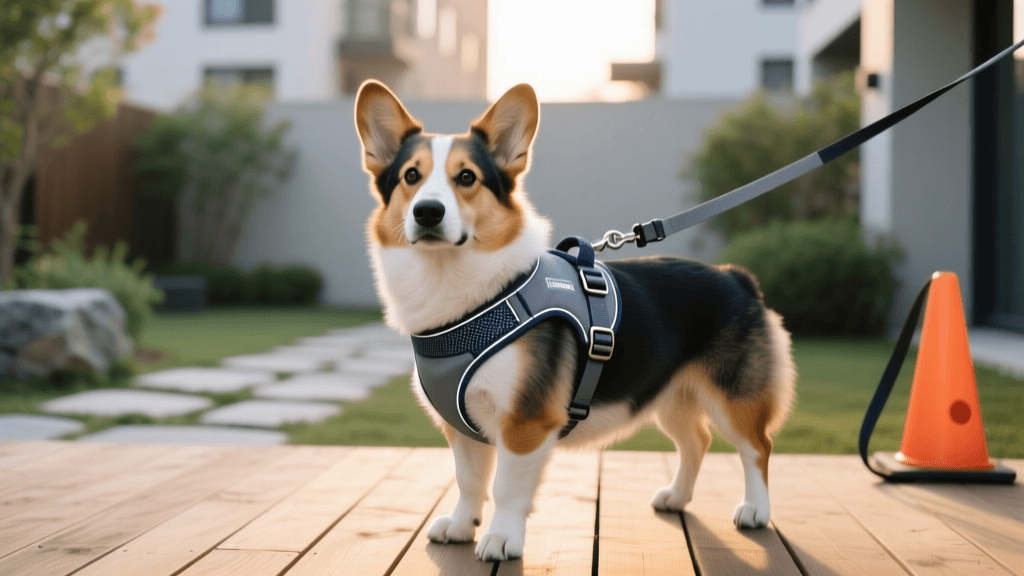
| Front-Clip Harness | Mild pullers and reactive dogs | Redirects forward momentum safely; prevents choking | Can chafe armpits if poorly fitted | $25 - $45 |
| Head Halter | Severe lungers and large breeds | Provides maximum head and directional control | Requires slow acclimation; risk of neck injury if jerked | $15 - $30 |
| 6ft Biothane Leash | All reactivity training | Easy to clean, no rope burn, consistent length | Stiffer than nylon; can be slippery when wet | $30 - $50 |
| High-Value Treats | Counter-conditioning | Creates strong positive associations (e.g., freeze-dried liver) | Can cause stomach upset if overfed | $12 - $20/bag |
| Retractable Leash | NONE (Strictly Avoid) | N/A | Encourages pulling; unpredictable locking mechanisms | $20 - $40 |
Step-by-Step Solutions to Cure Leash Reactivity
Once you have diagnosed the root cause, identified the threshold, and secured the proper gear, you can begin the active training phase. The goal is not merely to suppress the barking, but to change your dog's underlying emotional response from 'threat' to 'predictor of good things.'
Solution 1: The Engage-Disengage Game (Look at That)
Developed by dog training expert Leslie McDevitt, this protocol is the gold standard for fear-based reactivity. It teaches the dog that looking at a trigger is a cue to look back at the handler for a reward.
- Step 1 (Engage): Stand with your dog outside their threshold distance. Wait for them to look at the trigger (e.g., a dog walking 80 feet away).
- Step 2 (Mark): The exact millisecond they look at the trigger, use a clicker or a verbal marker like 'Yes!' to mark the behavior.
- Step 3 (Disengage): Your dog will naturally turn their head back toward you to see what the click meant.
- Step 4 (Reward): Deliver a high-value treat (like Zuke's Mini Naturals or boiled chicken) at your hip. Feeding at the hip keeps the dog oriented away from the trigger and in a heel position.
- Timing & Repetition: Keep sessions to 10-15 minutes. Aim for 10-15 successful repetitions per session. If your dog stares at the trigger and does not disengage after 3 seconds, they are over threshold. Increase your distance immediately.
Solution 2: The Emergency U-Turn
You cannot control the environment, and occasionally, a trigger will ambush you by popping out from behind a parked car. You need an escape route that feels like a game rather than a punishment.
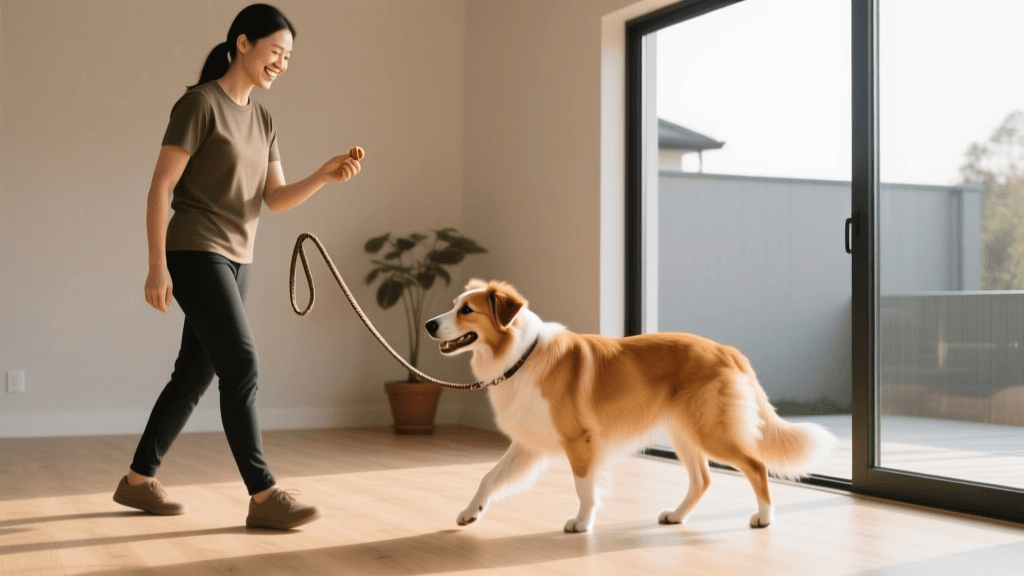
- The Setup: Practice this in your living room or yard with zero distractions.
- The Cue: Say a cheerful, unique cue word like 'Let's Go!' or 'Oops!'
- The Action: Immediately pivot 180 degrees on your heel and jog 5 to 10 steps in the opposite direction.
- The Reward: Stop, praise enthusiastically, and deliver a jackpot of 3-5 treats.
- Real-World Application: When an unexpected dog rounds the corner, say 'Let's Go!', pivot, and run. Your dog's natural chase instinct will override their reactivity, allowing you to escape the trigger zone before a reaction occurs.
Solution 3: Visual Blockers and Barrier Training
For highly visual dogs, simply breaking the line of sight can instantly lower their heart rate. Utilize the environment to your advantage. Park your car between your dog and a busy sidewalk, sit on a park bench with your back to the walking path, or use a physical visual blocker like a specialized umbrella or a towel draped over a crate during outdoor decompression sessions. By removing the visual stimulus, you allow the dog's nervous system to reset.
Pro Tip: Never punish a reactive dog for lunging, barking, or growling. Punishment suppresses the outward warning signs without fixing the underlying emotional response. A dog that is punished for growling may learn to skip the warning entirely and go straight to biting. Always reward the communication, and manage the environment to prevent the reaction.
Tracking Progress and Knowing When to Call a Professional
Behavioral modification is a marathon, not a sprint. Track your dog's progress by noting their threshold distance weekly. If your dog used to react at 50 feet but can now watch a trigger from 30 feet while eating treats, you are making massive progress. Consistency is paramount; one bad walk where your dog is allowed to rehearse the lunging behavior can set your training back weeks.
While foundational training resources, such as those provided by the American Kennel Club, are excellent for basic obedience, severe reactivity—especially cases involving a bite history, intense aggression, or handler-directed aggression when redirected—requires professional intervention. If you feel unsafe, overwhelmed, or if your dog's reactivity is not improving after 4 to 6 weeks of consistent threshold training, it is time to hire a professional. Look for a Certified Professional Dog Trainer (CPDT-KA) or a certified member of the International Association of Animal Behavior Consultants (IAABC) who specializes in force-free, science-based behavioral modification. They can provide real-time feedback, help you read subtle canine body language, and create a customized desensitization plan tailored to your dog's specific triggers.
jonas-cole
All our authors care for dogs every day — read more of their work on the authors page.