Adapting Obedience Training for Breeds Prone to Hip Dysplasia
Learn how to adapt obedience training for large breeds genetically prone to hip dysplasia. Protect joints while building a strong bond.

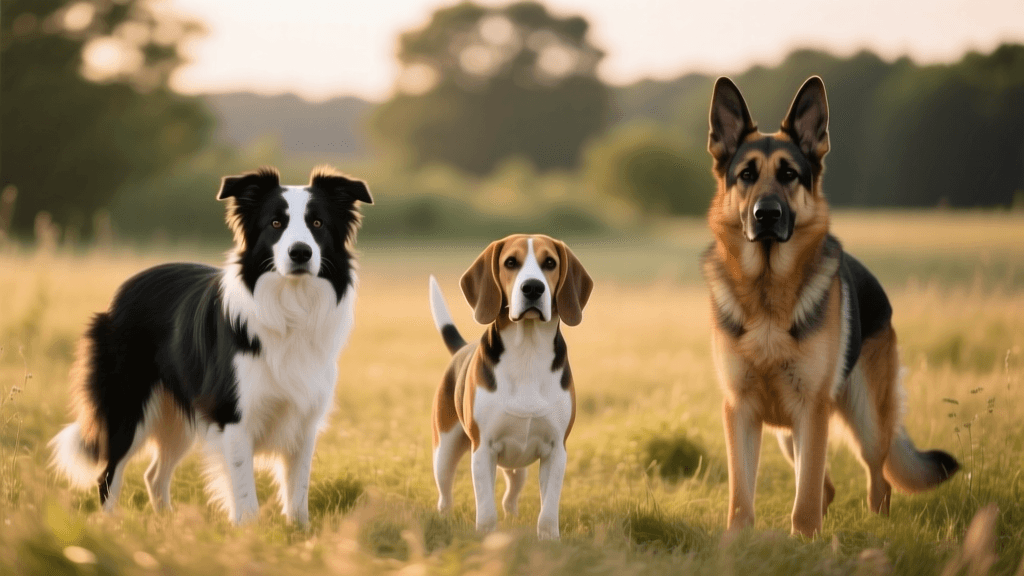
When welcoming a large or giant breed puppy into your home, the excitement of teaching them new tricks and obedience commands is often overshadowed by a hidden biological ticking clock. Breeds such as German Shepherds, Golden Retrievers, Rottweilers, and Labrador Retrievers are beloved for their intelligence, loyalty, and trainability. However, their genetic predisposition to orthopedic conditions, specifically hip dysplasia, requires a highly specialized approach to behavioral conditioning and obedience training. As a responsible owner, understanding the intersection of breed health profiles, genetics, and physical development is critical to ensuring your dog remains pain-free and eager to learn throughout their life.
Understanding the Genetic Link to Joint Issues
Hip dysplasia is not simply a result of poor care or a single injury; it is fundamentally a genetic condition. According to the Orthopedic Foundation for Animals (OFA), hip dysplasia is a polygenic trait, meaning it is controlled by multiple genes interacting with environmental factors. While you cannot change your dog's genetic code, you have immense control over the environmental triggers that can exacerbate joint laxity and accelerate the onset of osteoarthritis.
Genetics load the gun, but environment pulls the trigger. Factors such as rapid growth, excessive body weight, and inappropriate high-impact exercise during puppyhood can turn a mild genetic predisposition into a severe, debilitating orthopedic disease. Therefore, your training methodology must prioritize joint preservation just as much as behavioral compliance. Proactive owners often invest in early screening, such as the PennHIP evaluation, which can be performed as early as 16 weeks of age. This screening costs between $300 and $600 but provides invaluable data on joint laxity, allowing you to tailor your dog's physical and mental training regimen with absolute precision.
The Biology of Growth Plates and Training Limits
To train a large breed safely, you must understand their skeletal development. Puppies possess growth plates (epiphyseal plates) at the ends of their long bones. These are soft, cartilaginous areas where new bone is generated. In large and giant breeds, these growth plates do not fully close and calcify until the dog is between 14 and 18 months of age.
Repetitive stress, forced running (such as jogging alongside a bicycle), or high-impact jumping before the growth plates close can cause micro-traumas. This disrupts normal bone development and leads to malformed joints. Consequently, traditional high-energy training routines must be heavily modified during the first year and a half of your dog's life. The general veterinary consensus for puppy exercise is five minutes of structured, low-impact activity per month of age, up to twice a day. For a four-month-old puppy, this means training sessions should be capped at 20 minutes to prevent structural damage.
Essential Obedience Commands for Joint Protection
When adapting your training curriculum, focus on commands that promote impulse control and calmness rather than explosive physical movements. Here are the foundational commands every genetically vulnerable breed should master:
1. Threshold 'Wait'
Large puppies are prone to slipping on hardwood or tile floors when they bolt through doorways. Slipping causes sudden, unnatural torque on the hip joints. Teaching a solid 'Wait' command at all thresholds ensures your dog remains stationary until you give a release cue, preventing chaotic, high-speed exits that could result in a pelvic injury.
2. 'Place' or Mat Training
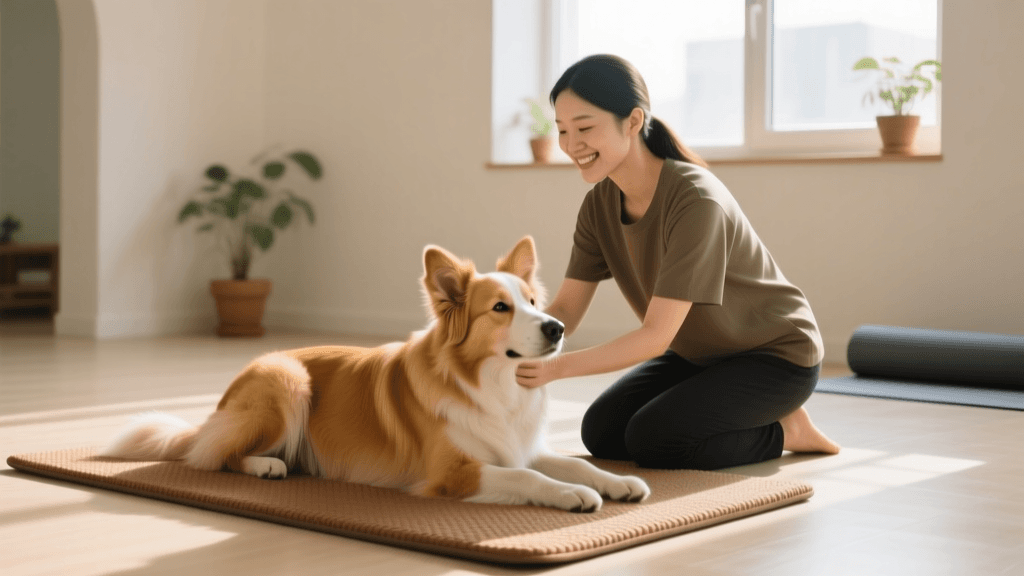
Constantly repeating 'Sit' and 'Down' commands forces the hips to rotate and bear weight in ways that can irritate developing joints. 'Place' training teaches your dog to go to a specific orthopedic mat and settle. This provides a mental 'off-switch' and encourages a relaxed, side-lying down position that takes the mechanical load off the hip sockets entirely.
3. Loose-Leash Walking with Proper Equipment
Pulling on a leash creates uneven weight distribution, forcing the hindquarters to overcompensate. Avoid neck collars or back-clip harnesses that encourage pulling. Instead, invest in a front-clip no-pull harness (such as the Rabbitgoo No-Pull Harness, typically costing around $25 to $30). This redirects the dog's momentum toward you, encouraging them to walk politely without straining their posterior chain.
High-Impact vs. Low-Impact Training Activities
To help you visualize how to structure your training sessions, refer to the comparison chart below. Swapping out high-impact drills for low-impact alternatives will protect your dog's genetic vulnerabilities while still burning off excess energy.
| High-Impact Activities (Avoid Until 18+ Months) | Low-Impact Alternatives (Safe for Puppies) |
|---|---|
| Fetch with repetitive hard stops and turns | Scent trailing or hide-and-seek with treats |
| Agility jumps, weave poles, or A-frames | Ground-level agility tunnels or target mats |
| Jogging or biking alongside the dog | Leisurely 'sniffaris' on soft grass or dirt |
| Frisbee catching with vertical leaps | Rolling a ball slowly on flat, soft terrain |
| Repetitive 'Sit Pretty' or begging tricks | 'Touch' (hand targeting) or 'Speak' commands |
Mental Stimulation: The Secret to Tiring Out a High-Energy Breed
One of the greatest challenges in training large, working breeds with joint vulnerabilities is meeting their immense need for activity without destroying their hips. The solution lies in cognitive fatigue. Mental stimulation burns just as many calories and provides the same endorphin release as physical exercise, but with zero orthopedic risk.
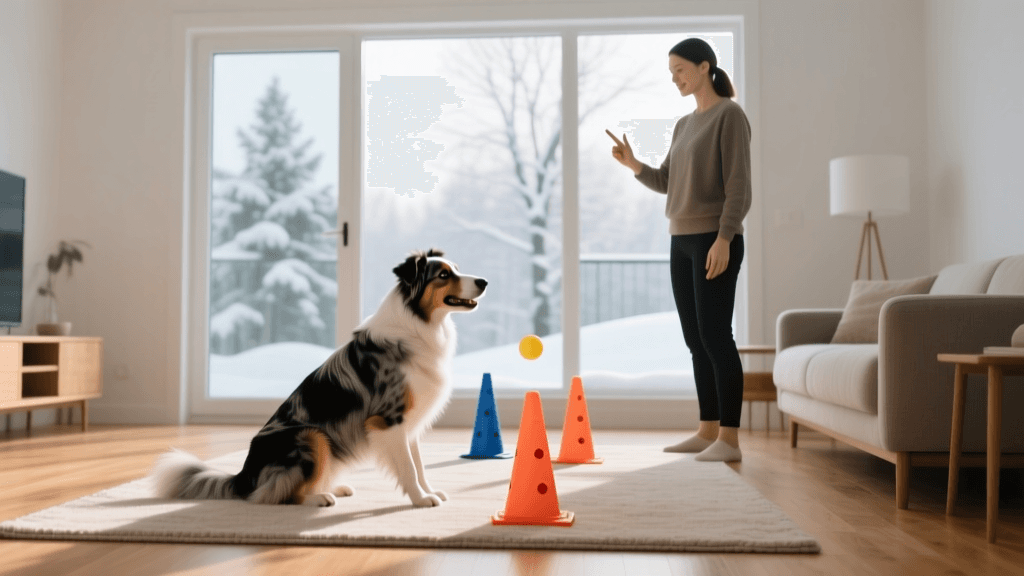
- Scent Work: Hide high-value treats like Zuke's Mini Naturals around your living room or yard. Sniffing lowers a dog's heart rate and engages their primary sensory cortex, leaving them thoroughly exhausted after just 15 minutes.
- Puzzle Feeders: Ditch the food bowl. Use interactive puzzles like the Kong Classic or Outward Hound Dog Brick. Forcing your dog to problem-solve for their daily kibble ration builds confidence and burns mental energy.
- Clicker Shaping: Use a clicker to teach complex, low-movement tricks. Teaching your dog to identify toys by name (e.g., 'fetch the rope' vs. 'fetch the bear') requires intense focus and impulse control.
Recognizing Pain vs. Stubbornness in Training
Dogs are stoic animals, and evolutionary biology dictates that they hide signs of weakness. A common mistake trainers make is labeling a dog with underlying hip pain as 'stubborn' or 'non-compliant.' The American College of Veterinary Surgeons (ACVS) notes that dogs with hip dysplasia often exhibit subtle behavioral changes long before they show an overt limp.
If your dog suddenly refuses to perform a previously mastered command, breaks a 'Stay' to shift their weight, or exhibits calming signals like excessive lip licking, yawning, or panting during a session, stop immediately. These are not signs of defiance; they are cries of physical discomfort. Punishing a dog for pain-induced non-compliance will destroy your bond and create behavioral anxiety. Instead, consult your veterinarian for a thorough orthopedic evaluation and adjust your training expectations accordingly.
Modifying Trick Training for Adult Dogs with Arthritis
If your adult dog has already been diagnosed with genetic hip dysplasia and secondary osteoarthritis, training does not stop—it simply evolves. You must eliminate tricks that require the dog to bear excessive weight on their hindquarters. Avoid commands like 'Sit Pretty,' 'Jump through a hoop,' or 'Roll Over,' which place immense sheer force on the hip joints.
Instead, focus on upper-body and cognitive tricks. Teach your dog to 'Spin' in a tight circle on a non-slip rug, 'Wave' their paw, or 'Speak' on command. You can also engage in canine massage and passive range-of-motion (PROM) exercises, which can be trained using positive reinforcement to help your dog relax while you manipulate their limbs to maintain joint flexibility.
Conclusion
Training a breed genetically prone to hip dysplasia requires a delicate balance of patience, biological awareness, and creative problem-solving. By prioritizing low-impact obedience commands, leveraging the power of mental enrichment, and remaining hyper-vigilant to the subtle signs of joint discomfort, you can cultivate a deeply obedient and well-mannered companion. Remember that true behavioral conditioning is not just about teaching a dog what to do; it is about understanding who they are on a genetic level and setting them up for a lifetime of physical and mental success.
priya-sutaria
All our authors care for dogs every day — read more of their work on the authors page.