Dog Breed Trainability: Match Training to Breed Traits
Discover how dog breed traits impact trainability. Learn to select the right breed and tailor obedience training methods for herding, hound, and working dogs.
Introduction to Breed-Specific Trainability
When selecting a canine companion, many prospective owners focus on coat color, size, or shedding levels. However, from a professional dog training perspective, the most critical factor to consider is a breed's genetic predisposition to learn and work. Trainability is not a universal metric; a Border Collie's eagerness to obey complex commands differs vastly from a Beagle's single-minded pursuit of a scent trail. Understanding these genetic blueprints is essential for setting realistic expectations and choosing a dog that matches your lifestyle, experience level, and training goals.
At Paws-Tales, we believe that there are no 'untrainable' dogs, only mismatched training methods. By aligning your obedience and behavioral conditioning strategies with your dog's ancestral purpose, you can transform frustrating stubbornness into focused cooperation. This comprehensive guide explores how to evaluate breed trainability, select the right dog for your household, and apply tailored training techniques across major breed groups.
The Science of Canine Genetics and Learning
Dog breeds were developed over centuries to perform highly specific jobs. According to the American Kennel Club (AKC), breed groups are categorized by the historical work they were bred to perform, such as herding livestock, retrieving game, or tracking scents. These historical roles have hardwired specific behavioral traits, drives, and problem-solving styles into their DNA.
For example, herding breeds possess high 'biddability'—a desire to work in tandem with a human handler. Conversely, livestock guardian breeds and scent hounds were bred to make independent decisions far away from human direction. When you attempt to train an independent breed using the same repetitive drills designed for a biddable retriever, you will likely encounter frustration. The American Veterinary Medical Association (AVMA) emphasizes that recognizing these innate behavioral drives is crucial for providing appropriate mental enrichment and preventing the development of anxiety or destructive behaviors.
Comparing Trainability Across Major Breed Groups
To help you match your training lifestyle to the right breed, we have broken down the primary characteristics of major breed groups. Use this comparison chart to understand what to expect during obedience training and behavioral conditioning.
| Breed Group | Primary Drive | Training Challenge | Best Reinforcement Method |
|---|---|---|---|
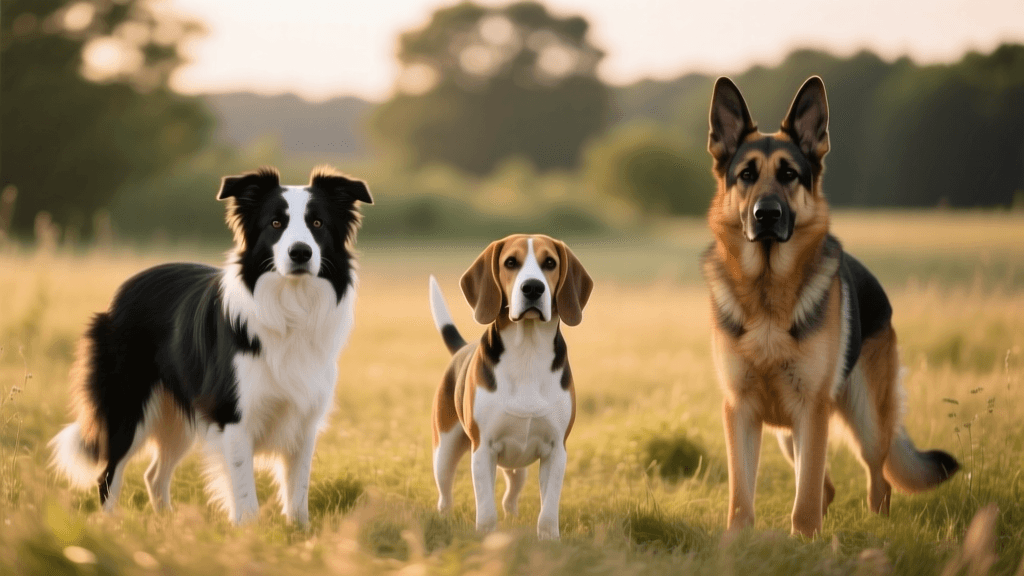
| Herding (e.g., Border Collie, GSD) | Work, movement, handler focus | Over-arousal, nipping, neuroticism if under-stimulated | Toy play, access to agility, job-oriented tasks |
| Sporting (e.g., Labrador, Golden) | Retrieving, food, pleasing handler | Distractibility, jumping, soft-mouthed sensitivity | High-value food treats, fetch-based rewards, praise |
| Hounds (e.g., Beagle, Coonhound) | Scent tracking, vocalization | Ignoring recall, 'selective deafness' when on a scent | Scent-work games, ultra-high-value treats (e.g., liver) |
| Terriers (e.g., Jack Russell, Airedale) | Prey drive, digging, chasing | Stubbornness, high reactivity to small animals | Flirt pole play, short training sessions, earthdog tasks |
| Working/Guardian (e.g., Mastiff, Akita) | Protection, territory, independence | Low biddability, skepticism of strangers, slow maturity | Respect-based bonding, calm praise, socialization |
Herding and Working Breeds: The Eager Achievers
Herding breeds are the honor students of the dog world. They learn new commands in fewer than five repetitions and thrive on complex problem-solving. However, their trainability comes with a caveat: they require immense mental stimulation. If you do not give a herding dog a 'job,' they will invent one, which often involves herding your children, chasing cars, or obsessively shadowing you around the house.
Actionable Training Advice: Utilize the 'Premack Principle,' which involves using a high-probability behavior (like chasing a ball) to reinforce a low-probability behavior (like holding a sit-stay). Incorporate agility equipment or advanced trick training into your daily routine. A 15-minute session of shaping complex tricks will tire a herding dog more effectively than a two-mile walk.
Sporting and Retrieving Breeds: The Food and Praise Motivated
Retrievers and pointers are highly biddable and generally forgiving of handler mistakes, making them excellent choices for first-time dog owners. They are heavily motivated by food and physical interaction. The primary training hurdle with sporting breeds is managing their exuberance and teaching impulse control, particularly around distractions like birds or other dogs.
Actionable Training Advice: Focus heavily on the '3-Ds' of dog training: Distance, Duration, and Distraction. Start teaching a rock-solid recall and 'leave-it' command in a low-distraction environment. Use a Ruffwear Front Range Harness (approx. $40) with a front-clip leash attachment to gently discourage pulling without causing tracheal damage. Reward successful focus with a game of tug or a retrieve, leveraging their natural fetching instincts.
Hounds and Terriers: The Independent Thinkers
If herding dogs are the honor students, hounds and terriers are the creative artists who refuse to follow the syllabus. Bred to track prey for miles or hunt vermin underground, these dogs are genetically wired to ignore human commands when a more interesting scent or movement is present. This is not 'stubbornness' in the human sense; it is intense environmental focus.
Actionable Training Advice: Traditional repetitive obedience drills will fail here. Instead, engage their noses. Hide treats around the yard or use a Snuffle Mat ($25-$30) to encourage natural foraging behaviors. For recall training, you must use a 15-foot to 30-foot biothane long line (typically $35-$50, 1/2 inch width for small breeds, 1 inch for large breeds). This allows them to explore safely while giving you the physical leverage to enforce a recall command if they catch an interesting scent.
Selecting the Right Breed for Your Training Lifestyle
Before bringing a puppy or rescue dog home, honestly evaluate your daily schedule, living environment, and patience levels. If you live in an apartment and work long hours, a high-drive herding breed will likely develop severe behavioral issues. The ASPCA notes that many common behavioral issues, such as excessive barking, chewing, and digging, are direct results of under-stimulation and breed-environment mismatching.
'The best dog for you is not necessarily the smartest dog or the most popular breed. The best dog is the one whose genetic energy requirements and working drives align seamlessly with your daily lifestyle and the time you can dedicate to structured training.' — Canine Behavioral Specialists
If you want a hiking companion who will happily trot off-leash by your side, look toward sporting breeds or versatile working breeds like the Standard Poodle. If you prefer a more independent, low-grooming companion and don't mind a dog that might never achieve off-leash reliability, a sighthound or a mixed-breed hound could be a perfect, low-pressure match.
Essential Training Tools by Breed Type
Equipping yourself with the right gear can drastically reduce training timelines and improve safety. Here are specific, breed-tailored tool recommendations:
- For Scent Hounds (Beagles, Bloodhounds): Invest in a GPS tracking collar. The Garmin Alpha 200 (approx. $600-$700) is an industry standard for hunters and hound owners. While expensive, it provides peace of mind when your dog inevitably goes deaf to recall commands while trailing a deer scent.
- For High-Prey Drive Terriers: A Flirt Pole ($25-$40) is essential. This tool mimics the erratic movement of prey, allowing you to safely exhaust your terrier's chase drive in a small backyard while teaching crucial impulse control commands like 'drop it' and 'wait'.
- For Heavy-Pulling Working Breeds: Avoid standard flat collars which can damage the thyroid and trachea. Opt for a well-fitted Y-front harness, such as the Hurtta Weekend Warrior ($60-$80), which distributes pressure across the chest and shoulders.
- For Anxious or Reactive Breeds: Use a treat pouch that allows for rapid-fire reward delivery. The Dog Gone Smart Treat Pouch ($20) features a magnetic closure, allowing you to deliver high-value rewards (like boiled chicken or freeze-dried liver) within the 1.5-second neurological window required to mark a desired behavior.
The Critical Window: Puppy Socialization
Regardless of the breed you select, early socialization is the bedrock of all future training. The primary socialization window closes between 12 and 16 weeks of age. During this time, puppies must be exposed to a wide variety of surfaces, sounds, people, and other animals in a positive, non-threatening manner. A well-socialized dog is significantly easier to train because they are not overwhelmed by environmental stressors, allowing their cognitive focus to remain on the handler and the task at hand.
Conclusion
Successful dog training is not about dominance or forcing compliance; it is about understanding the unique genetic tapestry of your dog and working with it, not against it. By carefully selecting a breed that matches your lifestyle and tailoring your obedience methods to their specific drives, you build a foundation of mutual trust. Whether you are shaping a Border Collie for agility or teaching a Beagle to check in on a long line, patience, breed-specific strategies, and positive reinforcement will always yield the most rewarding results.
hannah-wickes
All our authors care for dogs every day — read more of their work on the authors page.