Teaching Your Dog To Settle On A Mat
Learn about teaching your dog to settle on a mat with expert tips and data-backed advice.
The Mat as a Foundation Skill
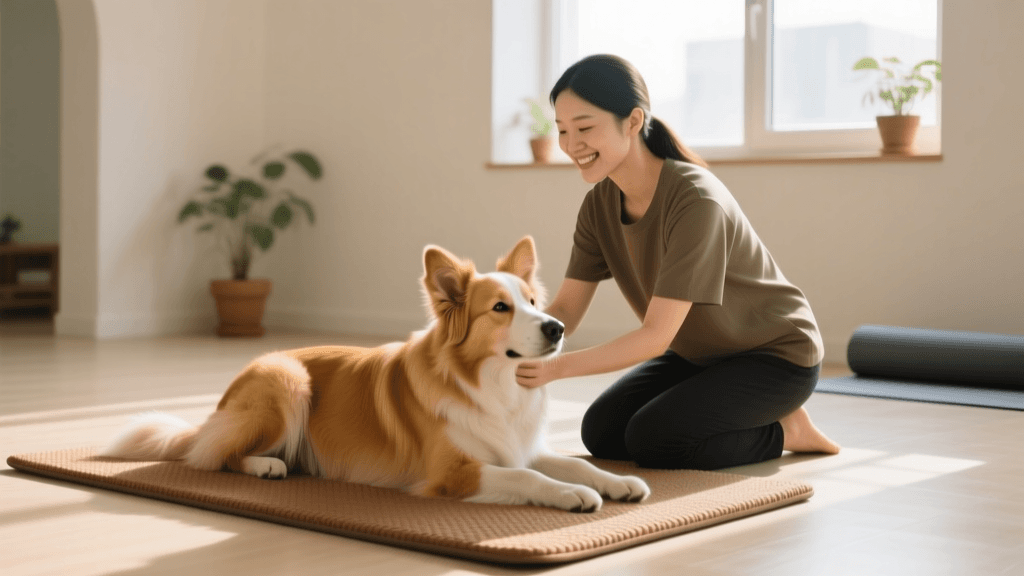
A dog who knows how to settle on a mat is a dog who can go anywhere. Restaurants with outdoor seating, veterinary waiting rooms, busy family gatherings — in all of these environments, a reliable mat behavior gives your dog a clear job and gives you peace of mind. Unlike a simple "down-stay," mat training teaches a dog to self-regulate: to choose calm over arousal, to find the mat as a place of comfort rather than confinement. That distinction matters enormously in practice.
The behavior is deceptively simple to describe — dog goes to mat, lies down, stays calm until released — but building it to the point of real-world reliability takes systematic work. The good news is that the science behind how dogs learn makes this process straightforward when you follow it carefully. Positive reinforcement, applied with precision and patience, produces a mat behavior that holds up under genuine distraction.
What the Research Tells Us About Dog Learning
Before picking up a clicker, it helps to understand the learning principles you are working with. The Association of Professional Dog Trainers (APDT, 2019) emphasizes that behaviors reinforced immediately and consistently are acquired faster and maintained longer than those reinforced on irregular schedules during initial learning. This is operant conditioning at its most practical: the dog offers a behavior, a reward follows within approximately 1.5 seconds, and the neural pathway strengthens.
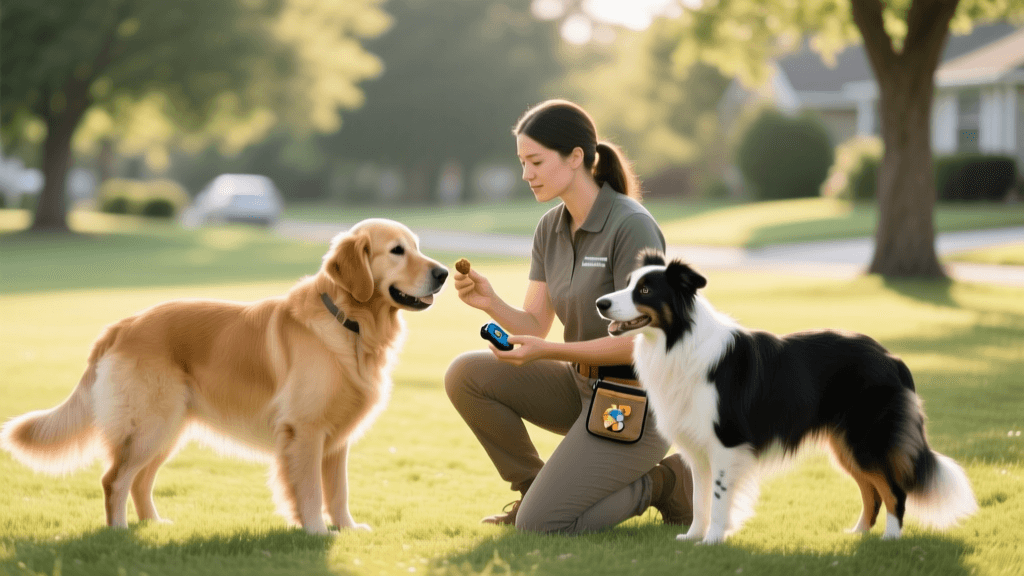
Karen Pryor's foundational work on clicker training, documented extensively through the Karen Pryor Academy, demonstrates that a conditioned reinforcer — the click — bridges the gap between the behavior and the primary reward (food, play, praise). In controlled studies reviewed by the Academy, dogs trained with marker-based methods reached criterion behaviors in an average of 15 to 20 repetitions fewer than dogs trained with lure-only methods, and showed significantly lower stress indicators during training sessions.
A 2020 study published in Applied Animal Behaviour Science found that dogs trained using reward-based methods showed 60% lower cortisol levels post-session compared to dogs trained with aversive techniques. Lower stress means better learning, better retention, and a dog who actively wants to engage with training. For mat work specifically, this matters because you are asking the dog to be calm — and a stressed dog cannot learn calm.
"The mat becomes a cue for the dog's entire nervous system to downregulate. We're not just training a position — we're training an emotional state." — Sarah Stremming, certified behavior consultant and host of The Cognitive Canine podcast, speaking at the 2022 APDT Annual Conference in Louisville, Kentucky.
Equipment and Setup
You do not need expensive gear. A bath mat, a folded blanket, or a purpose-made dog bed all work. The key property is that the mat be portable and visually distinct from the surrounding floor. Many trainers at the San Francisco SPCA's training department recommend a mat approximately 24 by 36 inches for medium-sized dogs — large enough for the dog to lie comfortably, small enough to be clearly defined.
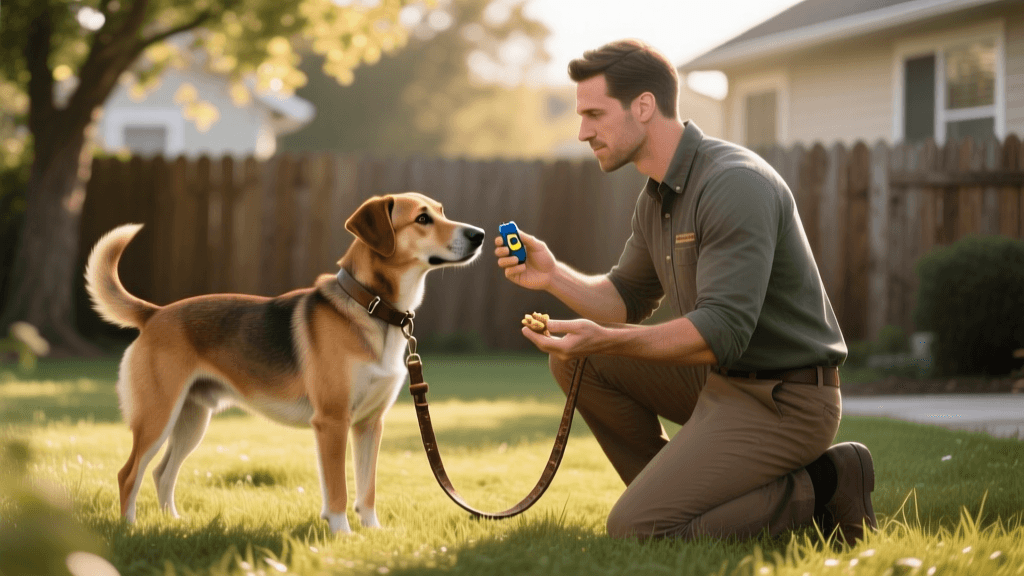
You will also need high-value treats cut into pieces no larger than a pea. Small pieces mean you can deliver many reinforcements without filling the dog up. Chicken, cheese, and commercial training treats all work well. A clicker or a consistent verbal marker ("yes") completes your toolkit.
Choosing the Right Mat
Texture matters more than you might expect. Some dogs are initially reluctant to step onto certain surfaces — rubber-backed mats, for instance, can feel unstable underfoot. If your dog hesitates, try a flat fleece blanket first. Once the behavior is established on a comfortable surface, you can gradually introduce different textures. The goal is that the mat itself becomes a powerful cue, so consistency in the early stages helps the dog generalize correctly later.
Setting Up Your Training Space
Start in the lowest-distraction environment available — typically a quiet room in your home with the door closed. Place the mat on the floor with nothing else interesting nearby. Have your treats in a pouch or bowl behind you, not in your hand, to prevent the dog from fixating on the food rather than the behavior. Keep initial sessions to 3 to 5 minutes. Dogs, particularly puppies and adolescents, learn better in short, frequent sessions than in long, infrequent ones.
Step-by-Step Training Protocol
The following protocol is adapted from methods taught at the Karen Pryor Academy and refined by certified professional dog trainers working in shelter and private practice settings. It moves through four distinct phases, each building on the last.
Phase 1: Building Mat Value (Sessions 1–3)
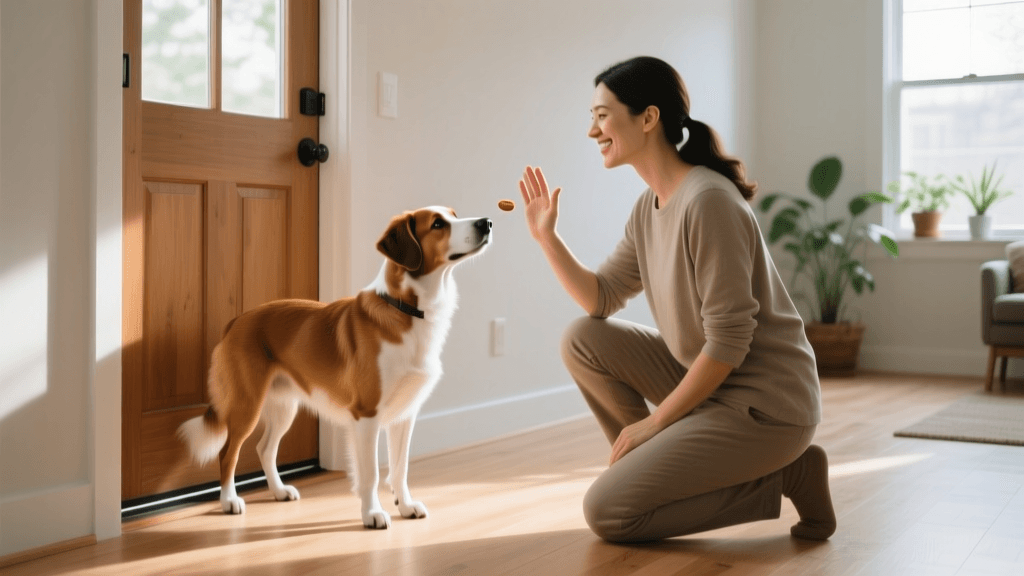
Place the mat on the floor and stand near it. Do nothing. Wait. Most dogs will investigate the mat within 30 seconds simply because it is new. The moment any paw touches the mat, click and toss a treat onto the mat itself — not to the dog's mouth. Tossing the treat onto the mat serves two purposes: it reinforces the dog for being on the mat, and it keeps the dog's attention on the mat rather than on you.
- Place mat on floor. Stand 2 to 3 feet away.
- Wait for any paw contact with the mat.
- Click the instant contact occurs.
- Toss treat onto the mat.
- Repeat 10 to 15 times per session.
- End session before the dog loses interest.
By the end of three sessions, most dogs are deliberately walking to the mat and standing on it, anticipating the click. This is the foundation of mat value — the dog has learned that the mat predicts good things.
Phase 2: Adding the Down (Sessions 4–6)
Once the dog is confidently going to the mat, begin waiting for a down. After the dog steps onto the mat, pause. Do not lure. Many dogs, especially those with some training history, will offer a sit or a down within a few seconds of standing on the mat. The moment elbows hit the mat, click and deliver several treats in a row — a "jackpot" of 3 to 5 treats delivered one at a time. This marks the down as especially valuable.
If the dog does not offer a down within 10 seconds, you can use a lure: hold a treat at the dog's nose and slowly move it toward the mat between the dog's front paws. As the dog follows the lure down, click when elbows touch and reward generously. Fade the lure within 2 to 3 repetitions by using an empty hand in the same motion, then reward from your pouch.
Phase 3: Building Duration (Sessions 7–12)
Duration is built through variable reinforcement of the dog remaining in the down on the mat. After the dog lies down, wait 2 seconds before clicking. Then 3 seconds. Then 5. Vary the intervals — sometimes click at 2 seconds, sometimes at 8, sometimes at 4. This variable schedule produces the most durable behavior. Research from the University of Lincoln's Animal Behaviour Cognition and Welfare Group confirms that variable ratio reinforcement schedules produce behaviors most resistant to extinction.
A common mistake at this stage is adding duration too quickly. If the dog gets up before you click, you have waited too long. Reset by asking the dog back to the mat and reinforcing at a shorter interval. The rule of thumb used by trainers at the Denver Dumb Friends League is: if the dog fails twice in a row, cut your duration in half.
Adding a Cue and Generalizing the Behavior
Once the dog is reliably going to the mat and lying down within 3 to 5 seconds, you can add a verbal cue. Say "mat" (or "place," or whatever word you prefer) once, clearly, just before the dog begins moving toward the mat. The cue predicts the behavior — it does not cause it yet. After 20 to 30 repetitions of cue followed by behavior followed by reward, the cue becomes meaningful.
Generalization is where many trainers stop too soon. A behavior trained only in the living room is a living room behavior. To make mat work truly portable, you must practice in multiple locations with the same mat. Start with low-distraction new locations — a different room, a quiet hallway — before moving to genuinely challenging environments. Each new location may require briefly returning to shorter durations and higher rates of reinforcement before the dog's performance stabilizes.
Common Challenges and How to Address Them
Even with a solid protocol, specific challenges arise. The table below outlines the most common problems trainers encounter and evidence-based solutions for each.
| Challenge | Likely Cause | Solution |
|---|---|---|
| Dog gets up immediately after lying down | Duration criteria added too fast | Return to 1–2 second duration; build more slowly |
| Dog goes to mat but won't lie down | Down not yet reinforced on mat specifically | Use brief lure; jackpot the first down on mat |
| Dog ignores mat in new locations | Insufficient generalization training | Restart Phase 1 briefly in each new location |
| Dog is anxious or won't settle | Arousal too high; environment too stimulating | Exercise dog before session; reduce distraction level |
| Dog loses interest mid-session | Sessions too long or treats insufficiently motivating | Shorten sessions to 3 minutes; upgrade treat value |
One challenge worth addressing in depth is the dog who is too aroused to settle. This is common in adolescent dogs between 6 and 18 months of age, and in high-drive breeds. The solution is not to push through the arousal — it is to address it before training begins. A 15 to 20 minute structured walk or a brief game of fetch before a mat session can reduce baseline arousal enough to make the session productive. Trainers at the San Francisco SPCA's behavior department routinely recommend this approach for shelter dogs learning mat work prior to adoption.
Proofing for Real-World Reliability
Proofing means systematically exposing the behavior to the kinds of distractions it will encounter in real life. This is done gradually, using a concept called the "three D's": distance, duration, and distraction. Work on each dimension separately before combining them.
- Distance: Send the dog to the mat from progressively farther away — start at 2 feet, work up to 10 or 15 feet over multiple sessions.
- Duration: Build to 10 minutes of calm mat behavior before adding significant distraction.
- Distraction: Introduce distractions in order of difficulty — a toy on the floor nearby, another person walking through the room, the doorbell, guests arriving.
When introducing a new distraction, temporarily reduce your duration expectations. If the dog can hold a 5-minute mat stay in a quiet room, expect a 30-second mat stay when the doorbell rings for the first time. Reinforce heavily for any success at the new distraction level, then build duration back up before adding the next distraction.
The APDT's 2021 position statement on humane training methods notes that behaviors proofed gradually across contexts show a 40% higher maintenance rate at 6-month follow-up compared to behaviors trained only in a single environment. This data point underscores what experienced trainers already know: the work you put into generalization is never wasted.
Mat training, done well, produces something more valuable than a single obedience behavior. It gives the dog a reliable coping strategy — a place to go when the world feels overwhelming, a behavior that earns reinforcement and communicates clearly to the humans around them. Dogs who have a strong mat behavior are easier to manage in public, calmer in veterinary settings, and more welcome in the social situations their owners want to include them in. The investment in systematic, positive training pays dividends across the dog's entire life.
Priya Sutaria
All our authors care for dogs every day — read more of their work on the authors page.