Training Herding Dogs: Border Collie vs Australian Shepherd
Compare Border Collies and Australian Shepherds for training. Discover breed-specific obedience timelines, drive management, and essential gear.
Introduction to Herding Breed Selection
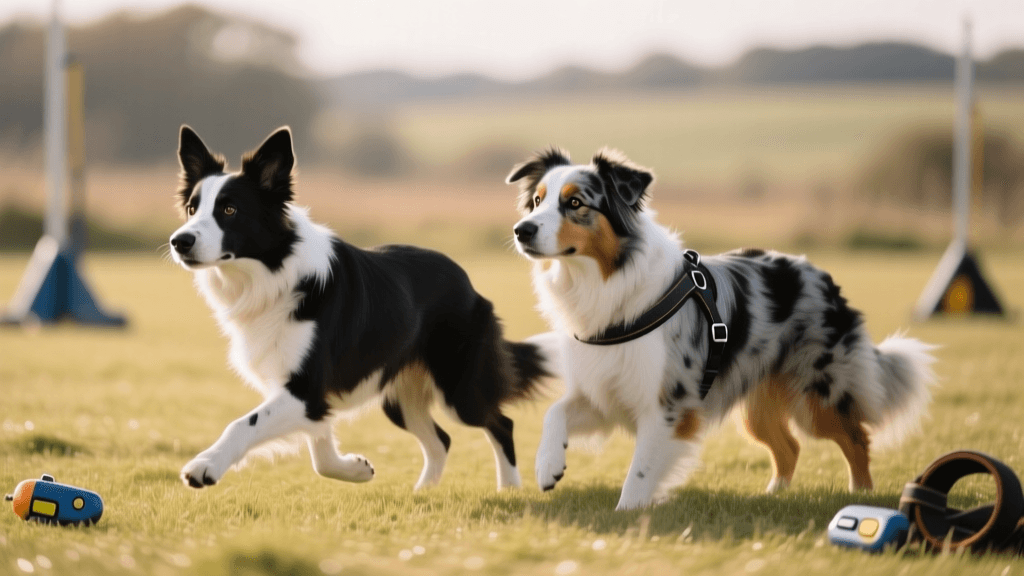
When prospective dog owners decide to bring a high-energy working dog into their lives, the Border Collie and the Australian Shepherd are frequently the top two breeds under consideration. Both breeds are renowned for their staggering intelligence, boundless stamina, and unparalleled trainability. However, selecting between these two herding powerhouses requires more than a superficial glance at their striking coats. As a senior dog trainer, I always remind my clients that a dog's genetic predispositions will dictate how they learn, what motivates them, and how they interact with their environment. According to the American Kennel Club's breed standard for the Border Collie, this breed is the quintessential sheepherder, characterized by an intense, almost hypnotic gaze known as 'the eye.' In contrast, the Australian Shepherd breed standard highlights a more versatile, rugged ranch dog that relies on physical proximity and a 'loose-eyed' approach to move stubborn cattle. Understanding these fundamental differences is the cornerstone of effective breed selection and subsequent obedience training.
Understanding the Herding Drive: Border Collie vs. Australian Shepherd
Before you can train a herding dog, you must understand what drives them. Herding is a modified predatory sequence. The full predatory sequence is: Search, Stalk, Chase, Bite, Hold, Kill, Dissect, and Consume. Herding breeds have been selectively bred to amplify the first three steps (Search, Stalk, Chase) and sometimes the 'Bite' (specifically nipping at heels to move livestock), while completely suppressing the 'Kill' and 'Consume' phases.
The Border Collie is heavily reliant on the 'Stalk' and 'Chase' phases. They use their intense 'eye' to control sheep from a distance. In a domestic setting, this translates to a dog that is highly reactive to fast-moving objects like bicycles, squirrels, and running children. They are extremely sensitive to their handler's body language and tone of voice, making them incredibly biddable but also prone to neurotic behaviors if trained with harsh corrections.
The Australian Shepherd, originally bred to work cattle in the rugged American West, possesses a more physical and assertive drive. Cattle are heavier and more aggressive than sheep, requiring the Aussie to use their body weight, bark, and occasionally nip heels to force movement. Consequently, Australian Shepherds tend to be more territorial, slightly more independent, and more resilient to environmental stressors than the hyper-sensitive Border Collie. This makes the Aussie an excellent family protector, but it also means they require firmer, more consistent boundary training from day one.
Breed Comparison Chart: Trainability and Drive
When selecting your breed, use the following comparison chart to align the dog's natural tendencies with your lifestyle and training capabilities.
| Trait | Border Collie | Australian Shepherd |
|---|---|---|
| Herding Style | Strong-eyed, stalking, gathering | Loose-eyed, physical, driving |
| Biddability | Extremely High (Lives to work) | High (Independent thinker) |
| Environmental Sensitivity | High (Sound and movement reactive) | Moderate to High (Territorial) |
| Off-Switch | Requires trained conditioning | Naturally slightly better indoors |
| Primary Motivation | Movement and Toys | Food and Handler Praise |
| Stranger Reception | Often aloof or indifferent | Reserved, watchful, protective |
Early Puppy Training Timelines (8 to 16 Weeks)
The critical socialization window for puppies closes around 16 weeks of age. The American Veterinary Society of Animal Behavior (AVSAB) strongly advocates for early, positive exposure to novel stimuli before the puppy's vaccination series is fully complete, provided it is done in safe, controlled environments. For herding breeds, this window is make-or-break for preventing fear-based reactivity and severe car-chasing behaviors later in life.
Weeks 8 to 12: Socialization and Bite Inhibition
During this phase, your primary goal is not strict obedience, but rather emotional regulation and bite inhibition. Herding puppies are notorious 'land sharks.' They will nip at ankles, pant legs, and hands. You must teach them that human skin is entirely off-limits. When the puppy nips, immediately withdraw attention by standing up and crossing your arms (becoming a 'tree'). Once the puppy offers a sit or a calm down, reward them with a soft chew toy. Limit physical exercise to the '5-minute rule' (5 minutes of structured walking per month of age) to protect developing growth plates, focusing instead on mental enrichment and sniffing games.
Weeks 12 to 16: Impulse Control and Engagement
Now you begin teaching the puppy that calmness pays. Introduce the 'Place' command. Using a raised cot helps the dog understand the physical boundary of the behavior. Lure the puppy onto the cot, mark the behavior with a 'Yes!', and reward. Gradually increase the duration from 3 seconds to 30 seconds before the puppy breaks the command. This is also the time to introduce basic recall in a low-distraction hallway, using high-value treats to build a magnetic attraction to the handler.
Essential Gear for High-Drive Puppies
Training a herding breed requires specialized tools that cater to their drive and physical needs. Budget approximately $100 to $150 for the following starter kit:
- Outward Hound Tail Teaser Flirt Pole (36 inches, ~$25): This is non-negotiable for herding breeds. It allows you to satisfy their 'chase' and 'stalk' prey drive without destroying your backyard or encouraging them to chase your children. Keep the lure on the ground to prevent joint injuries in growing puppies, and always let the dog 'catch' the lure at the end of the session to prevent frustration.
- Biothane Long Line (20 feet, 1/2 inch width, ~$35): Herding dogs have a high predatory drift and will bolt after a deer if given the chance. A 20-foot waterproof Biothane line allows you to practice recall commands safely in open fields without the line tangling or absorbing mud and water like nylon or cotton.
- Coolaroo Elevated Dog Bed (Medium, 43x31 inches, ~$45): Essential for teaching the 'Place' command. The raised edges provide a clear tactile boundary that helps the dog understand exactly where they need to be.
- Zuke's Mini Naturals (~$12/bag): Herding dogs require high-repetition training. These treats are under 3 calories each, preventing obesity while allowing you to reward 20 to 30 times in a single 10-minute session.
Managing Herding Behaviors in the Home
One of the most common reasons herding breeds are surrendered to rescues is the development of problematic herding behaviors indoors. This typically manifests as stalking children, nipping at heels, or obsessively circling the family during chaotic moments. It is crucial to understand that the dog is not being aggressive; they are simply doing what their genetics scream at them to do: control the movement of their 'flock.'
To manage this, you must proactively redirect the behavior before the dog reaches their threshold. If you know your children are about to run around the yard, preemptively put your dog on their 'Place' cot with a Kong Classic (Red, Medium, ~$18) stuffed with frozen peanut butter and kibble. This teaches the dog that chaotic movement in the environment is their cue to settle on their mat and chew, rather than a cue to initiate a herding sequence.
Pro Tip: Never use laser pointers to exercise a herding dog. The Border Collie and Australian Shepherd are highly prone to developing Canine Compulsive Disorder (CCD), specifically Light and Shadow Chasing. Laser pointers provide the 'chase' without the 'catch,' leading to severe neurological frustration and obsessive behaviors that often require lifelong medication to manage.
If your dog does begin to stalk or nip, do not yell or run away, as this mimics the behavior of a fleeing sheep and rewards the herding instinct. Instead, use a calm, flat leash correction to interrupt the behavior, immediately redirect them to a toy, or place them in a 30-second time-out in a quiet, boring room to reset their nervous system.
Advanced Obedience and Dog Sports
Basic obedience is merely the foundation for a herding breed. To truly fulfill their genetic potential, these dogs require a 'job.' If you do not live on a farm, you must provide an alternative outlet for their drive. The American Kennel Club's Herding program offers excellent avenues for dogs to work livestock in a controlled, competitive environment, even if you only do it on weekends.
If livestock is inaccessible, consider urban herding alternatives like Treibball. This sport involves the dog 'herding' large exercise balls into a goal using only their nose and shoulders, directed by the handler's whistles and hand signals. It perfectly mimics the gathering and driving phases of herding without the need for sheep or cattle.
Additionally, both breeds excel in Agility and Fast CAT (Coursing Ability Test). The Border Collie's tight turning radius and explosive acceleration make them the undisputed kings of agility courses, while the Australian Shepherd's power and endurance make them phenomenal competitors in endurance sports and scent work. When selecting your breed, consider which of these sports aligns with your own physical capabilities and time commitments.
Conclusion
Choosing between a Border Collie and an Australian Shepherd is a decision that will shape your daily routine for the next 12 to 15 years. The Border Collie is a sensitive, movement-obsessed athlete that requires a handler who is dedicated to channeling their intense drive into structured sports. The Australian Shepherd is a rugged, versatile partner that offers a slightly more balanced temperament for active families, provided their territorial and physical herding instincts are managed with firm, positive boundaries. By utilizing the correct training timelines, investing in drive-satisfying gear like flirt poles and long lines, and understanding the mechanics of the herding sequence, you can transform these high-octane breeds from household liabilities into the most rewarding companions you will ever own.
hannah-wickes
All our authors care for dogs every day — read more of their work on the authors page.