Senior Dog Training: Cognitive Exercises and Gentle Tricks
Discover how to keep your senior dog's mind sharp with cognitive training and low-impact tricks. Learn safe, gentle exercises tailored for aging pets.
The Golden Years: Why Mental Stimulation Matters for Senior Dogs
As our canine companions enter their senior years, typically between the ages of 7 and 10 depending on the breed, their physical capabilities naturally begin to slow down. However, a dog's need for mental stimulation, purpose, and engagement does not diminish with age. In fact, cognitive training becomes one of the most vital components of a comprehensive life stage care guide for aging dogs. Just like humans, dogs benefit immensely from neuroplasticity exercises that keep neural pathways active, staving off boredom, anxiety, and cognitive decline.
According to the ASPCA, older dogs can develop a variety of behavioral issues linked to underlying medical conditions or cognitive aging. Engaging your senior dog in low-impact, brain-boosting training sessions not only preserves their mental acuity but also strengthens the bond between you and your pet during their twilight years.
Understanding Canine Cognitive Dysfunction (CCD)
Before diving into specific exercises, it is crucial to understand what we are trying to prevent or manage. Canine Cognitive Dysfunction (CCD) is a condition related to brain aging that leads to changes in awareness, deficits in learning and memory, and decreased responsiveness to stimuli. The Texas A&M College of Veterinary Medicine notes that signs of CCD often include disorientation, altered interactions with family members, changes in sleep-wake cycles, and house soiling. While training cannot cure CCD, consistent cognitive enrichment has been shown to slow the progression of symptoms and improve the overall quality of life for senior dogs.
Pre-Training Health and Environmental Setup
Senior dogs often deal with osteoarthritis, diminished vision, or hearing loss. Before starting any new training regimen, secure clearance from your veterinarian. Once cleared, optimize your training environment to ensure comfort and safety:
- Orthopedic Support: Invest in a high-quality orthopedic bed, such as the Big Barker 7-inch Orthopedic Dog Bed (approximately $250), to cushion aging joints during floor-based training.
- Traction Control: Place non-slip rugs or yoga mats over hardwood or tile floors to prevent slipping when your dog shifts positions or stands up.
- Low-Calorie Rewards: Senior dogs are prone to weight gain, which exacerbates joint pain. Use tiny, high-value treats like Zuke's Mini Naturals (only 3 calories per treat) or boiled chicken breast cut into pea-sized pieces.
- Session Timing: Keep training sessions brief. Five to ten minutes, twice a day, is the sweet spot to prevent physical fatigue and mental frustration.
Low-Impact Tricks for Arthritic Joints
Traditional obedience training often involves repetitive sitting, lying down, or jumping, which can be painful for a dog with hip dysplasia or arthritis. Instead, focus on stationary tricks that require brainpower rather than physical exertion.
1. The 'Chin Rest'
This trick is excellent for husbandry, veterinary exams, and building focus without requiring your dog to move their body weight.
- Step 1: Sit in a chair and rest your hand, palm up, on your lap. Hold a treat in your other hand and lure your dog's nose down toward your open palm.
- Step 2: The moment their chin touches your palm, use a marker word like 'Yes!' and reward them with a treat from your other hand.
- Step 3: Gradually increase the duration they must hold their chin in your hand before marking and rewarding, building up to 10-15 seconds.
2. Hand Targeting ('Touch')
Targeting teaches your dog to touch a specific object with their nose, which is incredibly useful for guiding a visually impaired dog through a doorway or onto a scale.
- Step 1: Present your open palm a few inches from your dog's nose. Most dogs will naturally sniff your hand.
- Step 2: The exact millisecond their nose makes contact with your skin, mark the behavior and reward.
- Step 3: Begin moving your hand to different locations (left, right, slightly higher) so the dog must take a step or two to reach it, promoting gentle, controlled movement.
3. Seated 'Spin' or 'Twist'
Instead of asking an arthritic dog to stand and spin, teach them to pivot while seated or standing in place to maintain spinal flexibility without bearing weight on their hindquarters.
- Step 1: With your dog in a seated position, hold a treat at their nose level.
- Step 2: Slowly draw the treat in a tight circle around their head, luring them to follow the scent with their nose.
- Step 3: Mark and reward after a half-circle, eventually building to a full 360-degree pivot. Move slowly to accommodate stiff necks and shoulders.
Cognitive Enrichment Toys and Puzzles
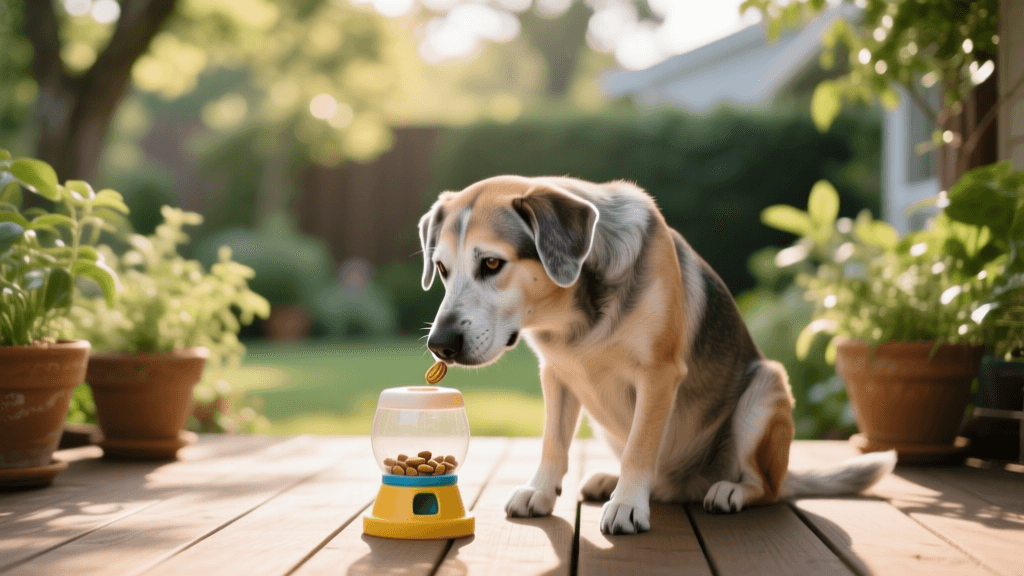
Physical tricks are only half the equation. Interactive puzzle toys force your senior dog to use problem-solving skills, mimicking the mental exertion of a long walk. Here are top-tier recommendations for aging dogs:
- Nina Ottosson Dog Brick Puzzle (Level 2): Priced around $15, this puzzle requires dogs to slide and flip compartments to find treats. It is excellent for dogs with mild cognitive decline as it offers a manageable challenge.
- Paw5 Wooly Snuffle Mat: Costing approximately $35, this mat taps into a dog's primal foraging instincts. Hiding kibble in the deep fabric strands encourages scent work, which tires out the brain faster than physical exercise.
- Outward Hound Hide A Squirrel: At about $12, this plush puzzle toy requires dogs to figure out how to extract squeaky squirrels from a tree trunk, promoting gentle pulling and problem-solving.
Weekly Senior Dog Cognitive Training Schedule
Consistency is key to maintaining neural pathways. Below is a structured, low-impact weekly schedule designed to balance mental stimulation with adequate physical rest.
| Day | Activity Type | Duration | Primary Goal |
|---|---|---|---|
| Monday | Scent Work (Snuffle Mat) | 10 Minutes | Olfactory stimulation and foraging instinct |
| Tuesday | Hand Targeting ('Touch') | 5 Minutes | Focus, mild mobility, and handler bonding |
| Wednesday | Rest & Gentle Massage | 15 Minutes | Physical recovery and tactile bonding |
| Thursday | Puzzle Toy (Dog Brick) | 10 Minutes | Problem-solving and memory recall |
| Friday | Chin Rest & Husbandry | 5 Minutes | Impulse control and cooperative care |
| Saturday | Novel Scent Walk (Sniffari) | 20 Minutes | Environmental enrichment and mapping |
| Sunday | Seated Tricks & Review | 10 Minutes | Confidence building and routine reinforcement |
Accommodating Sensory Decline in Training
Life stage care guides must address the inevitable sensory losses that accompany aging. If your dog is losing their hearing or vision, you must adapt your training communication methods.
Training a Deaf Senior Dog
If your dog is experiencing age-related hearing loss, transition from verbal markers ('Yes!' or a clicker) to visual markers. Use a distinct hand signal, such as a 'thumbs up' or a flash from a small LED pet light, to mark correct behaviors. For recall or gaining attention from across the room, a gentle vibration collar (like the Dogtra EZ-902, ensuring it is strictly set to vibration, never shock) can serve as an effective tactile cue.
Training a Blind Senior Dog
For dogs with cataracts or failing vision, rely heavily on scent and touch. You can use 'scent mapping' by dabbing a tiny amount of dog-safe vanilla extract on doorframes or the edge of the porch to help them navigate. When teaching new cues, use gentle physical luring and tactile prompts, such as a light tap on the shoulder, followed immediately by a high-value treat placed directly into their mouth.
The Role of Diet and Supplements in Cognitive Health
Training works best when supported by proper neuro-nutrition. The American Kennel Club highlights that diets rich in antioxidants, omega-3 fatty acids, and medium-chain triglycerides (MCTs) can significantly support brain health in aging dogs. Consider discussing supplements like Senilife or transitioning to a specialized brain-support diet like Purina Pro Plan Bright Mind with your veterinarian. These nutritional interventions provide the biological building blocks your dog's brain needs to form new memories during your training sessions.
Conclusion: Patience and Grace
Training a senior dog requires a shift in perspective. The goal is no longer about achieving flawless obedience or winning agility competitions; it is about preserving your dog's dignity, joy, and mental sharpness. By incorporating low-impact tricks, engaging puzzle toys, and accommodating their changing physical needs, you provide your aging companion with a rich, fulfilling life. Remember to celebrate the small victories, offer plenty of gentle praise, and cherish the quiet moments of connection that make the golden years truly special.
anouk-beaumont
All our authors care for dogs every day — read more of their work on the authors page.